




Carved Pedestal Sofa Table
A carved pedestal sofa table is a substantial drawing room centrepiece built for display and writing, combining rich timber with sculptural carving.
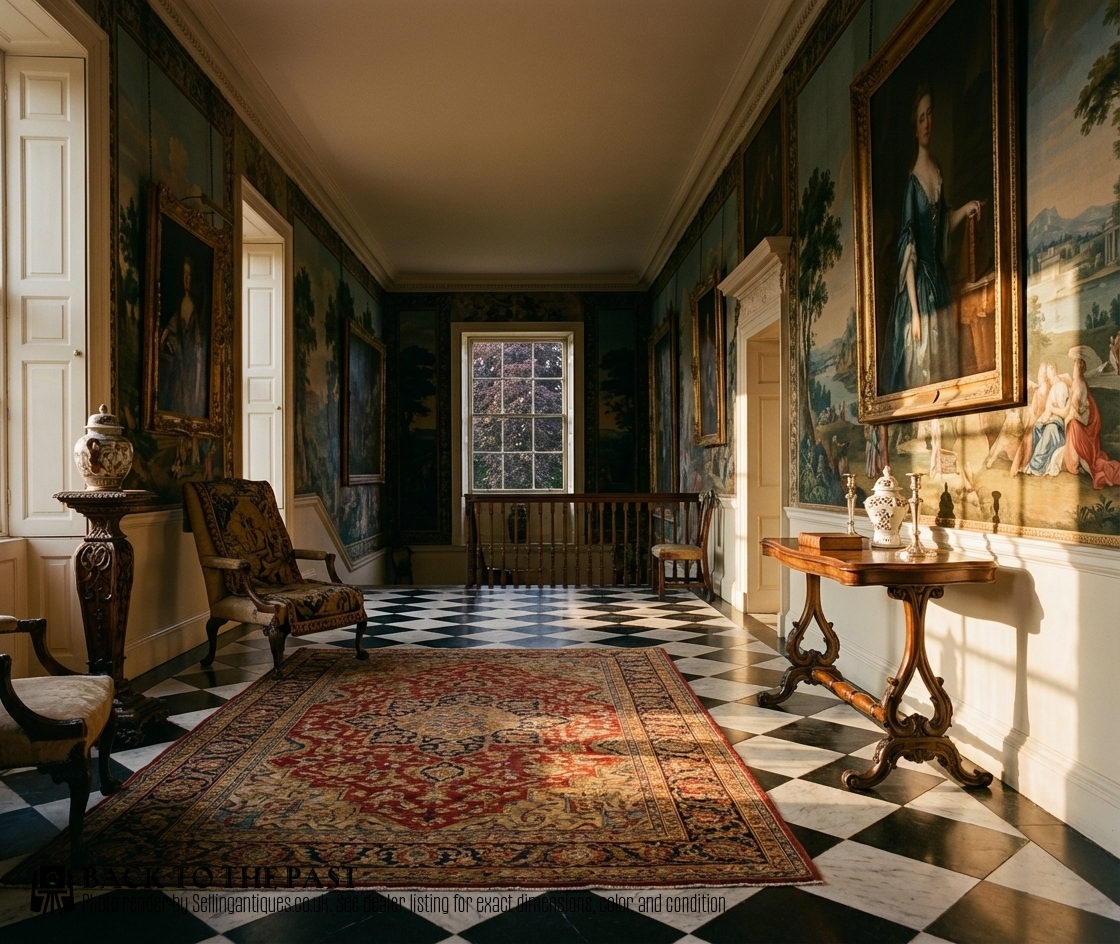
Carved Pedestal Sofa Table
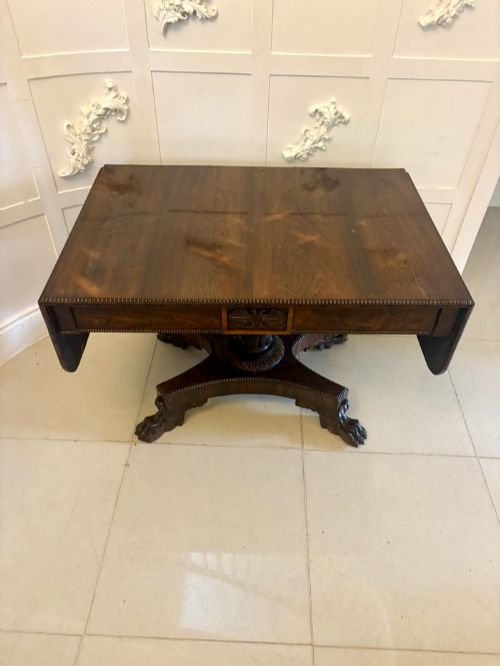
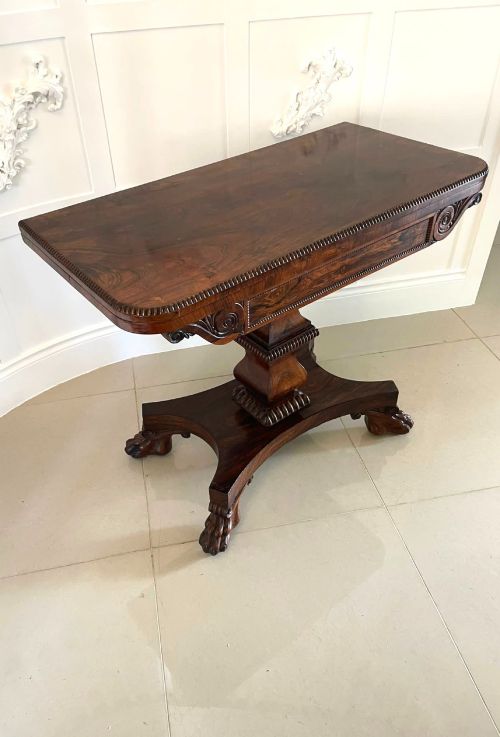
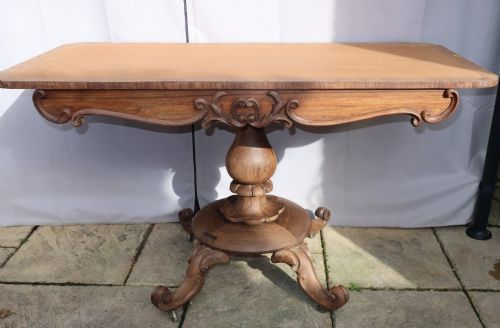
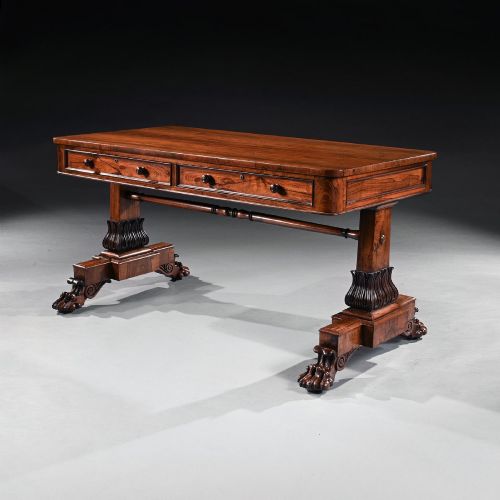
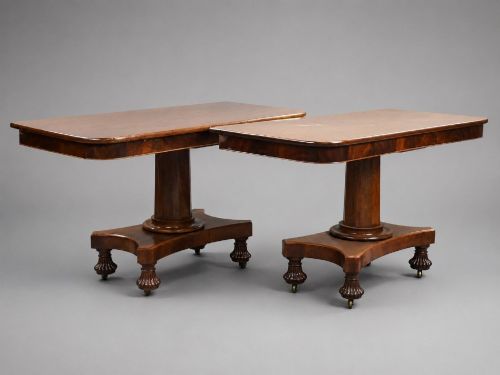
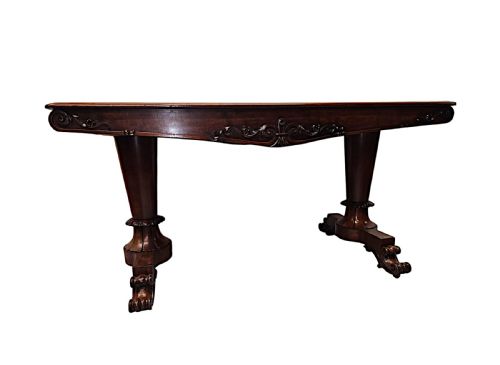
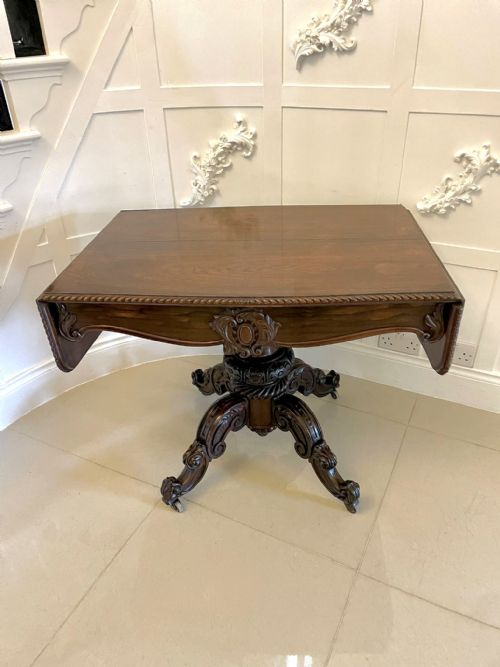
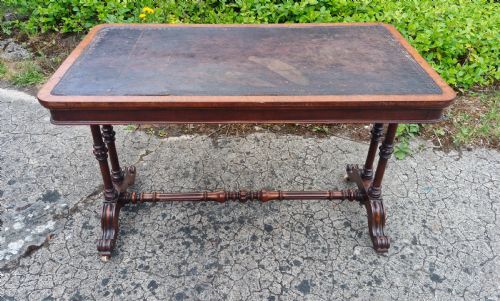
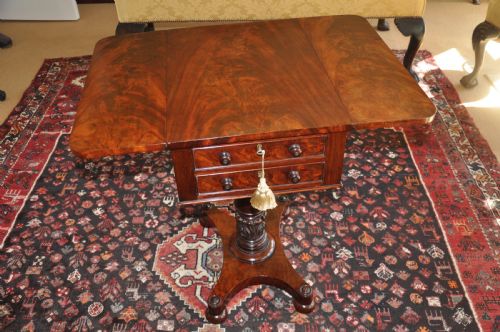
When you search for a carved pedestal sofa table, you find pieces predominantly from the nineteenth century, encompassing Regency, William IV, and Victorian periods. These tables typically feature a central pillar supported by a platform base or carved feet.
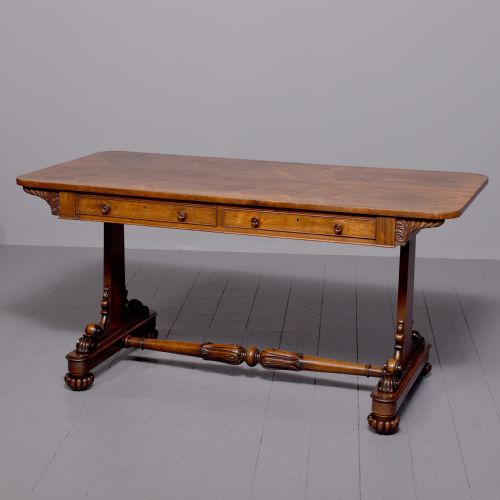
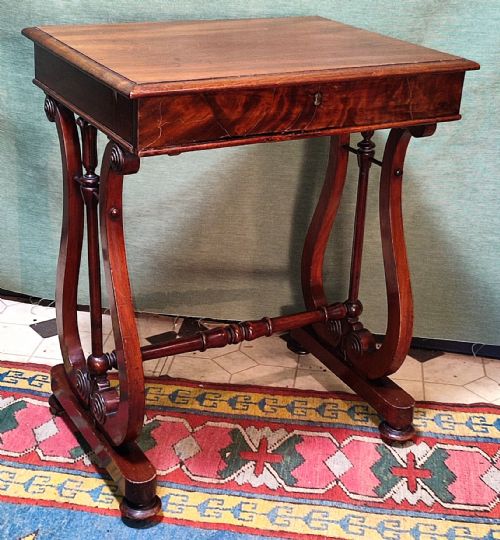
The selection here includes specific sofa tables alongside related pedestal forms such as library tables, centre tables, and console tables. Rosewood and mahogany appear frequently, often selected for their rich grain and deep colour.
Examples span from the crisp classical lines of the Regency era to the heavier proportions of Victorian walnut and burr walnut iterations. Makers and workshops from this span utilised figured veneers and solid timbers to create decorative furniture for principal rooms.
How they were made
Cabinetmakers constructed these tables using solid mahogany, rosewood, and walnut, frequently applying flame mahogany or burr walnut veneers to tabletops to create striking patterns. Secondary timbers provided stable internal framing for the pedestals and box components.
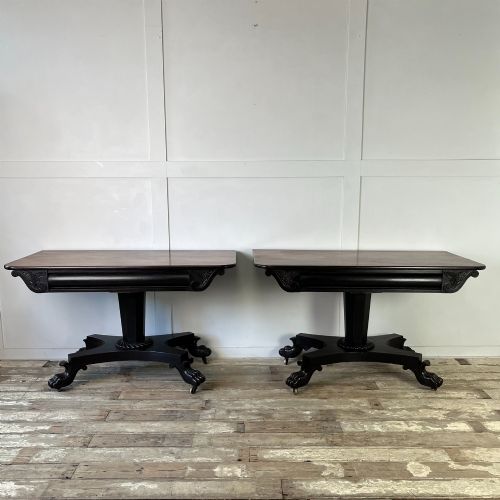
Carving was executed by hand on solid timber blocks, particularly around the central pillar, frieze brackets, and paw or dolphin feet. Brass castors were often fitted beneath the base to allow these heavy pieces to move across carpets.
Carved wooden dolphins and fierce lions' paws patiently hold up the heaviest Victorian tops.
What varies in quality
The distinction between ordinary and superior pieces rests on the depth and crispness of the hand carving on the pedestal and feet. Subtle details, such as the naturalistic movement in lions' paws or dolphins, separate workshop tiers.
Timber selection dictates visual impact, with highly figured burr walnut and rich rosewood veneers elevating the surface aesthetic. Construction integrity, including the stability of the central column and the smoothness of any folding leaves, marks the standard of the maker.
Mein of Kelso·Williams and Gibton
The Carved Pedestal Sofa Table Glossary
- Sofa table
- A rectangular table traditionally designed to stand in front of a sofa, featuring drop leaves at either end and twin drawer fronts on the frieze.
- Pedestal
- A central columnar support resting on a platform base or feet, replacing traditional corner legs.
- Frieze
- The horizontal band beneath the tabletop that frequently houses one or more drawers.
- Flame mahogany
- A veneer cut from timber where the grain creates a flickering, flame-like pattern across the surface.
- Burr walnut
- A prized wood harvested from walnut tree growths, characterised by swirling, intricate knot patterns.
Carved Pedestal Sofa Table: Frequently Asked Questions
Where did they put a sofa table?
These tables originally stood against the back of a sofa in the middle of a drawing room rather than flat against a wall. Their finished backs and freestanding design allowed them to anchor the centre of a reception space.
They also functioned as writing surfaces or sofa-side tables when the leaves were raised, offering versatility for polite activities.
How do I date a pedestal table?
Dating relies on combining timber choice, carved motifs, and structural proportions across the nineteenth-century periods. Regency and William IV pieces often display crisp rosewood or mahogany with classical paw feet, while mid-Victorian examples favour burr walnut and shaped platforms.
Looking at the construction of the drawer linings and the timber used beneath the veneers provides further confirmation of the manufacturing decade.
Can I use one as a desk?
Many nineteenth-century pedestal and library tables function well as writing desks due to their comfortable height and integrated drawers. Their finished backs mean they look correct sitting away from a wall in a study or home office.
Checking the kneehole clearance and drawer depth ensures the table suits daily practical writing tasks.
How do I care for rosewood and walnut?
Polishing requires traditional beeswax applied sparingly to maintain the natural lustre of the timber without building up sticky layers. Keeping the furniture away from direct sunlight and strong heat sources protects the delicate veneers from splitting or fading.
Occasional gentle dusting with a soft, dry cloth preserves the aged finish safely.