

Dark Rosewood Sofa Table
A dark rosewood sofa table is a substantial 19th-century furnishing that anchors a room with rich timber and practical drop leaves.
Dark Rosewood Sofa Table
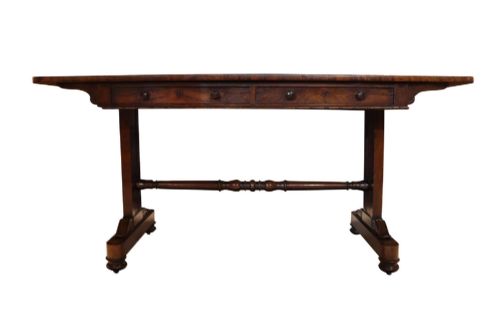
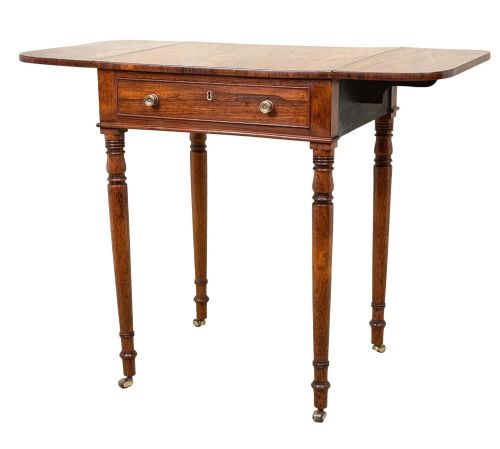
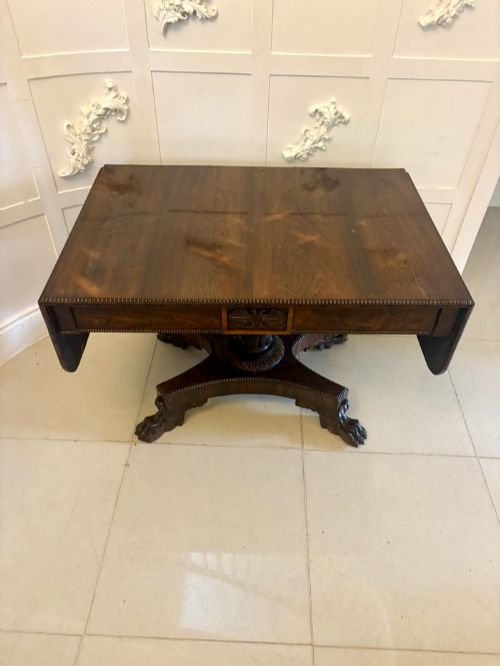
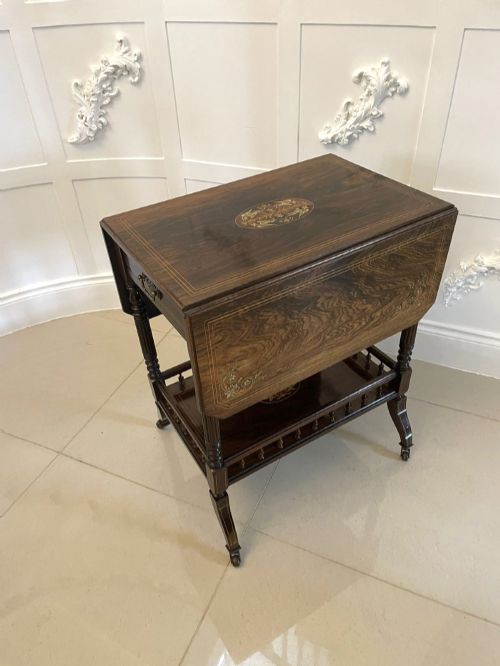
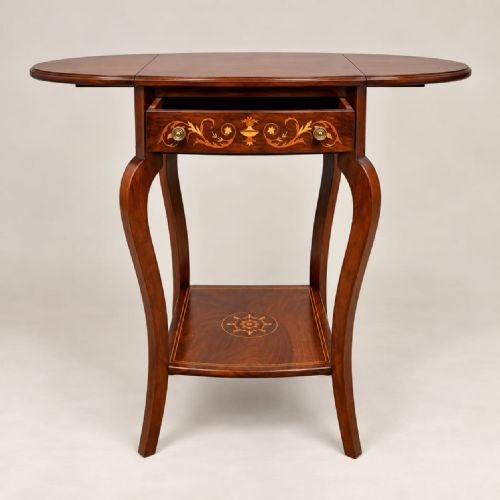
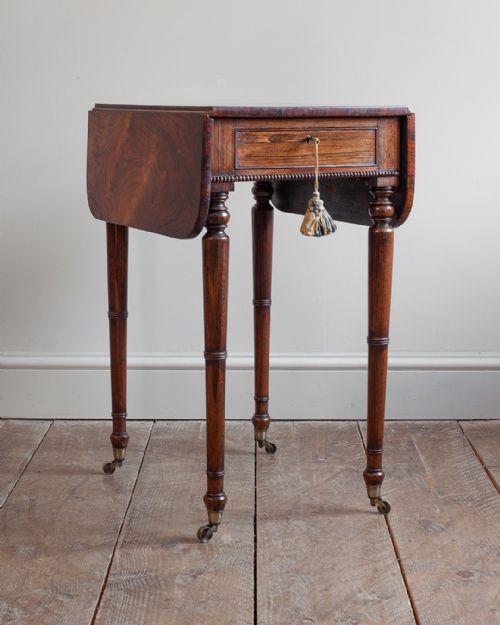
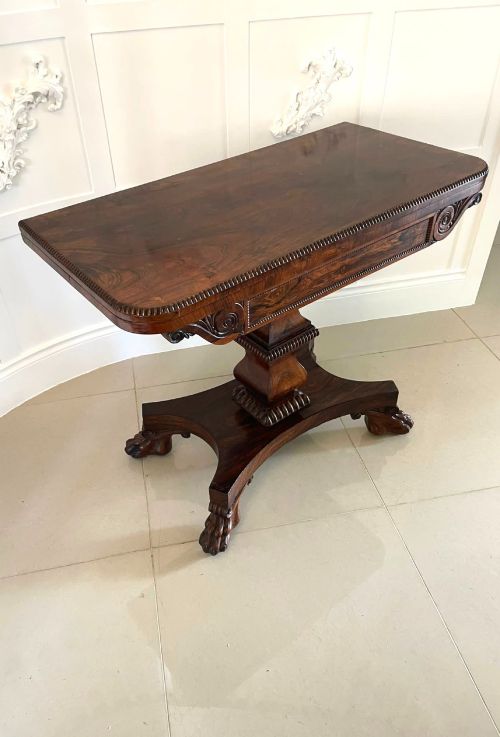
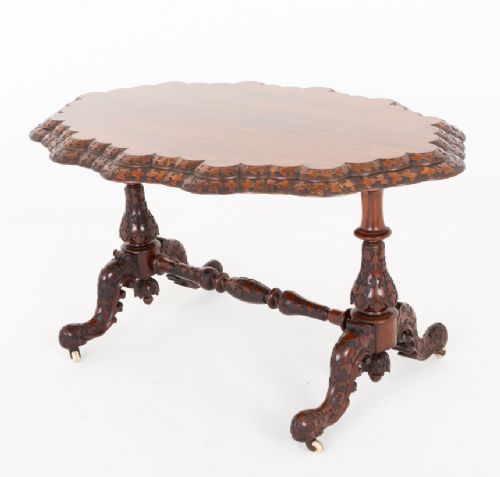
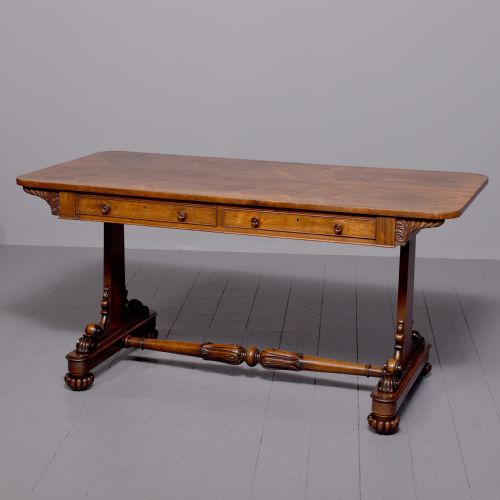
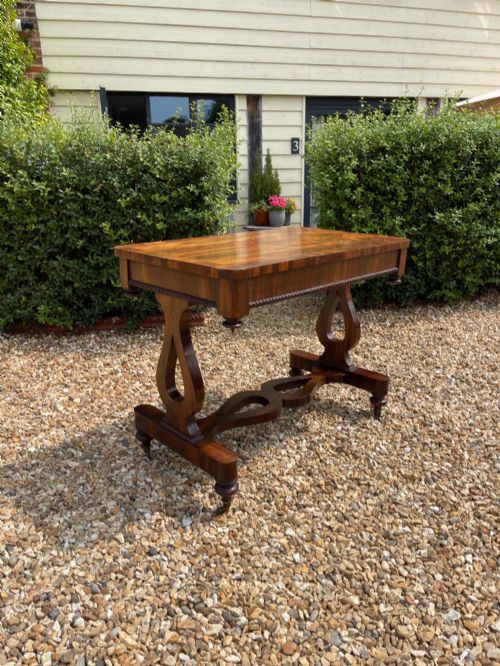
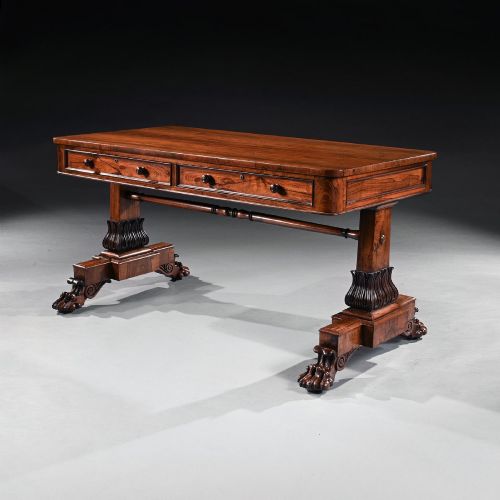
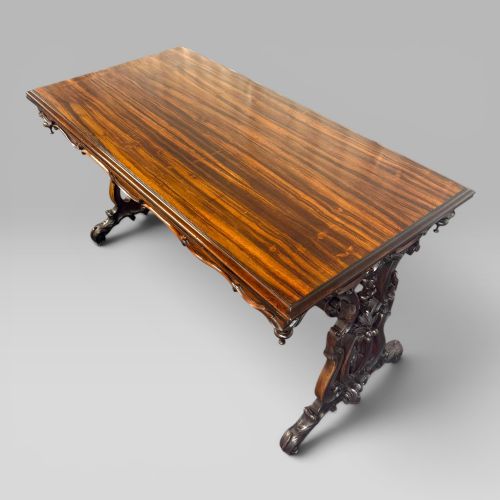
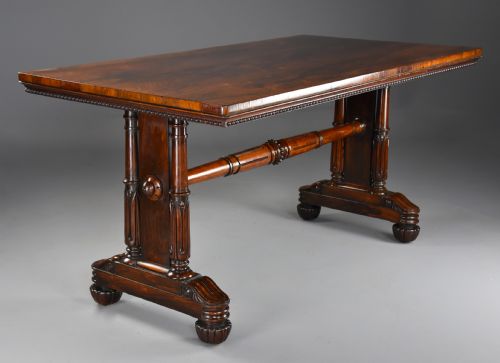
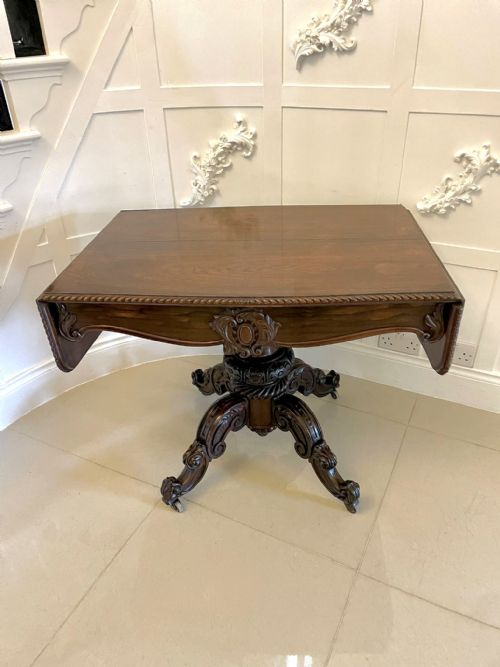
A dark rosewood sofa table is a specific form of 19th-century occasional or writing furniture designed to stand behind a sofa or freestanding in the centre of a room. The pieces found here span the Regency, William IV, and Victorian periods, often taking the form of library tables, writing desks, and drop-leaf occasional tables. They feature rich, dark timber surfaces supported by pedestals, pillars, or carved legs.
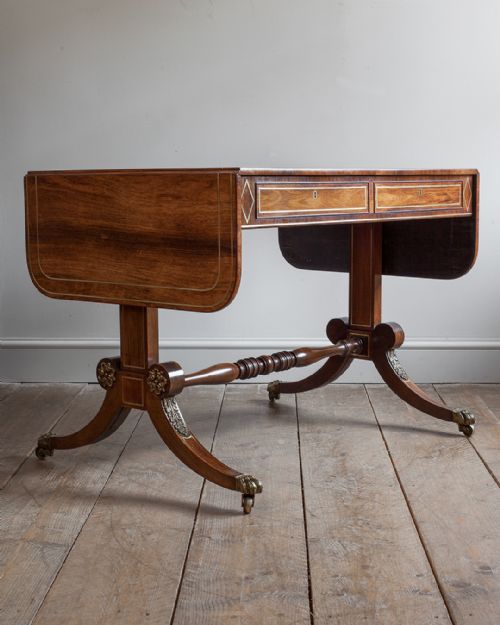
The version most commonly met on this page is the Regency or early Victorian sofa table equipped with twin drop leaves and two working drawers. These examples showcase the characteristic dark grain of rosewood, occasionally crossbanded with mahogany or embellished with brass mounts and inlay. They reflect the refined domestic requirements of nineteenth-century drawing rooms and libraries.
How they were made
Cabinetmakers utilised dense rosewood veneers applied to solid secondary timbers like mahogany or oak, creating stable surfaces that resisted warping while displaying dramatic grain patterns. Brass mounts, inlay, and gilt details were frequently integrated into Regency and Victorian designs to accent the dark timber. Drop-leaf mechanisms relied on sturdy hinged brackets beneath the leaves to support extended writing or serving surfaces.
Carved structural elements such as lion paws, dolphins, and pillar pedestals demanded skilled hand-chutting and joinery from period artisans. Crossbanding with contrasting woods like satinwood or mahogany framed the primary rosewood panels on top surfaces and drawer fronts. Interior drawer compartments often featured fine dovetail construction and secondary softwoods.
Some tables rest on carved wooden dolphins rather than standard feet, proving that even marine mammals had a role in Regency interior design.
What varies in quality
The quality of a dark rosewood sofa table depends heavily on the crispness of its hand-carved details and the selection of the timber grain. Finer examples display meticulously matched rosewood veneers across the top and leaves, whereas simpler pieces rely on plain or heavily figured boards without continuous grain flow. Carved elements such as pillar bases and feet separate standard production items from master cabinetmaker commissions.
Hardware integration and internal construction also mark the distinction between tiers of manufacture. Higher grade tables incorporate original brass mounts, working locks with keys, and precisely fitted dovetailed drawers that operate smoothly. Secondary timbers and structural framing inside pedestals reflect the underlying integrity and workshop origin of the piece.
Mein of Kelso·James Mein Kelso·Gillows
The Dark Rosewood Sofa Table Glossary
- Sofa table
- A rectangular 19th-century table with drop leaves on either side, originally designed to stand in front of a sofa. These pieces typically include two drawers and freestanding pedestals.
- Crossbanding
- A decorative border of veneer laid around the perimeter of a table top, positioned so the grain runs at right angles to the central panel. This technique frames the primary rosewood surface.
- Regency
- An English design style spanning the late 18th and early 19th centuries, characterised by classical proportions, brass inlay, and inspiration from Greco-Roman antiquities.
- Drop leaf
- A hinged flap on either side of a table top that can be raised to extend the surface area or lowered when space is limited. Support brackets swing out to hold the leaf in position.
- Library table
- A large freestanding table utilised for reading and writing, often fitted with drawers on both sides and supported by robust central pillars or carved pedestals.
Dark Rosewood Sofa Table: Frequently Asked Questions
What is a dark rosewood sofa table used for today?
These tables function effectively as writing desks, console surfaces, or freestanding centre tables in modern living spaces. Their drop leaves allow the footprint to adapt depending on available room.
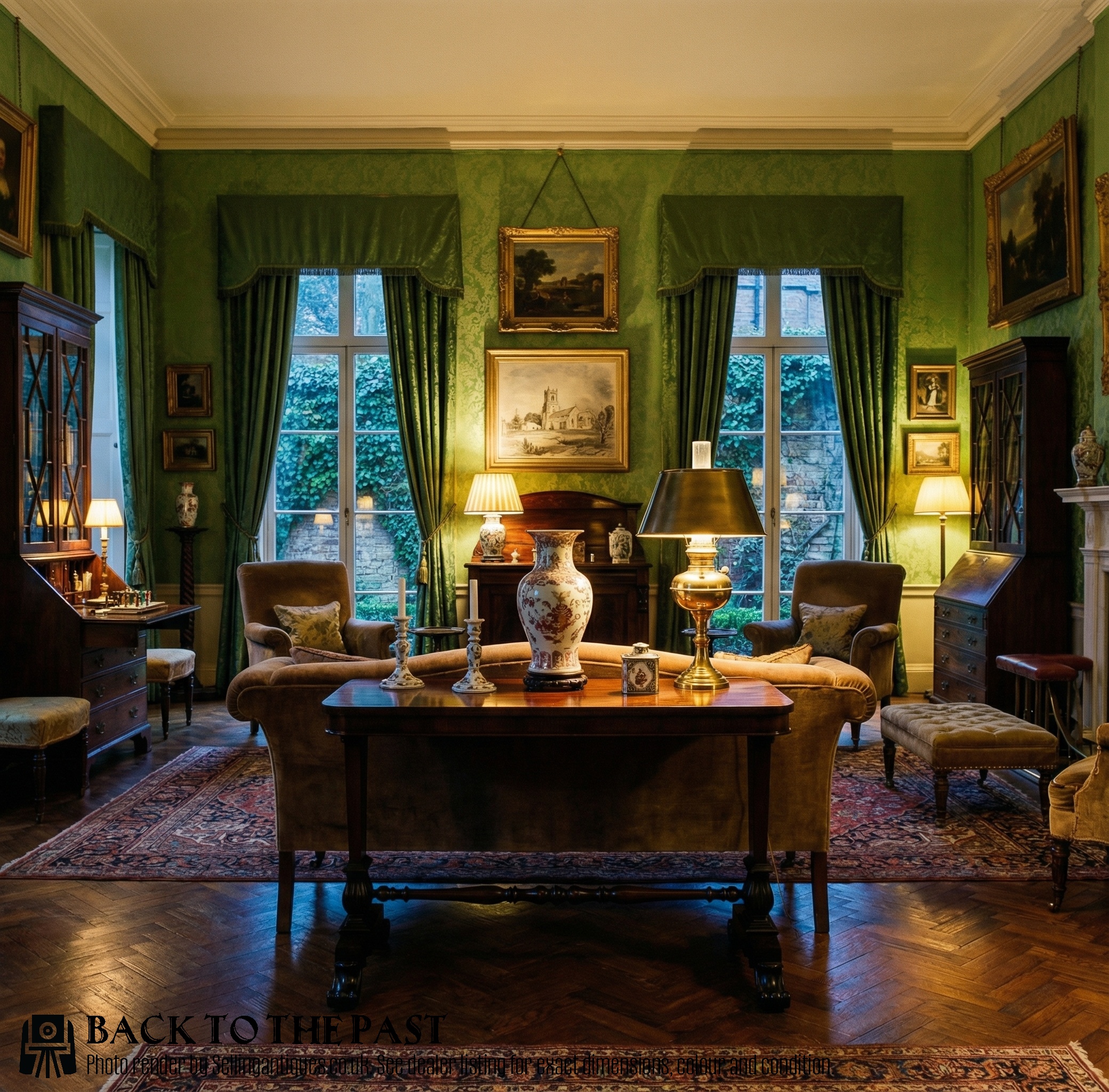
They also serve as display surfaces for lamps and books behind sofas or in hallways, retaining their original domestic utility.
How do I distinguish Regency from Victorian examples?
Regency pieces generally exhibit classical restraint, cleaner lines, and frequent use of brass inlay or mounts. They date from the early decades of the 19th century.
Victorian models tend to feature heavier carvings, darker finishes, and more elaborate structural turnings like triple barley twists as the century progresses.
Are the drop leaves structurally stable for daily use?
Period drop leaves are supported by pivoting wooden brackets or swing-out arms mounted beneath the table top. When properly engaged, they provide secure support for writing or serving.
Users should avoid placing excessive weight on the outer edges of the extended leaves to protect the antique hinges.
What maintenance does antique rosewood require?
Rosewood benefits from occasional application of quality furniture wax to nourish the timber and preserve the patina. Direct sunlight and extreme temperature fluctuations should be avoided to prevent veneer cracking.
Dusting with a soft, dry cloth is sufficient for routine care without stripping the historic finish.