


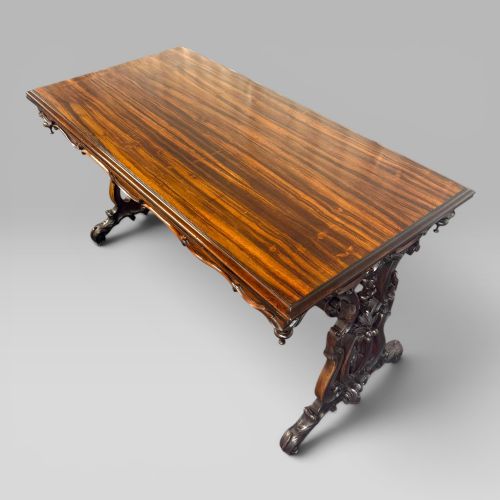
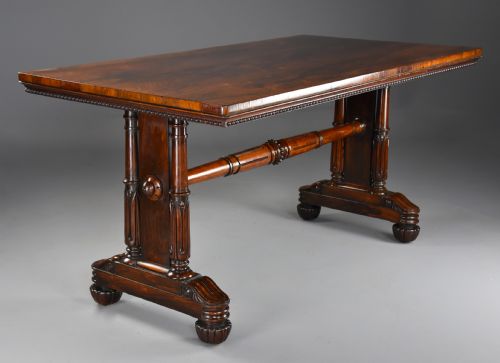
Dark Rosewood Writing Table
A dark rosewood writing table brings rich grain, deep colour and functional elegance into a room.
Dark Rosewood Writing Table
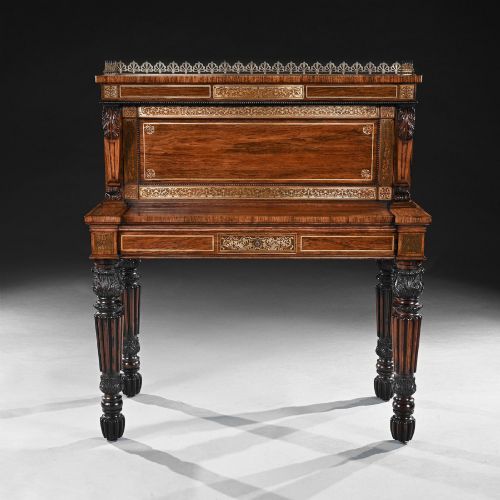
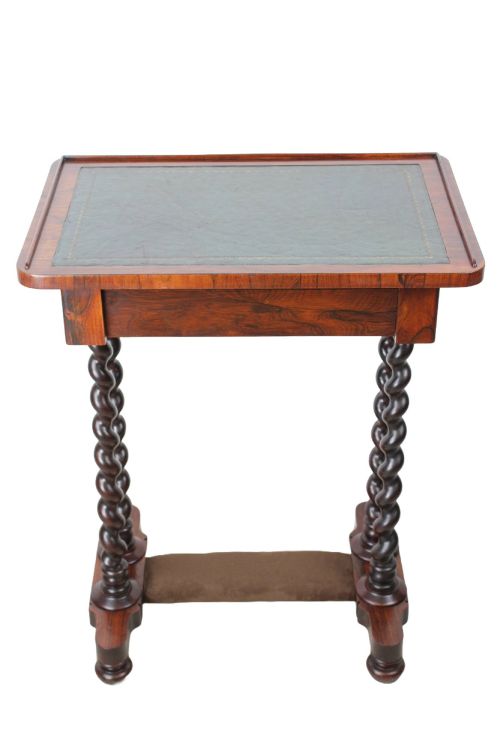
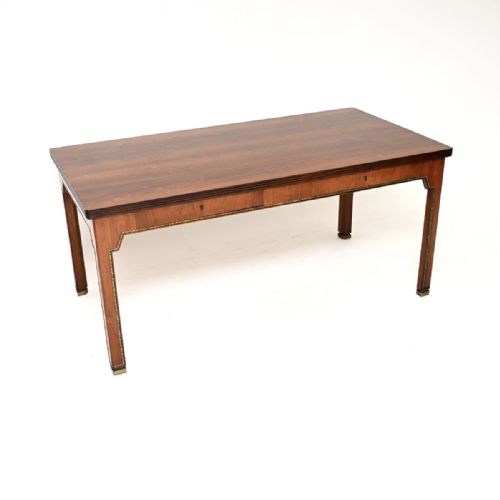
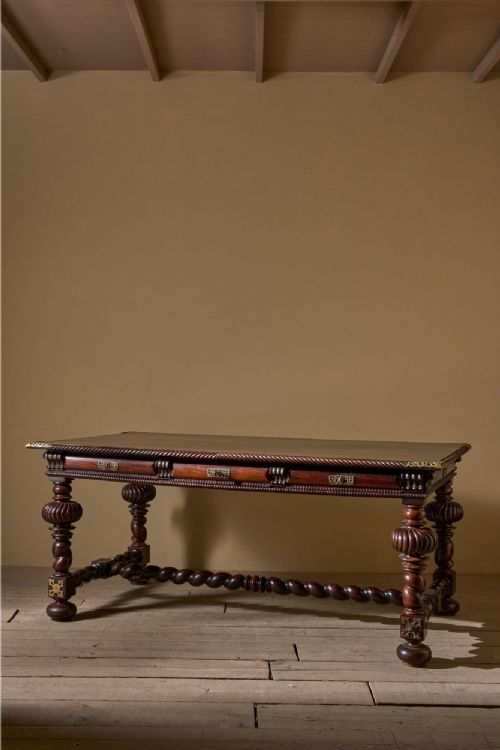
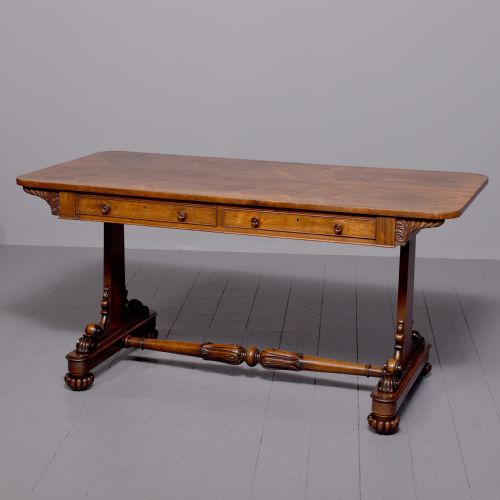
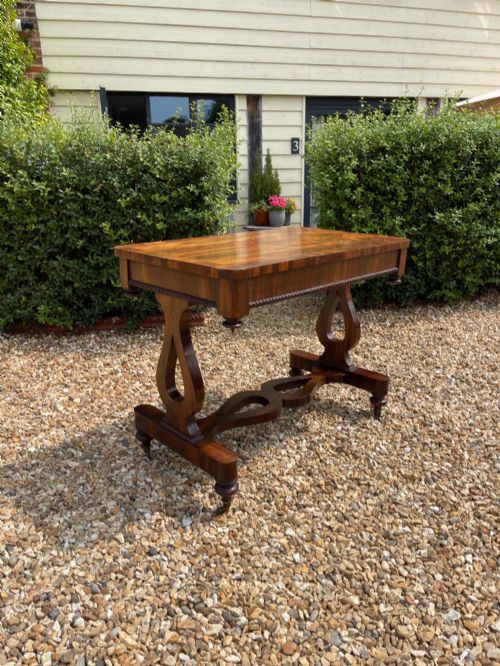
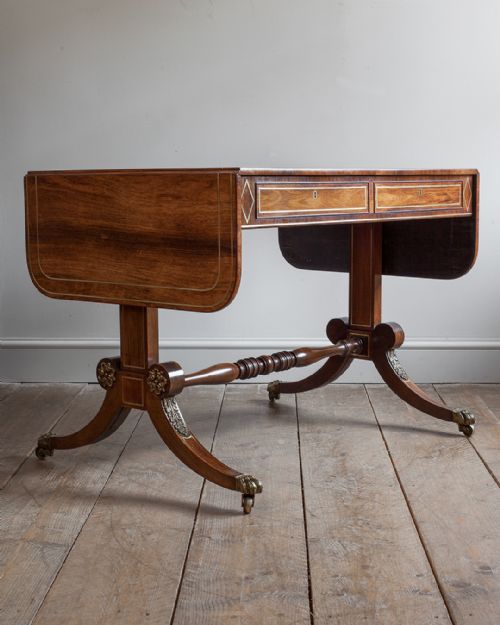
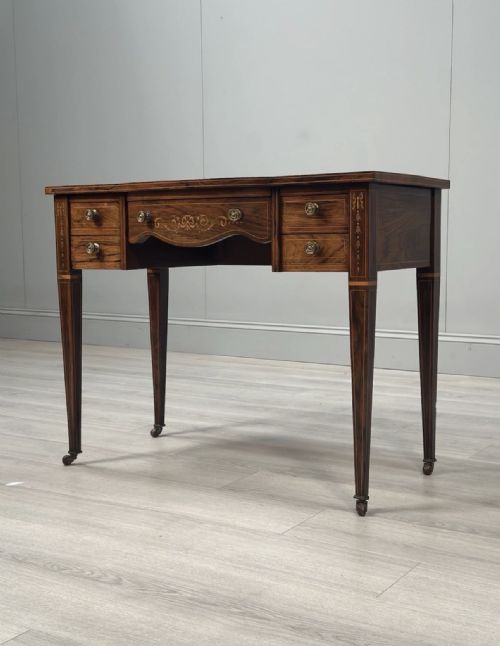
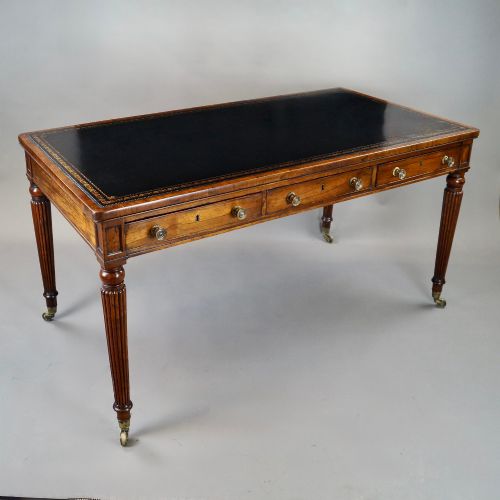
A dark rosewood writing table is a refined surface designed for correspondence, study and literary work, featuring prominent timber grain and sturdy construction. These pieces span periods from the Georgian and Regency eras through the Victorian period, appearing as freestanding centre tables, library tables, sofa tables and dedicated desks. The examples most frequently met on this page belong to the Regency and Victorian periods, often displaying classical proportions and functional drawers.
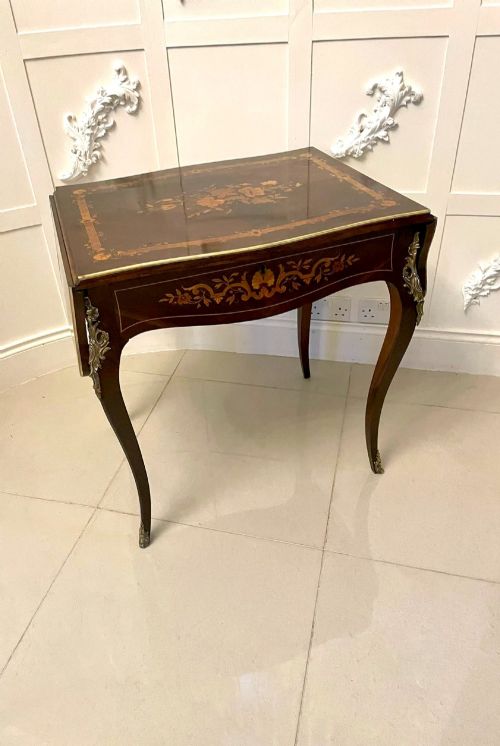
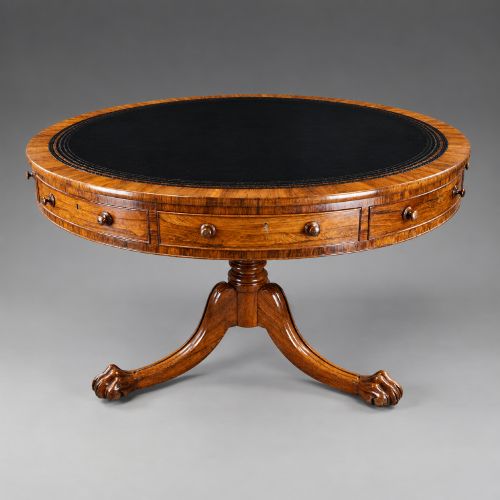
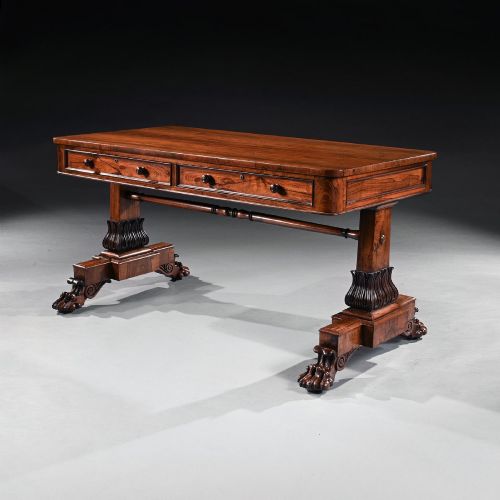
Makers and workshops constructed these writing tables to serve as both practical furniture and statement pieces within the home. Forms vary from compact side tables and drum tables to grand library tables supported by carved feet or pedestals. Buyers encounter diverse regional influences, including English Regency designs, French Louis XV styles, and later Danish Modern or Art Deco reinterpretations.
What varies in quality
The sophistication of the timber figure and the precision of the cabinetwork determine the standing of each piece. Superior examples exhibit tightly matched grain patterns, crisp carving on pedestal bases or lion paw feet, and harmonious proportions between the writing surface and the supporting framework.
The integration of secondary materials such as finely chased brass mounts, detailed marquetry, and well-executed leather writing inserts elevates a piece. Master workshops achieved distinction through rigorous joinery and thoughtful detailing that remains stable and intact over centuries.
Listings feature 19th-century pieces alongside Regency, Victorian, and Georgian examples, incorporating brass, leather, and ormolu.
Gillows Oxford Street Workshop·Mein of Kelso·James Mein
The Dark Rosewood Writing Table Glossary
- Rosewood
- A dense, heavily figured timber prized for its dark colour and rich grain. It forms the primary structural and aesthetic material for these tables.
- Crossbanding
- A decorative technique where a border of veneer is applied perpendicularly to the grain of the main surface. This frames the top of the table with contrasting wood.
- Marquetry
- The art of applying pieces of veneer to a structure to form decorative patterns. Artisans used contrasting woods to create intricate floral or geometric designs.
- Ormolu
- Gilded bronze applied as mounts and decorative accents on furniture. It provides a bright metallic contrast against dark rosewood surfaces.
Dark Rosewood Writing Table: Frequently Asked Questions
How were these tables used originally?
These tables served as functional surfaces for writing letters, managing household accounts, and reading large volumes in libraries.
Freestanding models allowed users to sit comfortably away from walls, while pedestal designs offered stability and enclosed storage.
How do I identify a Regency writing table?
Regency writing tables typically feature classical proportions, sabre or pillar legs, and refined brass stringing or mounts.
They reflect early nineteenth-century design influences, often combining dark rosewood with contrasting boxwood or brass details.
How do I care for a rosewood desk?
Maintain rosewood furniture by keeping it away from direct sunlight and maintaining stable room humidity to protect the timber grain.
Clean surfaces gently with a dry or barely damp cloth and nourish the wood periodically with appropriate furniture wax.
What distinguishes a library table from a desk?
Library tables are typically finished on all sides for freestanding placement in large rooms, featuring expansive surfaces for books.
Desks often include dedicated drawers and specialised compartments for writing materials and correspondence storage.