
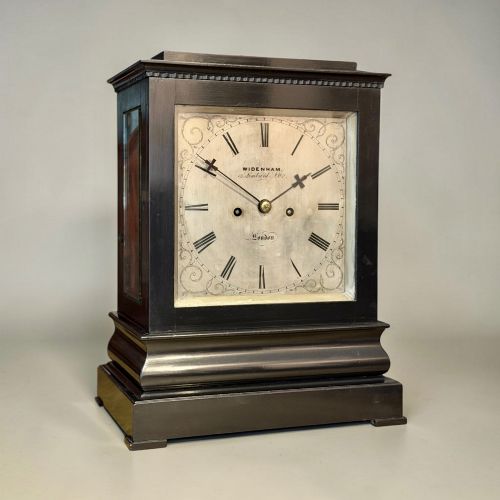
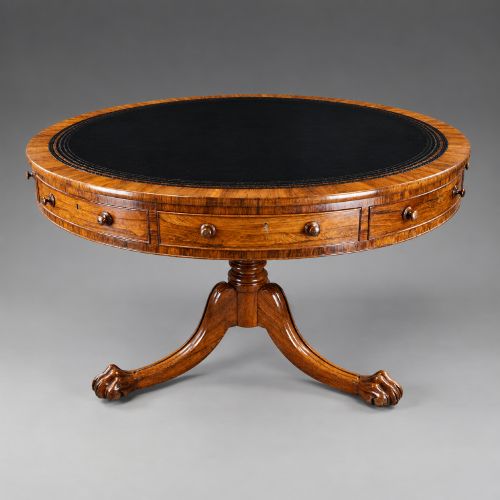
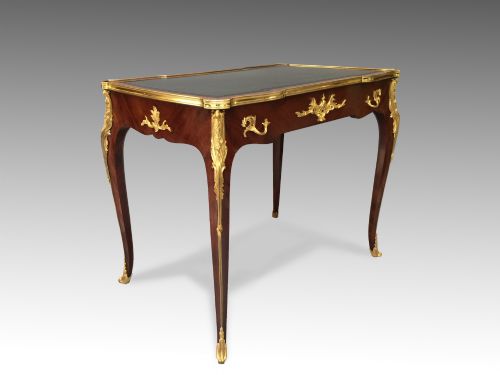
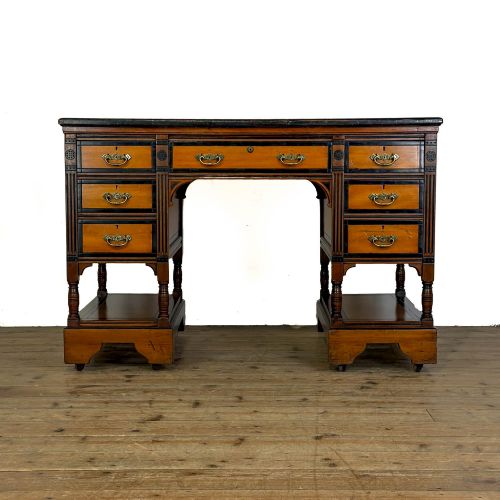
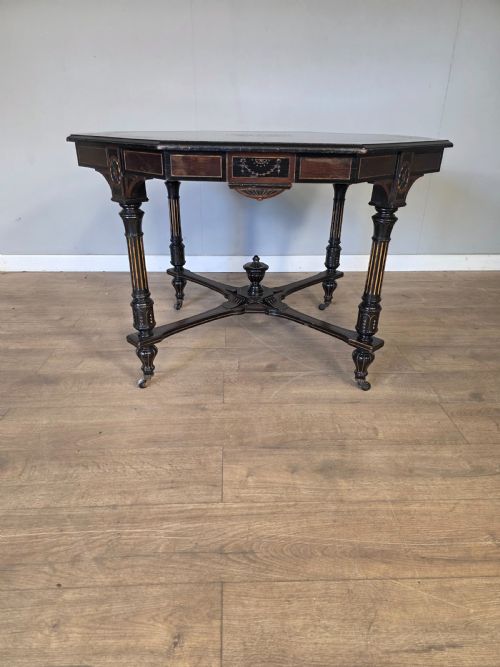
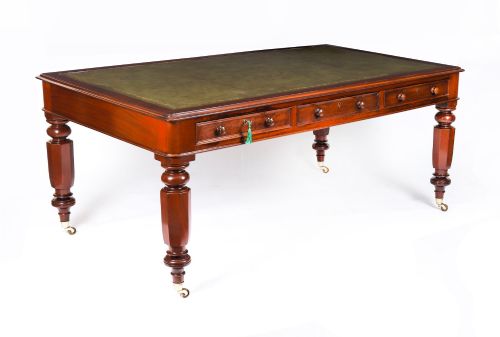
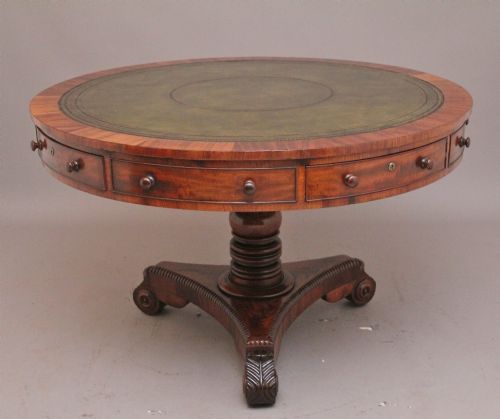
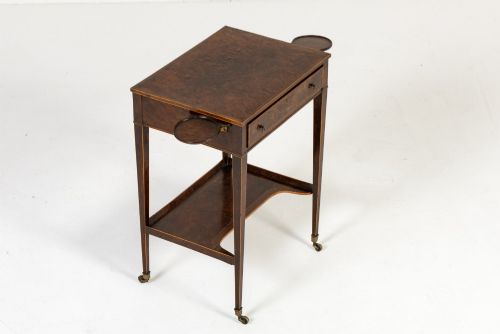
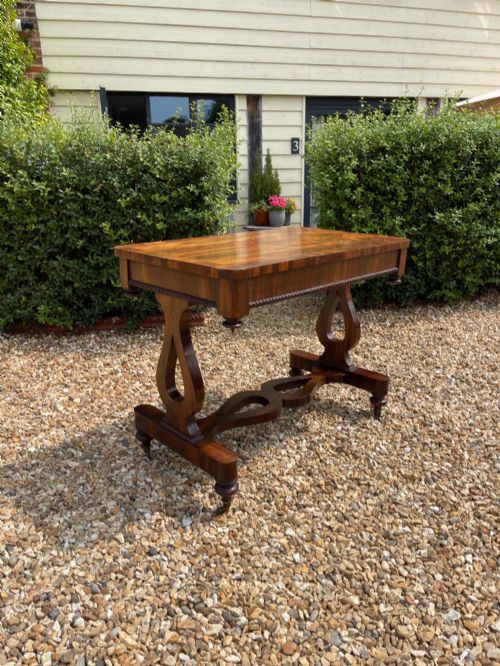
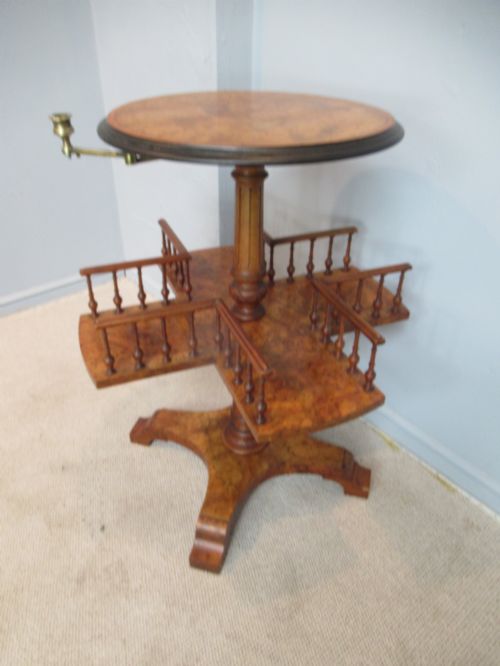
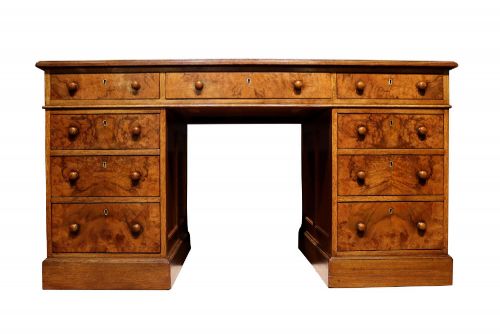
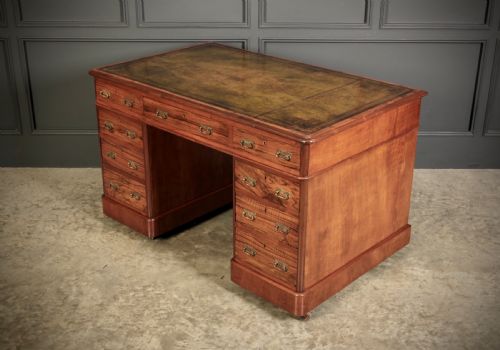

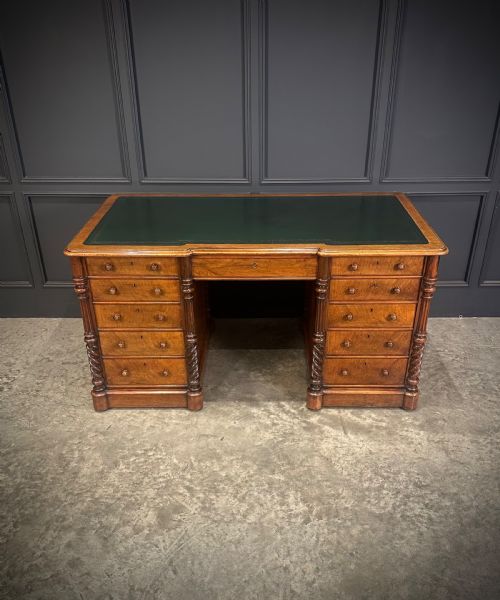
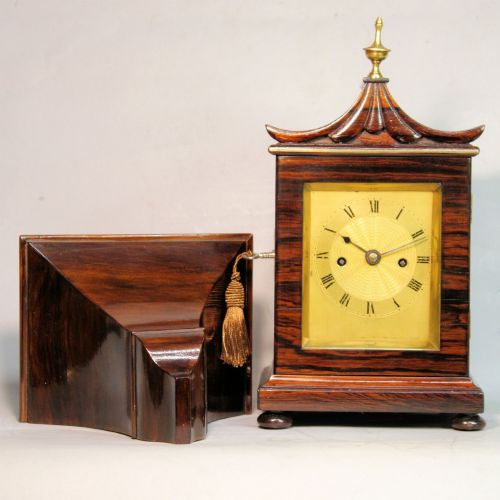

Nineteenth Century Library Table
A nineteenth century library table grounds a room with generous proportions and rich timbers.
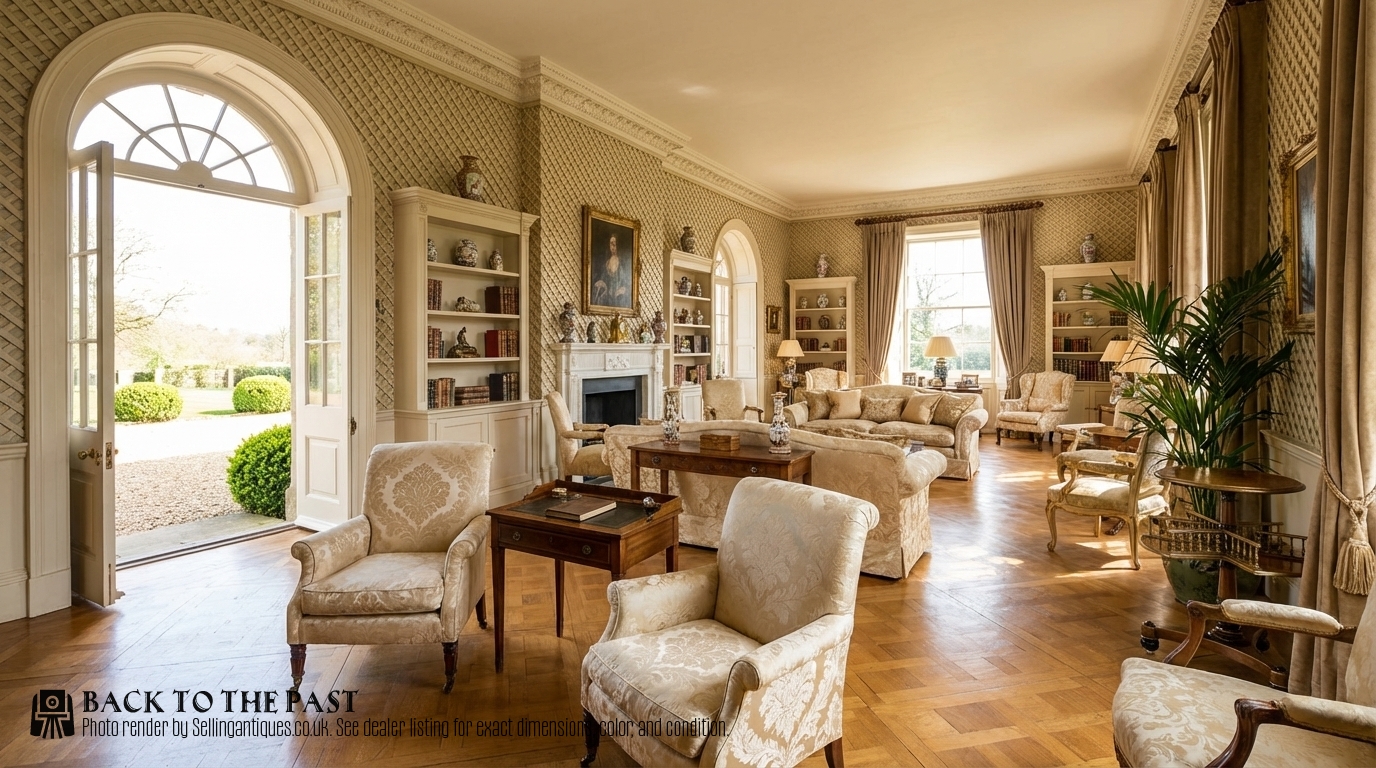
Nineteenth Century Library Table
A nineteenth century library table serves as a substantial writing surface or central display piece, designed for study or public rooms. These pieces appear in forms ranging from pedestal desks and partners desks to drum tables and writing tables.
Mahogany dominates the selection, alongside rosewood, oak, and walnut, frequently fitted with leather writing surfaces. The examples span various eras from the Regency period through the Victorian reign.
Buyers often encounter large partners desks with drawers on both sides or smaller writing tables intended for domestic studies. Freestanding centre tables also populate the selection, offering finished backs for placement away from walls.
How they were made
Cabinet makers utilised dense hardwoods like mahogany and rosewood, often selecting figured veneers for drawer fronts and top surfaces. Solid oak and walnut also provide structural integrity for larger pedestals and frames.
Writing surfaces frequently incorporate hand-tooled leather inserts bordered by gilt tooling. Brass hardware, including drop handles and key escutcheons, secures the functional drawers and adds metallic contrast to the timber.
The listings span the Victorian and Regency periods alongside specific years from 1800 to 1890.
What varies in quality
The selection of timber grain defines visual distinction, with highly figured flame mahogany and burr walnut commanding attention over plain planks. Grain matching across large expanses like desk tops reveals the cabinet maker's skill.
Construction methods dictate longevity, seen in secret dovetailing on drawers and substantial secondary framing timbers. The crispness of carved details, such as reeded legs or turned spindle bases, separates standard production from finer workshop output.
François Linke·Edwards & Roberts·Gillow & Co·Widenham·Webster Cornhill London·Walker·Arnold and Frodsham·J Shoolbred
The Nineteenth Century Library Table Glossary
- Partners desk
- A large double-sided writing table designed for two people to work opposite one another, featuring drawers and cupboards accessible from both sides. These heavy pieces typically sit in the middle of a study.
- Drum table
- A circular library table containing a ring of frieze drawers beneath a leather-insets top, often supported on a central pillar and tripod base. The top rotates on some examples for easy access.
- Pedestal desk
- A heavy writing desk comprising two supporting pedestals of drawers beneath a rectangular top. A central kneehole sits between the banks of drawers.
- Sofa table
- A rectangular occasional table with drop leaves on either end, traditionally placed in front of sofas during the nineteenth century. Trestle ends or pillar supports carry the frame.
- Frieze
- The horizontal band beneath the top edge of a table or desk that commonly houses drawers. This section often displays decorative veneers or brass mounts.
Nineteenth Century Library Table: Frequently Asked Questions
How do I use a partners desk?
A partners desk sits freestanding in the centre of a room rather than against a wall. It allows two people to sit opposite each other with matching drawer space on both sides.
Keep the leather surface clear and use the drawers for stationery or correspondence. The generous proportions suit large studies or open reception rooms.
What is a drum table used for?
A drum table provides a stable circular surface for reading, writing, or displaying books in a library. The built-in drawers around the rim hold small items close to hand.
Many examples incorporate a rotating mechanism so you can reach different compartments without moving your seat.
How do I care for leather desk tops?
Leather surfaces require gentle cleaning with a dry or barely damp cloth to remove dust. Avoid harsh chemical cleaners that strip the original dye and gilt tooling.
Apply a neutral wax or leather dressing periodically to keep the material supple and prevent cracking. Use blotters when writing directly on the leather.
How do I distinguish Regency from Victorian styles?
Regency pieces lean towards classical restraint, inspired by ancient Greece and Rome, often featuring clean lines, rosewood veneers, and brass inlay. They date from the early part of the nineteenth century.
Victorian furniture tends to be heavier, employing robust mahogany or walnut with more elaborate carving and visible grain patterns. This later era embraces revival styles and industrial improvements.