




Revolving Tiered Side Table
A revolving tiered side table brings movement and multiple surfaces to a room, offering clever tiered storage for books and dining.
Revolving Tiered Side Table
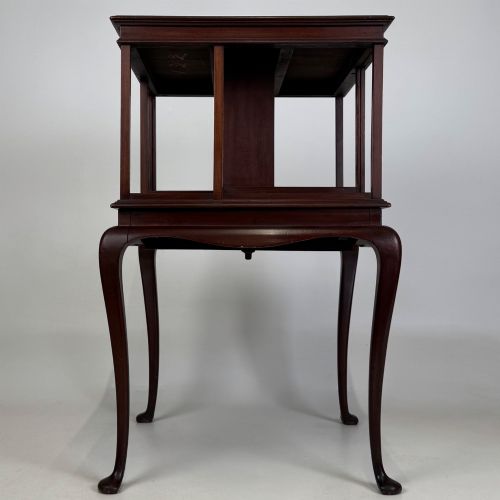
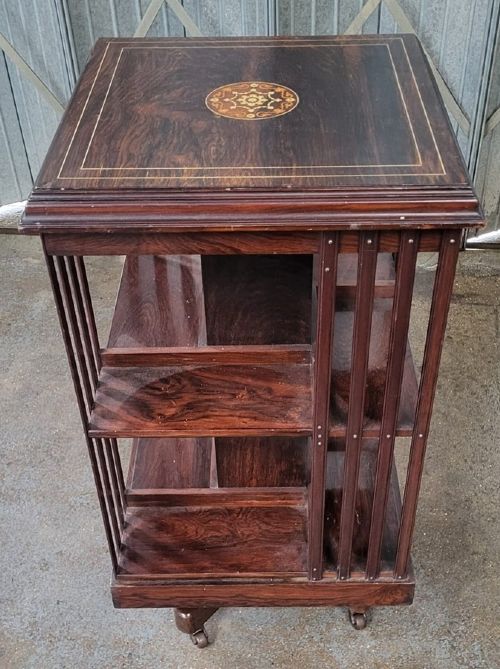
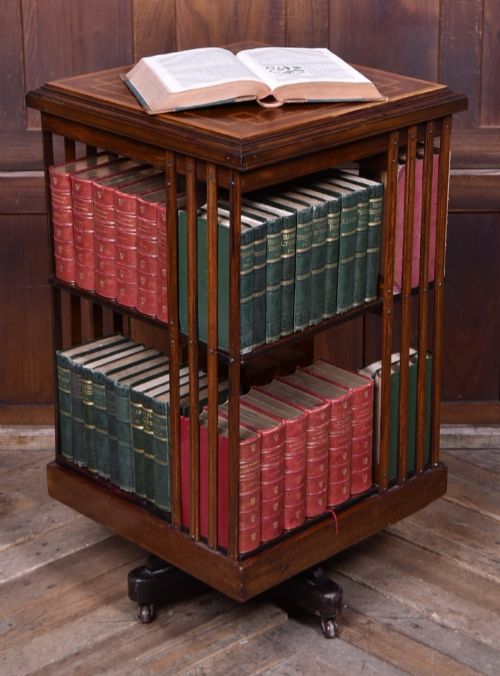
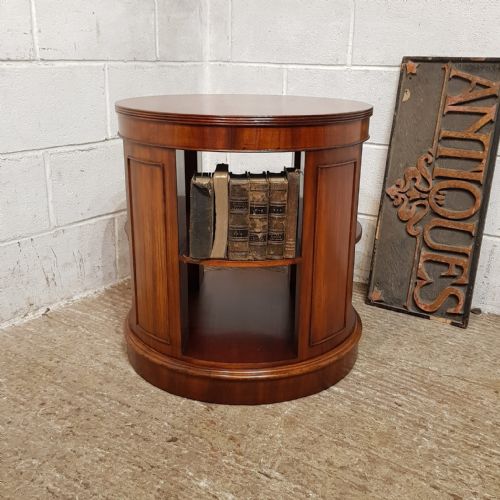
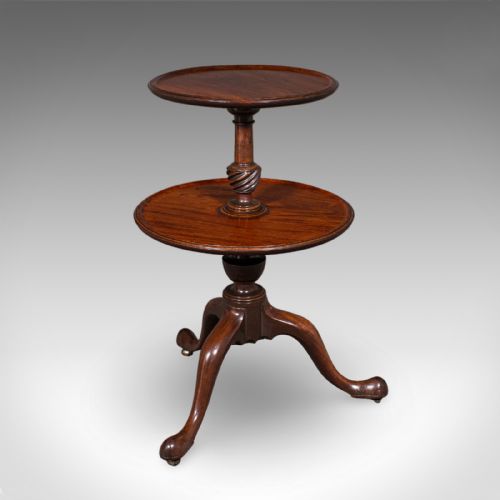
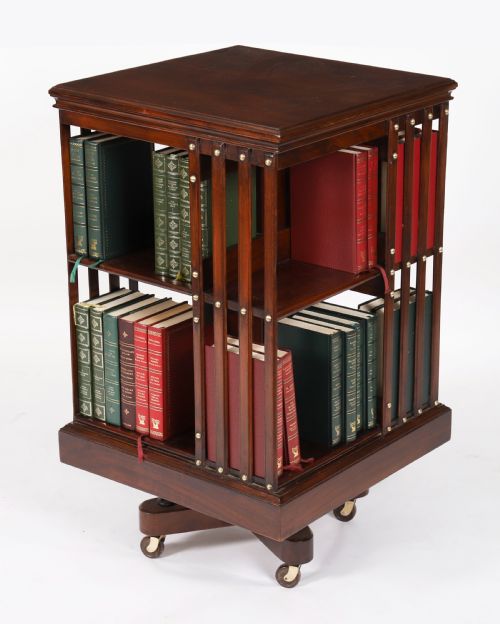
A revolving tiered side table is a functional piece designed with multiple rotating tiers, most frequently appearing here as revolving bookcases and multi-tiered dumb waiters from the Georgian, Regency, and Edwardian periods.
The selections on this page span rotating book tables and stacked serving stands, demonstrating how these multi-level pieces served both libraries and dining spaces across the eighteenth and nineteenth centuries.
Buyers will encounter compact rotating bookcase designs alongside taller three-tier dumb waiters supported on tripod bases, reflecting the versatility of forms recorded in mahogany and rosewood.
Materials and construction
Cabinet makers utilised dense timbers such as mahogany and rosewood to construct the robust central columns and rotating platforms required to bear the weight of stacked tiers.
Detailing often involved boxwood inlay, satinwood, and brass hardware to accent the edges and mechanical turning points of the rotating mechanisms.
Tripod bases and stable circular platforms were engineered to balance multiple revolving levels smoothly without tipping during use.
Listings span George III, Regency, Victorian, and Edwardian periods, constructed primarily in mahogany and rosewood.
Evaluating craftsmanship
Quality rests in the smoothness of the revolving mechanism and the precision with which the tiers align and rotate around the central spindle without wobble.
Superior examples exhibit well-figured timber grain, crisp boxwood or satinwood inlay work, and robust structural joinery on the tripod or pedestal base.
Finer pieces maintain original surfaces and patination on the wood, whilst lesser items may show heavy restoration or replacement hardware on the rotating tiers.
Maple & Co
The Revolving Tiered Side Table Glossary
- Dumb Waiter
- A tiered serving table designed to hold dishes or books without the aid of servants. These multi-level stands often feature rotating or graduated circular trays.
- Revolving Bookcase
- A low or table-height cabinet engineered to spin on a central axis for easy book selection. They appear frequently in Edwardian and late Victorian iterations.
- Tripod Base
- A three-legged support stand commonly fitted beneath the central column of dumb waiters and small tables. This configuration ensures stability on uneven floors.
- Marquetry
- Decorative inlay work using various coloured wood veneers to create geometric or floral patterns. Walnut examples often showcase this detailed surface embellishment.
- Occasional Table
- A small, versatile table intended for light use in various rooms. These pieces supplement primary furniture and appear in several period styles.
Revolving Tiered Side Table: Frequently Asked Questions
What is a revolving tiered side table?
These pieces are functional multi-level furniture items designed to rotate around a central axis for accessible storage or serving.
They encompass rotating bookcases and stacked dumb waiters used in period libraries and dining rooms.
How were dumb waiters used?
Dumb waiters held dishes, bottles, and afternoon tea items near dining tables to allow guests to serve themselves.
Their tiered revolving design kept multiple items within arm's reach without crowding the main dining surface.
Where should I place a revolving bookcase?
Compact revolving bookcases suit corners, beside armchairs, or beside desks where book access is needed quickly.
Their spinning action allows a large volume of reading material to fit into a small footprint.
How do I identify a Georgian dumb waiter?
Georgian versions typically feature solid mahogany construction with graduated circular tiers supported on robust tripod bases.
They rely on traditional joinery and often display the rich patination characteristic of eighteenth-century cabinet making.