

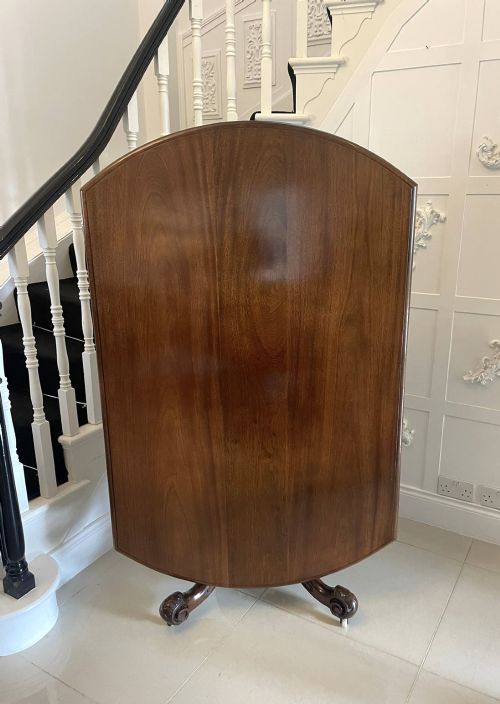
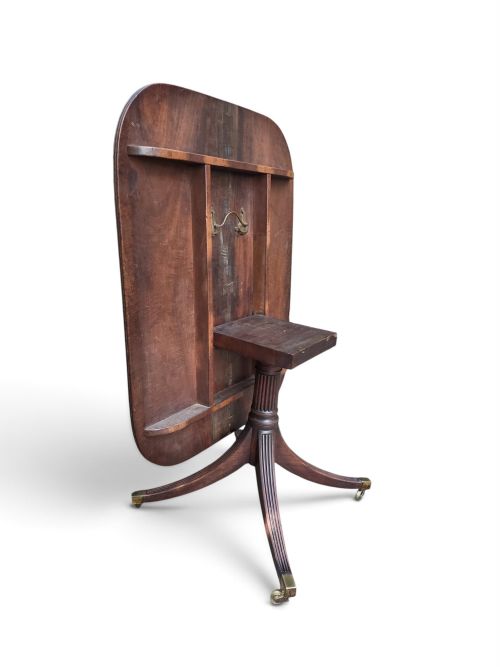
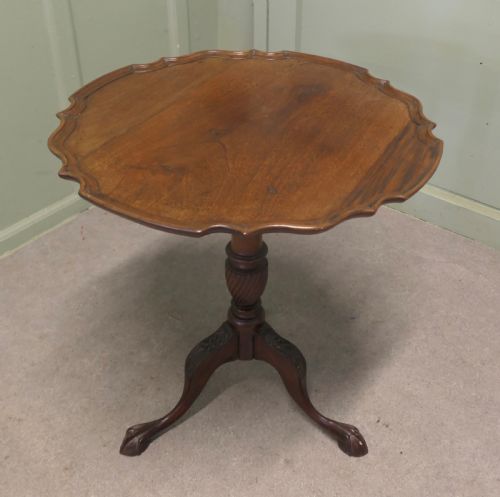
Victorian Mahogany Tripod Table
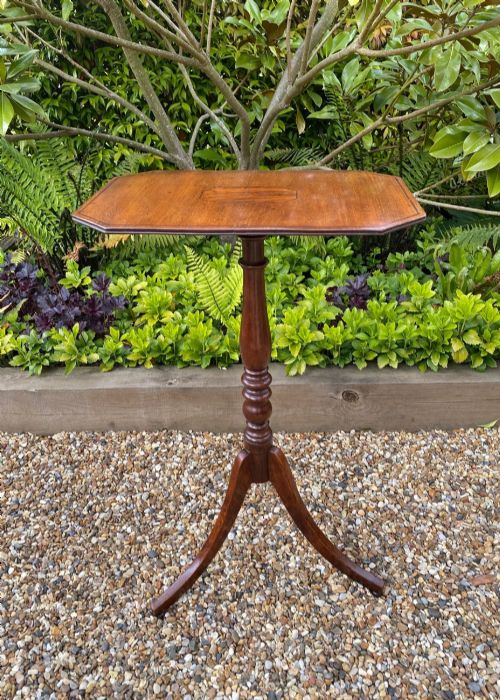
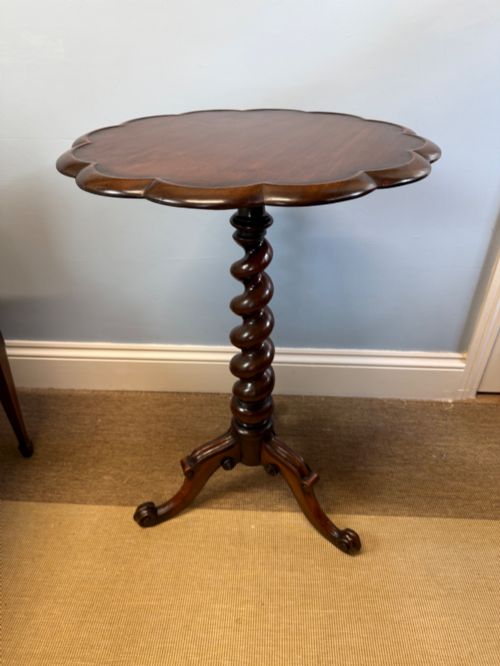
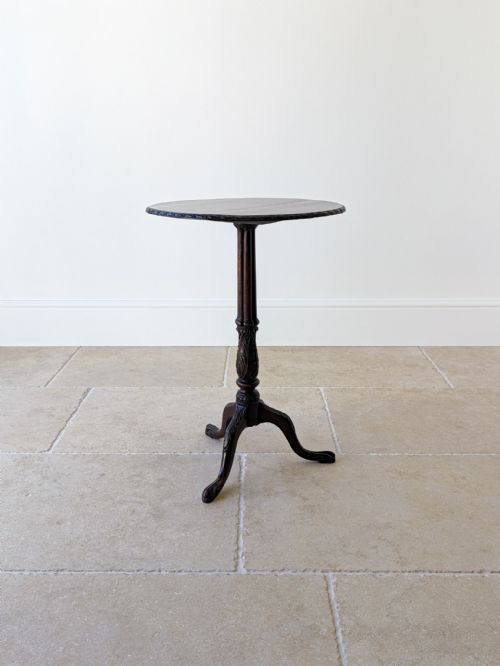
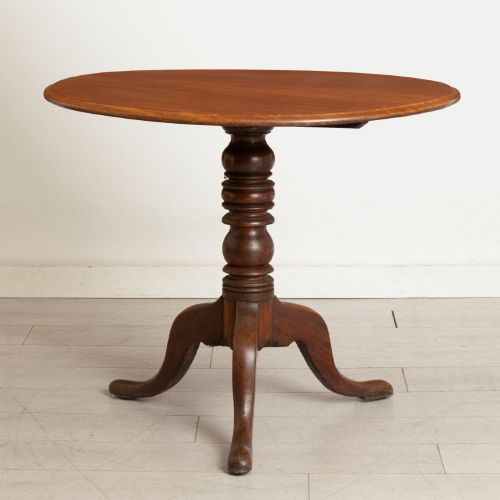
When you search for a victorian mahogany tripod table, you seek a versatile nineteenth-century piece featuring a central pillar supported by three splayed legs.
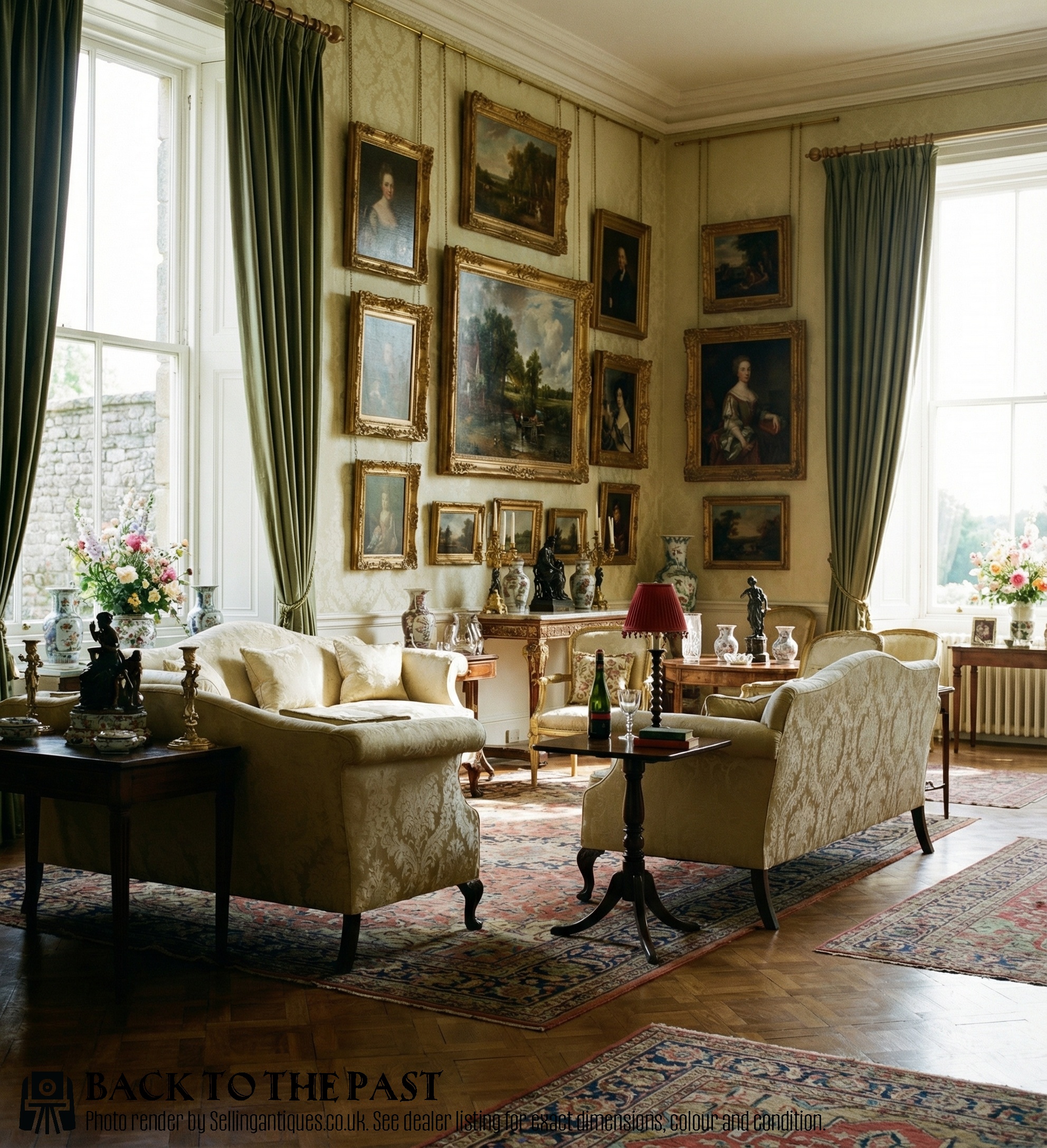
Victorian Mahogany Tripod Table
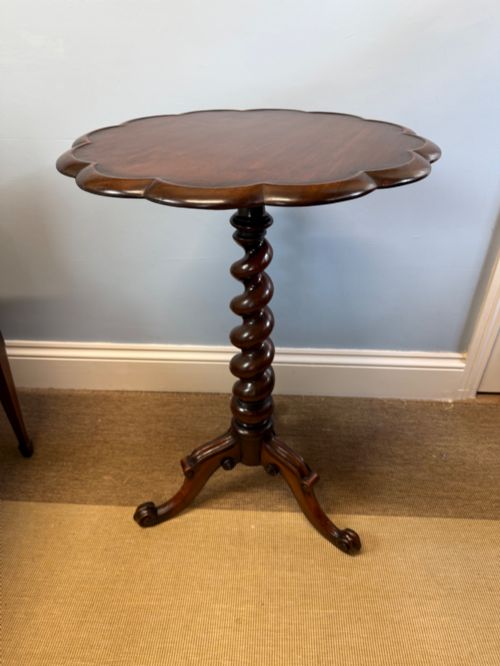
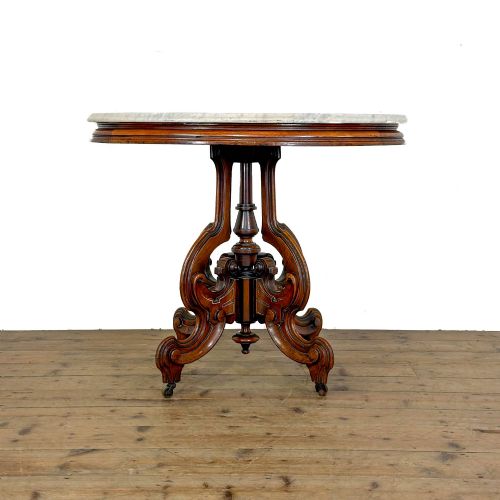
A victorian mahogany tripod table is a quintessential nineteenth-century form designed for flexibility in domestic interiors, serving variously as wine tables, lamp stands, occasional surfaces and tilt-top breakfast pieces. Most examples encountered on this page date from the mid to late nineteenth century, spanning the Victorian period alongside occasional Georgian, William IV and Regency revivals.
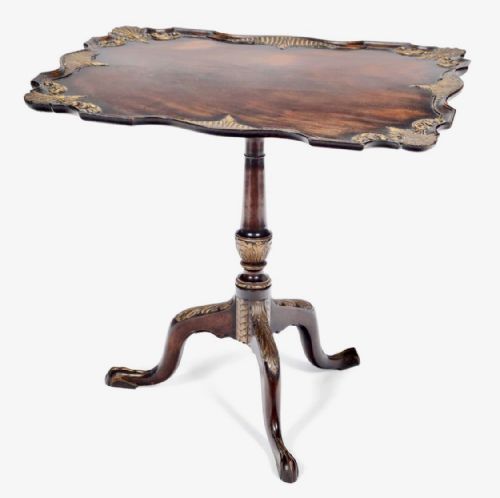
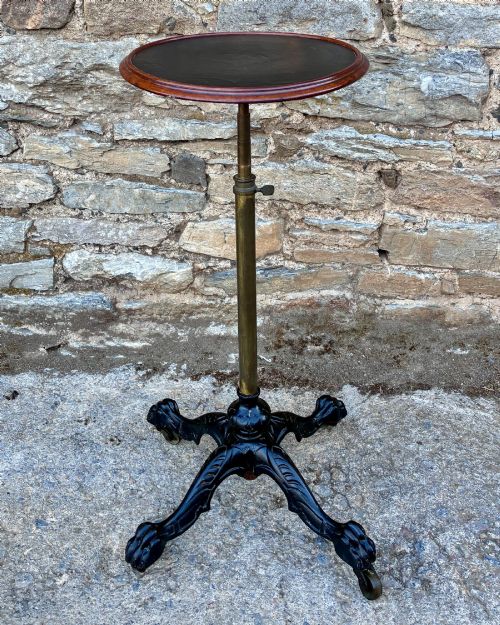
These items typically feature a circular or shaped top mounted on a turned pedestal base with three legs, often engineered with a tilt-top or snap mechanism for easy storage against a wall when not in use. Variations in the evidence include plant stands, dumb waiters, shaving mirrors, games tables and sewing tables, demonstrating the breadth of forms sharing this distinctive three-legged architecture.
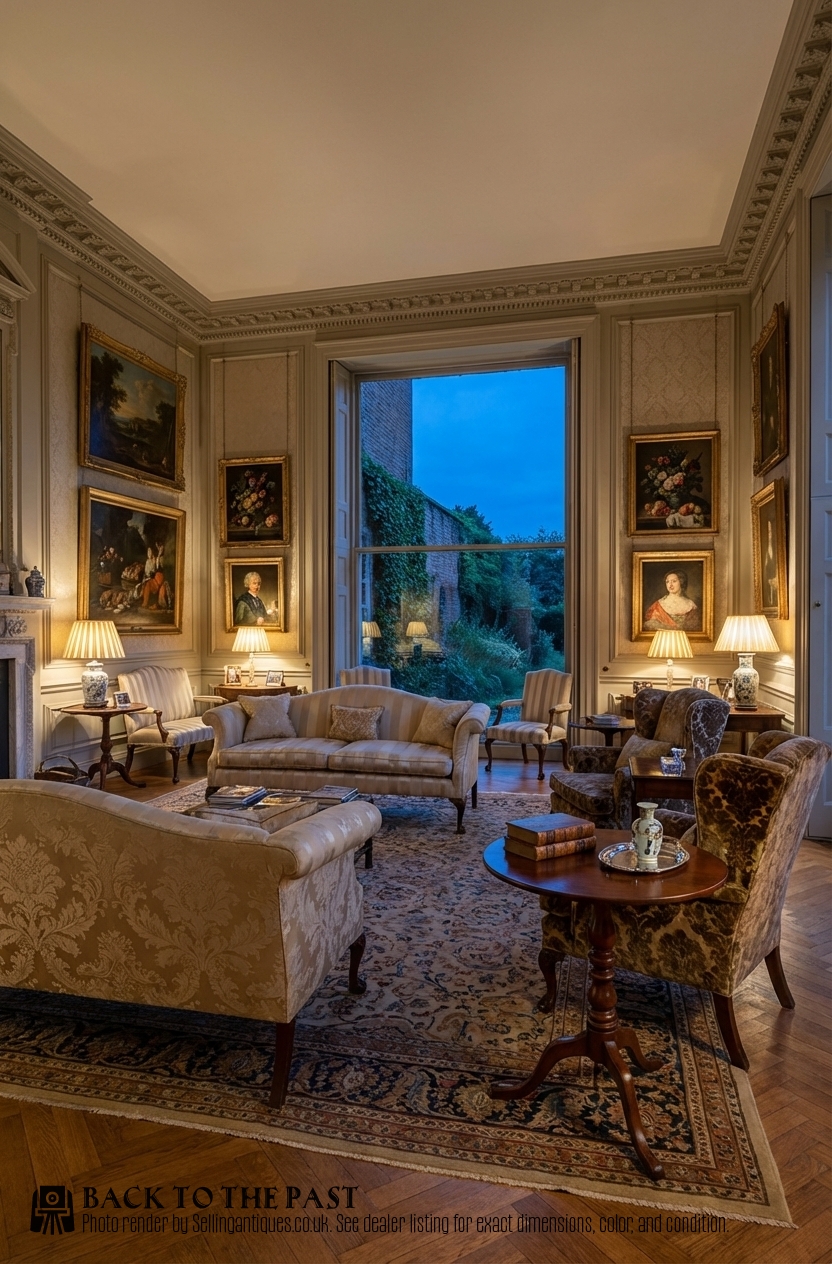
Materials and construction
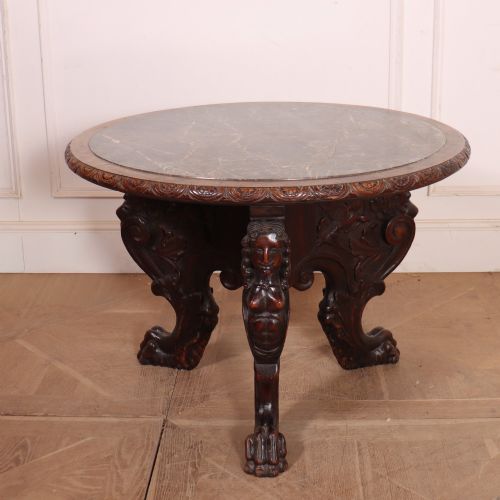
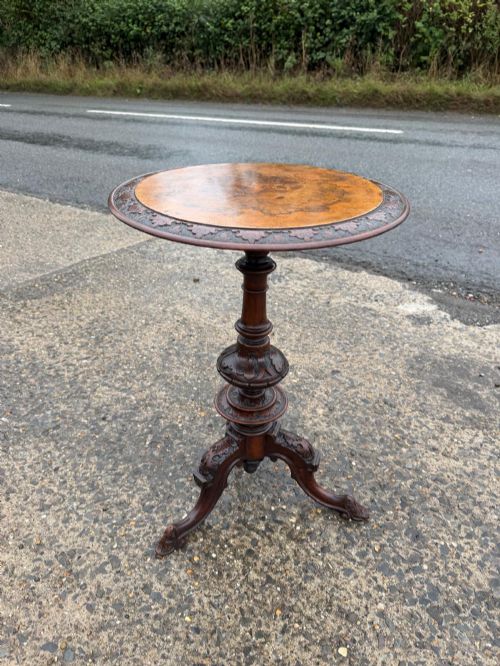
Mahogany serves as the primary timber across the inventory, frequently complemented by secondary or decorative woods such as walnut, burr wood, rosewood, birdseye maple, ebony, cherry and marble inserts. Cabinetmakers utilised solid timber and veneers, often incorporating brass castors on the scroll or cabriole legs of larger centre tables.
Joinery techniques combined stable pedestal turnings with hand-carved details, utilising tilt-top mechanisms, brass catches, and occasional wood inlay or parcel gilding. The tripod base required precise geometrical setting out to ensure stability on uneven floors while supporting heavy circular tops.
Victorian Mahogany Tripod Table Retail Price Guide 2026
Typical asking prices for victorian mahogany tripod table among the pieces listed under this phrase on Sellingantiques today, from the lower quarter to the upper quarter. They describe what is for sale here now, not the wider market.
Materials recorded in the inventory include mahogany, brass, walnut, marble, wood inlay, hardwood, wood and parcel gilt.
Factors of quality
Quality rests in the choice of timber and the crispness of execution, distinguishing standard utilitarian items from fine salon pieces through figured mahogany veneers, burr wood top selections and detailed carving on the knees and feet. The integrity of the tilt-top mechanism and the snug fit of the catch also separate better-made examples from simpler workshop production.
Proportion and balance dictate the aesthetic success of a tripod base, where slender turned columns and well-scrolled legs provide harmonious support without appearing clumsy. The presence of secondary decorative elements, such as inlaid chess boards, piecrust borders or parcel gilding, elevates the status of the piece within the Victorian range.
Swann and Millican
The Victorian Mahogany Tripod Table Glossary
- Tilt top
- A table top hinged to tip vertically when not in use. This mechanism allowed the furniture to be stored compactly against a wall.
- Snap top
- A spring-loaded or latched mechanism that locks a tilting table top securely into the horizontal position. It prevents accidental tipping during use.
- Pie crust
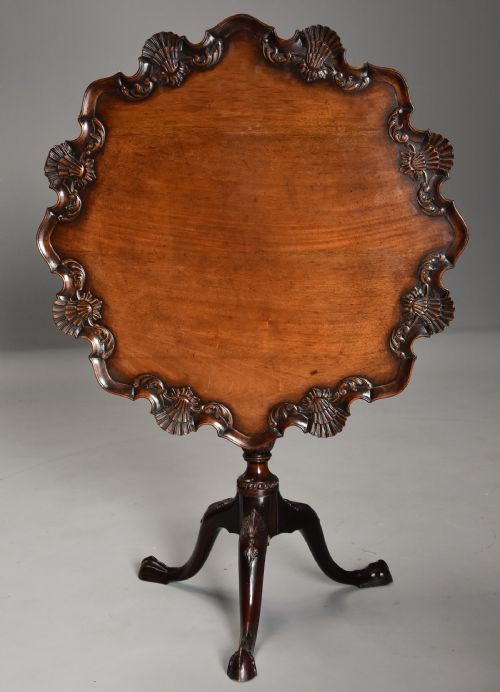
- A carved, raised decorative edge shaped in undulating curves resembling pastry work. This technique appeared frequently on finer circular occasional tables.
- Treen
- Small handmade wooden objects for domestic use. Examples include turned candlestands sharing pedestal tripod forms.
- Dumb waiter
- A tiered set of revolving or stationary circular trays on a central pillar. These served dining rooms for holding dishes without requiring extra servants.
Victorian Mahogany Tripod Table: Frequently Asked Questions
How do I use a tripod table today?
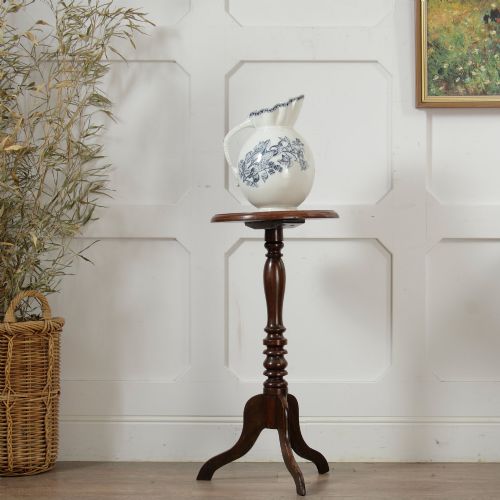
These compact surfaces fit easily beside armchairs, in narrow hallways, or as bedside lamp tables. Their small footprint makes them ideal for contemporary living spaces.
They also function effectively as display stands for plants, ceramics or decorative objects without dominating a room.
Are these tables solid mahogany?
Many examples utilise solid mahogany for the turned pillars and legs, whilst table tops frequently employ figured mahogany veneers laid over secondary timber foundations. This construction method prevented warping and allowed cabinetmakers to showcase striking wood grain patterns.
Inspectors will find variations including burr wood, walnut and occasional marble inserts across different manufacturing standards.
How can I tell the period?
Dating relies on stylistic clues, timber choice, and the turning style of the central pedestal. Earlier Georgian and Regency models often display greater restraint, while Victorian examples embrace richer carving, platform bases, and varied wood inlays.
Revival pieces from the late nineteenth century frequently replicate Chippendale forms with decorative piecrust edges and cabriole legs.