

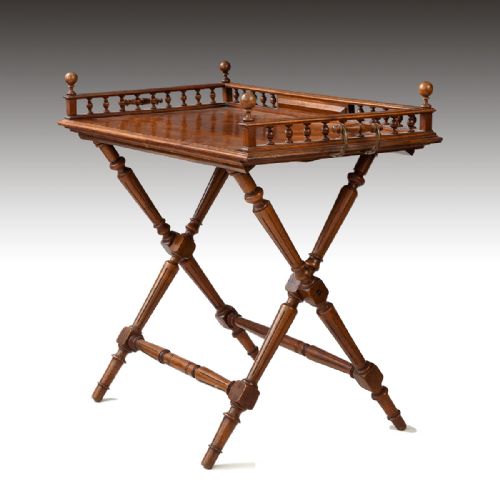
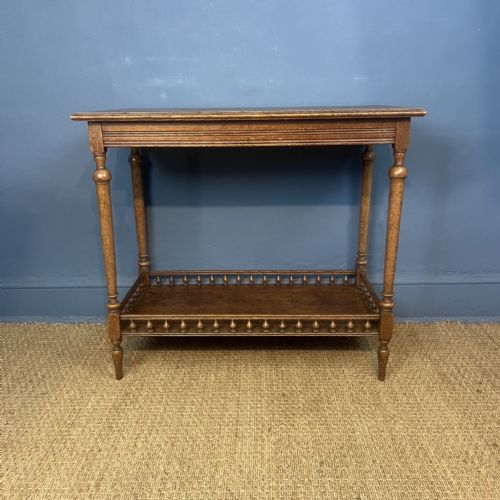


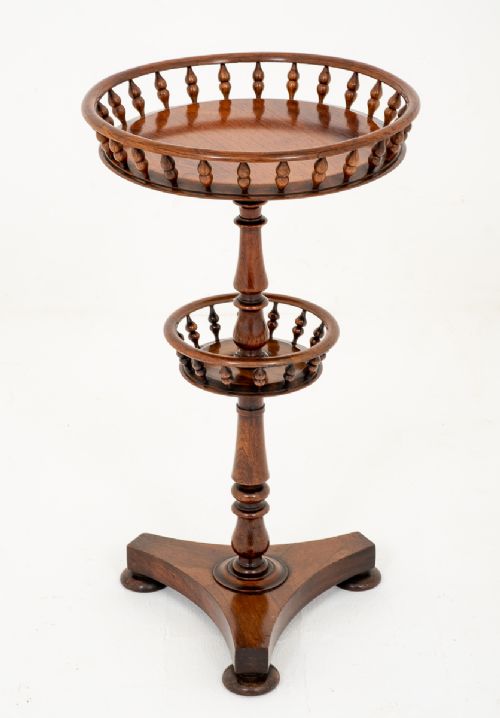
Spindle Gallery Side Table
A spindle gallery side table brings a refined raised rim and turned spindles to any room, offering both practical containment and elegant period charm.
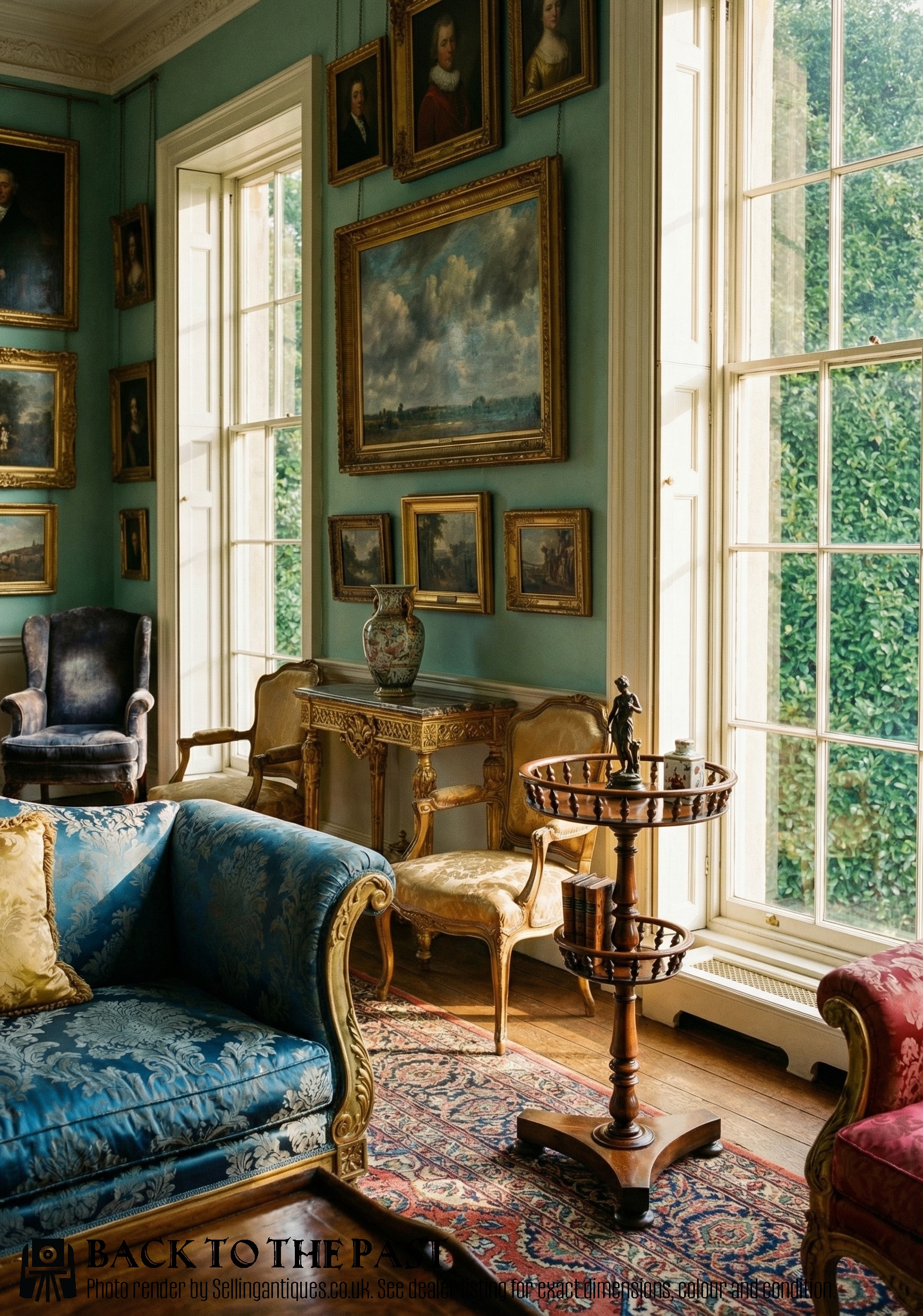
Spindle Gallery Side Table
When you search for a spindle gallery side table, you encounter an array of occasional furniture, lamp tables, and wine tables dating principally from the nineteenth century. These pieces serve as compact surfaces, distinguished by raised galleries that often incorporate delicate turned wooden spindles.
The selection ranges from Victorian rosewood and walnut designs to Aesthetic Movement oak and ebonised pieces, alongside Georgian and George III style interpretations. You will frequently find circular wine tables, two-tier occasional tables, and diminutive etageres among the listings.
While forms vary from rectangular console tables to octagonal tripod tables, the defining characteristic remains the raised gallery top. This serves to secure objects placed upon the surface, marrying utility with decorative grace.
How they were made
Cabinetmakers utilised dense hardwoods such as mahogany, walnut, rosewood, and oak to construct these tables, occasionally employing ebonised finishes to mimic more costly exotic materials. Brass fittings and ceramic components also appear as structural or decorative accents.
Turnery techniques shaped the slender vertical spindles that form the gallery railings, while traditional joinery secured the tops to pedestals or multi-tiered frameworks. Craftspeople shaped serpentine, circular, and octagonal surfaces to meet the stylistic demands of Georgian, Victorian, and Aesthetic Movement designs.
A coal purdonium styled in the Puginesque manner proves that even coal storage once demanded serious architectural ambition.
What varies in quality
The distinction between standard production and superior craftsmanship rests in the selection of timber veneers and solid hardwoods, such as figured walnut or richly grained rosewood. Finer examples display meticulous attention to the turning of the spindles and the structural integration of the gallery into the tabletop.
Proportion and execution define the upper tier of these tables, where diminutive scale or unusual configurations like two-tier shelving demonstrate greater ambition from the maker. The crispness of carved details and the stability of tripod bases or multi-tiered joints further separate exceptional pieces from simpler utilitarian items.
The Spindle Gallery Side Table Glossary
- Gallery
- A raised ornamental border or railing encircling the edge of a tabletop, shelf, or tray. This feature prevents items from sliding off the surface.
- Spindle
- A slender, turned piece of wood, often cylindrical or vase-shaped, used in a row to form a decorative gallery or barrier.
- Etagere
- A piece of furniture consisting of a set of open shelves for displaying small objects or ornaments. These often feature multiple tiers supported by slender columns.
- Tripod table
- A small occasional table supported by a central pillar resting on three legs. This form gained popularity during the eighteenth century for flexibility in placement.
- Serpentine
- A furniture top or front curving in a concave-convex-concave shape resembling the undulating movement of a snake. This contour requires precise woodworking skill.
- Butlers tray
- A portable rectangular wooden tray, often with hinged sides, designed to fit onto a separate folding stand. They provide versatile surface space in domestic interiors.
Spindle Gallery Side Table: Frequently Asked Questions
What is a spindle gallery side table used for?
These tables function as versatile surface furniture suited for holding lamps, drinks, or small decorative objects in sitting rooms and hallways. The raised rim ensures that items placed on top remain secure.
Historically, specific variations like wine tables and etageres catered to particular domestic needs, from serving refreshments to displaying collections. Today, they easily integrate into modern interiors as accent pieces beside seating.
How do I date a Victorian table?
Dating relies on examining the timber species, construction methods, and stylistic markers recorded across the nineteenth century. Victorian pieces frequently utilise rosewood, walnut, and ebonised wood.
Stylistic influences during this era span from Gothic Revival to the Aesthetic Movement. Comparing the turning style of the spindles and the joinery underneath provides further chronological context.
What is the difference between George III and Victorian styles?
George III pieces, dating from the late eighteenth century, typically emphasise classical proportions, mahogany construction, and understated elegance. Their galleries and tripod bases reflect restraint and refined joinery techniques.
Victorian pieces from the nineteenth century often embrace greater ornamentation, darker ebonised finishes, or exotic veneers like rosewood. They also encompass diverse revival movements, including Gothic Revival and Aesthetic design.
How do I care for antique wood tables?
Maintenance involves keeping wooden surfaces away from direct sunlight and maintaining stable humidity levels to prevent timber splitting. Gentle dusting with a soft, dry cloth preserves the polished finish.
Avoid placing damp items directly onto antique polishes and waxes. Occasional specialist waxing helps nourish dense hardwoods like mahogany and walnut over time.