


Victorian Freestanding Table
When you search for a victorian freestanding table, you are looking at nineteenth-century centre and writing tables designed to occupy the middle of a room.
Victorian Freestanding Table
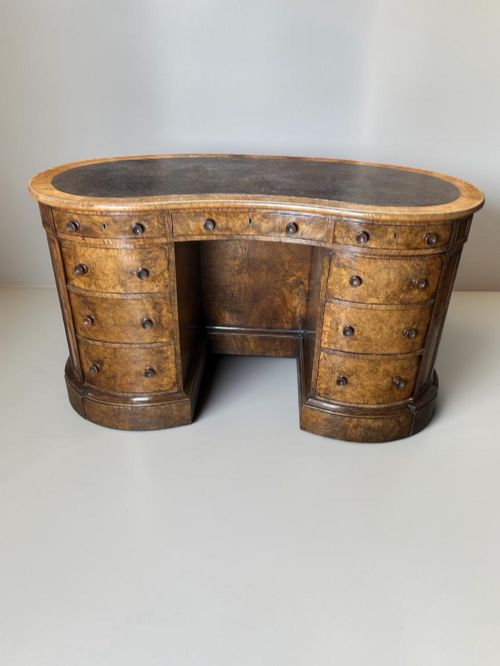
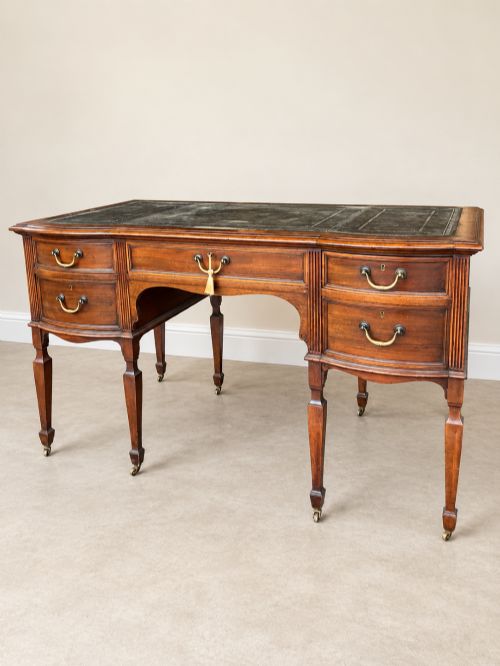
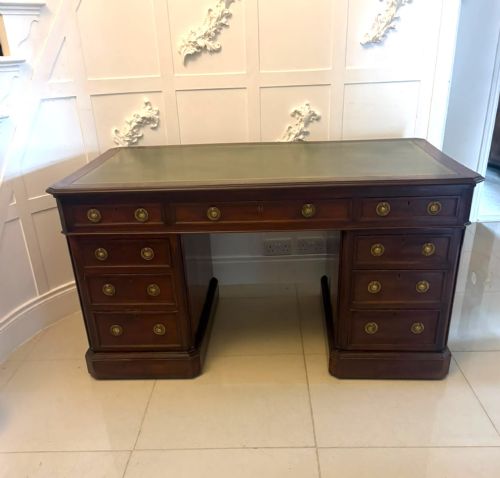
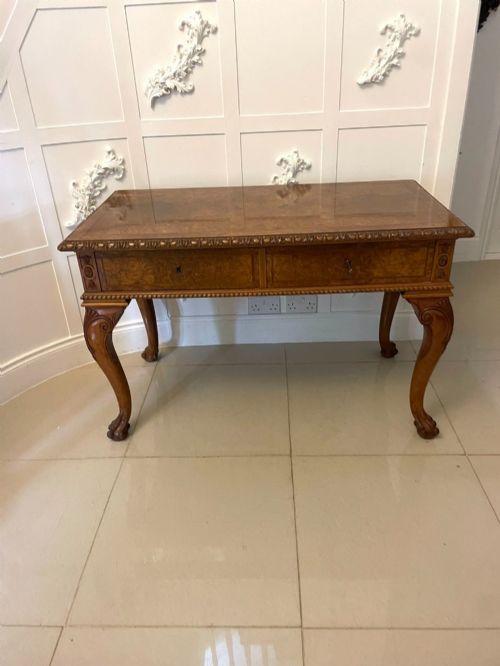
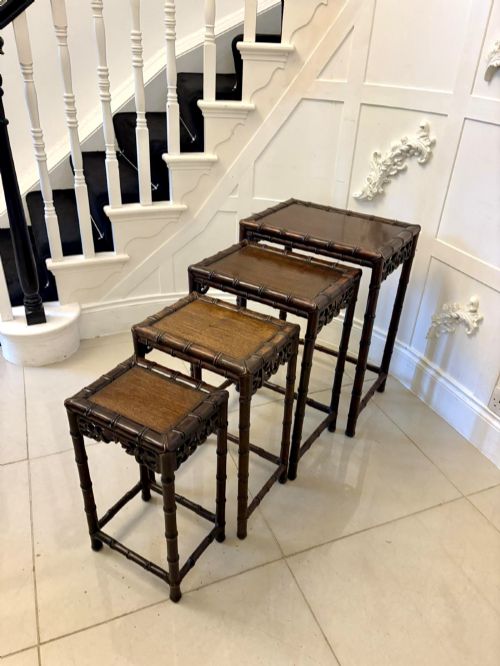
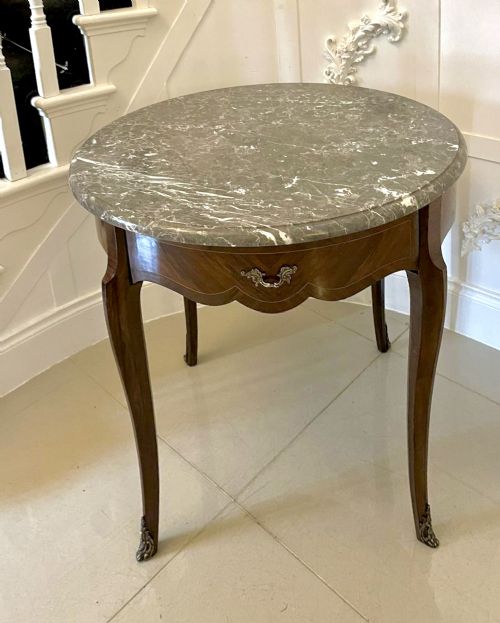
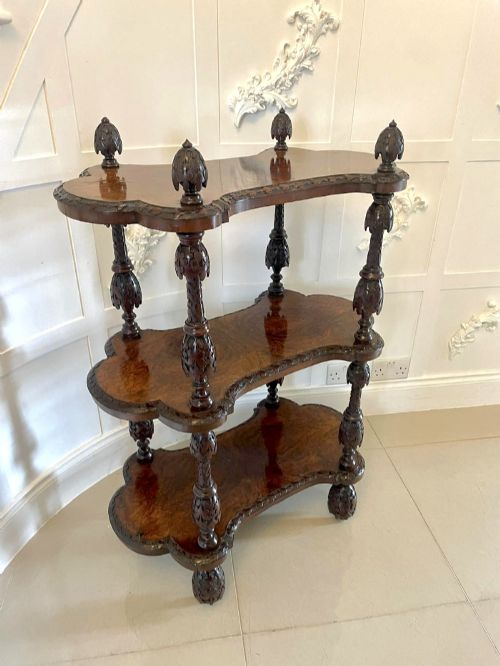
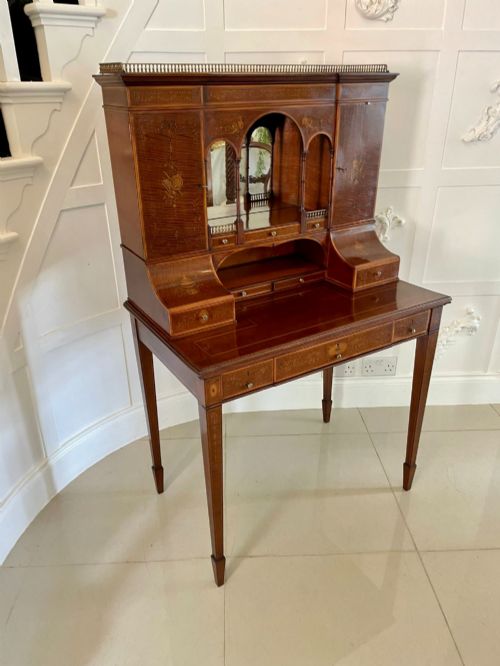
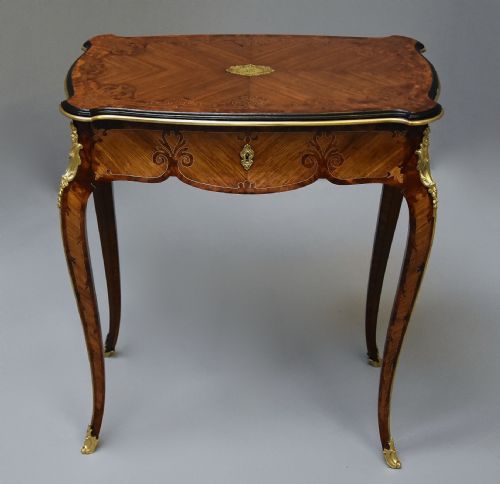
A victorian freestanding table comprises centre pieces, writing desks, and lamp tables finished on all four sides so they do not need to rest against a wall. The examples most frequently met on this page are centre tables and writing tables fashioned from burr walnut or kingwood.
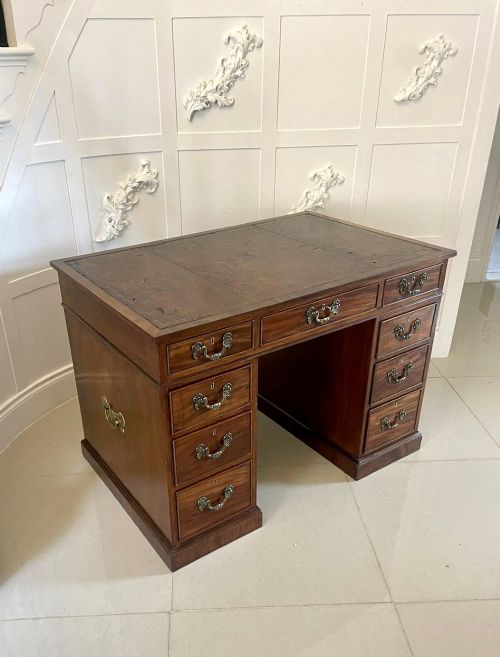
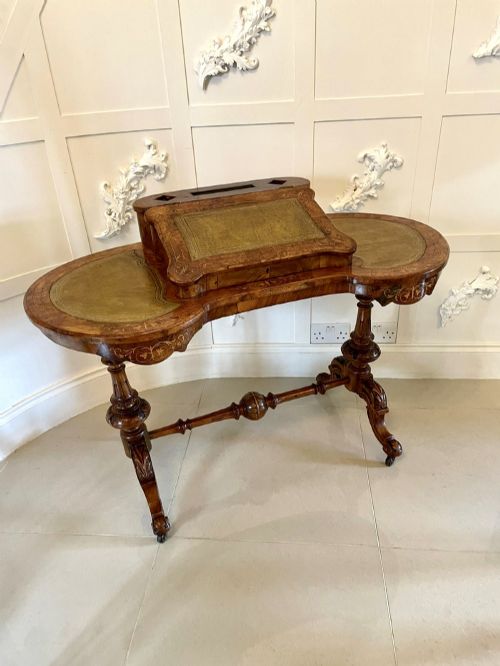
Makers designed these pieces for principal reception rooms where placement in the middle of the floor demanded finished backs and polished undersides. Forms span kidney-shaped writing surfaces, occasional lamp tables, and heavy library desks.
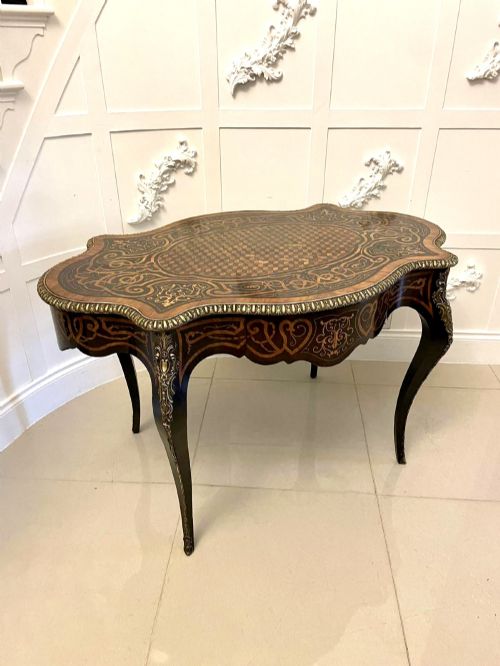
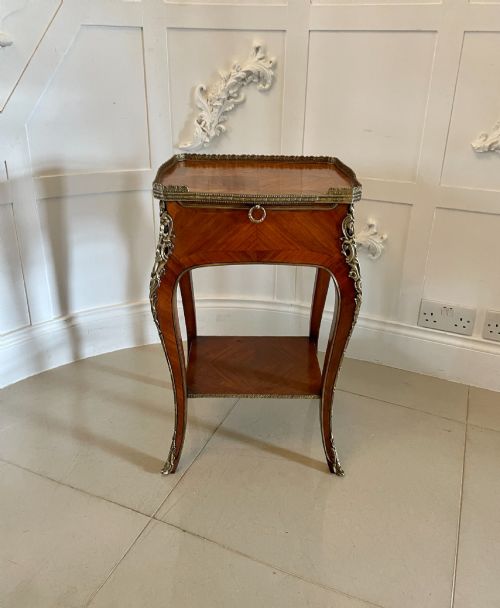
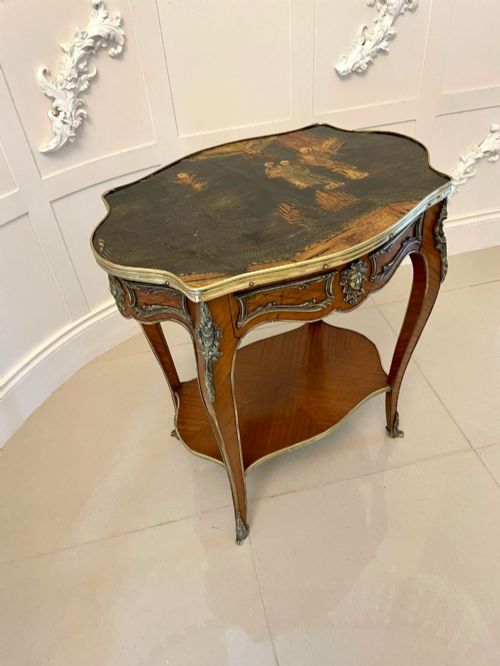
The aesthetic borrows heavily from French taste, incorporating marquetry, parquetry, and ormolu mounts alongside traditional English mahogany and walnut framing. These tables served for display, correspondence, and gathering in nineteenth-century domestic interiors.
How they were made
Cabinetmakers constructed these tables using solid foundational timbers like oak or mahogany, overlaid with figured veneers such as burr walnut, kingwood, and maple. Marquetry and parquetry panels involved intricate geometric or floral arrangements cut from contrasting exotic woods.
Metal ornamentation played a major role, utilising cast ormolu mounts fixed to corners, friezes, and legs to echo French styles. Leather inserts, often tooled with gilt borders, provided durable writing surfaces on desks and kidney-shaped tables.
Victorian Freestanding Table Retail Price Guide 2026
Typical asking prices for victorian freestanding table among the pieces listed under this phrase on Sellingantiques today, from the lower quarter to the upper quarter. They describe what is for sale here now, not the wider market.
Some nineteenth-century tables hide sophisticated mechanisms beneath their polished surfaces, rewarding curious handlers with secret compartments.
What varies in quality
The calibre of the figuring in the burr walnut or kingwood veneer sets the visual hierarchy, with dense, symmetrical grain patterns commanding greater appreciation. Finer workshops invested heavily in continuous veneer matching across drawers and tabletops.
The crispness of hand-carved details and the weight of cast ormolu mounts distinguish standard production from exhibition pieces. Superior construction is evident in secondary woods, secret mechanisms, and fully finished internal drawer linings.
Maple and Co
The Victorian Freestanding Table Glossary
- Burr walnut
- A prized wood veneer harvested from the excrescences or burls of walnut trees, yielding highly swirling, turbulent patterns. It was extensively utilised by nineteenth-century cabinetmakers on high-end tables.
- Ormolu
- Gilded bronze ornamentation applied to furniture corners and mounts. This technique was favoured in French revival pieces to add metallic contrast against dark exotic woods.
- Marquetry
- The art of forming decorative patterns on furniture by embedding small pieces of veneer of different woods. Artisans arranged floral or pictorial scenes across tabletops.
- Parquetry
- A geometric mosaic of wood pieces used for surface decoration. This technique frequently appeared on the tops of French-influenced centre tables.
- Kidney-shaped
- Describing a writing table curved inward on one side to accommodate the seated user. These compact desks represent a refined form of nineteenth-century workspace.
Victorian Freestanding Table: Frequently Asked Questions
Where did these tables sit?
Makers designed these pieces to occupy the middle of a room rather than resting against a perimeter wall. Because all four sides received finished veneers and polish, they presented an attractive profile from every angle.
In nineteenth-century homes, they anchored drawing rooms, libraries, and salons, serving as functional desks or decorative display surfaces for lamps and objects.
How do I spot French influence?
French influence appears through the adoption of kingwood veneers, elaborate marquetry panels, and cast ormolu mounts. Makers often turned to Louis XV and Rococo revival styles for inspiration.
These pieces typically exhibit lighter proportions, curved cabriole legs, and intricate floral inlays that diverge from stricter English geometric designs.
What is a centre table used for?
A centre table functioned primarily as a gathering point or decorative surface for lamps, books, and decorative objects in a large room. Their finished backs allowed them to stand completely isolated from architectural support.
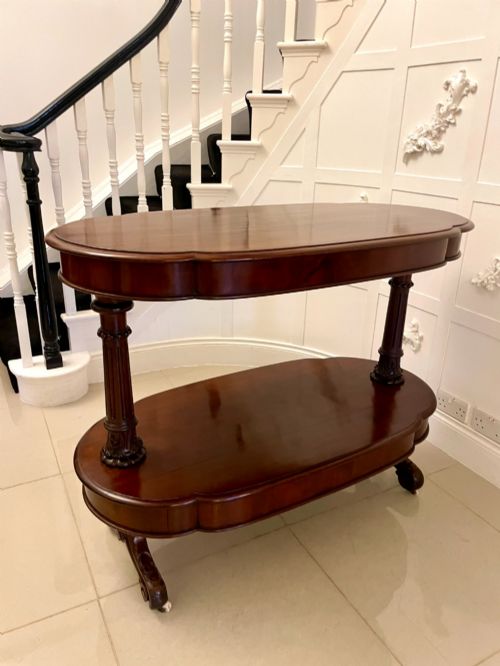
Many incorporated tilt-top mechanisms, drawers, or lower shelves to increase their utility during daily domestic life.
Are these tables suitable for modern rooms?
Their compact nineteenth-century proportions allow these pieces to integrate easily into contemporary living spaces as desks or lamp tables. The finished reverse sides mean they float successfully in open-plan layouts.
Durability comes from solid underlying construction in timbers like mahogany, oak, and walnut, ensuring they withstand everyday use.