






Golden Walnut Console Table
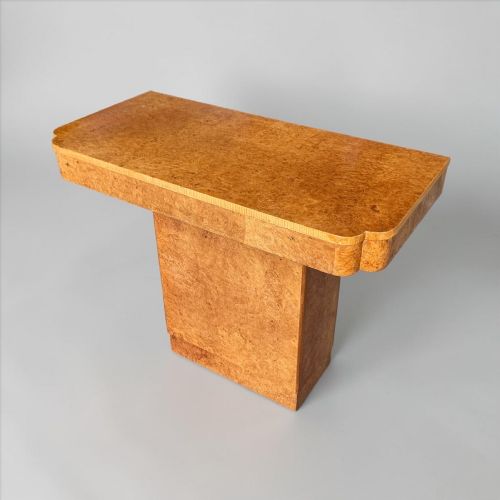
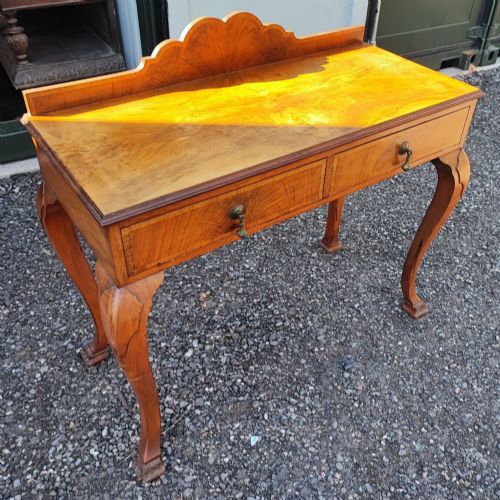
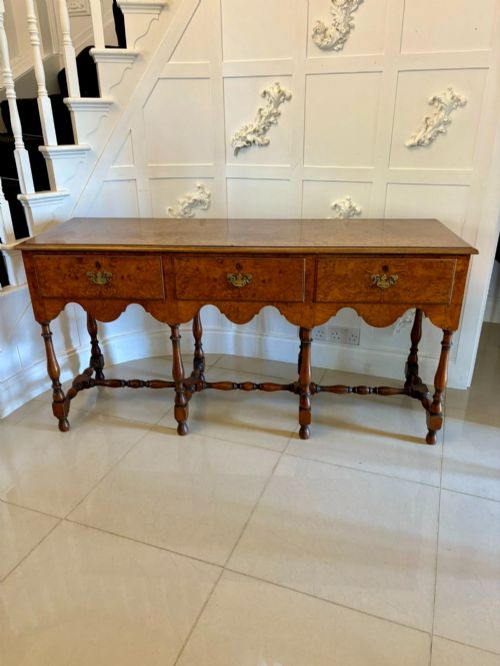
A golden walnut console table brings rich timber grain and classic form to a hallway or reception room.
Golden Walnut Console Table
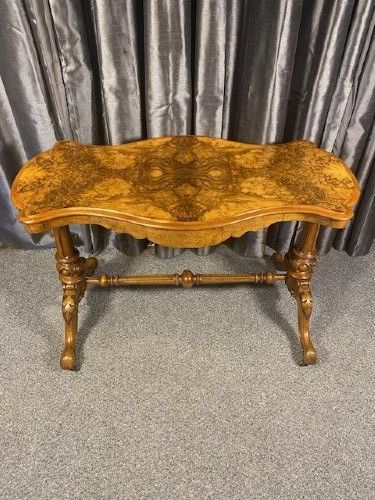
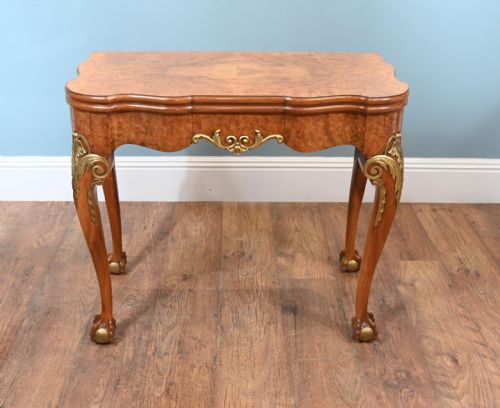
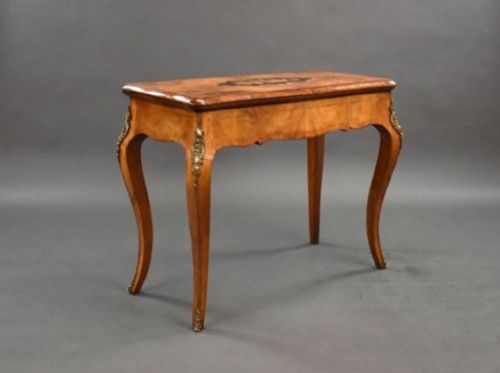
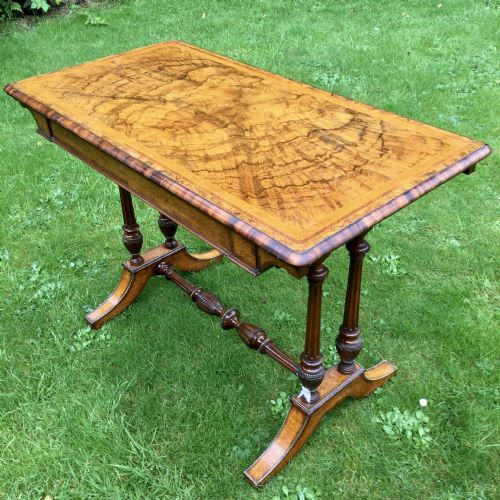
When you search for a golden walnut console table, you encounter diverse forms spanning the Victorian era through to the Art Deco period. These pieces encompass side tables, card tables, and serving tables alongside dedicated console tables.
Makers and retailers like Hille, Epstein and Co, and Maple's of London appear among the twentieth-century examples. Earlier nineteenth-century pieces showcase Victorian craftsmanship through marquetry inlay and serpentine shapes.
How they were made
Makers utilised select timbers, notably burr walnut and satin walnut veneers, chosen for their distinctive grain patterns and warm golden tones. Wood veneer application required considerable skill to cover larger surfaces without splitting or lifting.
Metal components such as brass and ormolu hardware appear on specific tables, providing structural and decorative accents. Cabinet-makers shaped solid wood and applied marquetry inlay to enhance the visual appeal of card tables and occasional pieces.
The listings span from the Victorian era through the Edwardian period to 1930s Art Deco.
What varies in quality
The standard of timber selection and veneer matching defines the visual distinction between individual examples. Finer tables exhibit continuous, well-chosen burr walnut grain across their tops and facades.
Attribution to noted workshops such as Hille or Maple's of London elevates the standing of a piece. The complexity of construction, from serpentine fronts to intricate marquetry inlay, separates standard utilitarian furniture from superior salon pieces.
Hille·Epstein and Co·Maple's of London
The Golden Walnut Console Table Glossary
- Console table
- A table designed to stand against a wall, frequently secured to it or supported by ornamental brackets and legs. These serve practical display roles in hallways and reception rooms.
- Burr walnut
- A highly prized timber figure taken from the wart or growth on a walnut tree. It yields swirling, mottled patterns that catch the light.
- Marquetry
- The art of applying pieces of veneer to a structure to form decorative designs and pictures. Victorian examples utilise this technique extensively on card table tops.
- Serpentine
- A furniture front or edge shaped with a concave centre flanked by convex curves. This undulating outline demands precise carpentry.
- Ormolu
- Gilded bronze used for decorative mounts and furniture trim. It provides metallic contrast against dark or golden wood surfaces.
Golden Walnut Console Table: Frequently Asked Questions
How do I identify the period of a walnut table?
Dating relies on examining structural forms, decorative motifs, and timber treatments. Victorian pieces often display rich marquetry and serpentine shapes.
Twentieth-century examples, including those from the 1920s and 1930s, lean towards Art Deco lines or Queen Anne revival styles. Maker stamps or labels also provide clear chronological markers.
Where should I place a console table?
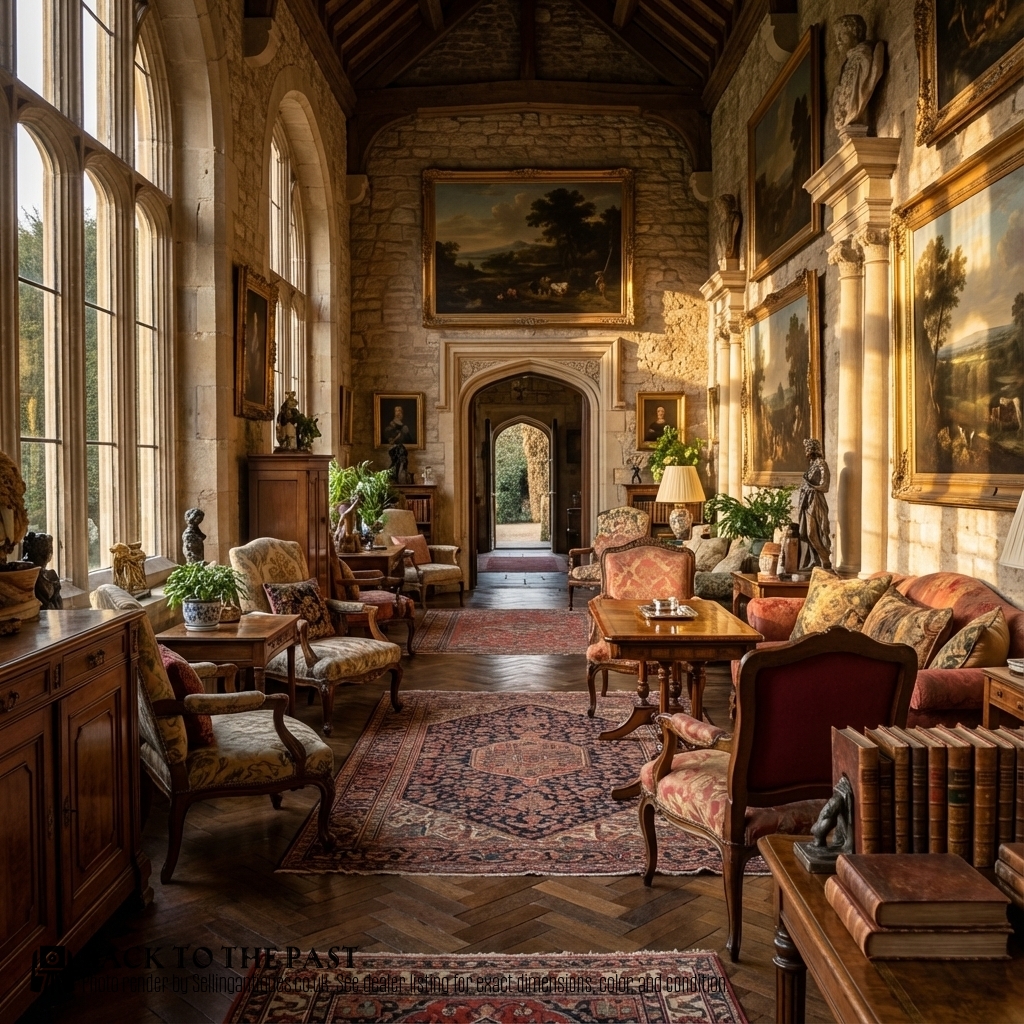
Console tables fit naturally against flat walls in entrance halls, corridors, and reception rooms. Their shallow depth ensures they do not obstruct walkways.
They provide a surface for lamps, decorative objects, or mirrors hung above them. Some folding versions, such as card tables, offer versatile placement options.
How do I care for walnut veneer surfaces?
Walnut veneer requires protection from direct sunlight and excessive moisture to prevent fading and warping. Regular dusting with a soft cloth maintains the finish.
Avoiding harsh chemical polishes preserves the natural grain and golden lustre of the timber. Professional wax application helps nourish the wood over time.