
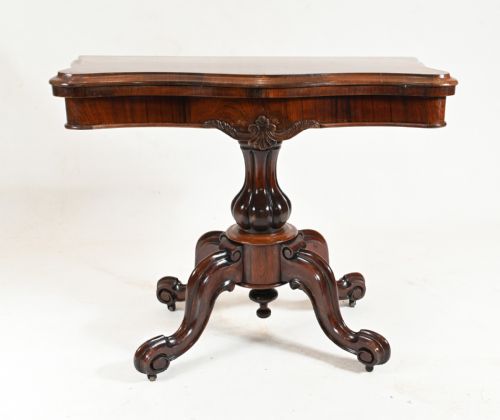
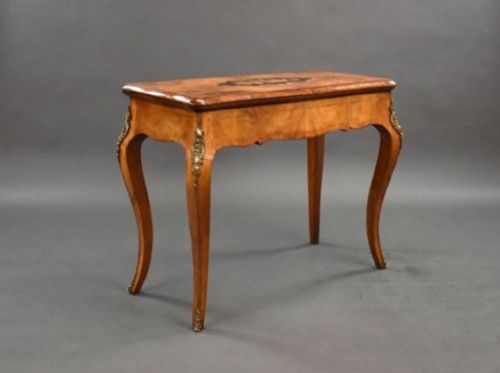


Victorian Serpentine Card Table
A victorian serpentine card table brings curved lines and rich timber into a room, offering a fold-over top designed for evenings of gaming.
Victorian Serpentine Card Table
When you search for a victorian serpentine card table, you encounter furniture built during the nineteenth century with undulating fronts and sides. These pieces function primarily as games tables or tea tables, featuring tops that hinge and fold open to reveal a baize-lined playing surface.
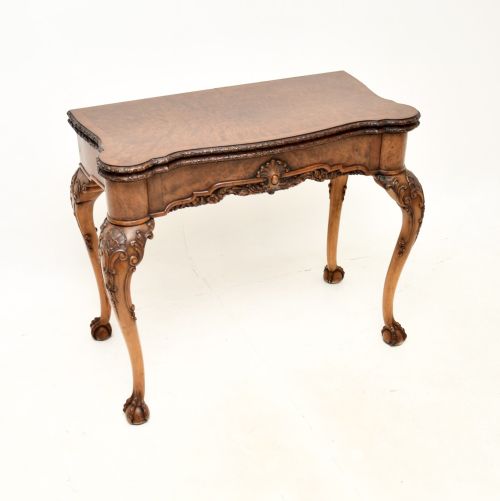
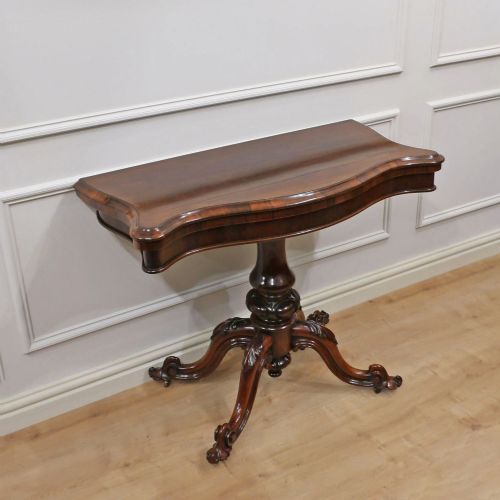
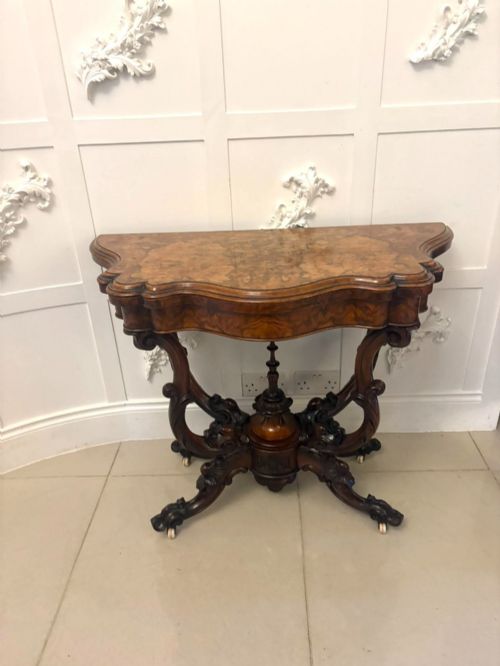
The selections on this page span the Victorian era, utilising forms from simple fold-over tables to elaborate pedestal and console designs. Walnut, burr walnut, mahogany and rosewood dominate the items seen here, alongside revival styles drawing on French and Chippendale aesthetics.
Materials and Construction
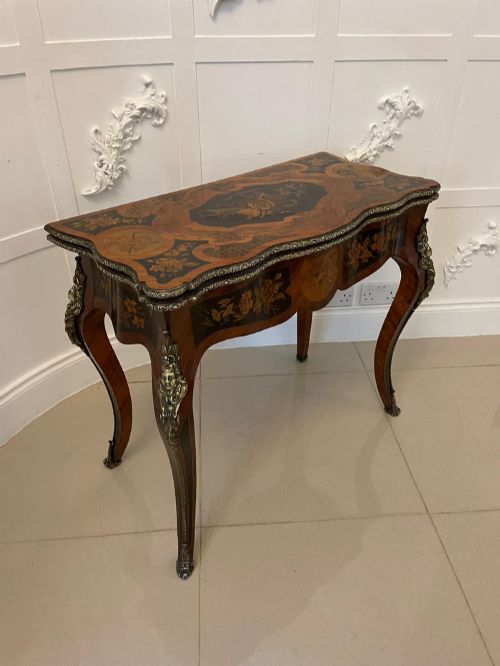
Cabinet makers built these tables using solid carcases faced with decorative veneers such as burr walnut, kingwood and mahogany. Marquetry and wood inlay appear frequently, set into the timber to create geometric or floral patterns across the surfaces.
Many examples incorporate brass hardware, ormolu mounts and carved wooden elements like baskets and pedestals. The folding tops swivel or flip on hinges to rest upon a pivoted base or a rear leg assembly.
Listings feature woods including walnut, burr walnut, mahogany, rosewood, kingwood, and satinwood, spanning the Victorian period.
Judging Quality
The distinction between standard examples and the finest work lies in the choice of timber and the precision of the cabinet making. Highly figured burr walnut and intricate marquetry indicate superior execution by skilled workshops.
Details such as cast ormolu mounts, finely carved wooden bases, and the crispness of the serpentine curves elevate certain pieces above simpler production models from the period.
Edwards & Roberts·Henry Dasson
The Victorian Serpentine Card Table Glossary
- Serpentine
- A curved line of furniture shaping that swells outward and recedes inward in a gentle S-shape. This contour defines the front edge of the tables found here.
- Marquetry
- Decorative patterns formed by fitting pieces of veneer into a prepared wood ground. Craftsmen utilise varied timbers to create pictorial or abstract designs.
- Ormolu
- Gilded bronze used for decorative mounts and furniture trim. This material appears on high-end revival pieces.
- Fold Over
- A table top design featuring a hinged flap that doubles the surface area when opened for play. The mechanism often reveals a storage well underneath.
Victorian Serpentine Card Table: Frequently Asked Questions
How do these tables work?
The top folds open on hinges to double the surface area, often rotating on a pivot or sliding to reveal a hidden compartment beneath. The unfolded section rests on a swinging leg or the extended frame.
Inside, the surface is typically lined with baize or felt for card playing. When closed, the piece serves as a side or console table against a wall.
Where should I place one?
These tables suit hallways, drawing rooms or living spaces where a slim profile is required against a wall. Their finished backs and serpentine fronts allow them to sit effectively as console tables when closed.
Opening the top requires clearance on at least one side, so placing them in open areas or corners works best for actual use.
What woods were used?
Walnut and burr walnut form the majority of the pieces, prized for their rich grain patterns. Mahogany and rosewood also appear across the nineteenth-century examples.
Inlay work frequently incorporates satinwood and other contrasting timbers to highlight the serpentine curves.
How do I spot revival styles?
Revival pieces incorporate design elements from earlier French or English periods, such as Louis XV or Chippendale motifs. Ormolu mounts and elaborate marquetry point toward French inspiration.
These stylistic cues help distinguish revival output from simpler domestic designs of the era.