




Victorian Curved Top Table
These Victorian curved top table pieces offer practical writing and display surfaces with graceful arched profiles, combining period craftsmanship with refined domestic utility.
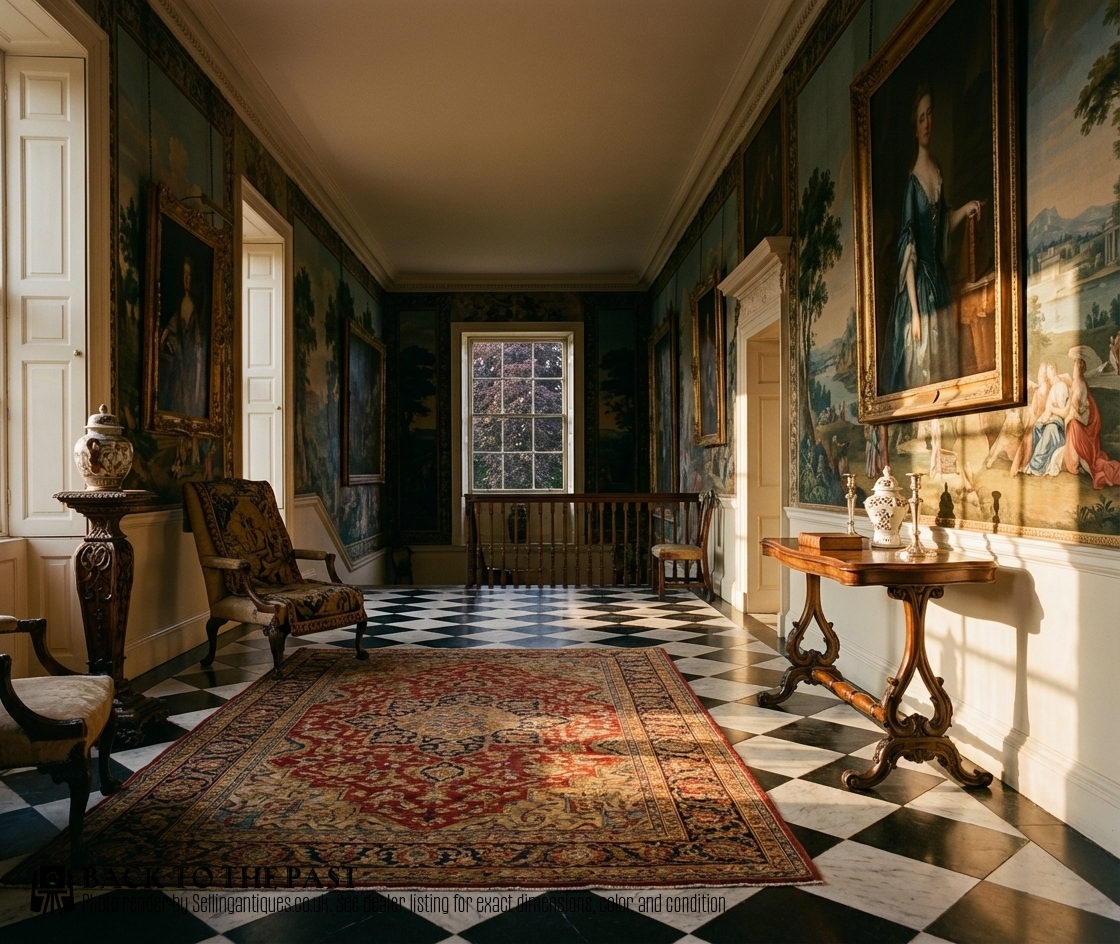
Victorian Curved Top Table
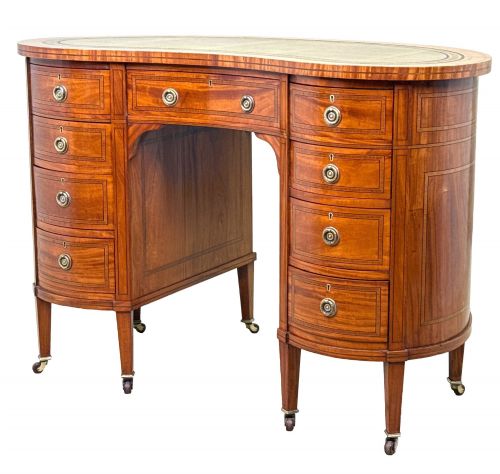
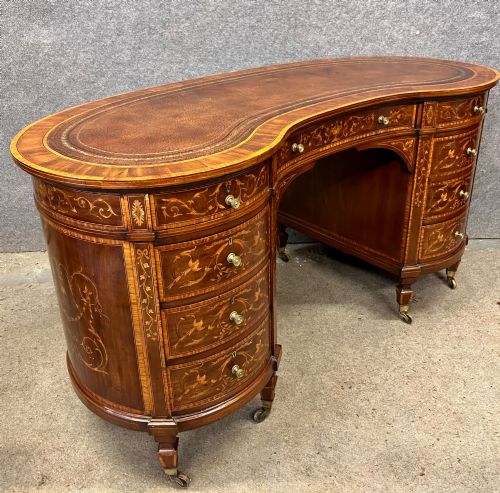
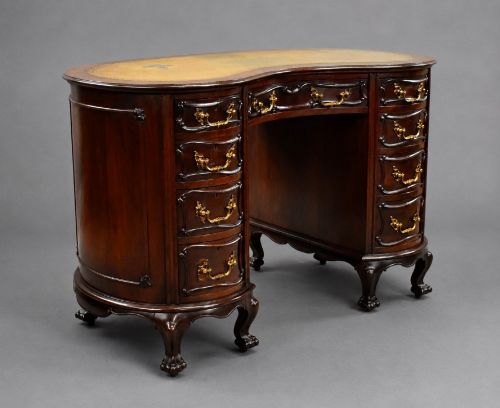
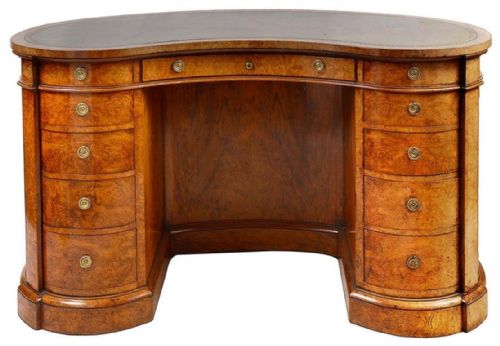
When you search for a victorian curved top table, you encounter forms that curve and bend away from rigid rectangular geometry. The selection on this page centres heavily on kidney shaped desks, alongside console tables, dressing table mirrors, centre tables, and shaped stretcher tables.
The dominant material across these pieces is mahogany, accompanied by satinwood, burr walnut, rosewood, and oak. Production spans the Victorian and Edwardian periods, stretching from the mid-nineteenth century through to the year nineteen hundred.
Design influences range from straightforward Victorian construction to Sheraton Revival and Victorian Rococo Revival styles. You will also find specific variations including cylinder desks and kneehole desks designed for practical writing tasks.
Materials and construction
Cabinet makers utilised solid timbers alongside fine veneers such as satinwood, burr walnut, and mahogany to build these curved surfaces. Timber framing frequently incorporated intricate inlay work to accentuate the sweeping outlines of the desks and tables.
Leather inserts appear frequently on the writing surfaces, trimmed with gold tooling to frame the curved edges. Brass handles, hinges, and occasional marble elements provide functional and decorative contrast to the warm timber tones.
The listings on this page span the Victorian and Edwardian eras, incorporating timber forms from eighteen-sixty to nineteen hundred.
Assessing quality and execution
The distinction between standard examples and exceptional pieces lies in the precision of the curved timber work and the complexity of the inlay. Master workshops invested significantly more labour into seamless veneer matching across difficult kidney and cylinder shapes.
Hardware selection and secondary timber choice further separate ordinary production from workshop masterpieces. Signed pieces by established makers demonstrate superior joinery and more refined proportions in the overall silhouette.
Wolfe and Hollander·Collinson and Lock·Gillows·Thonet
The Victorian Curved Top Table Glossary
- Kidney shaped desk
- A writing table with a concave front curve that wraps around the user, sitting on pedestals or slender legs. This form became popular during the nineteenth century for domestic studies and boudoirs.
- Satinwood
- A pale, lustrous timber imported from the tropics, prized by cabinet makers for decorative veneers and stringing. It reflects light brightly and contrasts sharply with darker woods like mahogany.
- Cylinder desk
- A writing desk featuring a rolling semi-cylindrical wooden shutter that conceals drawers and pigeonholes when closed. When opened, it reveals a pull-out writing slide.
- Burr walnut
- Timber taken from the abnormal growth of a walnut tree, producing highly swirling, knotty grain patterns. It was sliced into thin veneers for decorative table tops and drawer fronts.
- Stretcher table
- A table equipped with horizontal rails connecting the legs near the base to provide structural rigidity. In Victorian examples, these stretchers often curve in harmony with the table top.
Victorian Curved Top Table: Frequently Asked Questions
What is a kidney shaped desk?
A kidney shaped desk is a writing table featuring a curved, bean-like top designed to fit comfortably around the user. These pieces often incorporate multiple drawers or pedestals beneath the work surface.
They emerged as popular items for residential studies and private dressing rooms during the Victorian era, offering both aesthetic elegance and practical utility.
How do I identify a Victorian desk?
Victorian desks are typically constructed from dense hardwoods like mahogany and walnut, frequently decorated with fine inlay work or brass hardware. Their forms reflect historical revival styles popular during the nineteenth century.
Examining the secondary timbers inside the drawers and the construction methods used on the curved joints helps confirm the period of manufacture.
Where were these tables used?
These tables served primarily as private writing desks or display surfaces in nineteenth-century drawing rooms, libraries, and bedrooms. Their finished backs allowed them to stand away from walls in the centre of a room.
Smaller occasional and centre tables were easily moved to accommodate social gatherings or domestic tasks.
What timber was used most often?
Mahogany served as the primary timber for the majority of these nineteenth-century desks and tables, prized for its durability and deep reddish-brown colour. Cabinet makers also employed satinwood, burr walnut, and rosewood for decorative effect.
Veneers were cut thin and applied to sturdy carcase woods to create complex curved profiles.