
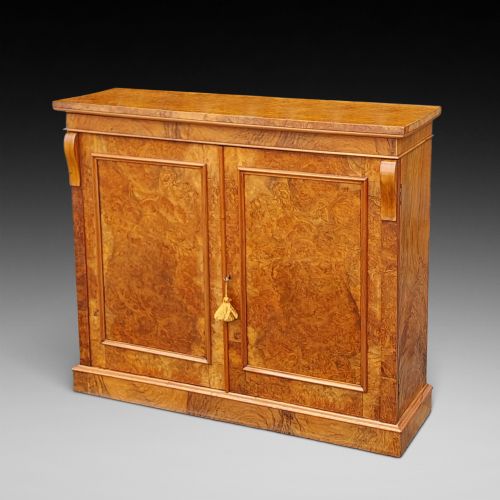
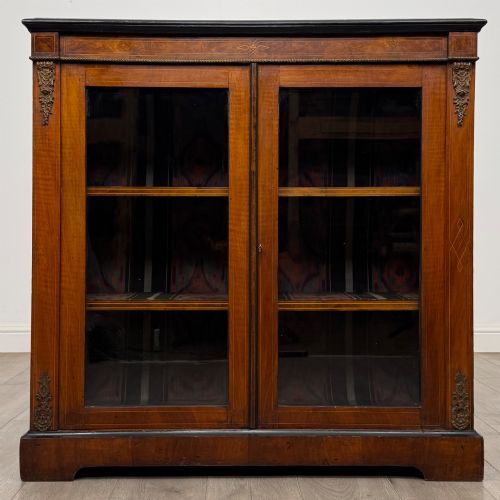
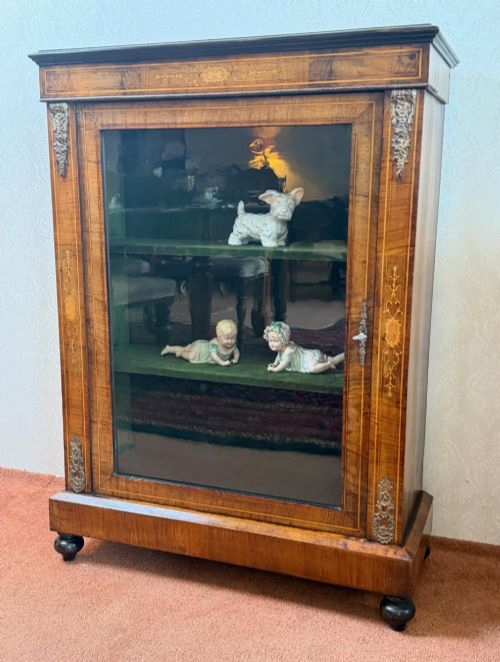
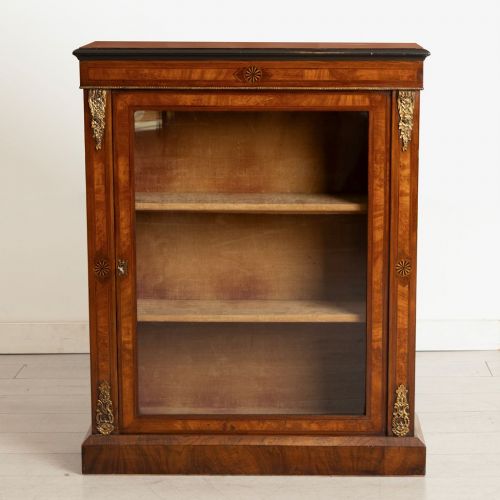
Victorian Pier Bookcase
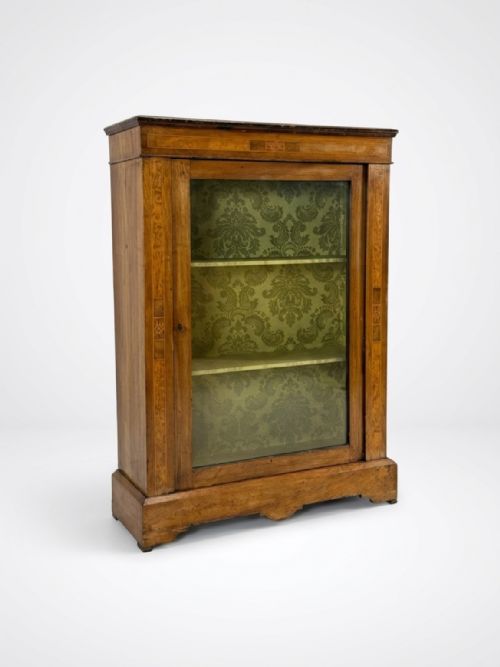
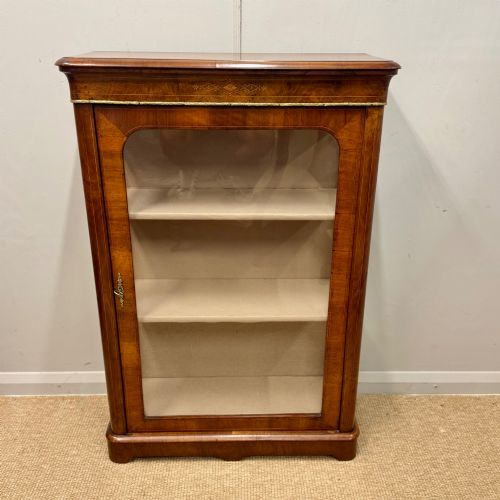
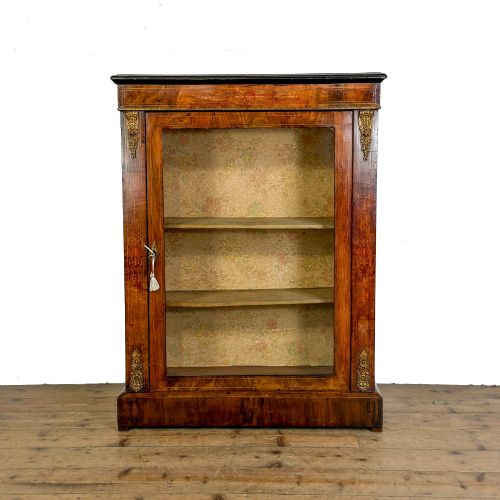
When you search for a Victorian pier bookcase, you are looking at narrow glazed display furniture designed to stand between drawing room windows.
Victorian Pier Bookcase
A victorian pier bookcase combines lower shelf storage with glazed display space for books and decorative objects. The pieces found here date predominantly from the nineteenth century, spanning periods from the eighteen-fifties through to the eighteen-eighties.
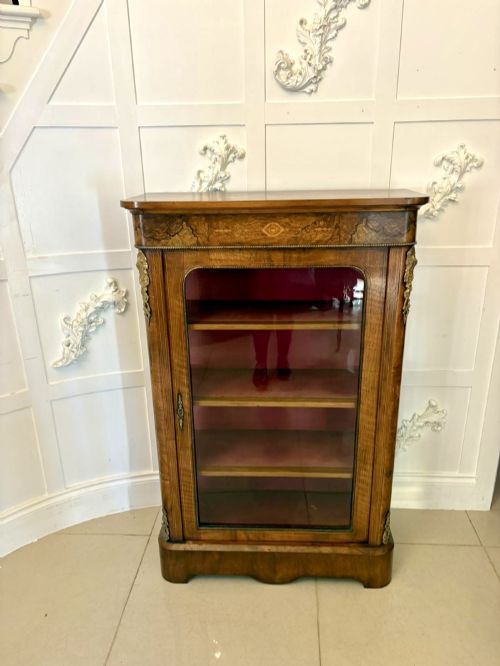
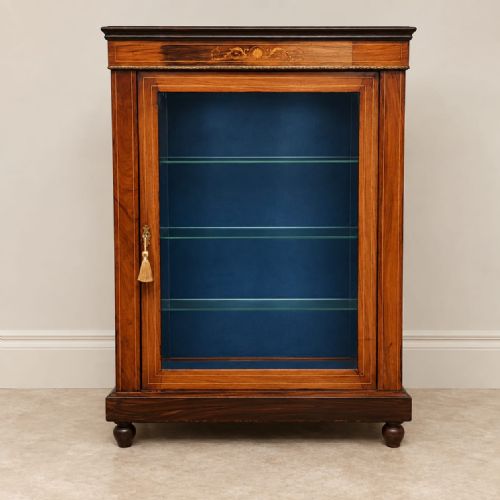
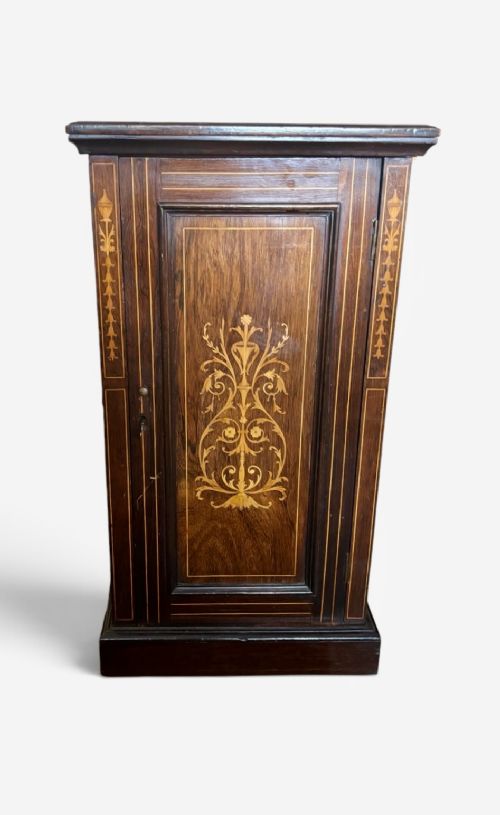
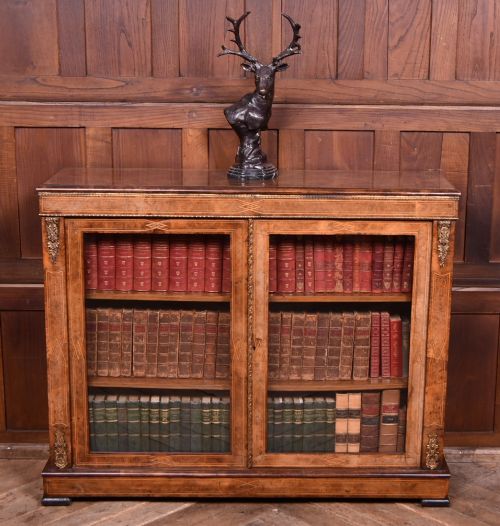
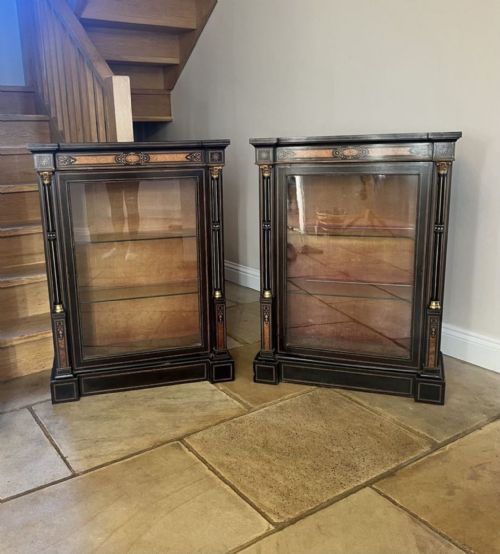
Most examples take the form of narrow single-door cabinets, though pairs and two-door variations also appear across the listings. Walnut and burr walnut dominate the selection, accompanied by rosewood, mahogany, and ebonised wood.
Makers recorded in the archive include established cabinet-makers such as James Winter and Edwards & Roberts. Styles range from straightforward Victorian designs to Louis XVI revival and aesthetic movement interpretations.
Materials and Technique
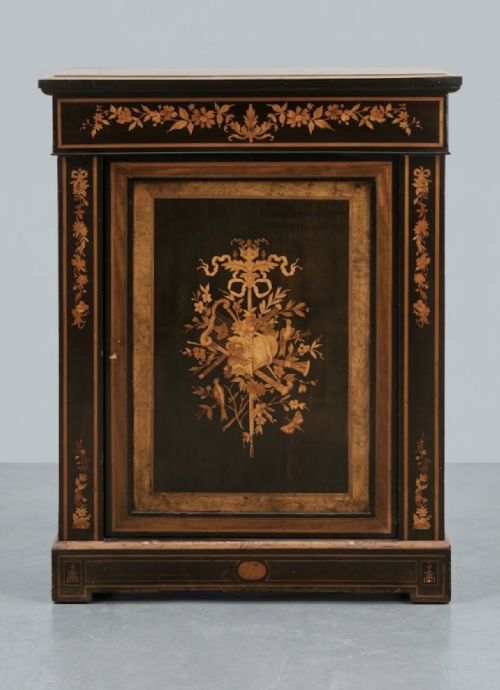
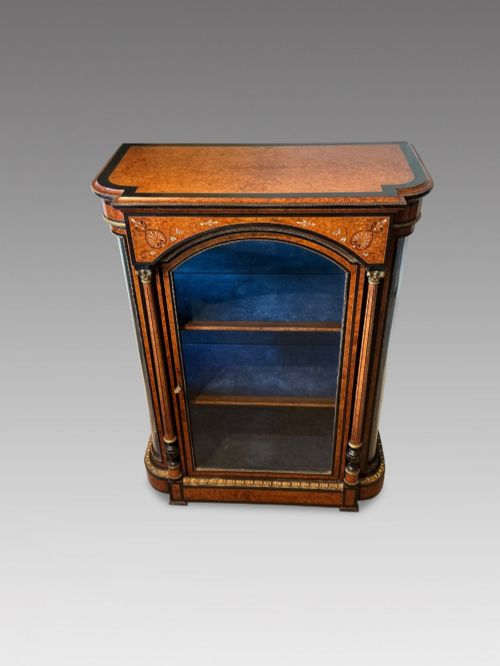
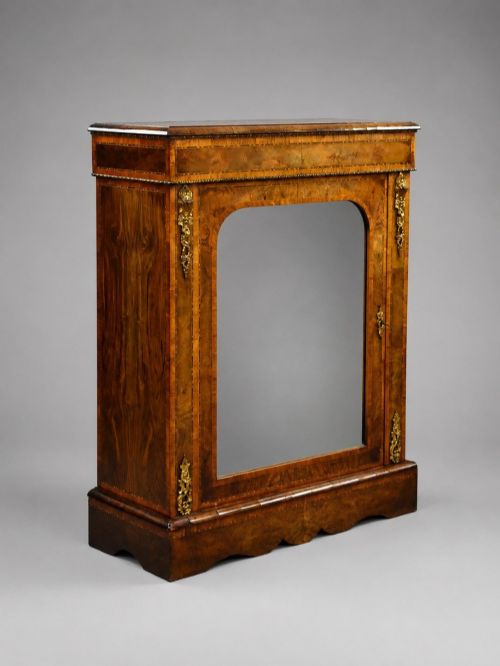
Cabinet-makers relied on figured timber veneers, particularly burr walnut and rosewood, laid over solid foundational woods. Marquetry in satinwood, ebony, and boxwood creates intricate floral and geometric motifs across the door panels and friezes.
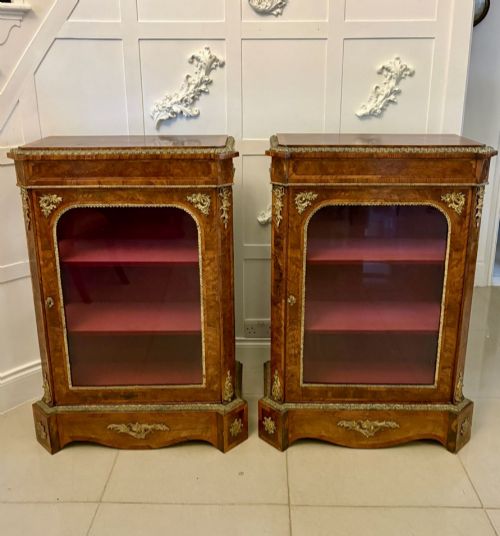
Ormolu mounts in cast brass highlight corners, pilasters, and cornices, while glazed doors protect the interior shelves. Some iterations incorporate marble tops or fine brass stringing to accentuate the rectilinear proportions.
Walnut is the predominant timber across these listings, appearing alongside rosewood, mahogany, and ebonised wood.
Judging Quality
The distinction between standard examples and top-tier pieces rests on the choice of timber and the precision of the marquetry. Highly figured burr walnut with rich natural chatoyancy marks the better productions.
Finely chased ormolu mounts and crisp cabinet joinery separate ambitious workshop output from routine manufacturing. The harmony of the proportions and the delicacy of any inlaid stringing dictate the visual success of the piece.
James Winter·Edwards and Roberts
The Victorian Pier Bookcase Glossary
- Pier cabinet
- A narrow cabinet built to fit the wall space between two windows. These pieces often feature glazed doors for displaying books and ornaments.
- Marquetry
- Decorative patterns formed by fitting together thin slices of veneer of various timbers. This technique creates contrasting pictorial designs on cabinet doors.
- Ormolu
- Gilded bronze mounts applied to furniture for decorative accent. The term derives from the French for milled gold.
- Ebonised
- Wood finished with a black stain or polish to imitate ebony. This treatment was popular during the nineteenth century for dramatic contrast.
Victorian Pier Bookcase: Frequently Asked Questions
What is a pier bookcase?
A pier bookcase is a narrow nineteenth-century display cabinet designed specifically for the wall space between architectural windows. They typically feature glass doors protecting fitted interior shelving.
These pieces served as elegant furniture for drawing rooms, holding prized book collections alongside small decorative ceramics and curiosities.
Where should I place mine?
These narrow cabinets excel in hallways, alcoves, or between windows where wider furniture will not fit. Their shallow depth preserves floor space in smaller rooms.
Keep them away from direct sunlight and strong heat sources to protect the delicate nineteenth-century timber veneers and polish.
How do I date these cabinets?
Dating relies on timber choices, construction methods, and stylistic cues recorded across the Victorian era. Earlier examples from the eighteen-fifties often showcase rosewood and simpler classical proportions.
Later pieces from the eighteen-seventies and eighties frequently employ ebonised finishes, aesthetic movement details, or heavier marquetry inlay.
Are pairs common?
Matched pairs of pier cabinets occur less frequently than single items because of their original placement flanking twin drawing room windows. Surviving pairs represent more ambitious original commissions.
Finding a matched pair requires patience, as most pieces entered the market individually over decades of dispersal.