
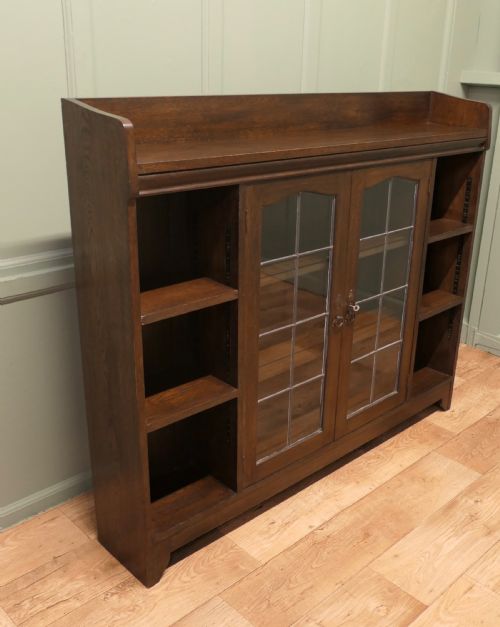
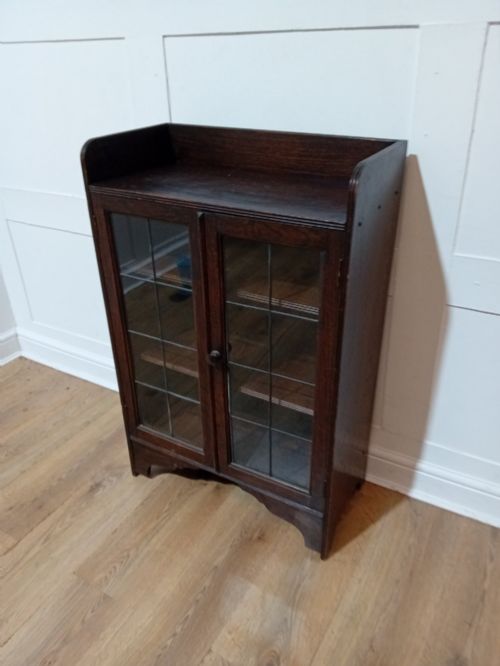
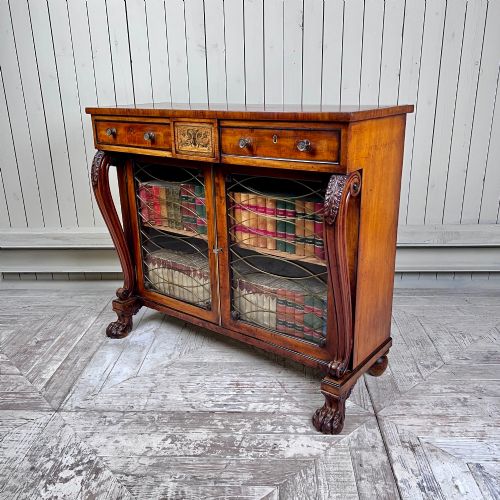
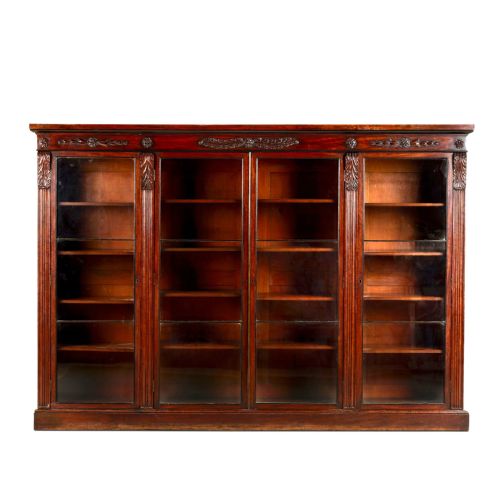
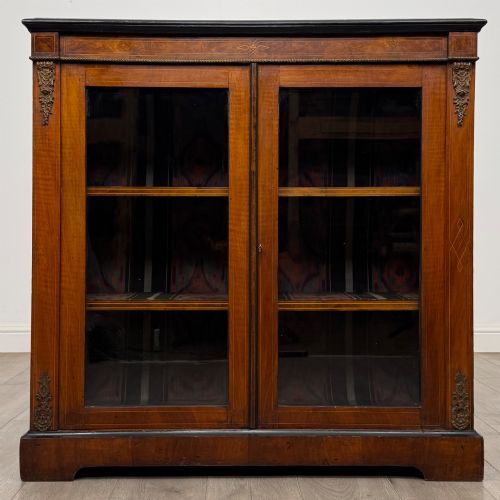
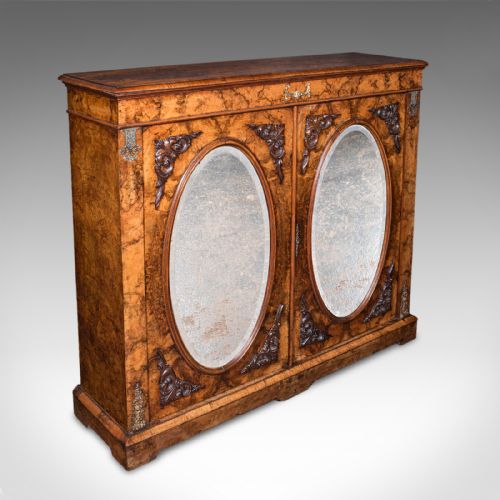
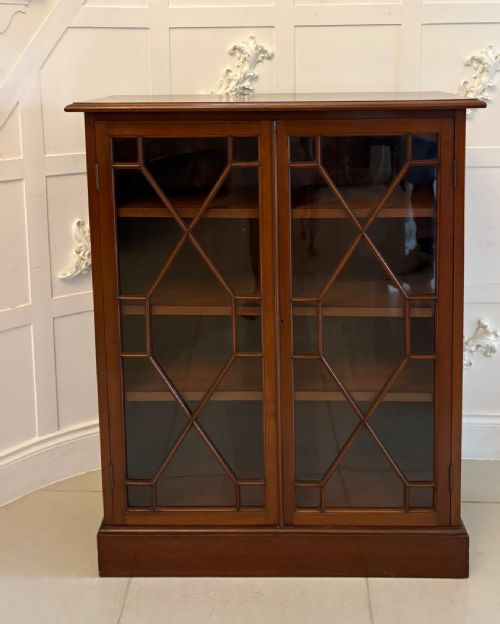
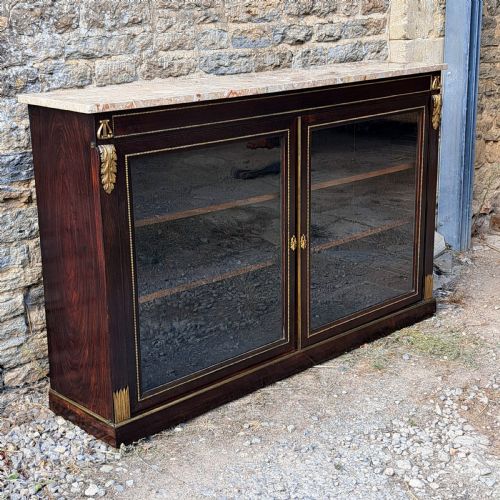
Low Glazed Bookcase Cabinet
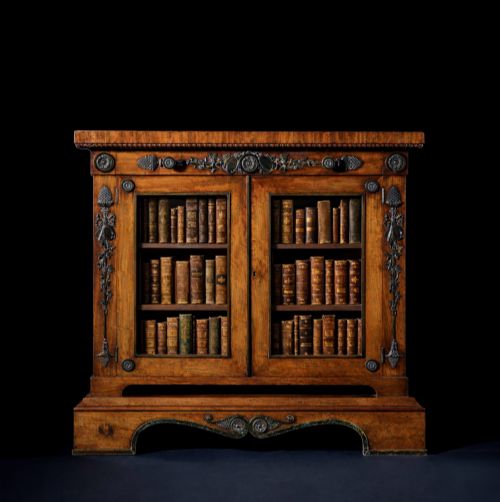
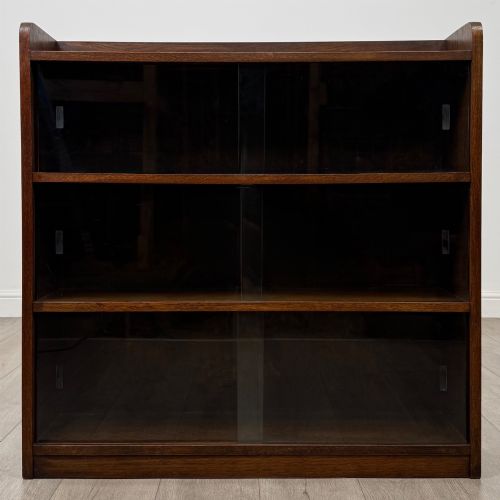
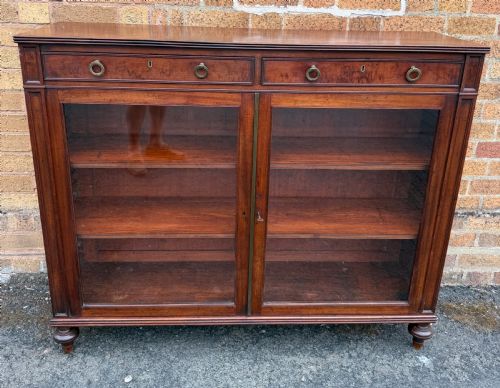
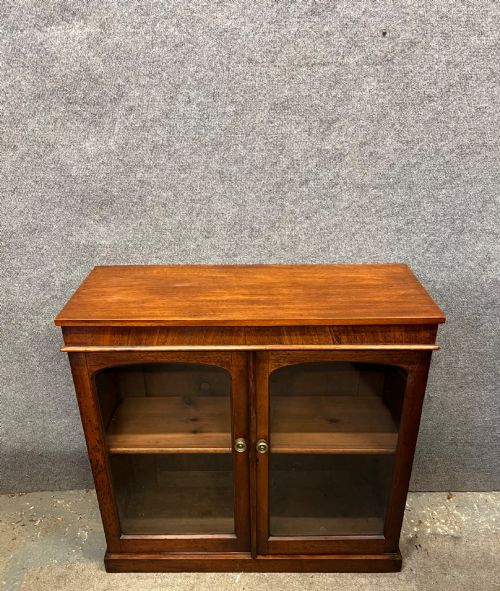
A low glazed bookcase cabinet houses books and displays objects behind glass doors, combining storage with visibility.
Low Glazed Bookcase Cabinet
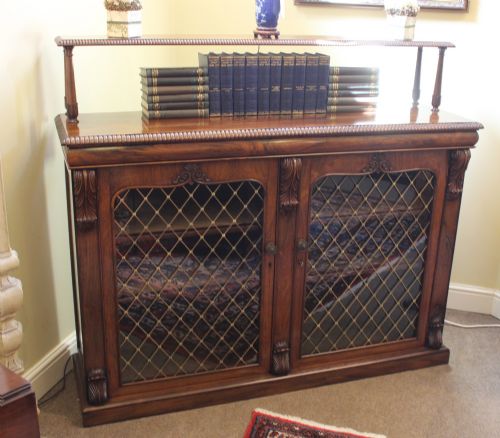
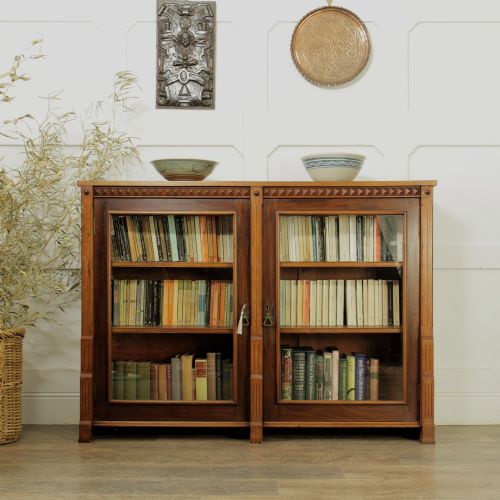
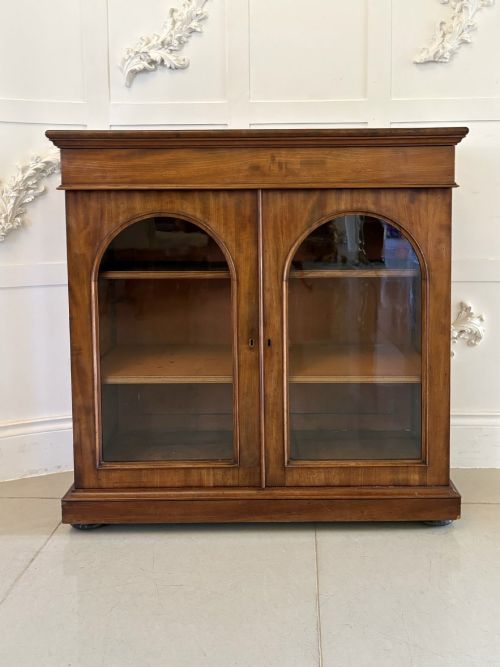
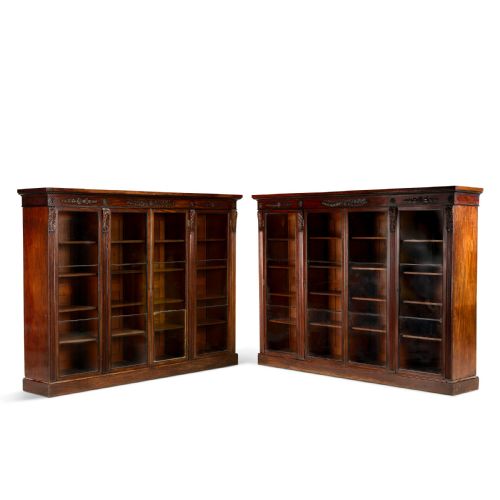
A low glazed bookcase cabinet provides shelved storage and display space while maintaining a compact height suitable for domestic rooms. Buyers searching for a low glazed bookcase cabinet encounter pieces originating from the Regency, Victorian, Edwardian and later periods up to nineteen-thirty.
The material vocabulary spans mahogany, walnut, burr walnut, rosewood and oak, often detailed with brass, ormolu or ebony inlay. Forms range from pier cabinets and chiffoniers to breakfront bookcases and side cabinets fitted with glass doors.
How they were made
Cabinet makers utilised timber veneers such as mahogany, walnut and rosewood applied over solid carcases, incorporating glass panels to enclose the shelving. Brass mounts, ormolu details and fine inlay work ornamented the exterior surfaces.
Joinery techniques included adjustable shelving tracks, astragal glazing bars and panelled wooden backs, ensuring structural stability alongside refined proportions.
Materials recorded across the inventory include mahogany, walnut, burr walnut, rosewood, oak, brass, ormolu and velvet.
What varies in quality
The selection of timber grain, such as figured mahogany or burr walnut veneers, sets higher tier examples apart from plain counterparts. Finer execution shows in crisp brass inlay, precise bronze mounts and balanced proportions across the cabinet facade.
The Low Glazed Bookcase Cabinet Glossary
- Astragal
- The narrow wooden moulding that divides glass panes within a glazed door. These bars create geometric patterns across the cabinet front.
- Chiffonier
- A low cabinet featuring enclosed cupboards below, often surmounted by a low tier or shelf. They frequently incorporated glazed or panelled doors.
- Pier cabinet
- A narrow freestanding cabinet designed to fit wall spaces between windows. They commonly feature glass doors for displaying ornaments.
- Ormolu
- Gilded bronze ornamentation applied to furniture. This decorative technique appears on Regency and nineteenth century cabinet work.
- Breakfront
- A piece of furniture where the central section projects forward from the flanking wings. This architectural form adds depth to larger bookcases.
Low Glazed Bookcase Cabinet: Frequently Asked Questions
What periods do these cabinets span?
The pieces range from George III and Regency eras through the Victorian and Edwardian periods up to nineteen-thirty.
Craftsmanship and timber choices shift across these eras, moving from classical mahogany work to ornate walnut veneers and later oak or art deco designs.
How were these cabinets used?
Owners stored volumes while displaying porcelain, glass and decorative objects behind protective glass doors in reception rooms.
The low height allowed the top surface to function as a shelf for ornaments or mirrors while keeping books within reach.
What woods appear most often?
Mahogany, walnut and rosewood dominate the listings, frequently enhanced by burr walnut figures and contrasting inlay.
Oak and occasional painted finishes also appear, particularly in Arts and Crafts or later twentieth-century examples.
How do I identify a Regency piece?
Regency cabinets typically display classical proportions utilising mahogany or rosewood, often embellished with brass inlay or bronze mounts.
Clean architectural lines and restrained ornamentation distinguish these earlier nineteenth-century examples from later Victorian styling.