
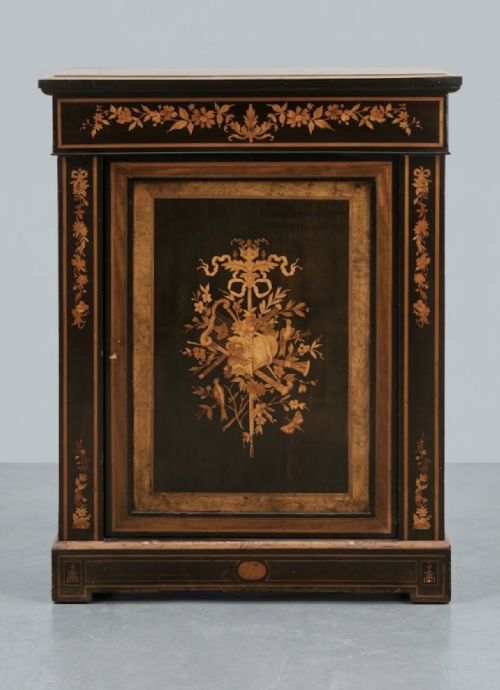
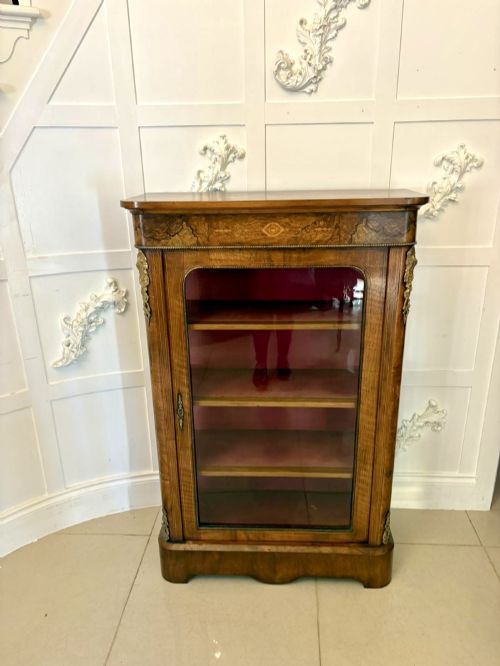
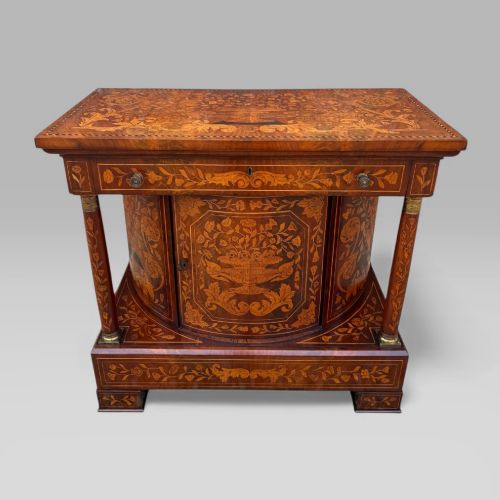
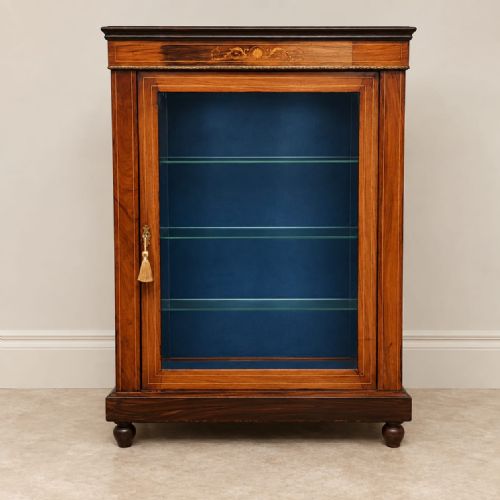
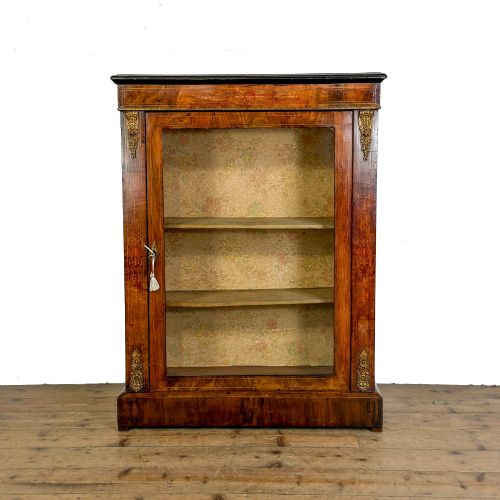
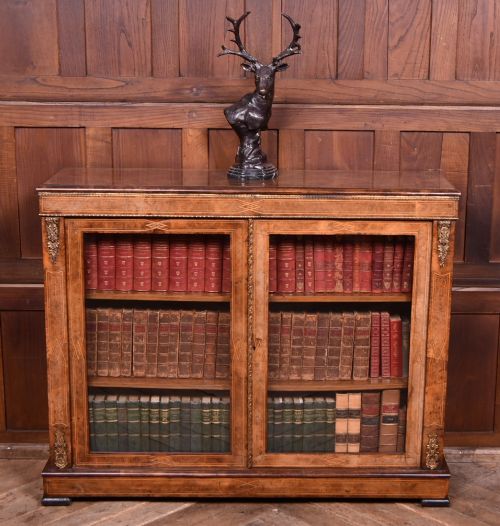
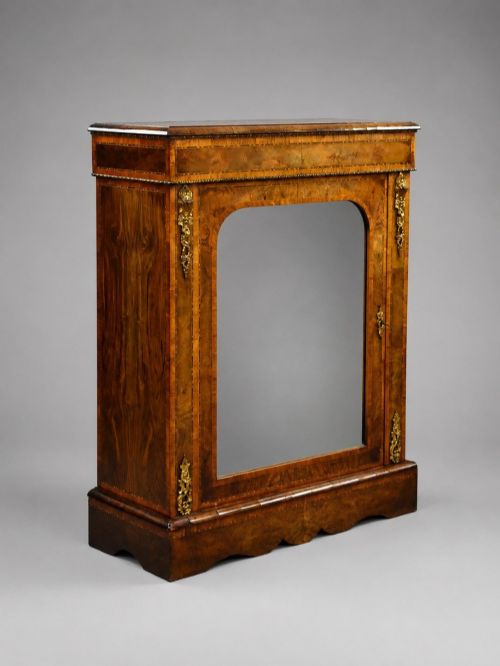
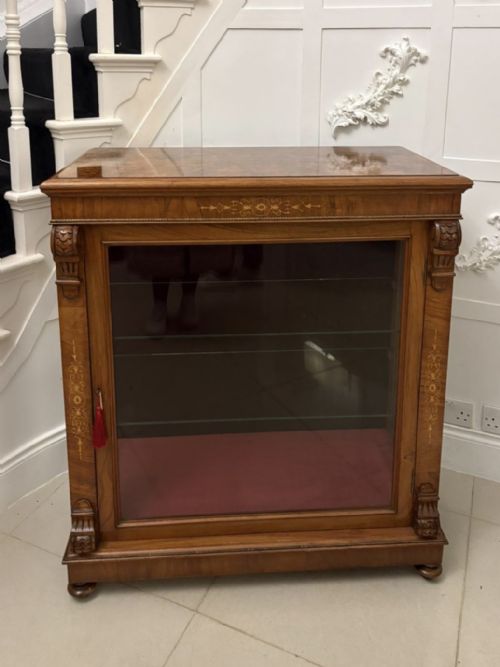
Marquetry Inlaid Pier Cabinet
A marquetry inlaid pier cabinet brings architectural elegance to a formal sitting room, offering narrow display space designed specifically for nineteenth-century pier walls.
Marquetry Inlaid Pier Cabinet
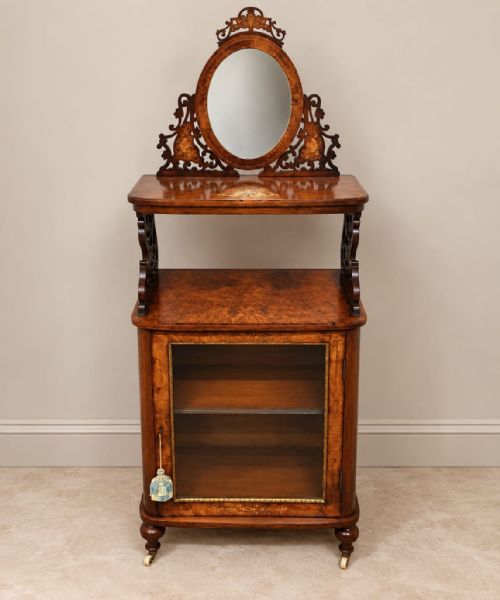
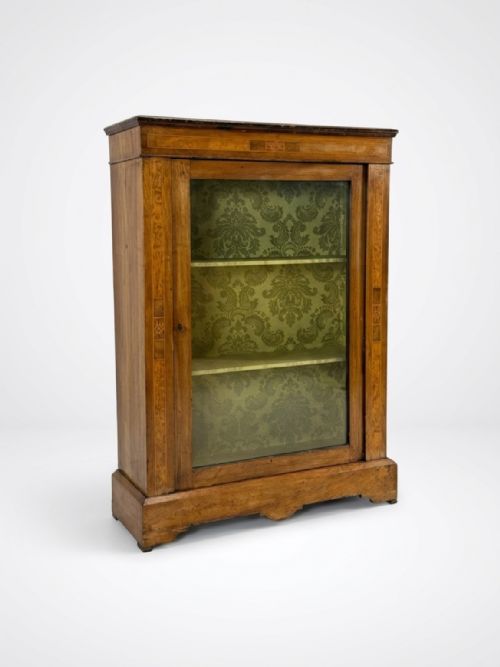
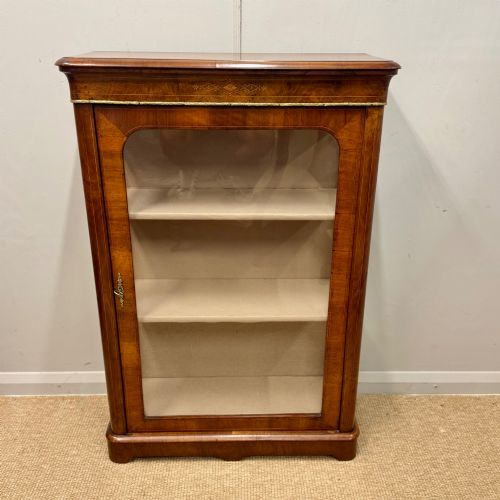
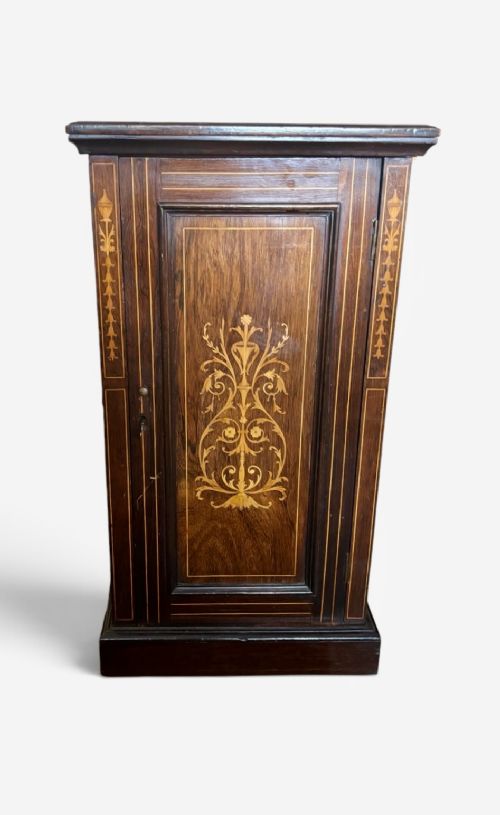
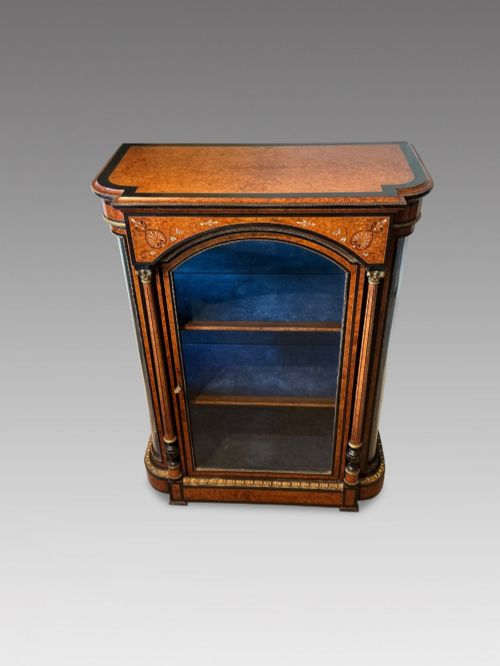
A marquetry inlaid pier cabinet is a slender display furniture piece designed to fit the narrow wall space between tall windows. Most examples encountered here date from the Victorian era, spanning the decades between eighteen-sixty and eighteen-eighty.
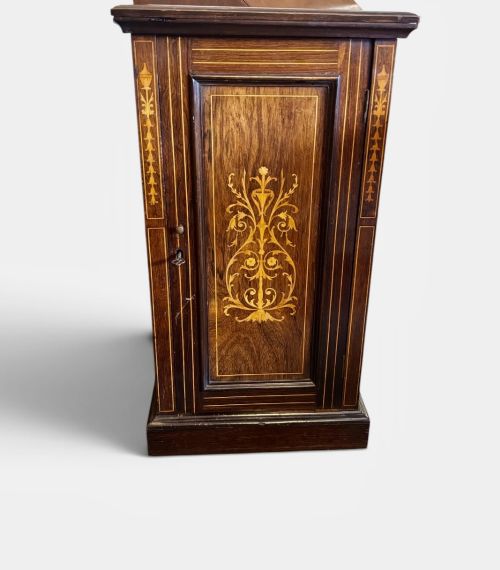
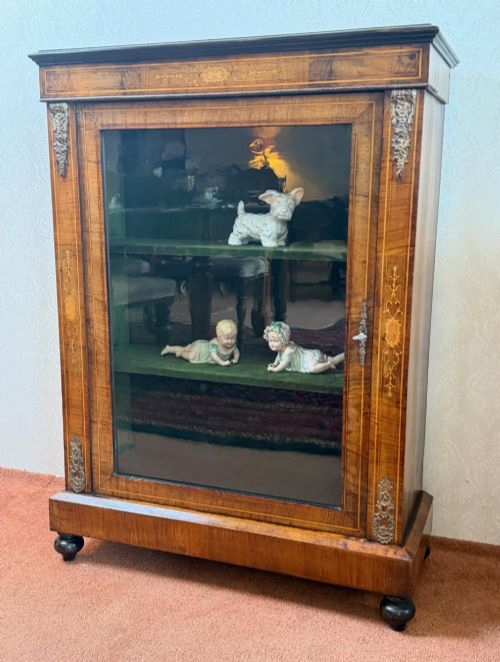
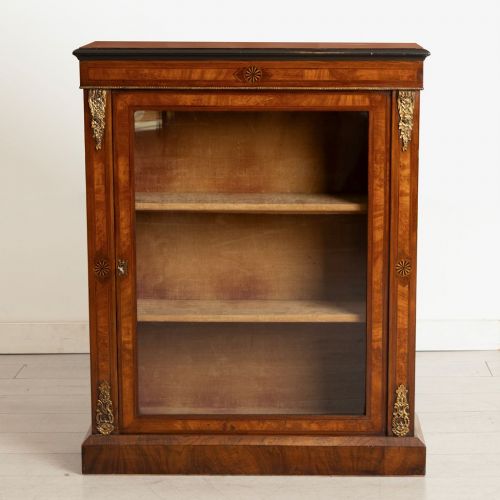
These upright cabinets combine glazed doors with wooden shelving to display ceramics and curiosities safely. They emerge primarily in walnut and burr walnut, frequently accented with elaborate floral or scroll marquetry.
What Varies in Quality
The sophistication of the timber grain and the precision of the marquetry define the upper tier of pieces. Finer cabinets display meticulously matched burr walnut veneers paired with crisp, multi-toned floral inlays rather than simple stamped motifs.
Structural harmony also separates standard examples from exceptional ones, particularly the weight of the cast ormolu mounts and the thickness of the glass panes. Better pieces maintain intact original patination across the polished wood surfaces.
Listings feature walnut, rosewood, and mahogany timbers paired with boxwood and satinwood marquetry across Victorian periods.
The Marquetry Inlaid Pier Cabinet Glossary
- Marquetry
- Decorative veneer work forming pictures or patterns using various tinted woods. These complex designs are cut by hand and fitted precisely into the cabinet surface.
- Ormolu
- Gilded bronze mounts applied to furniture for decorative enrichment. This technique adds metallic highlights to the corners and frames of Victorian cabinets.
- Burr Walnut
- Highly figured wood timber taken from walnut tree growths. It provides swirling grain patterns prized by nineteenth-century cabinetmakers.
Marquetry Inlaid Pier Cabinet: Frequently Asked Questions
Where should a pier cabinet go?
These tall, slender cabinets suit narrow wall spaces, particularly between tall windows or flanking a fireplace in a reception room.
Their shallow depth ensures they do not crowd a room while still offering protected vertical display space for ceramics and glass.
How do I spot Victorian pieces?
Victorian examples frequently utilise walnut, rosewood, and burr walnut timbers combined with intricate boxwood and satinwood marquetry details.
They commonly feature glazed doors framed by ebonised wood or brass mounts, dating primarily from the mid to late nineteenth century.
What is the difference between a pier cabinet and a credenza?
Pier cabinets are distinctly tall and narrow, built to occupy specific wall partitions between windows in period drawing rooms.
Credenzas are typically much wider, low-slung side cabinets often fitted with multiple doors and a central display section.
How should I clean the marquetry?
Maintain the polished timber surfaces using a soft, dry cloth to remove dust without disturbing the delicate veneer and inlay work.
Avoid applying harsh chemical sprays or excess moisture, which can penetrate hairline cracks in the nineteenth-century polish.