


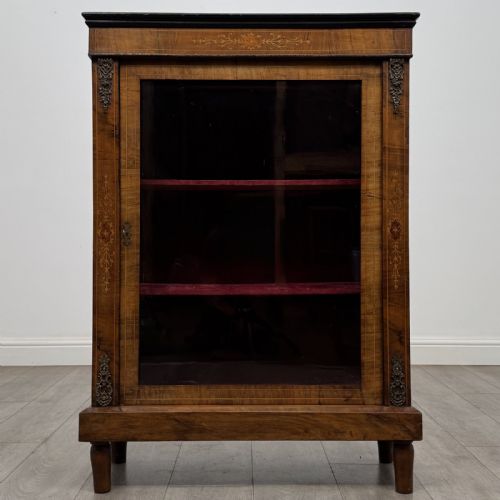
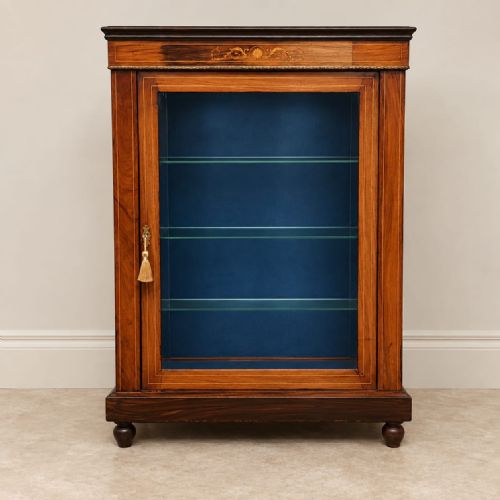
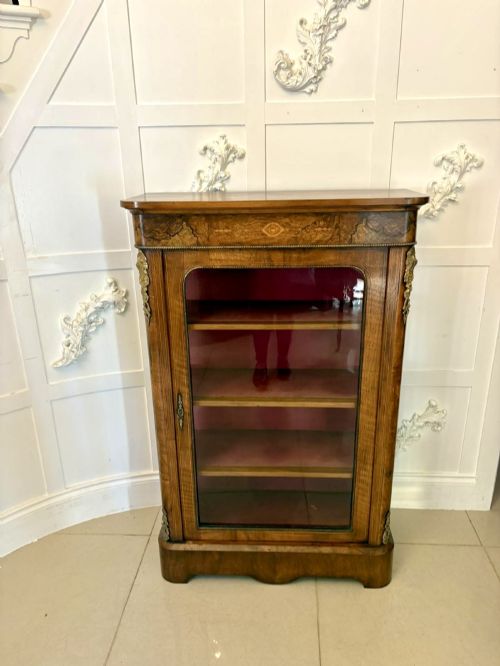
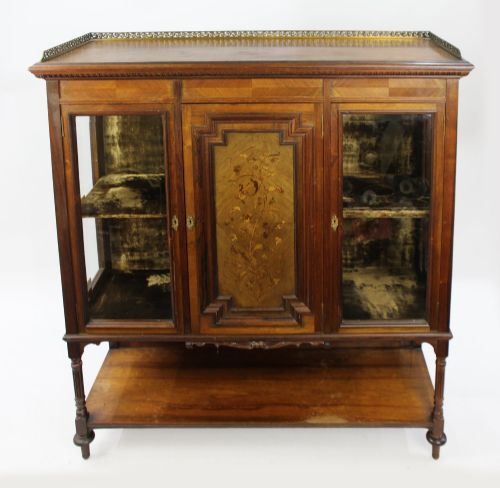
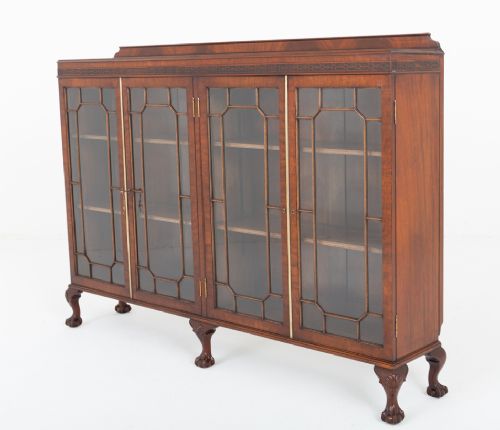
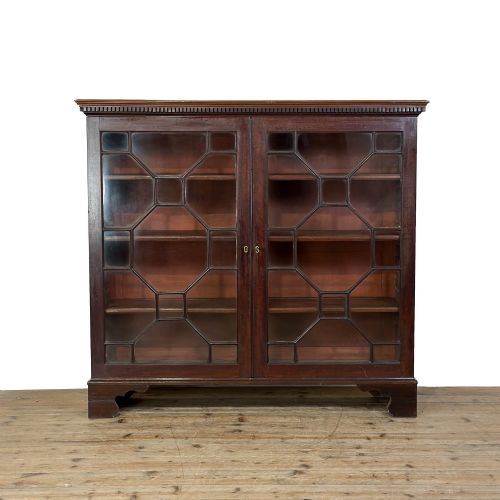
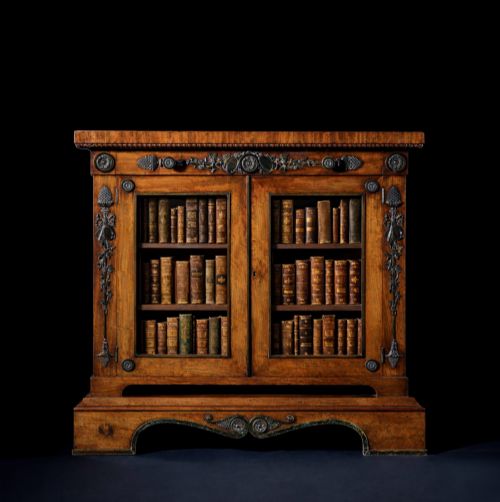
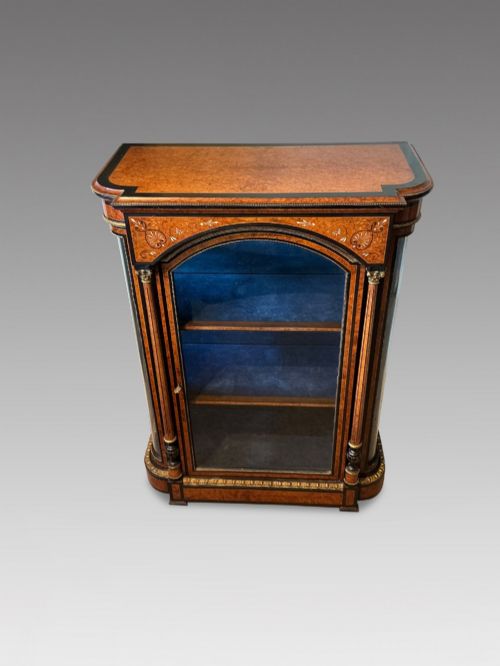
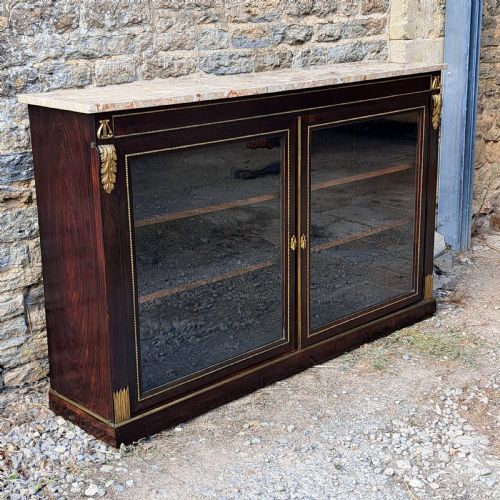
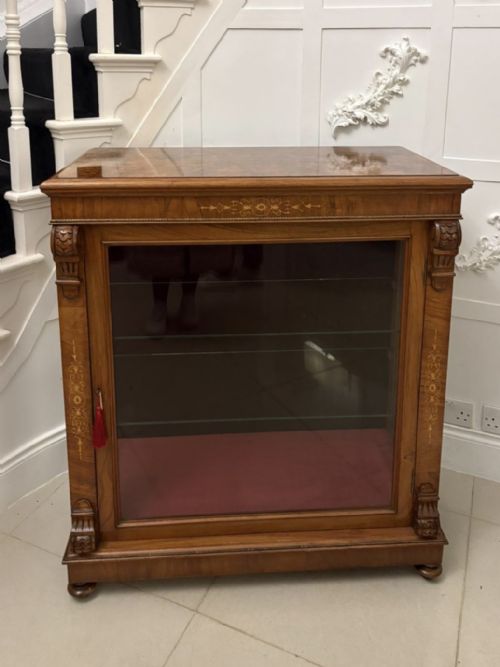
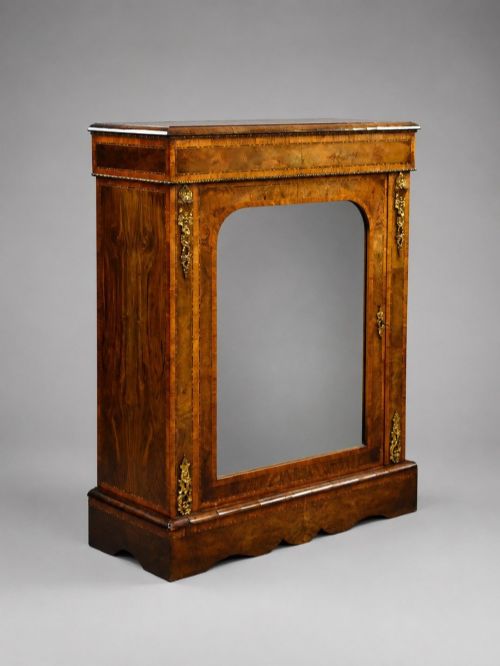
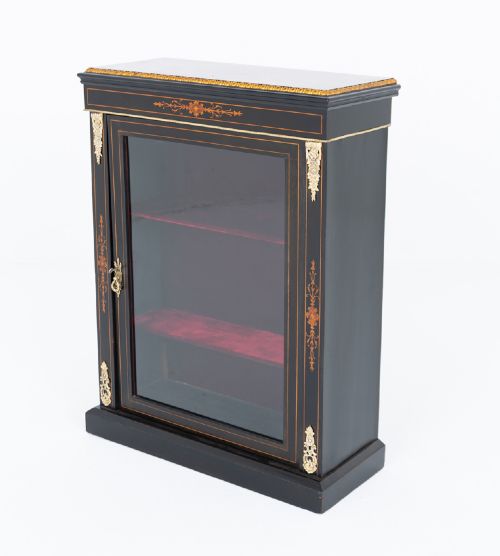
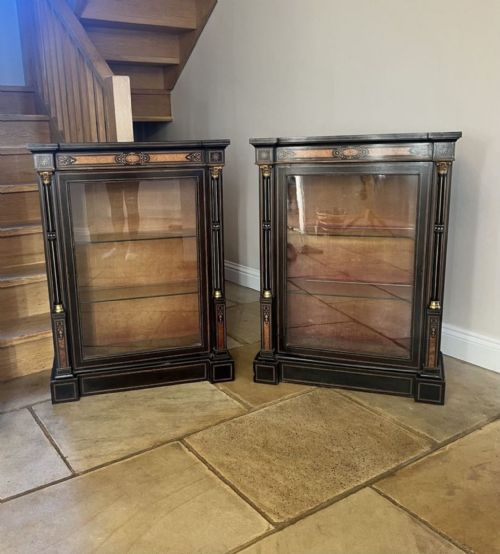


Glass Door Side Cabinet
A glass door side cabinet brings display space and timber character to a room, offering glazed panels to protect books and treasured objects.
Glass Door Side Cabinet
When you search for a glass door side cabinet, you encounter disciplined storage furniture designed to hold books and display ornaments. These pieces range from compact pier cabinets to larger breakfront bookcases and credenzas.
The majority of examples seen on this page date from the Victorian period, alongside pieces from the Regency and Edwardian eras. Forms vary from single-door wall-adjacent cabinets to wider multi-door sideboards and bookcases.
Makers and cabinetmakers produced these furnishings to anchor principal rooms, using glazed doors to keep dust from delicate bindings and porcelain collections. The resulting pieces combine utility with decorative presence.
Materials and construction
Cabinetmakers built these pieces primarily using walnut, burr walnut, rosewood, mahogany, and ebonised wood. Timber veneers such as burr walnut and figured walnut provided rich grain patterns across flat door panels and friezes.
Decoration relied upon boxwood marquetry, brass mounts, ormolu, and bronze details to accent the timber surfaces. Glazed doors were fitted with fitted glass panes, sometimes complemented by internal velvet linings and adjustable shelving.
Glass Door Side Cabinet Retail Price Guide 2026
Typical asking prices for glass door side cabinet among the pieces listed under this phrase on Sellingantiques today, from the lower quarter to the upper quarter. They describe what is for sale here now, not the wider market.
The listings here draw predominantly from the Victorian era, supplemented by Regency and Edwardian examples featuring walnut, rosewood, and mahogany.
Defining quality in these cabinets
Quality rests upon the selection of timber veneers, where highly figured burr walnut or richly grained rosewood elevates a piece above plain mahogany or standard stocks. The crispness of boxwood marquetry inlay and the weight of ormolu or brass mounts also separate standard items from finer workshop output.
Structural integrity reveals itself in the fit of glazed doors, the precision of mitred joints, and the retention of original glass and internal velvet linings. Cabinets that preserve their original ebonised finishes or mirror backs demonstrate superior preservation.
The Glass Door Side Cabinet Glossary
- Pier cabinet
- A narrow cabinet designed to stand against the wall space between windows. These pieces often feature single glazed doors and marquetry inlay.
- Credenza
- A low dining or reception room cabinet, frequently fitted with glass doors and side cupboards. They often incorporate ormolu mounts and figured timber veneers.
- Marquetry
- Decorative veneer work formed by fitting pieces of contrasting wood and boxwood into a ground layer. This technique created floral or geometric patterns on cabinet doors.
- Ormolu
- Gilt bronze mounts applied to the corners, feet, and friezes of cabinets. The technique adds metallic contrast to dark woods such as rosewood and ebonised timber.
- Ebonised wood
- Timber treated to imitate ebony. This finish gained popularity during the Victorian period, often contrasted with amboyna or gilt details.
Glass Door Side Cabinet: Frequently Asked Questions
Where should I place a glass door side cabinet?
These cabinets suit living rooms, libraries, or hallways where wall space permits a slim or breakfront profile. Their glazed doors allow you to display ceramics and books safely while keeping dust out.
Position them away from direct sunlight to protect antique timber veneers and velvet linings from fading over time.
How do I clean antique timber and glass?
Dust timber surfaces regularly with a soft, dry cloth to prevent accumulation in carved details and marquetry. Avoid modern silicone sprays or harsh chemical polishes that can degrade nineteenth-century finishes.
Clean the glass panels with a mild glass cleaner applied to a cloth rather than sprayed directly, ensuring liquid does not seep into wooden rebates.
What is the difference between a pier cabinet and a credenza?
A pier cabinet is typically a tall, narrow single-door piece built to occupy the narrow wall pier between windows. They focus on vertical display with glazed doors and fitted shelves.
A credenza is wider and lower, frequently featuring three doors or a central glazed cupboard flanked by side cabinets, designed to sit against a main reception room wall.
How do I identify a Victorian walnut cabinet?
Victorian walnut cabinets often display rich, figured grain patterns, particularly when burr walnut or marquetry inlay is employed. Look for nineteenth-century construction traits such as hand-cut dovetails and original brass hardware.
Many examples incorporate boxwood stringing and glazed doors framed by moulded timber borders characteristic of the 1850s to 1880s.