


Victorian Needlework Screen
A victorian needlework screen brings warmth and texture to a room, combining tactile embroidery with handsome timber frames made to shield faces from hearth heat.
Victorian Needlework Screen
When you search for a victorian needlework screen, you encounter striking furnishings designed to manage the intense heat of open fires while decorative panels add colour and domestic artistry to interiors. The forms divide between upright pole screens with adjustable panels and wider floor or table models that sit securely near the hearth.
Rosewood and mahogany form the backbone of the timberwork seen across these pieces, frequently paired with intricate wool, silk, or canvas needlepoint panels. Styles range from restrained early designs to ornate revival pieces bearing the curved flourishes typical of the nineteenth century.
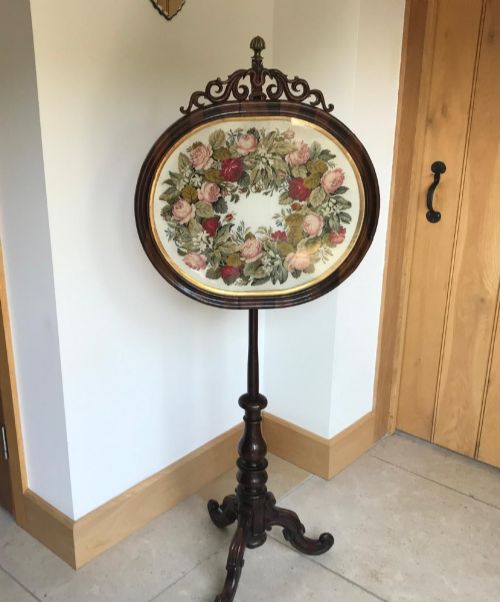
Pole screens dominate the selection, offering a sliding mechanism mounted on a slender central column supported by a carved tripod or circular base. Table screens and broader room dividers also appear, providing compact alternatives or expansive privacy panels for period spaces.
Materials and construction
Cabinetmakers utilised dense hardwoods such as rosewood, mahogany, satinwood, and carved oak to construct the sturdy frames and pedestals. These timbers received hand-carving, bobbin turning, or gilding to enhance the visual weight of the support structure.
Needlework panels relied on durable wool, silk, and canvas materials worked in Berlin wool work, tent stitch, or tapestry techniques. Installers secured these textile artworks tightly within wooden frames or behind protective glass panes to guard against soot and handling.
Period origins stretch across the Regency, William IV, and Victorian eras, encompassing Rococo Revival and Baroque design influences.
Assessing craftsmanship and design
The sophistication of the timber carving and the complexity of the needlework panel dictate the distinction between standard examples and exceptional pieces. Finely turned columns, substantial rosewood grains, and deep relief carvings on bases separate ambitious workshops from simpler output.
The artistic execution of the embroidery itself matters greatly, where dense shading, careful stitch tension, and ambitious figural or floral compositions elevate the panel. Well-executed sliding mechanisms on pole screens that hold their position securely also denote superior period manufacturing.
The Victorian Needlework Screen Glossary
- Pole screen
- A freestanding vertical screen featuring an adjustable embroidered panel mounted on a central wooden shaft. This design allowed sitters to slide the screen up or down to deflect heat from their faces.
- Berlin work
- A popular nineteenth-century style of needlepoint embroidery worked on canvas from coloured charted designs. It brought vivid shades of wool into domestic decorative panels.
- Cheval screen
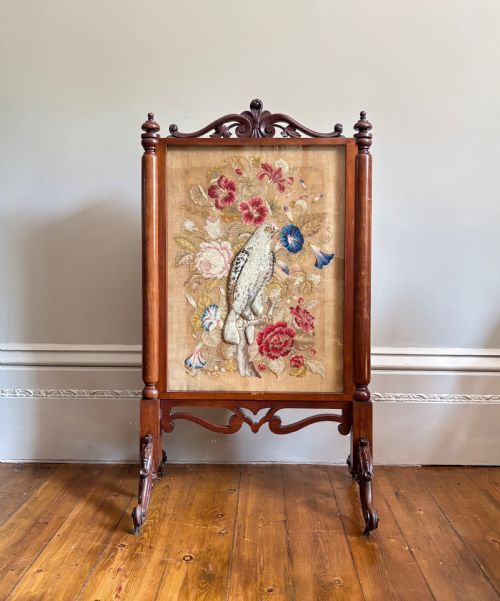
- A large floor-standing screen supported by two sturdy side pillars rather than a central pole. These wider frames often double as room dividers or privacy panels.
- Table screen
- A smaller version designed to sit atop a desk, table, or mantelpiece rather than the floor. It offered localized protection from hearth drafts in intimate seating arrangements.
- Tapestry
- Hand-woven or embroidered textile art depicting pictorial scenes or floral motifs. In these pieces, the tapestry forms the central decorative and functional barrier.
Victorian Needlework Screen: Frequently Asked Questions
How did people use a pole screen?
Sitters placed the pole screen between their chairs and the open fireplace to block the intense radiant heat of coal or wood fires. They adjusted the height of the needlework panel along the upright shaft to shield their faces while keeping the rest of the room comfortable.
Over time, these pieces shifted from purely functional hearth furniture to decorative statement items positioned in drawing rooms and parlours.
Are pole screens difficult to place in modern rooms?
Their slender vertical profiles make them surprisingly versatile for corner placement in contemporary interiors where floor space is limited. They function effectively as sculptural objects or display accents rather than practical heat shields today.
Pairing a rosewood or mahogany frame with neutral modern decor allows the antique needlework panel to serve as a focal point of textile art.
What is the difference between a pole screen and a cheval screen?
A pole screen uses a single central wooden shaft with a sliding panel mounted on a weighted tripod or circular base. This allows the embroidery to pivot and adjust vertically.
In contrast, a cheval screen is wider, supported by two upright legs on either side of a fixed frame, functioning more like a miniature room divider.
How do I care for the antique needlework?
Keep textile panels out of direct sunlight to prevent the coloured wool and silk threads from fading over time. Gentle dusting with a soft brush helps maintain the fabric without disturbing delicate stitches.
Avoid placing these screens directly next to modern heat sources or damp walls to protect both the wooden frames and the historic canvas backings.