


Victorian Woolwork Tapestry
Victorian woolwork tapestry brings tactile historical texture to interiors, prized for its vivid domestic needlework.
Victorian Woolwork Tapestry
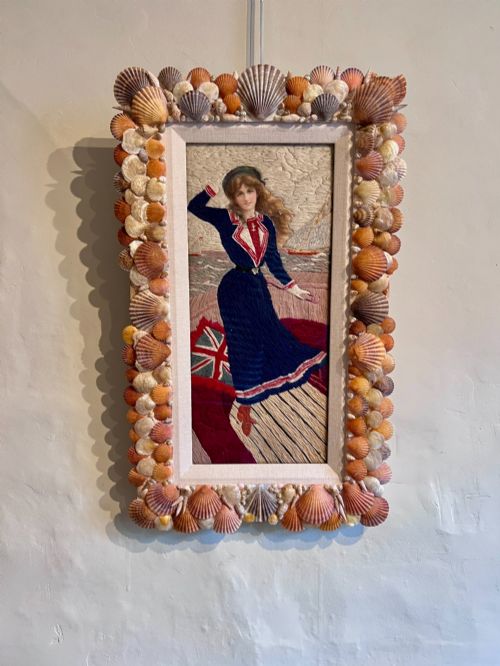
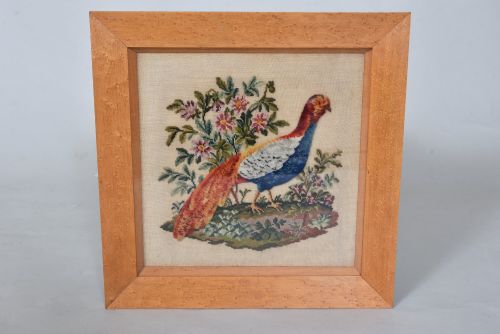
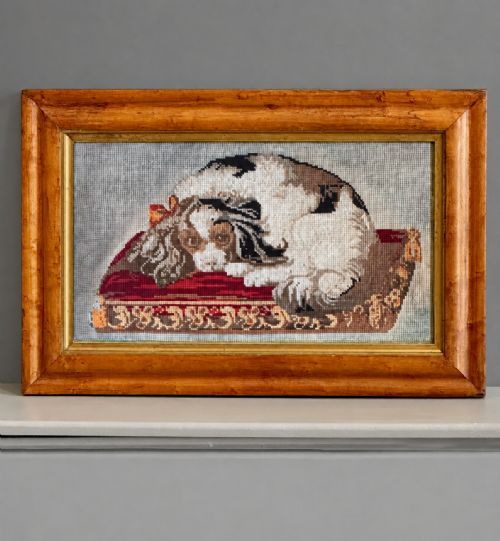
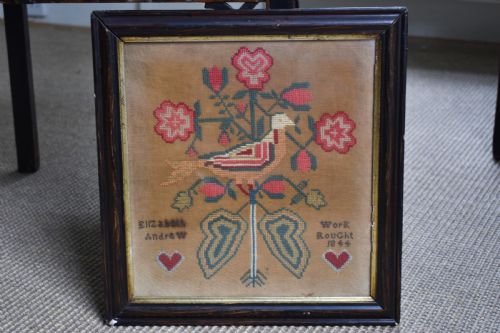
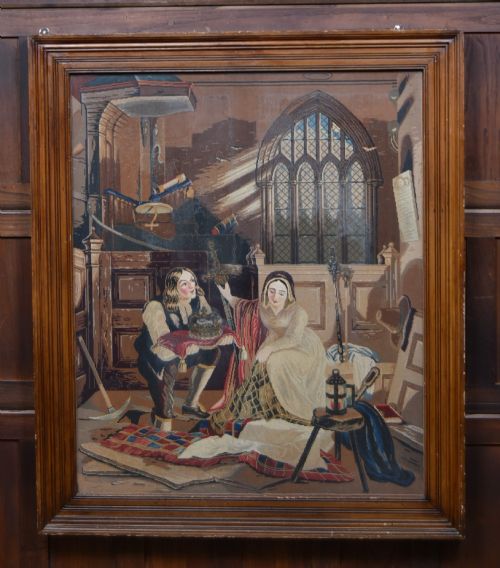
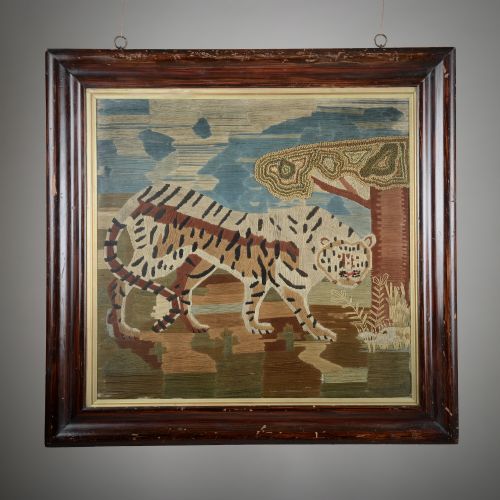
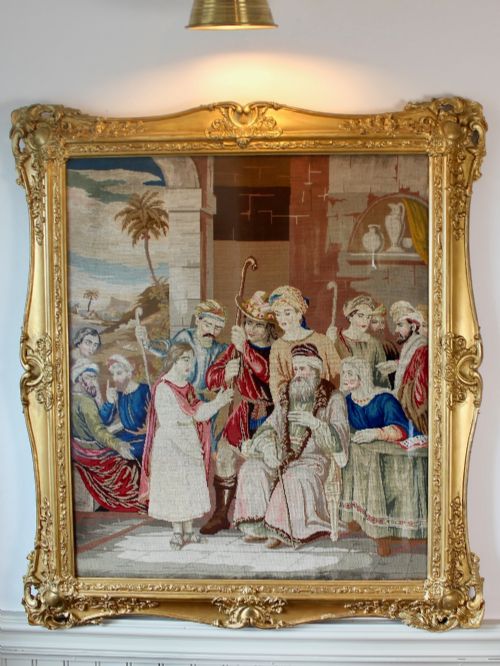
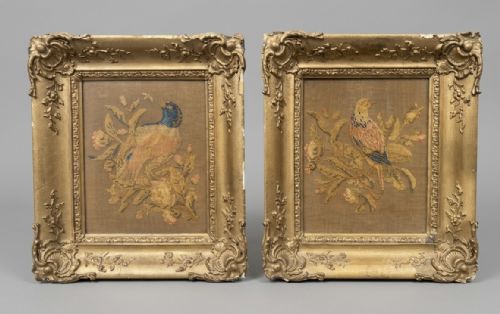
Victorian woolwork tapestry encompasses framed wall art, samplers, fire screens, and textile panels originating across the nineteenth century, including specific styles like Victorian Folk Art, Victorian Rococo Revival, and Gothic Revival. These pieces present pictorial scenes, portraits, religious subjects, animals such as lions, pheasants, and dogs, alongside commemorative military subjects.
Buyers are most likely to encounter framed wall art executed in Berlin work, gros point, petit point, or plushwork techniques. The selection spans domestic animal depictions, portraiture, and narrative scenes housed in original wooden, giltwood, burr maple, or rosewood frames, occasionally retaining glass.
Materials and construction methods
Makers utilised wool and silk thread worked upon canvas foundations, frequently incorporating fabric backing and mounting the finished needlepoint within wood or giltwood frames. Glazing with glass protected the delicate textile surfaces from dust and environmental degradation.
Techniques range from standard Berlin wool work and counted thread methods to raised plushwork and carpet mosaic pictures. Frames employed woods like oak, walnut, rosewood, and burr maple, sometimes enhanced with gilt finishes.
Listings feature works spanning the nineteenth century, utilising wool, silk, canvas, and various wood frames across styles from folk art to Gothic Revival.
Distinctions in execution and presentation
Quality rests upon the fineness of the needlework stitches, the complexity of the pictorial composition, and the fidelity of the colour palette. Superior examples demonstrate skilled shading, anatomical accuracy in figures or animals, and well-executed detail in complex scenes.
The integrity of the original frame, whether rosewood, burr maple, or giltwood, significantly influences the overall character. Surviving glass and minimal restoration to the wool fibres distinguish better-preserved historical items.
The Victorian Woolwork Tapestry Glossary
- Berlin work
- A type of nineteenth-century needlepoint worked in wool on canvas from printed and hand-coloured squared paper patterns. This method allowed makers to produce highly detailed pictorial scenes.
- Gros point
- A coarse needlepoint stitch executed on canvas that provides robust texture and coverage. It frequently forms the background or primary structure of larger nineteenth-century tapestries.
- Plushwork
- A needlework technique where loops of wool are cut to create a raised, velvet-like pile. This method added realistic texture to animal depictions such as pheasants.
- Sampler
- A piece of needlework demonstrating various stitches and motifs, traditionally produced to display a maker's skill. Historical examples often incorporate alphabets or pictorial designs.
Victorian Woolwork Tapestry: Frequently Asked Questions
How should I clean a Victorian woolwork tapestry?
Surface dust should be removed gently using a soft brush while avoiding moisture or harsh cleaning agents. Professional textile conservators should handle deep cleaning to prevent damaging the historic wool fibres.
Keeping the piece behind original glass protects the fragile textile from atmospheric soot and physical handling. Avoid placing the artwork in direct sunlight to prevent the wool and silk threads from fading.
Were these tapestries made at home?
Many nineteenth-century needlework pieces were produced domestically by women following commercially printed Berlin work charts. These patterns democratised complex pictorial designs for amateur makers.
Other examples originated from professional workshops or specialised artisans creating large wall hangings and furniture panels. The complexity of stitches often indicates whether a piece was domestic handiwork or professional production.
What frames are original to these tapestries?
Rosewood, burr maple, oak, and giltwood frames frequently house these nineteenth-century textiles. The choice of wood often reflects the domestic fashion and status of the period.
Original frames generally show period-appropriate construction methods and minor wear consistent with age. Matching glass retention further supports the originality of the framing.
How do I identify a Berlin work piece?
Berlin work is characterised by counted wool stitches on canvas that create symmetrical, brightly coloured pictorial designs. The motifs often rely on charted floral, animal, or narrative subjects.
This style gained immense popularity during the mid-nineteenth century following the distribution of painted grid patterns from Germany. The regular grid appearance distinguishes it from freehand embroidery.