
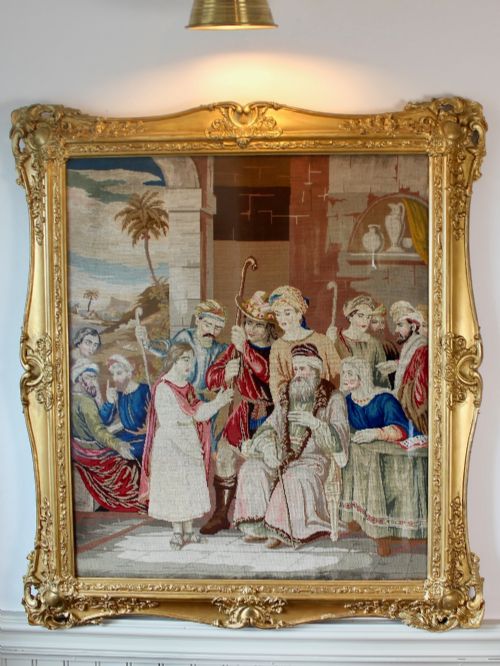


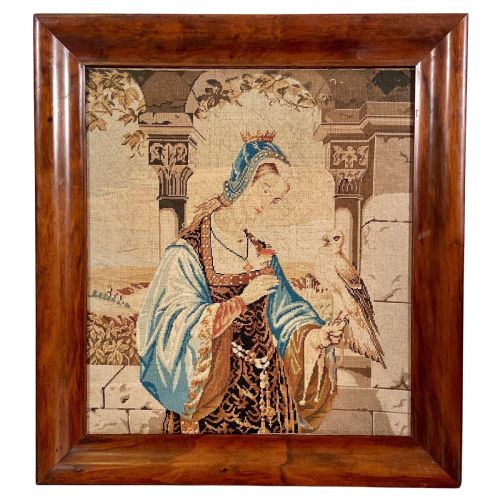


Wool Needlepoint Picture
A wool needlepoint picture brings texture and historical narrative to a wall, offering rich colour preserved behind glass.
What these wool needlepoint picture examples represent
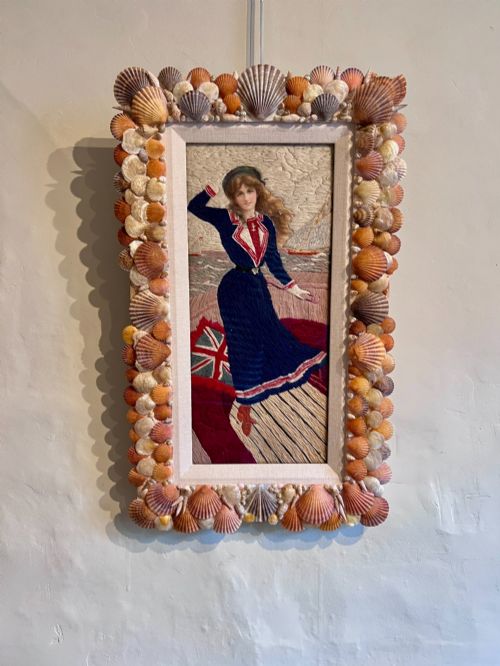
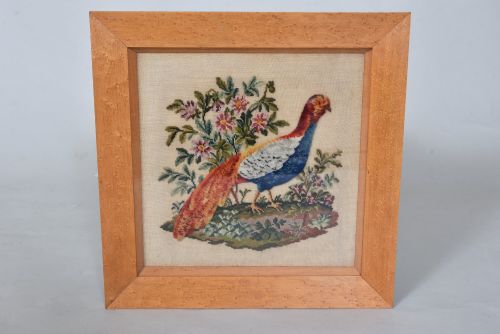
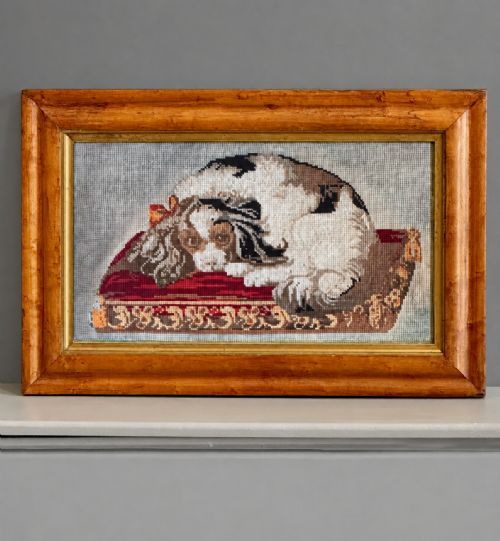
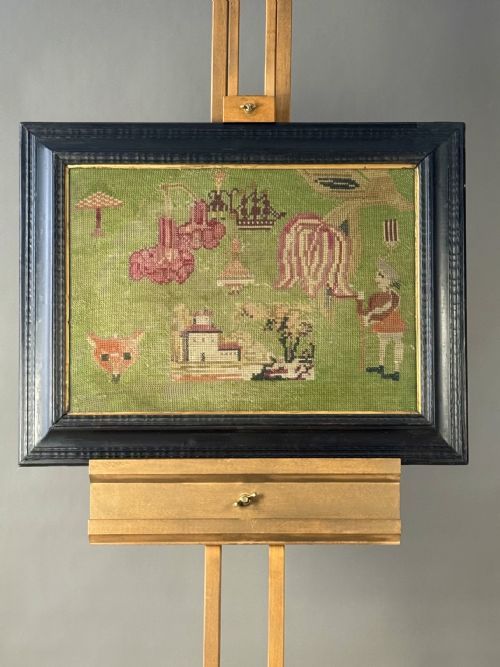
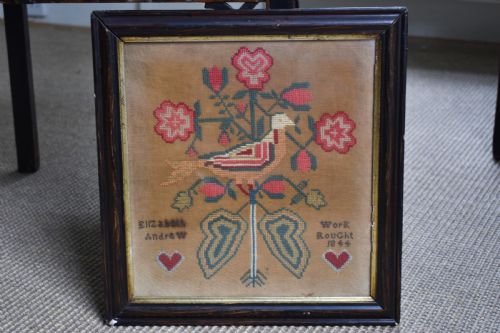
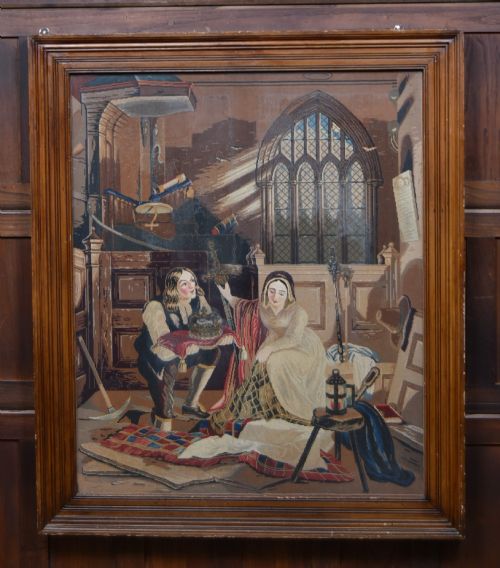
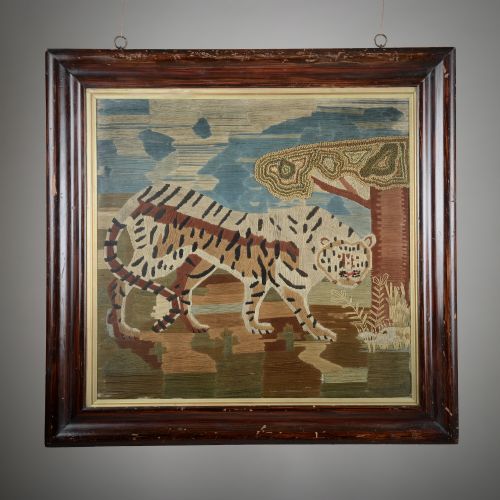
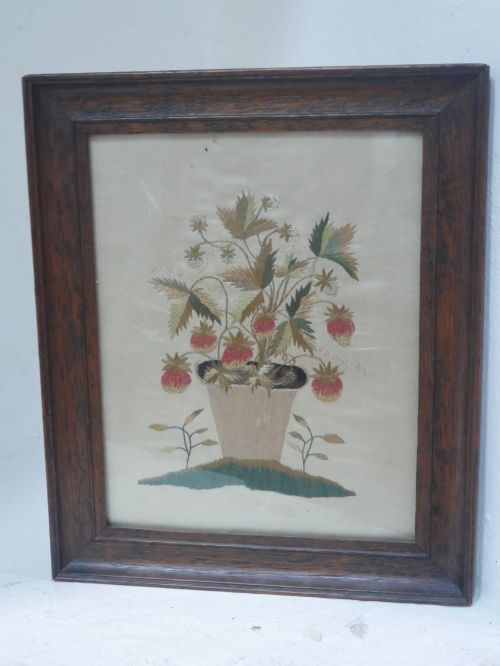
A wool needlepoint picture brings tactile depth to wall art through worked textile designs. These pieces span the eighteenth, nineteenth, and early twentieth centuries, encompassing Victorian, Georgian, Renaissance Revival, and Edwardian styles. The selection includes works produced in Britain and continental Europe.
Victorian examples dominate the selection, often translating famous paintings or dramatic narratives into stitched form. Subjects range from allegorical scenes and literary figures to landscape interpretations after Constable. Textile art pieces frequently retain their original timber and giltwood frames.
Scottish and Italian origins appear among the regional variations, depicting subjects such as mourning scenes or noble figures. Formats include large framed wall art designed for domestic display. Each piece relies on canvas or linen grounds worked primarily in wool yarns.
How these wool needlepoint picture works were constructed
Giltwood and timber frames protect the fragile surfaces, frequently paired with glazing to shield the woolwork from dust and light. The weight and moulding of the frame often reflect the period of the textile it encloses. Glazed frontages help preserve the integrity of the fibre over generations.
Retail Price Guide 2026
Typical UK retail prices for wool needlepoint picture, calculated from the Sellingantiques database of over a million retail prices indexed since 2003. This retail price guide relies exclusively on Sellingantiques data; no external sources or auction records are used, so the figures do not describe the wider market.
Italian and Scottish regional origins appear within the selection, alongside dominant Victorian decorative styles.
What separates standard examples from finer works
Quality rests in the precision of the stitching and the complexity of the colour palette employed by the worker. Finer pieces demonstrate subtle tonal shading that gives depth to figures and landscapes, whereas simpler works rely on flat blocks of colour. The ambition of the pictorial composition dictates the overall artistic merit.
The survival of the original frame and glass contributes significantly to the integrity of the piece. Works retaining their period gilt wood or timber surrounds offer a more complete historical context than those re-framed later. The tightness of the canvas tension inside the frame also influences longevity.
The Wool Needlepoint Picture Glossary
- Berlin woolwork
- A type of needlepoint embroidery popular in the nineteenth century that used painted paper patterns and brightly dyed wools. It allowed makers to create complex pictorial scenes at home.
- Gros-point
- A coarse needlepoint stitch worked on canvas, providing a durable and textured surface suitable for large pictorial panels. It forms the heavy background work in many historical textiles.
- Giltwood
- Timber carved and coated with a thin layer of gold leaf. It defines the decorative frames that encase many nineteenth-century wall pieces.
- Canvas
- A heavy woven fabric used as the foundational ground for needlepoint stitching. Its grid structure guides the placement of each individual yarn.
- Renaissance Revival
- A nineteenth-century architectural and decorative style drawing inspiration from fifteenth-century Italian and French art. It influences the classical themes seen in continental needlework.
Frequently Asked Questions
How should I hang a wool needlepoint picture?
Hang these textile works away from direct sunlight and high humidity to prevent the wool fibres and timber frames from degrading.
Ensure the wall fixings are secure, as glazed frames carrying timber mouldings can be surprisingly heavy.
What periods do these pictures come from?
The available examples date primarily from the Victorian era, alongside eighteenth-century works and later pieces from around nineteen hundred.
Styles span Georgian restraint through to ornate Renaissance Revival compositions originating in Britain and Italy.
Are these pieces cleaned easily?
Surface dust on the exterior glass can be wiped gently with a standard cloth, but the textile beneath should remain undisturbed.
Professional conservators handle any deep cleaning or structural repairs required by aged wool and canvas.
How do I identify the subject of a needlework?
Subjects often reference well-known paintings, literary narratives, or classical mythology popular during the nineteenth century.
Inscriptions on the reverse or traditional titles recorded by dealers help clarify specific historical or theatrical scenes.