



Nineteenth Century Tapestry
Nineteenth century tapestry brings textile artistry into domestic rooms, offering woven and embroidered surfaces that transform walls, furniture, and firesides.
Nineteenth Century Tapestry
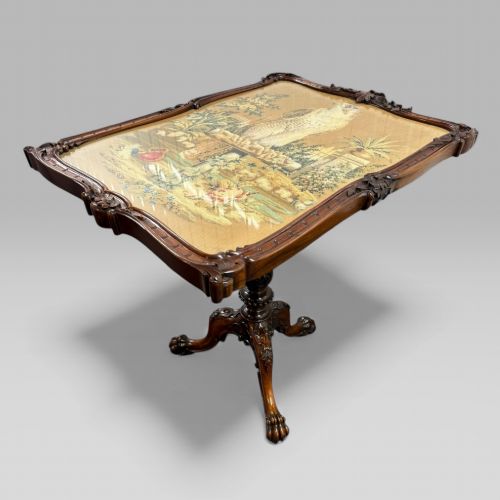
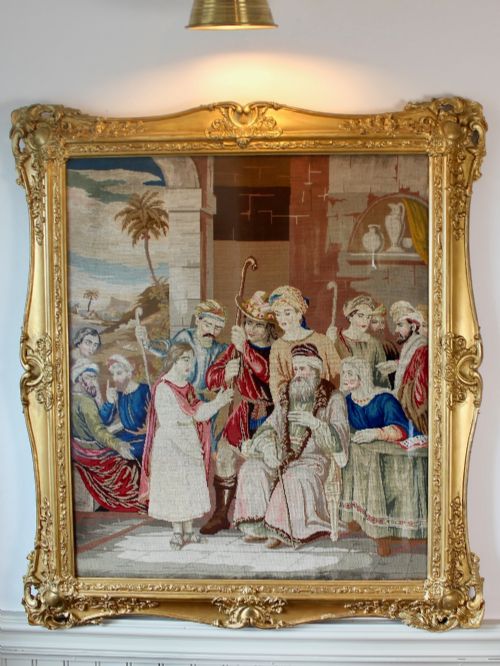
A nineteenth century tapestry encompasses woven wall hangings, framed needlework pictures, and decorative textiles integrated into period furnishings. Buyers exploring this category will frequently encounter framed Berlin woolwork panels, tribal dowry embroideries, and firescreen inserts.
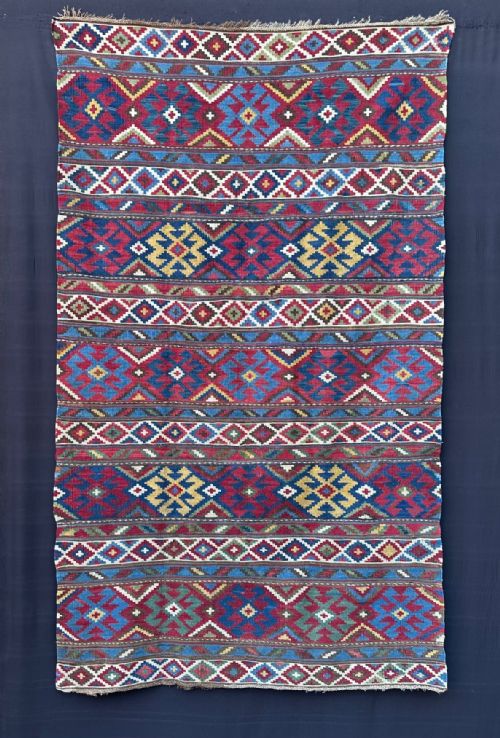
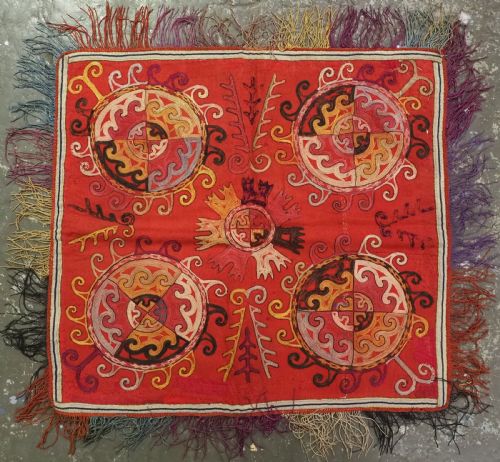
The selections span diverse origins, ranging from French needlepoint portraits and Aubusson carpets to Caucasian kilims and Central Asian tribal trappings. These textiles appear both independently as wall art and mounted within mahogany, rosewood, or giltwood frames.
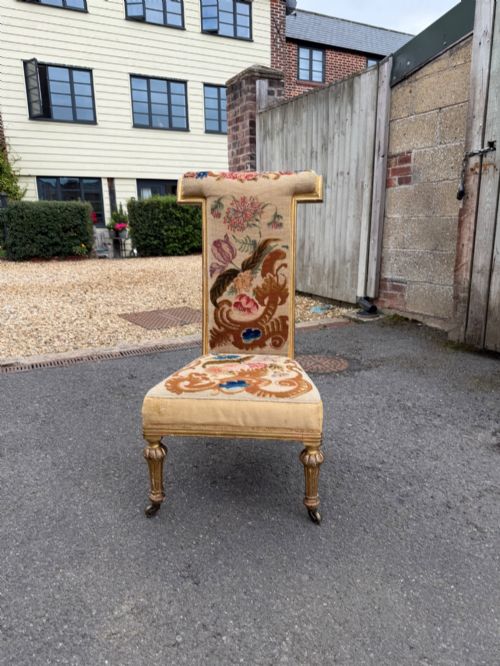
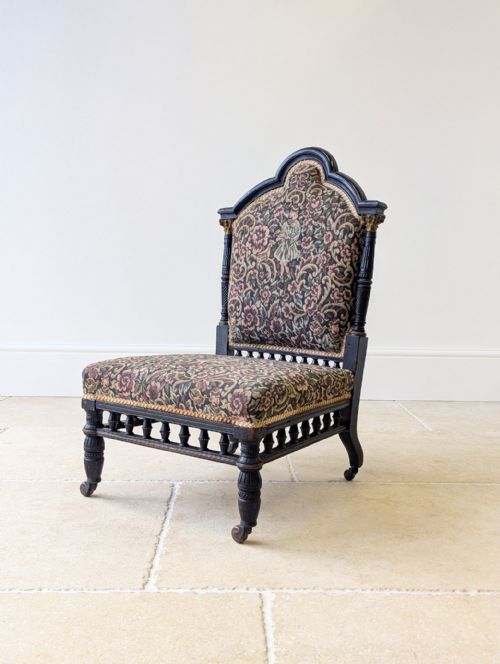
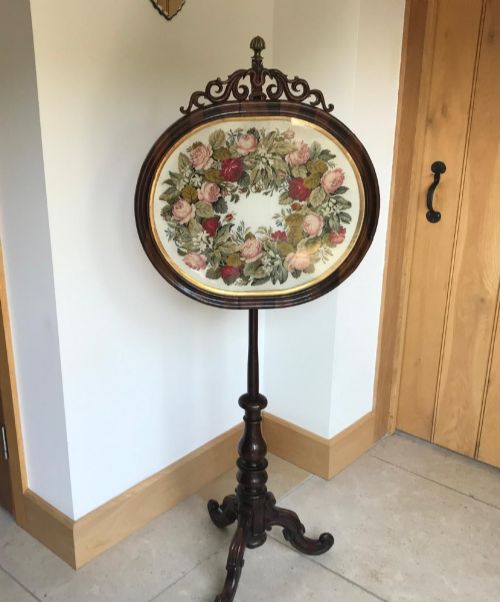
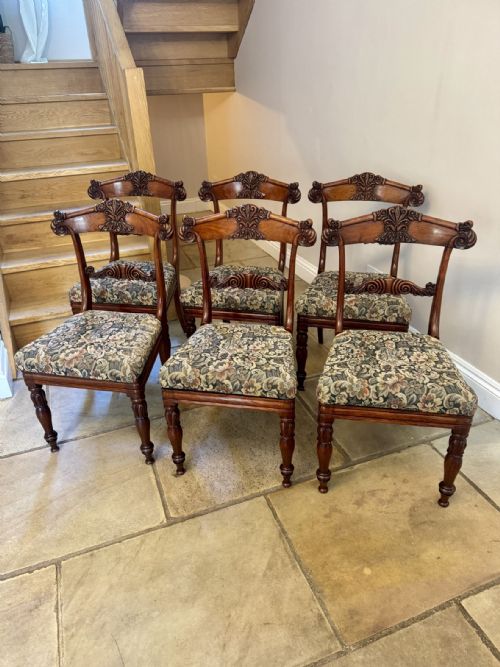
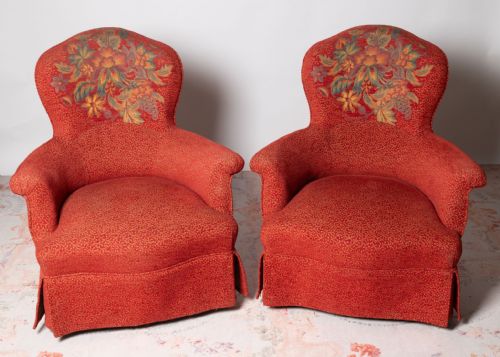
Functional items also dominate the selection, including pole screens, footstools, and salon chairs upholstered in period woolwork or gros-point. Each piece reflects the nineteenth century domestic preoccupation with ornate, tactile interior decoration.
Materials and construction
Makers relied primarily on wool, silk, and cotton yarns, working upon canvas grounds or woven foundations. Berlin woolwork utilised gridded charts and brightly dyed wools to produce pictorial scenes, whilst tribal pieces employed fine knotting and embroidery techniques.
Structural framing involved dense timbers such as mahogany, rosewood, satinwood, and ebonised wood for firescreens and chairs, often enhanced with giltwood accents. Glass frequently protected framed needlework pictures and wall hangings from atmospheric dust and wear.
Nineteenth Century Tapestry Retail Price Guide 2026
Typical asking prices for nineteenth century tapestry among the pieces listed under this phrase on Sellingantiques today, from the lower quarter to the upper quarter. They describe what is for sale here now, not the wider market.
Listings feature items from the 1850s, 1870s, 1880s, and 1890s, alongside broader Victorian and Regency periods.
Evaluating craftsmanship
Quality rests upon the precision of the needlework or weave, evident in the tightness of the stitch and the clarity of the pictorial composition. Finer threads and complex colour blending distinguish accomplished Berlin woolwork and silk pictures from simpler domestic attempts.
The integrity of the supporting frame or textile backing dictates overall survival. Pieces retaining their original rosewood or mahogany mountings, crisp carved details, and stable tension command greater appreciation.
H Ogden of Manchester·Gillows
The Nineteenth Century Tapestry Glossary
- Berlin woolwork
- A popular nineteenth century style of needlepoint embroidery worked on canvas from printed, gridded colour charts. This technique allowed makers to create detailed pictorial representations of contemporary stories and historical scenes.
- Pole screen
- A vertical decorative panel mounted on an adjustable brass or wooden rod supported by a tripod base. These devices stood before fireplaces to shield occupants from the intense heat of the hearth.
- Chuval
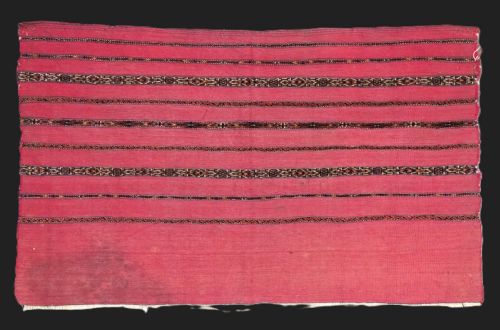
- A large tent bag produced by Turkmen tribes, often featuring distinctive guls or medallions. Collectors prize the surviving face panels for their intricate geometric designs and fine wool knotting.
- Gros-point
- A coarse needlepoint stitch executed on canvas that provides durable texture to upholstery and wall hangings. It frequently appears alongside finer tent stitches in nineteenth century pictorial works.
- Kilim
- A flatwoven carpet or rug lacking a pile, produced across Eastern Europe and the Caucasus. These textiles utilise slit-weave techniques to create sharp geometric patterns.
Nineteenth Century Tapestry: Frequently Asked Questions
How were nineteenth century tapestry firescreens used?
These screens stood between seating areas and open fireplaces to protect individuals from the intense radiant heat. The adjustable panels allowed occupants to block the warmth from their faces while seated.
Over time, the functional need diminished as central heating evolved, leaving the screens valued purely for their decorative textile panels and polished wood frames.
What distinguishes Berlin woolwork from other needlepoint?
Berlin woolwork relies on printed, gridded paper charts that guided makers to count stitches precisely. This method introduced vibrant synthetic dye colours and highly realistic pictorial detail to domestic embroidery.
Pieces executed in this style often depict literary scenes, religious subjects, or animal portraits framed for wall display.
How should I care for a textile wall hanging?
Keep textile wall hangings away from direct sunlight to prevent the wool and silk fibres from fading. Gentle surface dusting with a soft brush helps maintain the integrity of the weave.
Ensure the hanging is properly supported across its entire width to avoid undue strain on the historic threads and backing fabric.
What is the difference between a kilim and a pile rug?
Kilims are flatwoven textiles created by interlocking warp and weft threads without forming a raised pile. This construction results in a thinner, lighter fabric with visible geometric patterns on both sides.
Pile carpets involve knotted yarn loops cut to create a plush surface, offering a different texture and weight for floor covering.