
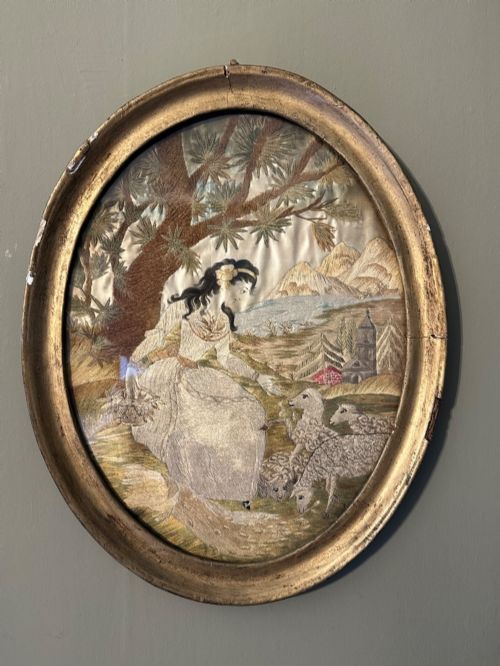

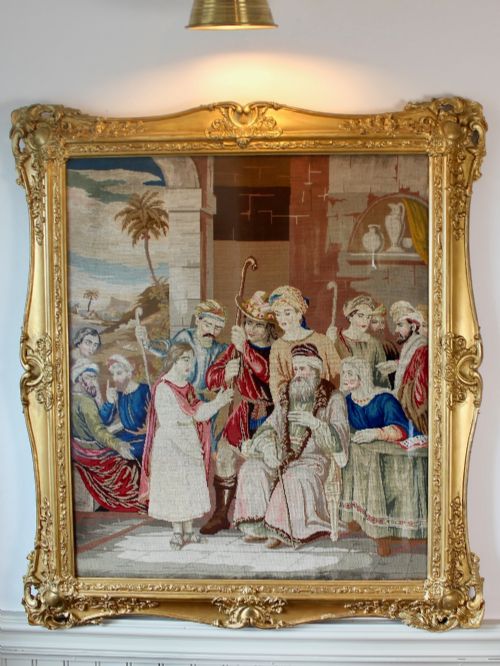

Framed Needlepoint Picture
A framed needlepoint picture brings centuries of textile artistry indoors, offering detailed wool and silk scenes preserved behind glass.
Framed Needlepoint Picture
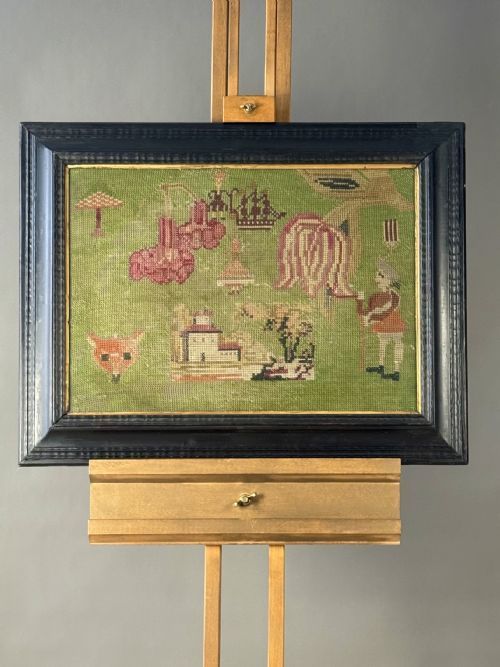
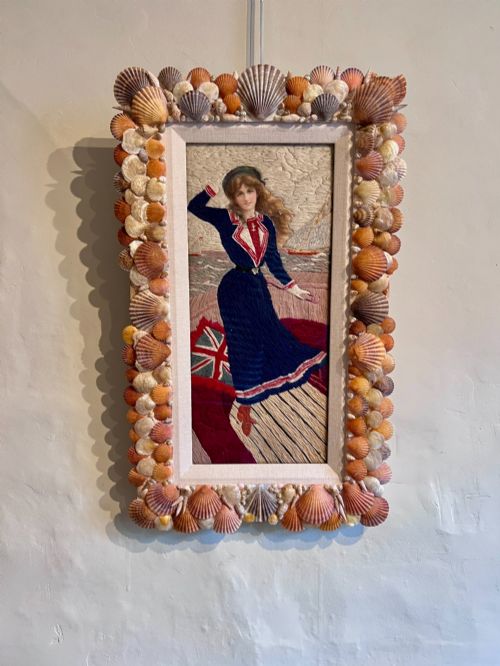
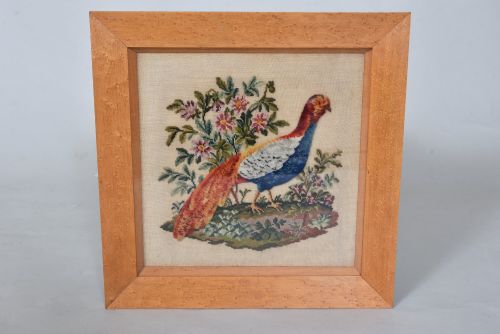
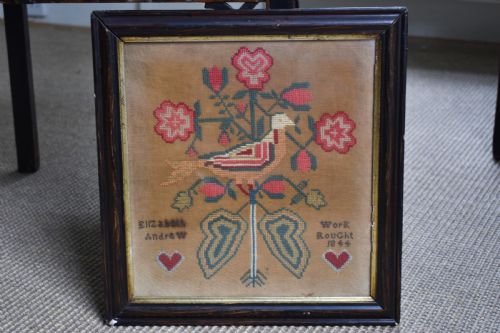
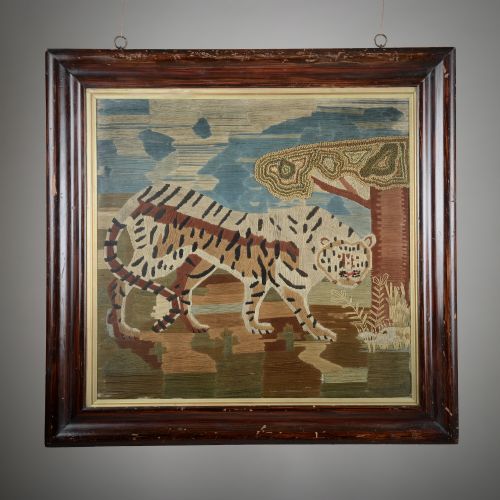
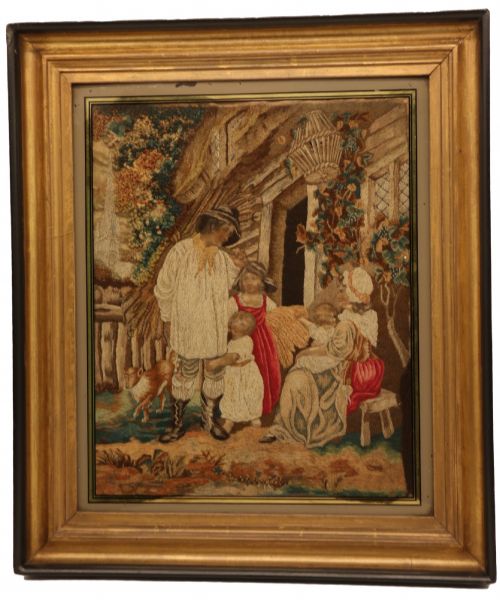
When buyers search for a framed needlepoint picture, they encounter wall art spanning from the seventeenth century through the Victorian era and into the early twentieth century. The selection ranges from pastoral scenes and literary subjects to detailed portraits and animal studies.
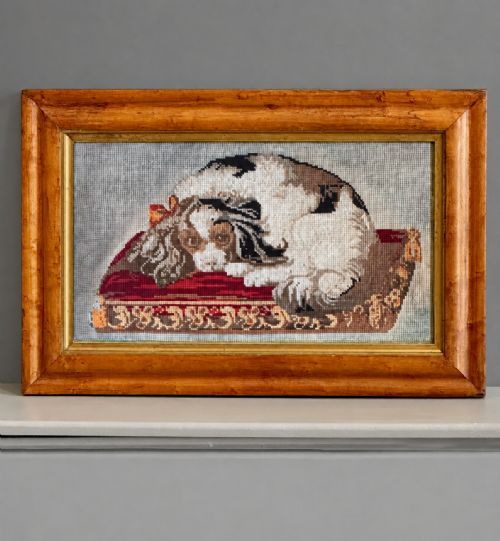
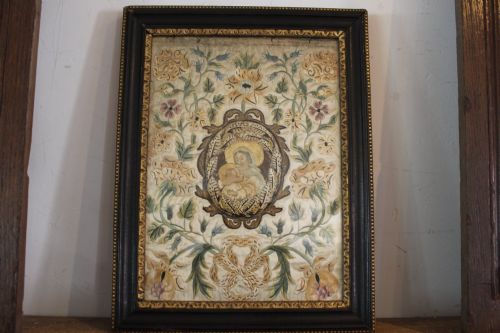
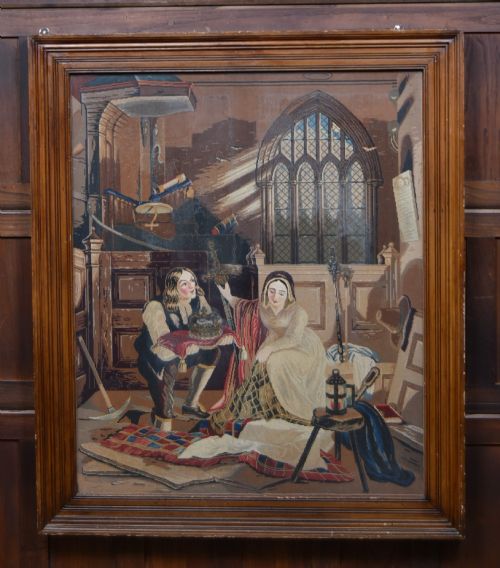
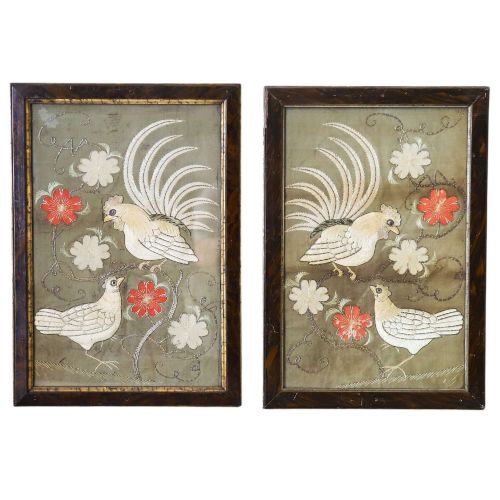
Victorian examples frequently utilise plushwork or Berlin work techniques to render dogs, birds, and figures in rich wools. Earlier eighteenth and seventeenth-century pieces often incorporate fine silk embroidery and wool on linen grounds, depicting classical subjects and biblical narratives.
Regional variations appear across British, French, Italian, and Chinese works, housed in period surrounds such as burr maple, giltwood, and faux tortoiseshell frames. These textile wall art pieces function as both historical documents and decorative focal points for domestic interiors.
Materials and construction methods
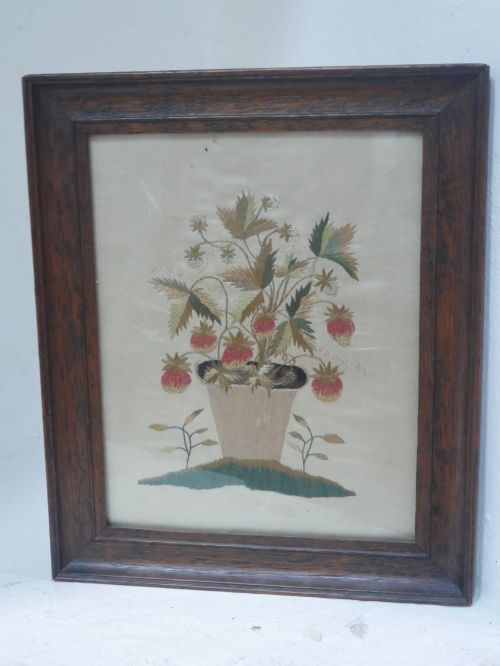
Maker execution relies on textile mediums such as wool, silk floss, and linen canvas, often combined with hand-painted silk details or beadwork fragments. Threads are stitched using various methods including long stitch, gros-point, and needlepoint tapestry techniques.
Protection and presentation involve original timber and gilt frames fitted with glass to shield delicate silk and wool threads from environmental degradation. Surviving pieces frequently retain verre églomisé mounts or original wooden surrounds that complement the stitched artwork.
Framed Needlepoint Picture Retail Price Guide 2026
Typical asking prices for framed needlepoint picture among the pieces listed under this phrase on Sellingantiques today, from the lower quarter to the upper quarter. They describe what is for sale here now, not the wider market.
Listings feature textile art executed in wool, silk, and linen across the seventeenth, eighteenth, nineteenth, and twentieth centuries.
Evaluating needlework picture quality
Quality rests upon the intricacy of the stitchwork, the complexity of the colour palette, and the preservation of the textile fibres. Finer works display meticulous tension and precise shading that give depth to human figures, animals, and landscapes.
The integrity of the original frame adds significantly to the piece, particularly when housed in period burr maple, giltwood, or verre églomisé surrounds. Superior examples maintain stability in the canvas ground without excessive fading or loss to the silk and wool threads.
The Framed Needlepoint Picture Glossary
- Berlin work
- A type of nineteenth-century needlepoint worked in coloured wool on canvas from printed grid patterns. It allowed makers to create vivid pictorial scenes with elaborate shading.
- Plushwork
- A raised embroidery technique using looped stitches cut to create a velvet-like pile. Victorian makers utilised this method to render realistic textures on animals.
- Verre églomisé
- A process of applying gold or silver leaf to glass along with engraving and painting. Frames featuring this technique frame the needlework with decorative borders.
- Gros-point
- A coarse needlepoint stitch worked on canvas that creates durable, textured areas. It often forms the background or structural elements of historical tapestries.
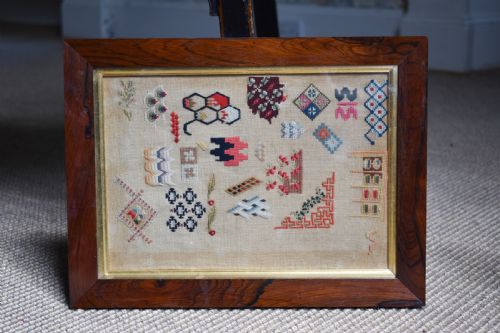
- Sampler
- A piece of needlework produced to demonstrate proficiency in various stitches. Early examples display alphabets, motifs, and decorative borders.
Framed Needlepoint Picture: Frequently Asked Questions
How do I hang a textile picture safely?
Position the artwork away from direct sunlight and damp environments to protect the delicate silk and wool fibres.
Ensure the frame hangs securely from appropriate wall fixings that support the weight of the wood and glass.
What periods do these pictures cover?
The inventory spans from the seventeenth century through the Georgian and Regency periods into Victorian times and the early twentieth century.
Each era displays distinct aesthetic preferences, from seventeenth-century silk embroideries to Victorian woolwork and Berlin work.
How are antique silk and wool cleaned?
Textiles behind glass generally require minimal maintenance beyond dusting the exterior frame with a dry cloth.
Professional conservators should handle any internal cleaning or stabilization of fragile threads to prevent fibre loss.
Are original frames common?
Many pieces retain period surrounds such as burr maple, giltwood, or faux tortoiseshell frames that match their manufacturing era.
Original framing enhances the historical context and visual presentation of the stitched artwork.