





Tapestry Fireplace Guard
A tapestry fireplace guard shields a room from intense hearth heat while displaying intricate textile artistry.
Tapestry Fireplace Guard
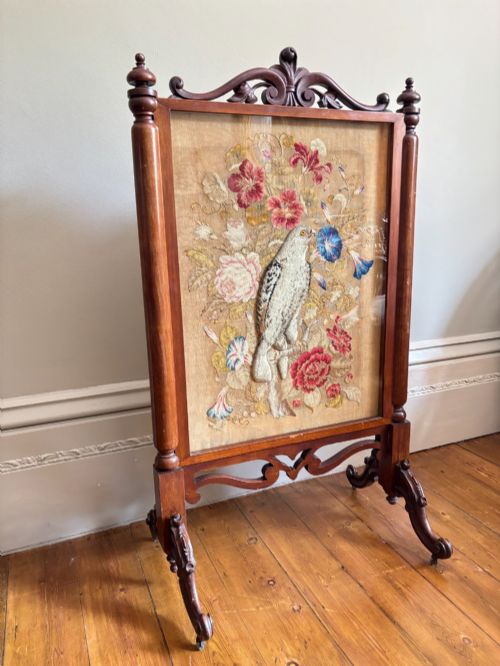
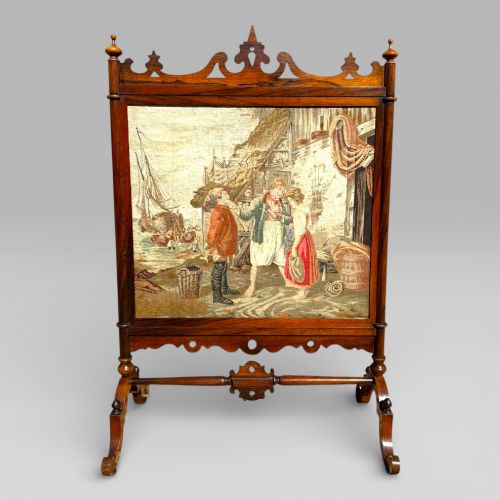
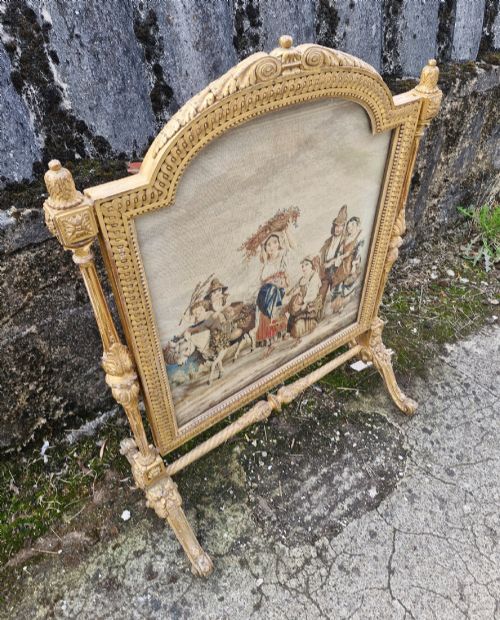
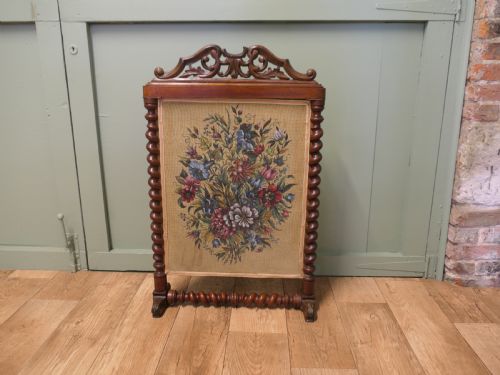
A tapestry fireplace guard serves as both a practical hearth screen and a decorative focal point in a traditional interior. When searching for a tapestry fireplace guard, buyers encounter forms ranging from floor-standing cheval frames to pole screens and metamorphic occasional tables.
The pieces listed on this page span the Georgian, Victorian, and Edwardian eras, showcasing styles from Rococo Revival and Regency to Art Nouveau. Mahogany, rosewood, oak, walnut, and giltwood provide the structural framework for these textile panels.
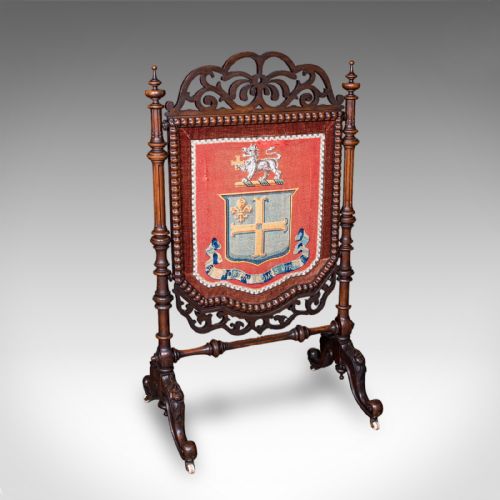
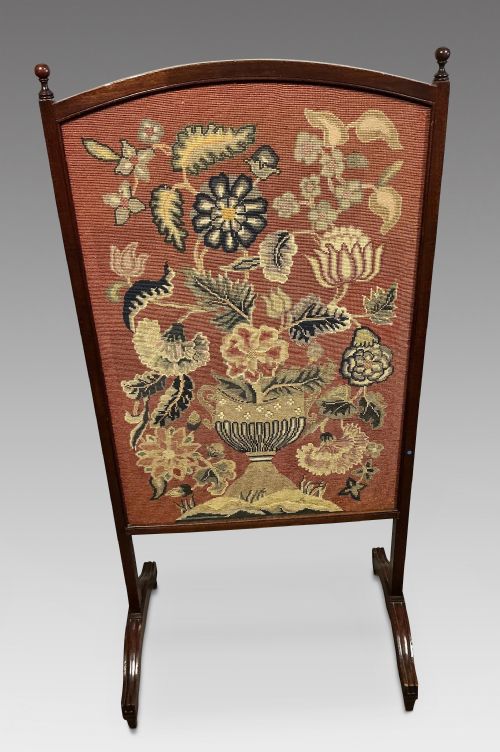
Needlepoint, wool, silk, and canvas panels dominate the visible surface, often depicting pastoral scenes, heraldic coats of arms, or figural motifs. The forms vary from large stationary screens to smaller adjustable designs intended to block radiant heat from the fire.
Materials and construction
Makers constructed the supportive frames using dense timbers such as mahogany, rosewood, oak, walnut, and giltwood, often incorporating carved details, bobbin turning, or brass hardware. These wooden structures support the central textile element, which requires rigid mounting to withstand fluctuating hearth temperatures.
The decorative panels utilise wool, silk, and cotton threads worked onto canvas or needlepoint mesh by hand. Specialised techniques include hand-woven pictorial tapestries and embroidered armorial designs fixed securely within the timber surrounds.
Tapestry Fireplace Guard Retail Price Guide 2026
Typical asking prices for tapestry fireplace guard among the pieces listed under this phrase on Sellingantiques today, from the lower quarter to the upper quarter. They describe what is for sale here now, not the wider market.
Some screens double as occasional tables, proving that Victorians loved furniture that could multitask while keeping ankles cool.
Judging quality and craftsmanship
The caliber of a tapestry fireplace guard rests upon the density and precision of the needlework within the panel, alongside the crispness of the timber carving on the frame. Hand-woven pictorial scenes and finely detailed armorial needlepoint demonstrate superior textile execution compared to simpler machine-woven substitutes.
Structural integrity of the wooden housing, whether rosewood, mahogany, or oak, dictates durability. Pieces that retain original glazing, functioning adjustable mechanisms, or sophisticated turning demonstrate higher workshop standards.
The Tapestry Fireplace Guard Glossary
- Pole screen
- A vertical wooden stand featuring an adjustable framed panel that slides up and down on a central shaft to block radiant heat. This form dates back to the Georgian period.
- Cheval screen
- A self-standing frame supported by two lateral feet, allowing the tapestry panel to tilt at an angle. It provides a wider viewing surface than a pole screen.
- Needlepoint
- A form of canvas work where yarn is stitched through a stiff open-weave mesh in a counted pattern or painted design. It forms the primary decorative surface on Victorian examples.
- Armorial
- A design displaying a family coat of arms or heraldic crest. These panels were often hand-embroidered to denote lineage and status.
Tapestry Fireplace Guard: Frequently Asked Questions
How did people use tapestry fireplace guards?
These screens protected ladies' faces and delicate wax cosmetics from the intense radiant heat of open coal or wood fires.
Positioned strategically in front of the hearth when the fire burned low, they also concealed the empty grate during warmer months.
What is the difference between a pole screen and a cheval screen?
A pole screen uses a single vertical pillar with a sliding mechanism to raise or lower the needlework panel.
A cheval screen stands on two stable side feet and usually tilts on a horizontal axis within a fixed frame.
How should I clean a vintage tapestry panel?
Dust the textile gently using a soft-bristled brush or a low-suction vacuum attachment protected by mesh.
Avoid liquid cleaners or water, as older wool and silk threads can shrink or bleed when exposed to moisture.
How do I date a Victorian fire screen?
Examine the timber species and the framing style, noting that early Victorian pieces often feature rosewood or mahogany with elaborate hand-carving.
Later Victorian and Edwardian examples incorporate turned elements, brass mounts, or alternative woods such as oak and walnut.