
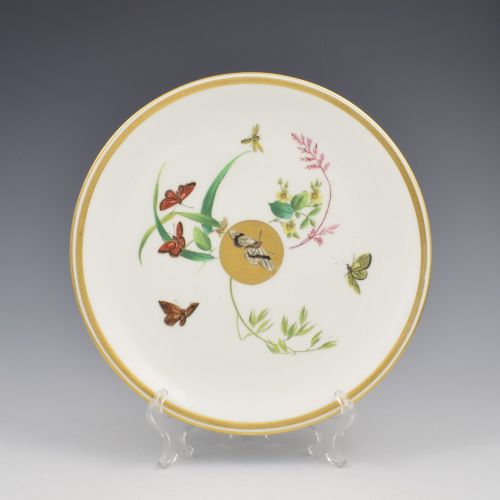


Victorian Mintons China
Victorian Mintons china brings together delicate porcelain, intricate gilding, and master painting from the nineteenth century for the discerning collector.
Victorian Mintons China
Victorian Mintons china encompasses a diverse array of ceramics produced during the nineteenth century, ranging from functional tea services to decorative cabinet plates. When exploring this selection, buyers frequently encounter plates, platters, vases, and tureens shaped by historical revivals and aesthetic shifts.
The objects displayed here span various decades of the nineteenth century, including specific pieces from the 1840s, 1860s, 1870s, 1880s, and 1900. Forms such as basketweave plates and rectangular platters sit alongside elaborate tea sets and single vases.
Makers and decorators utilised distinct decorative vocabularies, drawing upon Rococo revival, Neoclassical, Chinoiserie, Kakiemon, and Aesthetic movement influences. These expressions demonstrate the factory's versatility across earthenware, bone china, and porcelain bodies.
Materials and Manufacture
Makers shaped these wares from porcelain, bone china, and earthenware, applying smooth glazes to create refined surfaces for subsequent decoration. Skilled hands then added hand-painted details, transfer printing in blue and white, and enamel pigments.
Finishing touches often involved gilt, gold leaf, and raised pearl jewelling to accentuate borders and pictorial scenes. Advanced techniques such as pate-sur-pate built up delicate translucent white reliefs over coloured slip grounds.
The recorded object types include tea services, sauce tureens, cabinet plates, vases, and rectangular platters spanning the Victorian era.
Assessing Quality and Artistry
Quality rests upon the precision of the hand-painting, the intricacy of special decorative methods like pate-sur-pate, and the clarity of transfer printing. Superior pieces exhibit meticulous brushwork, careful enamel placement, and rich application of gold leaf.
The artistic ambition of the form also distinguishes individual items, as seen in elaborate armorial designs, Japanese-inspired aesthetic motifs, and textured basketweave mouldings. Greater artistic engagement elevates a piece beyond standard utilitarian production.
Minton·Mintons
The Victorian Mintons China Glossary
- Pate-sur-pate
- A ceramic technique where successive layers of liquid white porcelain slip are built up on a coloured ground to create a low relief cameo effect. This method requires immense skill from the artist to achieve translucent tonal gradation.
- Kakiemon
- A style of Japanese enamelled porcelain characterised by asymmetrical, restrained motifs of birds, flowers, and tigers on a milky white body. Victorian makers adapted these colourful oriental patterns for European tastes.
- Bone china
- A type of soft-paste porcelain composed of bone ash, china stone, and kaolin, producing a strong, milky-white body. It allowed makers to form thinner, more refined tableware and decorative plates.
- Gilt
- A thin layer of gold or gold leaf applied to the surface of ceramic objects to highlight rims, handles, and painted borders. Its application reflects the decorative ambition of nineteenth-century tablewares.
- Cabinet plate
- A decorative ceramic plate intended for display on a wall or within a cabinet rather than for dining use. These items typically feature elaborate hand-painted landscapes, armorials, or figurative scenes.
Victorian Mintons China: Frequently Asked Questions
What periods do these ceramics cover?
The pieces span the nineteenth century, with specific examples originating from the 1840s through to 1900. This timeline captures the evolution of the factory's output from early Victorian utility to late nineteenth-century artistic revival styles.
Collectors can trace changing tastes across different decades through distinct shifts in decorative motifs, ceramic bodies, and manufacturing techniques.
How do I identify different decorative styles?
Stylistic identification relies on recognising visual influences such as Japanese motifs, Chinese tree patterns, Rococo curves, and Neoclassical symmetry. Transfer-printed blue and white patterns also appear alongside brightly enamelled subject matter.
Examining the interplay between the painted surface, the ground colour, and moulded details helps determine whether a piece belongs to an aesthetic movement or a historical revival.
What forms are commonly available?
The selection includes dining and display wares such as dessert plates, cabinet plates, teapots, tea sets, sauce tureens, and serving trays. Vases and platters also feature prominently among the recorded object types.
These forms served both practical dining functions and decorative display purposes within nineteenth-century domestic interiors.
How should I care for Victorian porcelain?
Care requires gentle handling to protect fragile porcelain bodies, delicate enamel work, and applied gold leaf surfaces. Hand washing in lukewarm water with mild soap preserves the historical finishes far better than mechanical dishwashers.
Displaying pieces away from direct sunlight and extreme temperature fluctuations protects the glazes and prevents degradation of the ceramic body over time.