


White Gold Cabinet Plate
White gold cabinet plate designates fine porcelain dishes enriched with gilding and enamel, offering collectors refined Regency and Victorian decorative art for display.
White Gold Cabinet Plate
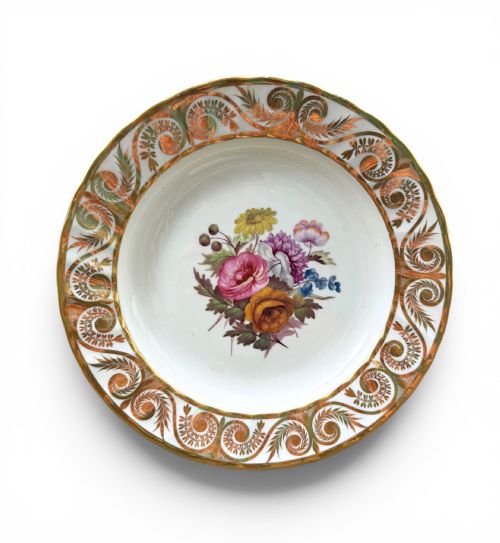
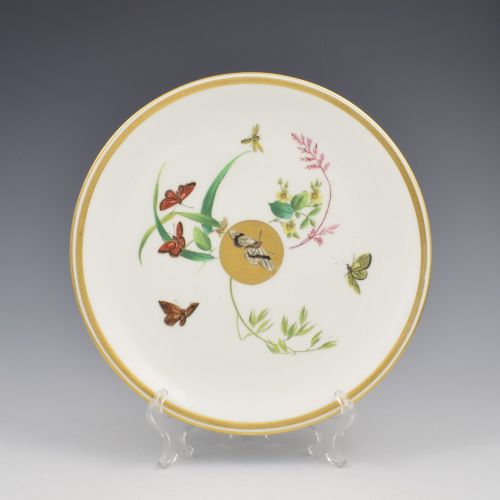
When you search for a white gold cabinet plate, you encounter decorative dishes and dessert plates designed primarily for display rather than dining. These pieces emerge from the Regency, Victorian, and Edwardian eras, spanning the nineteenth century and the early nineteen hundreds.
The selections on this page concentrate on notable porcelain forms including cabinet plates, dessert dishes, and bowls. You will find items shaped by prominent aesthetic movements and revival styles such as Rococo and Japanese style ornamentation.
Makers represented in the current selection include Derby, Minton, Royal Worcester, Barr Flight and Barr, Coalport, Meissen, and Wedgwood. Each form reflects the specific decorative tastes of its period, from floral hand painting to topographical views and pate sur pate work.
Materials and methods
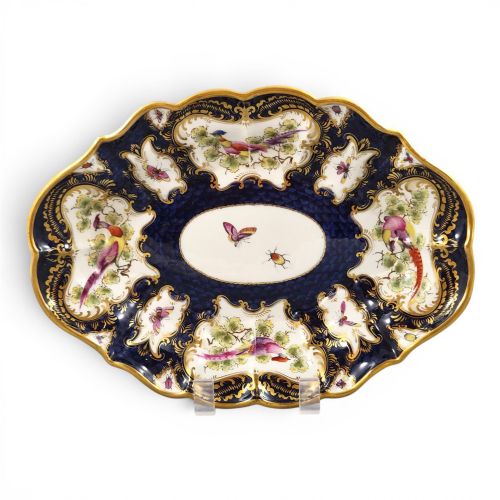
These items rely on high-grade porcelain as a primary body, shaped into plates, bowls, and baskets. Artisans applied hand painting alongside enamel work to create detailed botanical, avian, and topographical scenes.
Gilding and gold leaf define the surface decoration on many examples, accentuating borders, motifs, and relief elements. Techniques such as pate sur pate build raised white designs against contrasting coloured or gilt grounds.
Several plates record specific nineteenth-century exhibition pieces, letting you own ceramics that once travelled to international display halls.
Assessing quality in porcelain plates
Quality rests upon the precision of the hand painting and the crispness of the porcelain moulding, particularly in basketweave or shaped rims. Superior pieces exhibit fine brushwork in floral studies or landscape miniatures.
The application of gold leaf and gilding dictates the visual hierarchy, with intact, burnished gold distinguishing finer examples from simpler factory work. The reputation of the porcelain house also influences the standing of each piece.
Derby·Minton·Royal Worcester·Barr Flight and Barr·Coalport·Meissen·Wedgwood
The White Gold Cabinet Plate Glossary
- Cabinet plate
- A decorative plate intended for display in a cabinet or on a wall rather than for practical table use. These often feature elaborate hand painting and gilding.
- Pate sur pate
- A ceramic technique where design is built up in successive layers of liquid white clay slip onto a contrasting coloured body. This creates a cameo-like relief effect.
- Gilding
- The application of gold leaf or powdered gold to the surface of porcelain. It highlights rims, handles, and painted borders.
- Aesthetic Movement
- A late nineteenth-century design style that rejected heavy Victorian ornamentation in favour of asymmetrical compositions and Japanese art influences.
- Rococo Revival
- A nineteenth-century revival of eighteenth-century Rococo style characterised by C-scrolls, asymmetry, and naturalistic floral motifs.
White Gold Cabinet Plate: Frequently Asked Questions
How do I display a cabinet plate safely?
Cabinet plates are best exhibited using secure wall hangers or dedicated plate stands designed for porcelain. Ensure the display fixture supports the weight of the dish without putting undue pressure on the rim.
Keep pieces away from direct sunlight to preserve the vibrancy of the hand-painted enamels and the brightness of the gilding over time.
Are these plates suitable for serving food?
These decorative dishes and dessert plates are intended for display and collection rather than daily dining. Historic gilding and enamel work can wear down with frequent use and washing.
Gentle dusting with a soft, dry cloth is sufficient for maintenance, avoiding abrasive cleaners that might damage the surface.
What does blue scale mean on porcelain?
Blue scale refers to a patterned underglaze blue ground resembling fish scales, popularized by factories like Royal Worcester in the nineteenth century. This intricate background often frames reserved panels of hand-painted flowers.
Plates featuring this pattern require careful handling to preserve the integrity of the blue ground and surrounding gilt work.