


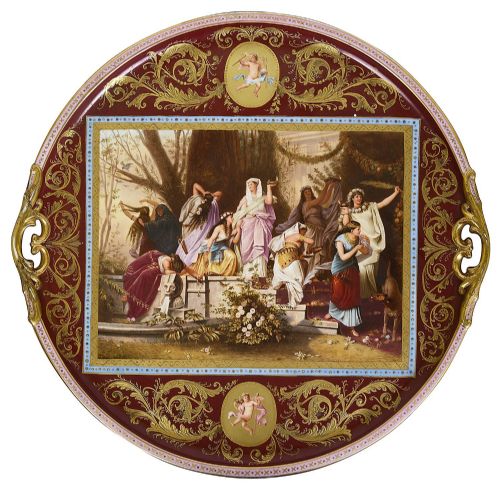


Neoclassical Display Plate
These neoclassical display plates bring hand-painted mythological scenes and heavy gilding straight into a room, offering a glimpse of 18th and 19th-century craft.
Neoclassical Display Plate
When you search for neoclassical display plates, you encounter ornamental items intended for showcase rather than dining, predominantly spanning the 18th century and the 19th century.
The pieces on this page take the form of cabinet plates, decorative chargers, commemorative plates, and decorative trays rooted in neoclassical, Louis XVI, and Victorian neoclassical styles.
Porcelain dominates the selection, featuring hand-painted mythological or classical figures alongside cobalt blue and gold gilt highlights.
Materials and construction
Makers utilised fine porcelain as the primary canvas, applying detailed hand-painted scenes often depicting classical subjects like Cupid, Psyche, or Venus.
Gold leaf and gold gilt provide ornate borders and accents, while select pieces incorporate enamel work and pate-sur-pate techniques to build raised decorative details.
Alternative items appear in pewter and silver plate, demonstrating that these classical designs extended beyond ceramic bodies into metalwork.
Prudent buyers know that wise and foolish virgins make excellent company on a living room wall.
Assessing quality and execution
Quality rests heavily on the skill of the hand-painted artwork upon the porcelain surface, where finely detailed mythological figures outshine simpler decorative patterns.
The application of gold gilt and the richness of cobalt blue backgrounds dictate visual impact, with deeply saturated colours and intact gilding elevating a charger.
Signed works by named painters carry distinct artistic merit, setting individual cabinet plates apart from standard factory output.
Royal Vienna·Mintons
The Neoclassical Display Plate Glossary
- Cabinet plate
- A decorative ceramic plate intended for display in a cabinet or on a wall rather than for table service. These items usually feature intricate painted scenes.
- Charger
- A large ornamental plate used as a base setting or displayed on its own for decorative effect. They measure significantly wider than standard dining plates.
- Gilt
- A thin layer of gold applied to the surface of porcelain or metal. This technique enhances the decorative borders with a bright metallic sheen.
- Pate-sur-pate
- A ceramic decorating method where relief designs are built up using layers of liquid clay slip. This creates a cameo-like effect against a contrasting background.
- Neoclassical
- An artistic style drawing inspiration from the classical art and culture of ancient Greece and Rome. It prioritises symmetry, classical motifs, and mythological narratives.
Neoclassical Display Plate: Frequently Asked Questions
What is a neoclassical display plate?
These pieces are ornamental ceramics and metal items created for visual display rather than daily use. They showcase classical motifs and mythological artwork popular during past centuries.
Most examples found here date from the 18th and 19th centuries, reflecting the enduring appeal of neoclassical design across various European factories.
How were cabinet plates used?
Historically, owners showcased these decorative plates in specialised display cabinets, on mantelpieces, or mounted directly onto walls. They served as conversation pieces that demonstrated the collector's taste and culture.
Because of their delicate painted surfaces and heavy gilding, they remained strictly ornamental rather than serving food at the dining table.
How do I care for antique porcelain?
Keep these delicate objects away from direct sunlight to prevent fading on the hand-painted scenes and enamel work. Dust them gently with a dry, soft cloth without applying cleaning liquids.
Handle them by the edges with clean hands, avoiding pressure on any raised gilt or pate-sur-pate details that could chip or wear down.
How do I identify a 19th-century piece?
Look closely at the painting style, the depth of the cobalt blue grounds, and the application of gold gilt. Nineteenth-century items frequently depict romanticised classical scenes from mythology.
Factory marks on the underside often help confirm the production period, aligning with the styles of the 1850s up to 1900.