
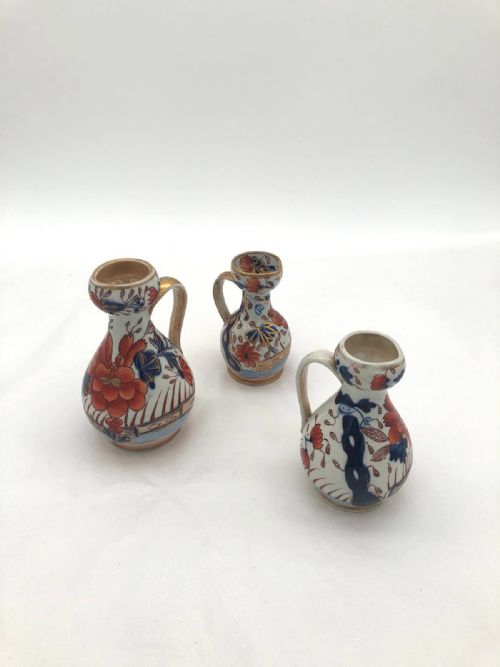


Victorian Masons Ironstone China
These pieces of victorian masons ironstone china combine heavy earthenware durability with intricate painted motifs, offering practical serveware and decorative vessels.

Victorian Masons Ironstone China
Victorian masons ironstone china encompasses a diverse array of utilitarian and decorative objects originating from the nineteenth century, ranging from large soup tureens and dinner plates to specialised vessels like cheese dishes, comports, and miniature jugs. Buyers seeking these items encounter robust ceramic bodies designed to withstand daily service while displaying elaborate patterns suited for formal dining rooms.
The selections available typically showcase specific forms such as sauce tureens with ladles, garnitures of vases, and extensive sets of plates bearing traditional patterns like Old School House, Pagoda, and Chinoiserie motifs. These pieces bridge the gap between heavy earthenware utility and refined porcelain appearance, making them durable yet decorative additions to any collection.
Materials and Techniques
The manufacture of these ceramics relies on a dense ceramic body known as ironstone, combined with applied enamel colours, glaze, and gold leaf or gilding to create rich surface decoration. Artisans hand painted intricate details over moulded forms, ensuring each vessel received careful attention to pattern work such as the Fence and Doves, Water Lily, or Mogul designs.
Techniques involved firing the heavy earthenware base before applying vibrant enamels and metallic leaf accents, which were then sealed beneath a glossy glaze. This method yielded a robust material capable of holding intricate, colourful motifs without sacrificing the structural strength required for heavy serveware like meat platters and soup tureens.
A tiny miniature watering can waits among the heavy tureens, proving that Victorian potters delighted in scaling down the mundane.
Assessing the Craftsmanship
Distinctions in quality rest upon the precision of the hand painting and the crispness of the moulded form, particularly in complex shapes like chestnut baskets, potpourri vases, and figurative jugs. Superior examples maintain sharp relief details and cleanly applied enamel colours that sit evenly beneath the glaze.
The execution of decorative motifs, from elaborate Chinoiserie scenes to simpler floral borders, determines the refinement of individual pieces. Well preserved gilding and vibrant, intact enamel work distinguish finer decorative plates and comports from standard utilitarian vessels.
Mason's
The Victorian Masons Ironstone China Glossary
- Ironstone
- A dense, heavy ceramic body patented in the nineteenth century to provide an affordable, durable alternative to porcelain. It forms the structural base for all pieces in this category.
- Comport
- A raised dish or bowl used for serving fruit or sweets on a formal dining table. These elevated vessels often feature decorative transfer-printed or hand-painted patterns.
- Gilt
- A thin layer of gold leaf or metallic gilding applied to the surface of the ceramic to accent rims, handles, and raised moulding details. It provides a bright metallic contrast to the painted enamels.
- Ashet
- A large oval platter or serving dish used for presenting meat at the table. These sturdy ironstone platters frequently match larger dinner services.
- Chinoiserie
- A European artistic style reflecting Chinese motifs, heavily utilised in the decoration of nineteenth-century ceramics. This aesthetic appears across vases, plates, and garnitures with fantastical garden and architectural scenes.
Victorian Masons Ironstone China: Frequently Asked Questions
What is Victorian Masons ironstone china?
Victorian Masons ironstone china is a durable, heavy ceramic ware produced in the nineteenth century, known for its strong earthenware body and vibrant hand-painted or transferred patterns.
These items range from functional tableware like soup tureens and plates to decorative objects including vases, comports, and miniature vessels featuring prominent Chinoiserie and floral designs.
How were these ceramic pieces used?
Many of these items served practical dining functions, such as large soup tureens, sauce tureens with ladles, cheese dishes, and sets of dinner plates used in formal nineteenth-century households.
Other pieces were purely decorative, including garnitures of vases, potpourri vessels, and miniature jugs designed to ornament mantelpieces and display cabinets.
How do I care for ironstone china?
Living with these ceramics involves gentle handling to preserve the hand-painted enamels, delicate gilding, and the underlying ironstone body from unnecessary impact or abrasive cleaning.
Hand washing with mild soap is recommended to protect the historic glaze and metallic leaf accents from fading or degradation over time.
How can I identify different patterns?
Pattern identification relies on examining the specific painted or printed motifs, such as the distinct architectural elements of the Pagoda pattern or the floral arrangements of the Water Lily design.
Comparing the style of decoration against documented nineteenth-century motifs helps distinguish specific patterns like Chinoiserie Bandana or Old School House.