








Victorian Lacquered Tray
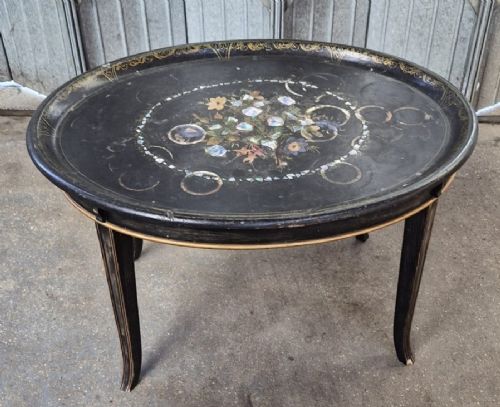
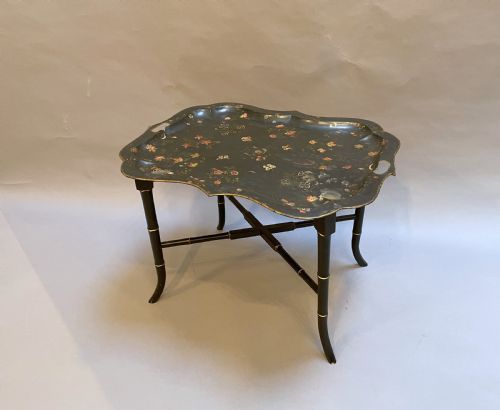
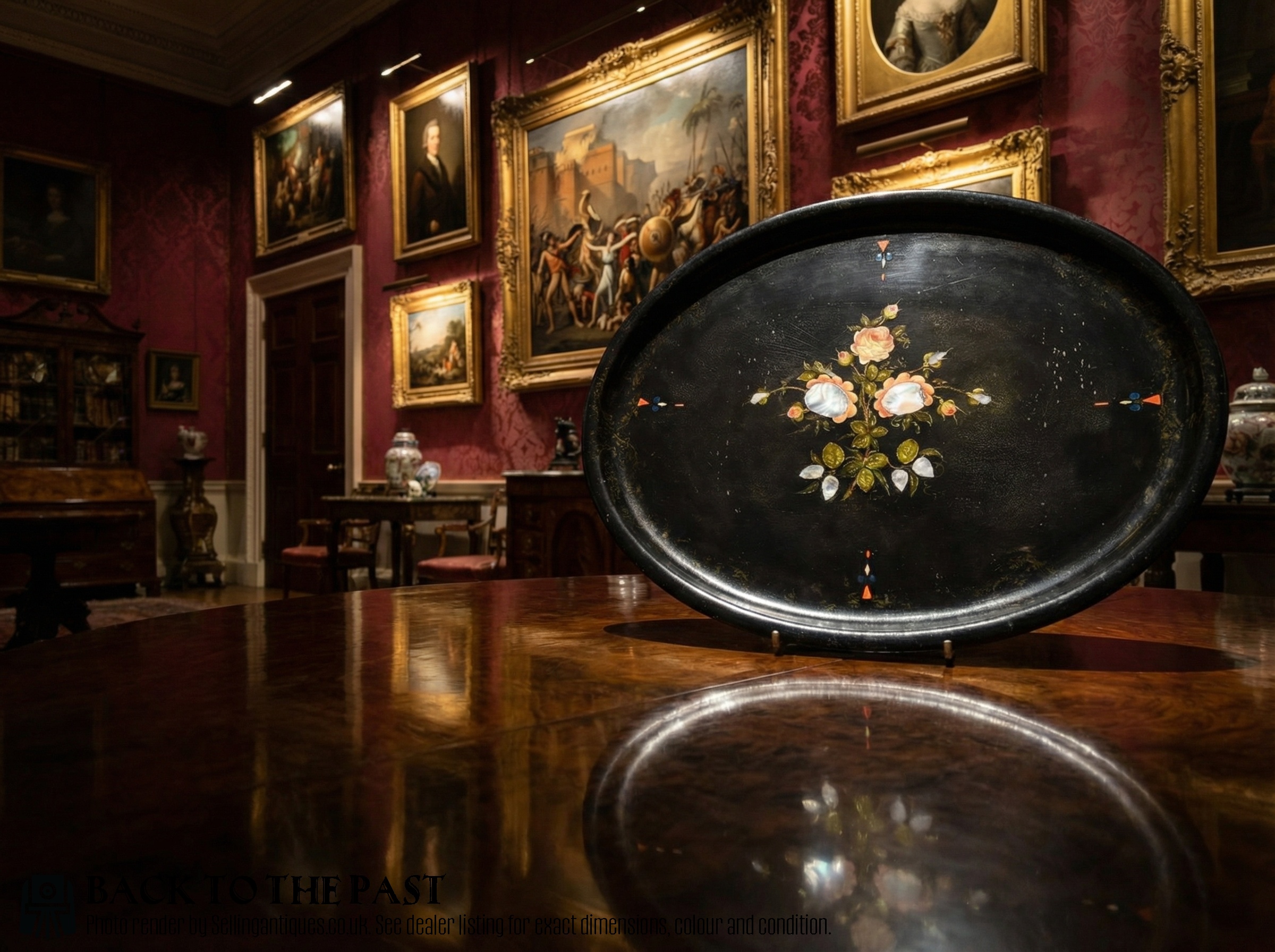
A victorian lacquered tray brings polished surface and hand-painted detail to a room, serving as a drinks holder or sitting upon a custom stand as a table.

Victorian Lacquered Tray
When searching for a victorian lacquered tray, buyers encounter serving pieces, card baskets, desk sets, and occasional tables created from the nineteenth century onwards. These objects combine utility with decorative finishes, frequently appearing in oval or rectangular forms designed for display or service.
The material foundation rests primarily on papier-mâché, wood, and toleware, shaped into deep trays and dishes. Many examples incorporate stands to function as side tables or coffee tables within contemporary interiors.
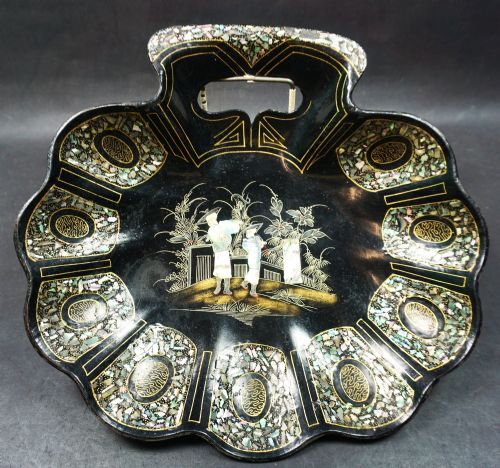
Originating largely from English workshops, alongside regional variations such as Kashmiri or Japanese export pieces, these items showcase diverse aesthetic influences including Chinoiserie and Victorian Gothic styles.
Materials and Construction
Makers built papier-mâché bodies by layering paper pulp or sheets with glue and pressure, resulting in a lightweight yet rigid board capable of sustaining heavy use. Artisans then applied layers of dark lacquer to seal and smooth the surface.
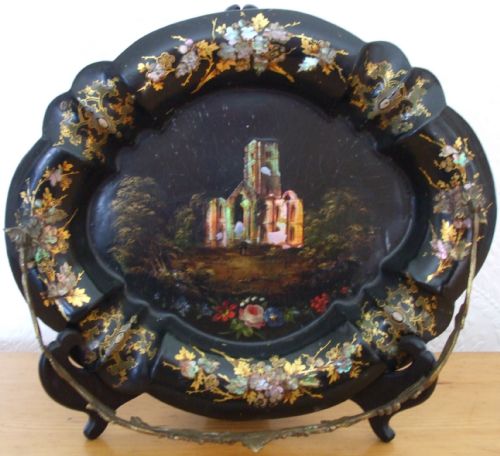
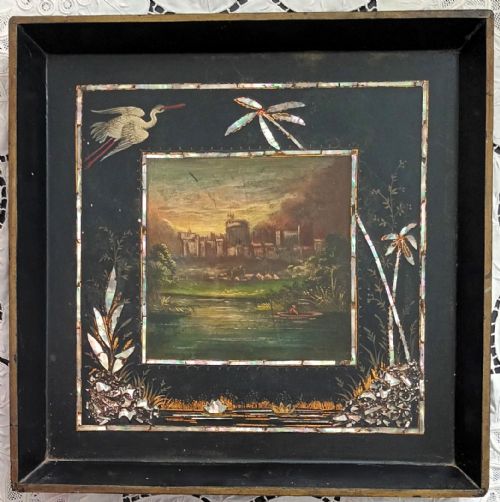
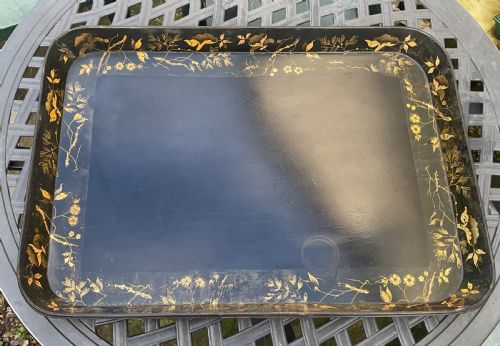
Decoration relied on hand-painted motifs, gold leaf, and mother-of-pearl inlay embedded directly into the lacquer. Toleware alternatives utilised sheet metal painted and baked with protective finishes to create durable serving surfaces.
Victorian Lacquered Tray Retail Price Guide 2026
Typical asking prices for victorian lacquered tray among the pieces listed under this phrase on Sellingantiques today, from the lower quarter to the upper quarter. They describe what is for sale here now, not the wider market.
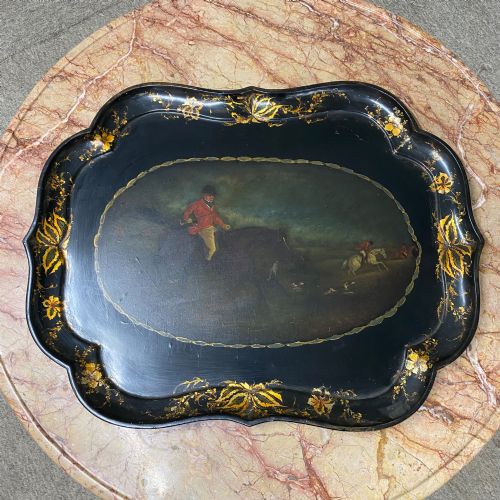
Several trays preserve scenes of nineteenth-century hunting parties frozen mid-chase beneath layers of glossy black lacquer.
Quality Variations
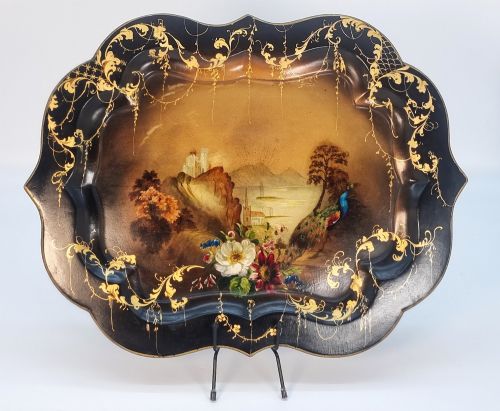
Quality depends upon the intricacy of the hand-painting, the depth of the lacquer finish, and the integration of mother-of-pearl inlay. Superior pieces exhibit fine pictorial detail, such as intricate hunting scenes or elaborate Chinoiserie landscapes, executed by skilled hands.
Structural integrity also separates standard items from exceptional ones, particularly regarding the preservation of the lacquer and the stability of any accompanying stands or supporting frames.
Jennens & Bettridge
The Victorian Lacquered Tray Glossary
- Papier-mâché
- A composite material formed from paper pulp or layered paper mixed with glue, compressed and dried to form a rigid structure. This substance forms the core of many nineteenth-century serving trays.
- Toleware
- Painted or enamelled sheet metal items produced in England and elsewhere during the nineteenth century. These pieces often feature dark backgrounds with gilt or hand-painted ornamentation.
- Chinoiserie
- European artistic style reflecting Chinese motifs and decorative techniques. It appears frequently on lacquer trays through depictions of pagodas, figures, and exotic landscapes.
- Mother-of-pearl
- The iridescent inner layer of certain mollusc shells, sliced thin and embedded into lacquer surfaces. It catches light to highlight details within floral or architectural designs.
- Ebonised
- Wood or papier-mâché treated to resemble ebony through dark staining or finishing. This process provides a stark contrast against gold leaf and painted highlights.
Victorian Lacquered Tray: Frequently Asked Questions
How do I use a tray table?
A tray table combines a detachable lacquered tray with a folding or fixed wooden stand, creating a convenient surface for serving drinks or displaying decorative objects.
Position the table beside a seating area or use the tray independently for serving guests during gatherings.
How do I clean papier-mâché?
Maintain the surface by dusting gently with a soft, dry cloth to prevent accumulation of grit or debris.
Avoid liquid cleaners, moisture, and direct sunlight, as water and heat damage the underlying lacquer and painted decoration.
What is toleware?
Toleware refers to lacquered or painted metalware produced for domestic use, including trays, canisters, and coal scuttles.
These pieces feature hand-painted or stencilled designs upon a dark metal base, offering durability alongside decorative appeal.