
Victorian Inlaid Drawers
Victorian inlaid drawers bring together rich timber and delicate contrasting woodwork to serve everyday storage with distinct period character.
Victorian Inlaid Drawers
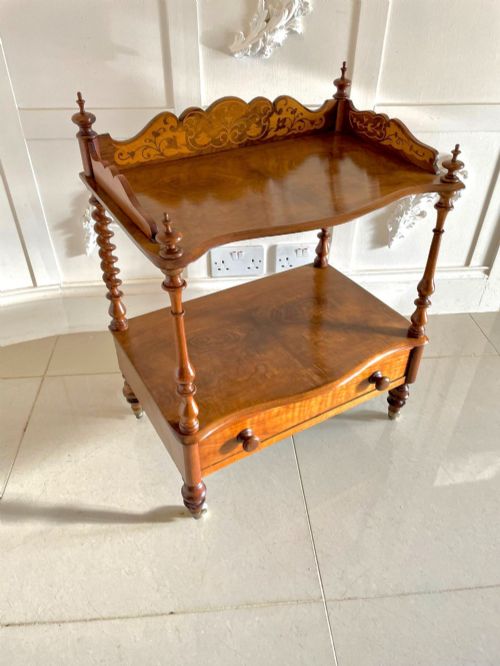
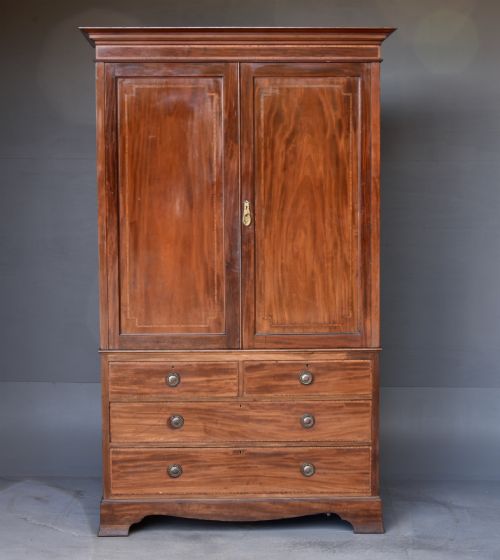
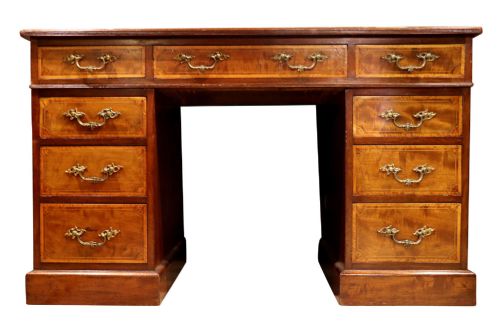
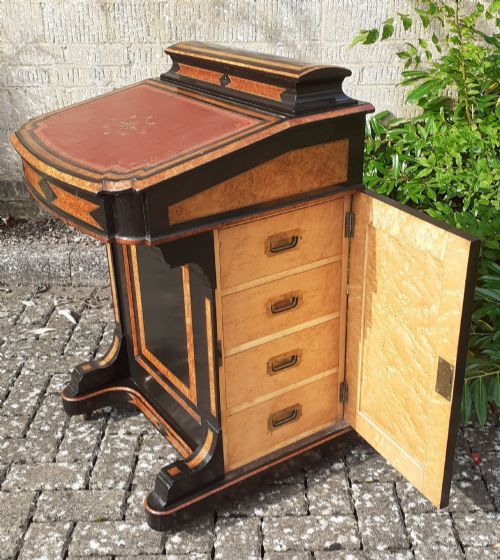
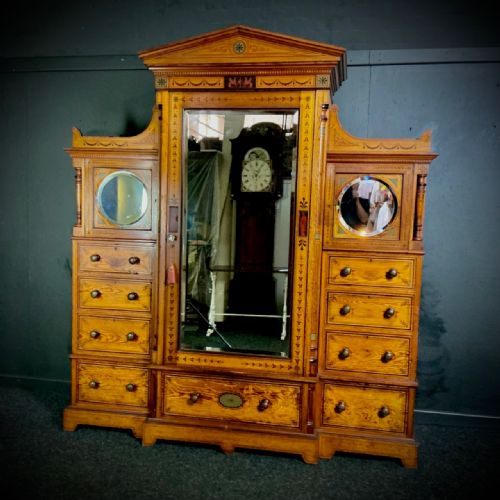
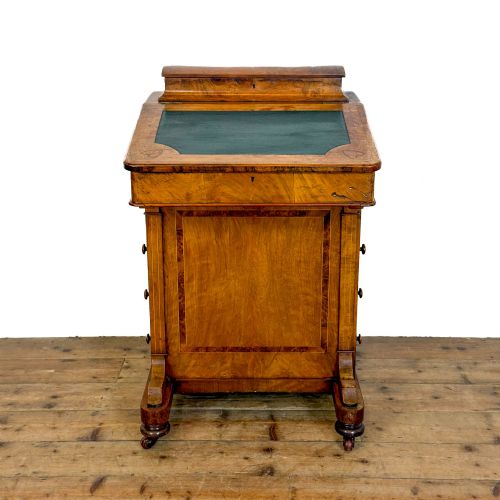
When searching for victorian inlaid drawers, buyers encounter a variety of forms ranging from tall chests and compact bedside cabinets to elaborate writing tables, davenports, and desks. The selection spans the nineteenth century into the Edwardian era, showing influences from Sheraton Revival, Aesthetic Movement, and French styles.
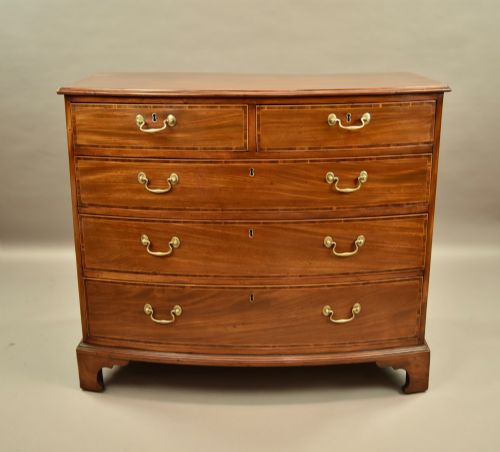
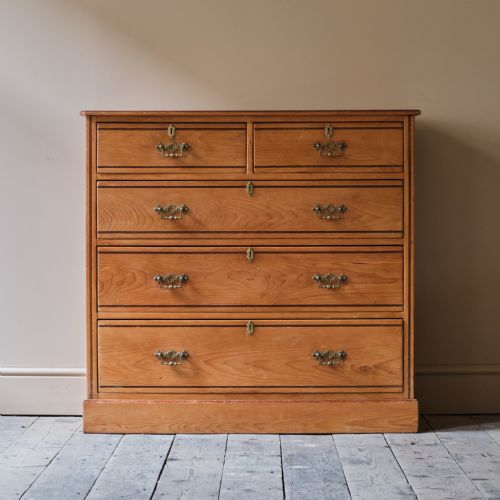
Chest formats dominate the offerings, appearing in standard horizontal configurations as well as bowfront designs, alongside specialised pieces featuring secret compartments and drop-front writing surfaces. Timber choices reflect the period preference for substantial carcases enhanced by decorative surface enrichment.
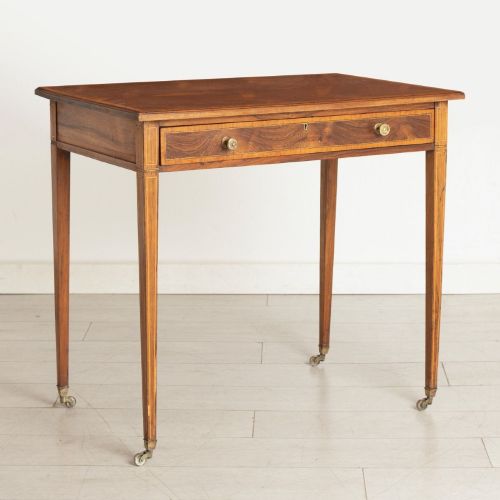
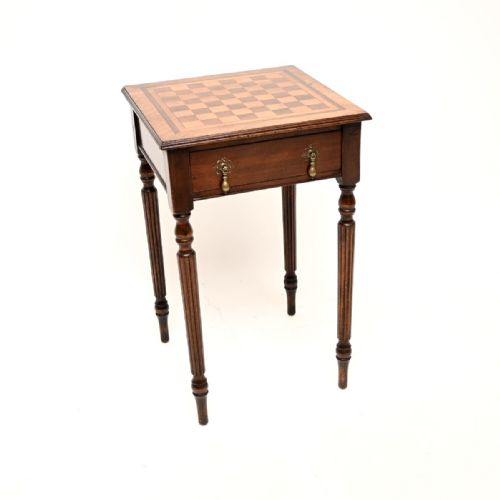
The integration of drawer storage with ornamental borders and pictorial motifs distinguishes these domestic items from plain utilitarian furniture. Pieces vary from simple side tables with a single drawer to grand multi-drawer chests built for formal chambers.
Materials and construction
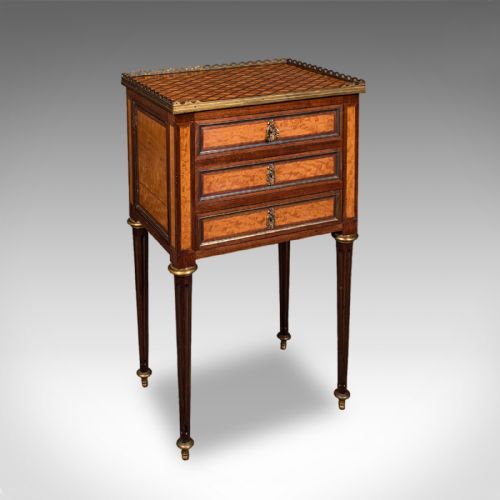
Carcases rely on solid timbers such as mahogany, walnut, rosewood, and pine, frequently veneered with burr walnut, satinwood, kingwood, or amboyna to provide rich background grain. Brass hardware, leather inserts, glass panels, and occasional ormolu mounts supplement the primary wooden structures.
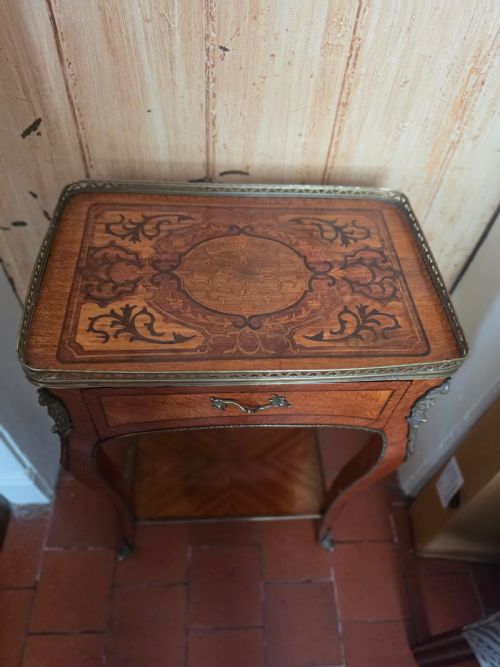
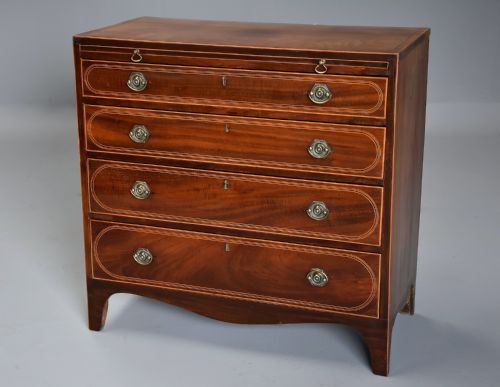
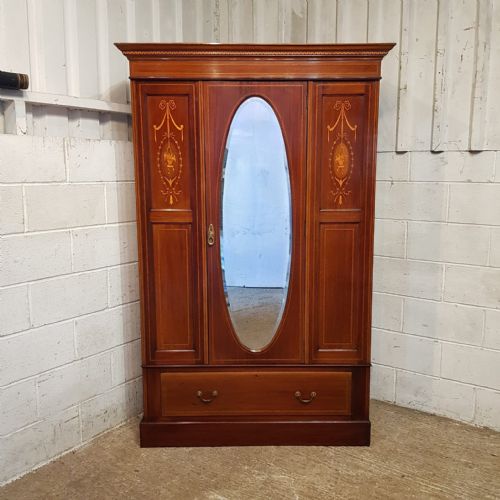
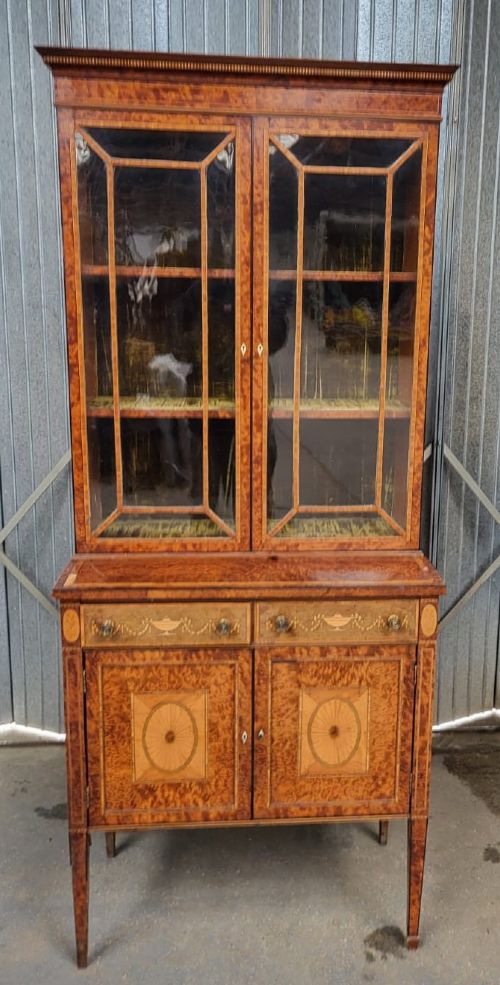
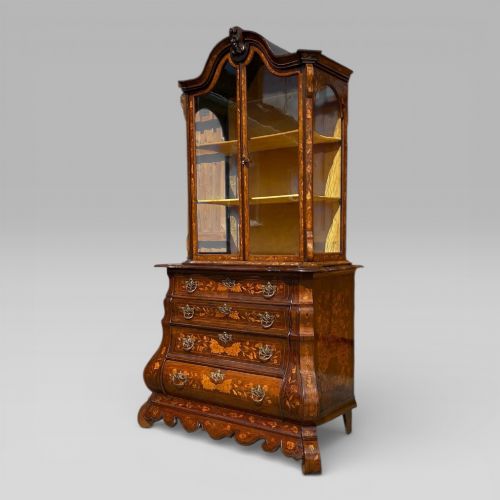
Decorative surface work utilises wood inlay, stringing, and marquetry, setting contrasting lighter woods into darker matrices to form geometric bands, floral sprays, or classical motifs. Cabinetmakers applied these techniques across drawer fronts, tabletops, and side panels to create visual depth.
Listings feature nineteen-century and Edwardian forms, incorporating satinwood, mahogany, rosewood, and walnut with brass and leather details.
Quality variations
Excellence in these items rests on the precision of the cabinetwork, particularly how cleanly the contrasting veneers and stringing meet the surrounding timber without gaps. Superior examples display dense, well-figured primary woods and finely judged botanical or geometric marquetry rather than coarse, stencilled decoration.
Makers' marks and attribution to established workshops elevate certain pieces, demonstrating higher standards of internal secondary wood selection and drawer lining construction. The integrity of original brass handles, working locks, and smooth drawer action further differentiate standard domestic items from premier productions.
Edwards & Roberts·Holland & Sons·Druce & Co·Mawer & Stephenson·Donald Ross
The Victorian Inlaid Drawers Glossary
- Inlay
- The technique of embedding pieces of contrasting material into a recessed wooden surface to form a flat decorative design. This method defines the ornamented borders seen on many period drawer fronts.
- Marquetry
- An elaborate form of inlay assembling decorative veneers to create pictorial scenes or scrolling patterns across furniture panels. Cabinetmakers utilised this to depict birds, flowers, and urns.
- Crossbanding
- A border of veneer laid around the perimeter of a tabletop or drawer front so that its grain runs perpendicular to the central panel. It provides a neat visual frame.
- Wellington chest
- A tall, narrow chest of drawers secured by a hinged vertical locking stile on one side that fastens with a key. This form originated in the nineteenth century for secure document storage.
- Secretaire
- A desk form incorporating a fitted drop-front drawer that conceals small compartments and writing surfaces. It combines standard drawer storage with a pull-out writing desk.
- Stringing
- Thin lines of contrasting light or dark wood inlaid in narrow channels around drawer perimeters or legs. This linear detail creates subtle geometric definition.
Victorian Inlaid Drawers: Frequently Asked Questions
What are victorian inlaid drawers used for?
These pieces provide functional storage for clothing, documents, and domestic items while adding decorative presence to a room.
Depending on the specific form chosen, they function as bedside cabinets, writing desks, or main bedroom chests.
How do I identify the wood types?
Primary woods like mahogany and walnut show deep reddish brown or dark brown tones, while satinwood offers a pale golden appearance.
Figured veneers display swirling grain patterns, and contrasting inlay timbers provide lighter highlights against the dark ground.
Are secret drawers common?
Many larger writing slopes, davenports, and formal chests incorporate hidden compartments designed for valuables.
These concealed spaces typically operate through spring mechanisms or removable dividers within standard drawer runs.
How do I care for inlaid furniture?
Maintain stable indoor humidity levels to prevent the delicate wood veneers and stringing from drying out and lifting.
Apply quality beeswax sparingly and avoid placing pieces in direct sunlight or near heat sources.