
Inlaid Wooden Drawers
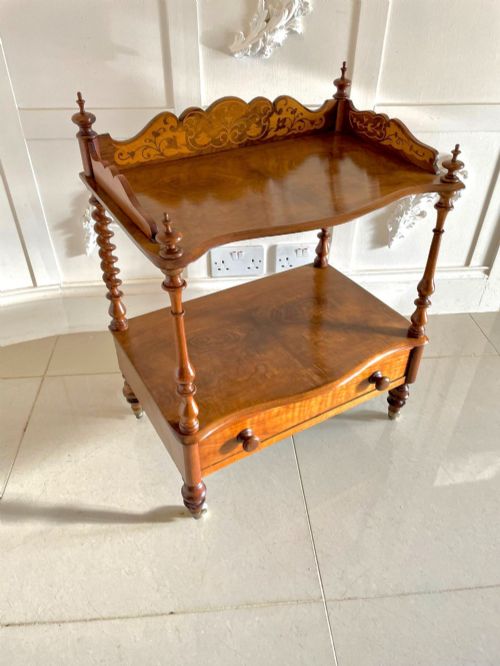
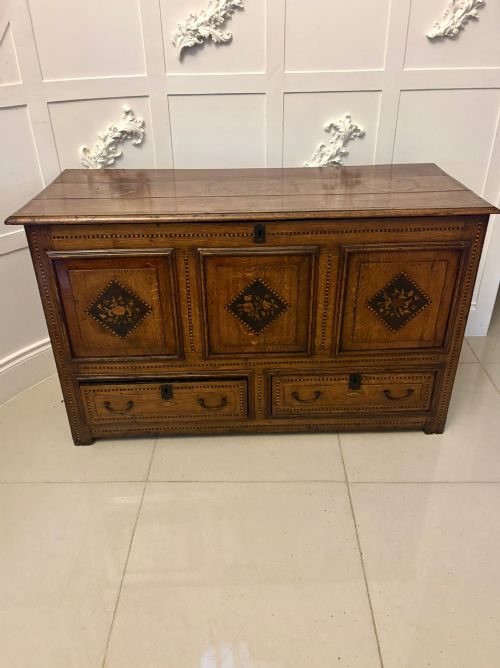
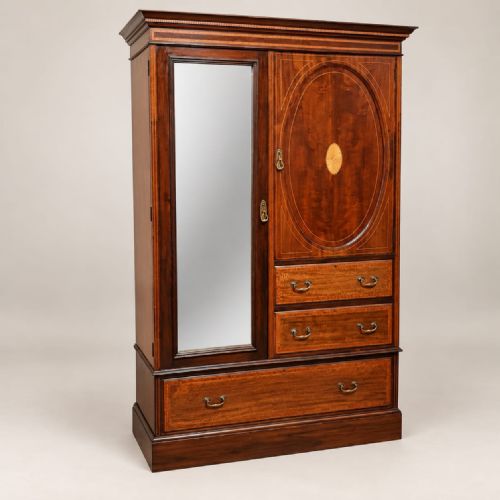
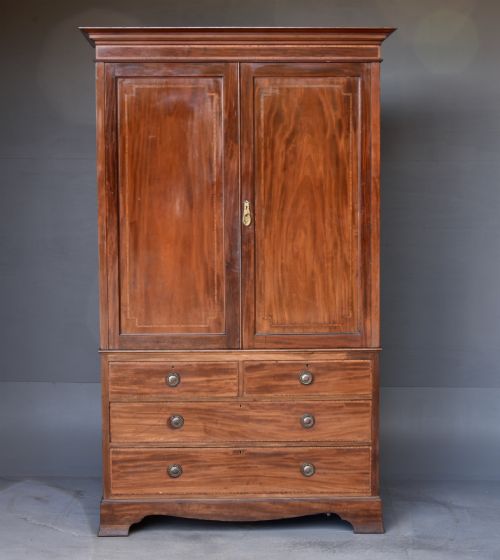
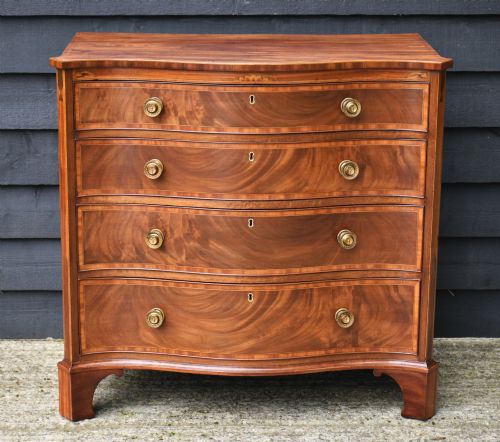
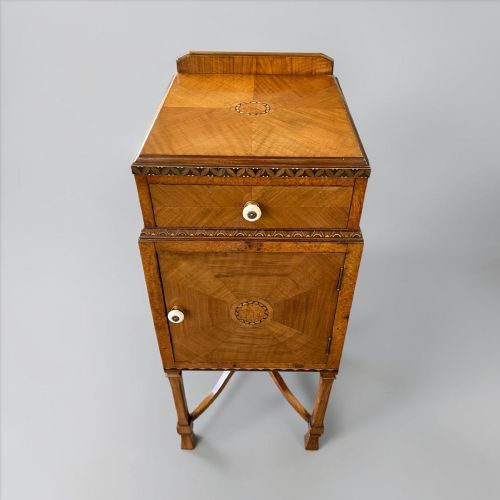
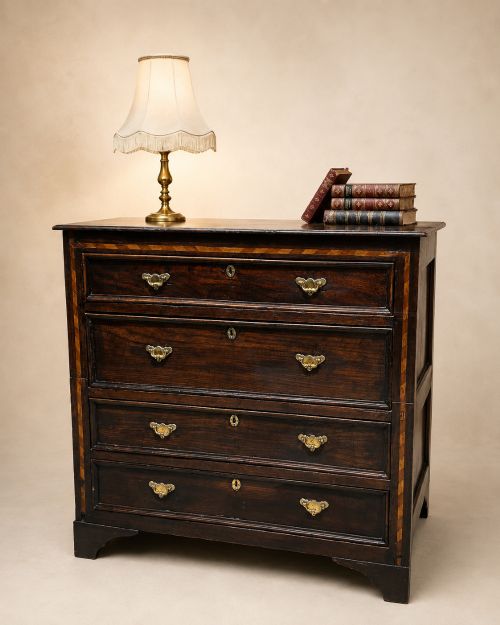
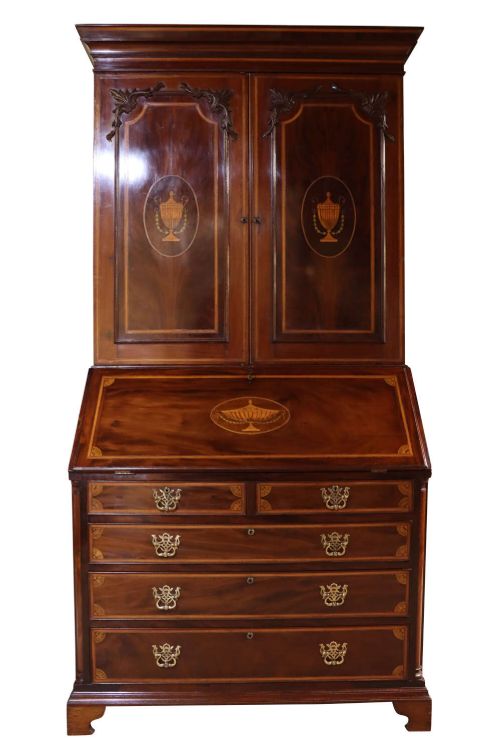
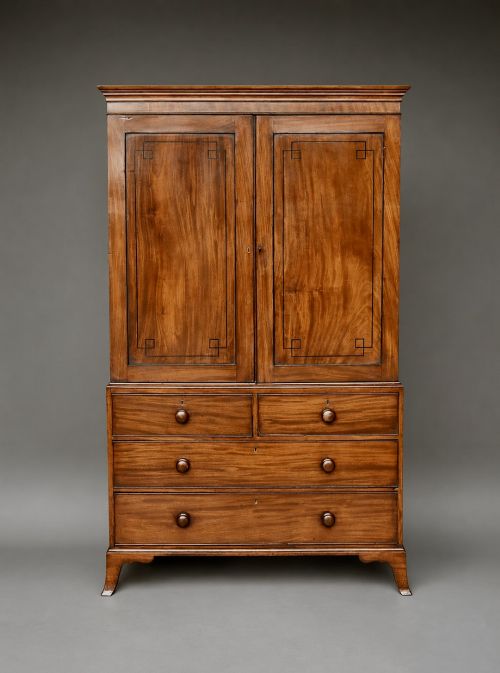
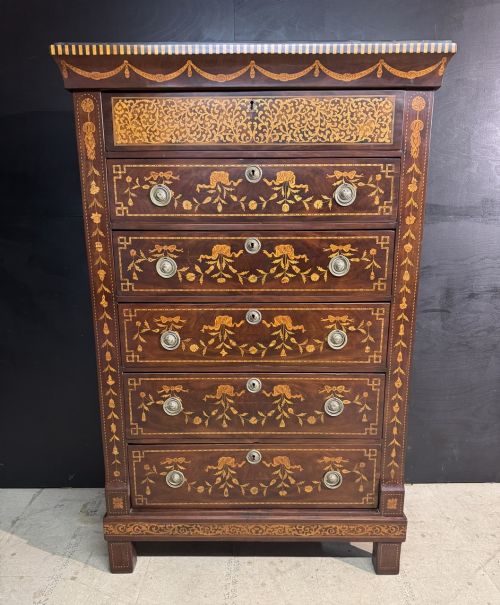
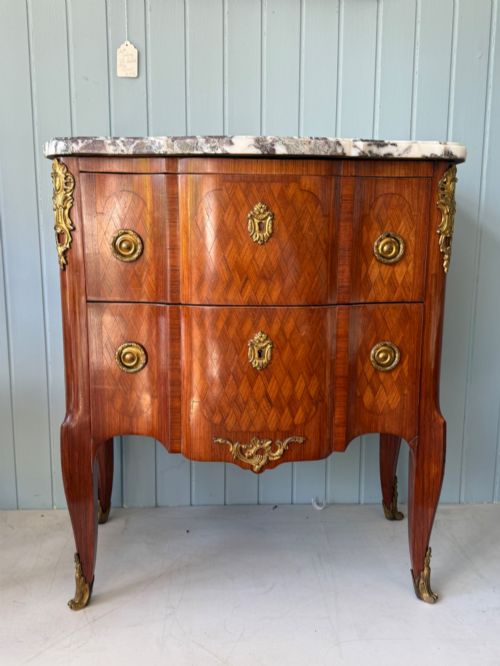
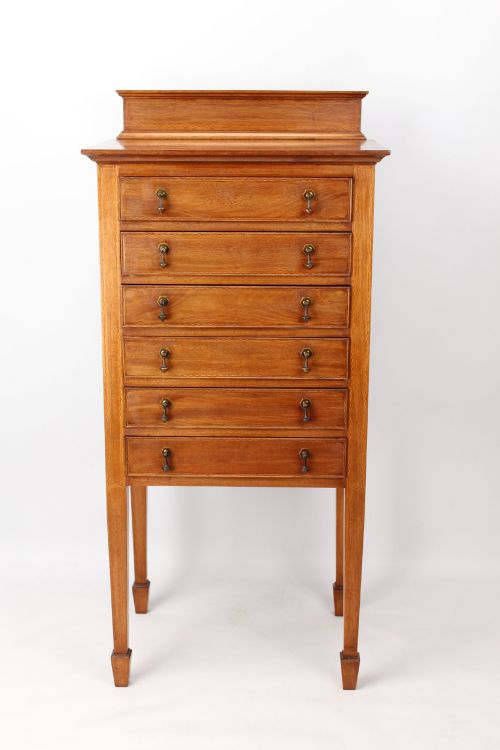
These inlaid wooden drawers bring together rich timber and precise marquetry across Georgian, Victorian, and Edwardian forms.
Inlaid Wooden Drawers
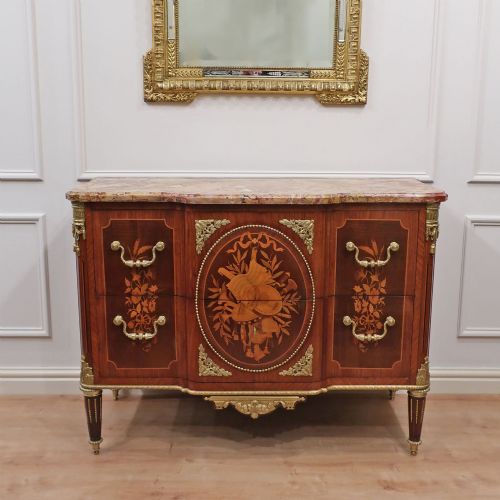
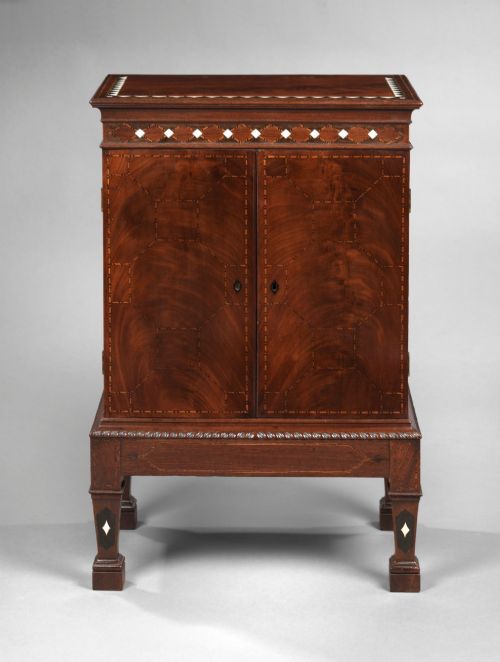
When you search for inlaid wooden drawers, you encounter a diverse range of storage furniture spanning several centuries of cabinet making. The pieces on this page primarily take the form of chests of drawers, alongside wardrobes, bedside cabinets, and side cabinets originating from Georgian, Victorian, Edwardian, and Regency periods.
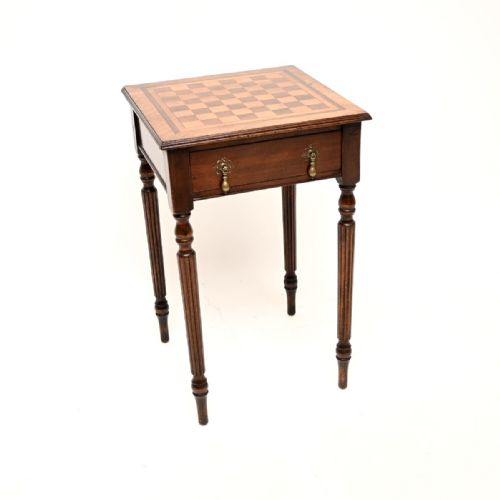
The selection ranges from substantial oak mule chests and tall Dutch commodes to smaller occasional tables and jewellery boxes. Mahogany, walnut, and satinwood form the foundation of most examples, frequently embellished with contrasting boxwood and bone details.
Materials and construction
Cabinet makers utilised dense hardwoods such as mahogany, walnut, and oak as the structural base for these pieces. Timber selection dictated both durability and the depth of natural grain visible beneath polished surfaces.
Wood inlay and marquetry were applied using contrasting veneers like boxwood, satinwood, and kingwood. These decorative elements required precise hand-cutting to fit seamlessly into prepared recesses within the primary wood.
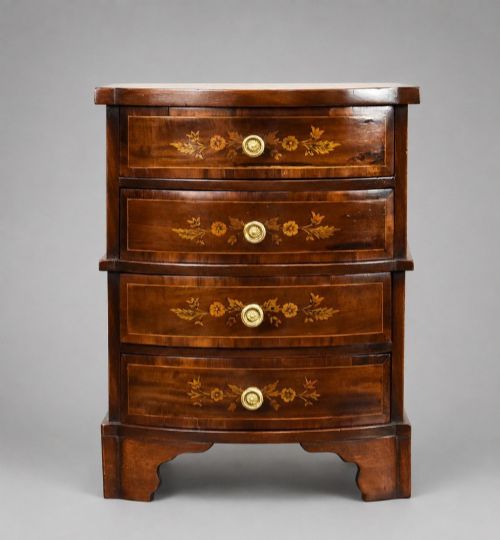
A miniature marquetry bow front chest proves that master craftsmen enjoyed showing off by making fully functional furniture for dolls.
Assessing quality
The standard of an inlaid wooden drawer rests upon the precision of the joinery and the integration of the decorative work. Superior examples demonstrate tight, flush joints where veneers meet, without gaps or lifted edges.
The choice of primary timber and the complexity of the internal carcass construction distinguish finer pieces from standard utilitarian storage. Original brass hardware and well-fitted drawer linings further elevate the standing of a piece.
maples & co
The Inlaid Wooden Drawers Glossary
- Marquetry
- Decorative patterns formed by fitting together small pieces of veneer into a wooden surface. This technique allows for complex pictorial or geometric designs.
- Veneer
- A thin slice of figured wood applied over a secondary timber base. It provides a decorative exterior while maintaining structural stability.
- Boxwood
- A dense, pale yellow wood frequently utilised for contrasting stringing and inlay lines. Its fine grain permits intricate cutting.
- Commode
- A decorative set of drawers or a low chest, commonly associated with French and continental design. These often feature curved fronts and elaborate surface decoration.
- Caddy top
- A raised, moulded tabletop edge resembling the lid of a tea caddy. This profile appears frequently on Georgian chests of drawers.
Inlaid Wooden Drawers: Frequently Asked Questions
What periods do these drawers come from?
The pieces span the seventeenth, eighteenth, nineteenth, and early twentieth centuries. Georgian and Victorian examples appear frequently alongside Edwardian and Regency pieces.
Specific decades like the 1920s and 1930s also contribute items such as Art Deco bedside tables and specialist collector's chests.
How do I care for inlaid wooden surfaces?
Maintain stable humidity levels and avoid placing wooden furniture in direct sunlight to prevent the timber from drying out. Gentle dusting with a dry, soft cloth preserves the polished finish.
Apply a quality furniture wax sparingly when the wood appears dry, avoiding harsh chemical cleaners that can damage delicate veneers.
Where were these pieces used originally?
These items served functional roles in bedrooms, drawing rooms, and studies of period homes. Wardrobes and chests provided garment storage, while smaller cabinets and writing tables suited reception rooms.
Collectors utilised specialist small chests and coin cabinets for displaying valuable items in private studies.
How do I distinguish between periods?
Cabinet proportions, handle styles, and timber choices offer key indicators of age. Georgian pieces often feature flame mahogany and bracket feet, while Victorian examples lean towards heavier burr walnut.
Edwardian furniture frequently employs lighter satinwood and mahogany combinations with simplified neoclassical motifs.