

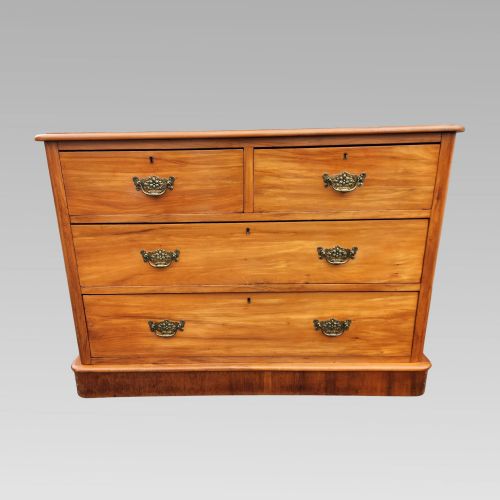
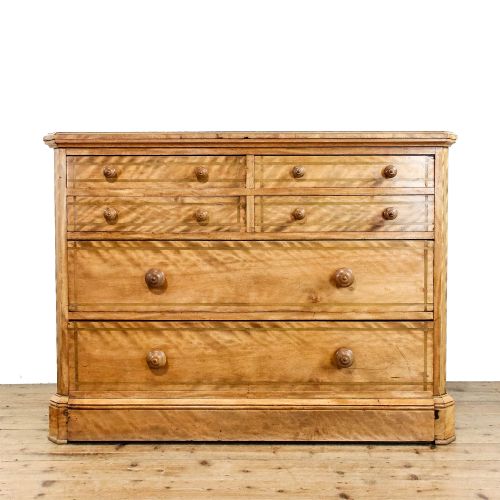
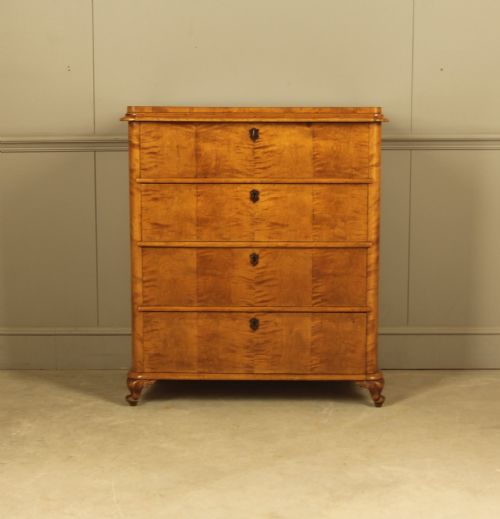
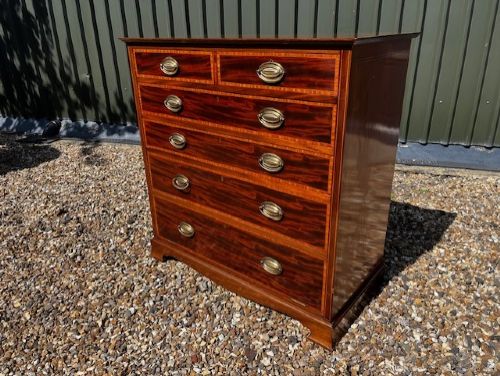


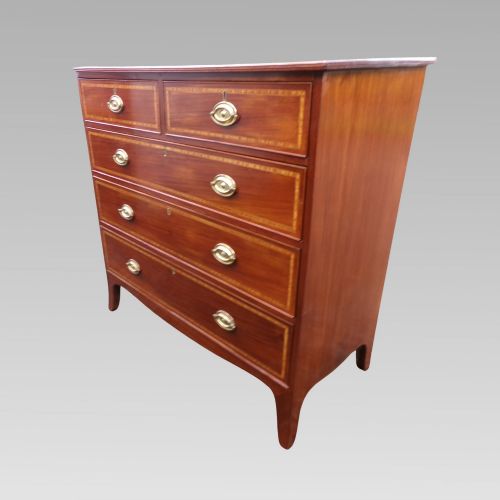


Satinwood Tallboy Dresser
A satinwood tallboy dresser brings pale, figured timber and upright storage to a room, offering both surface grain and practical proportions.
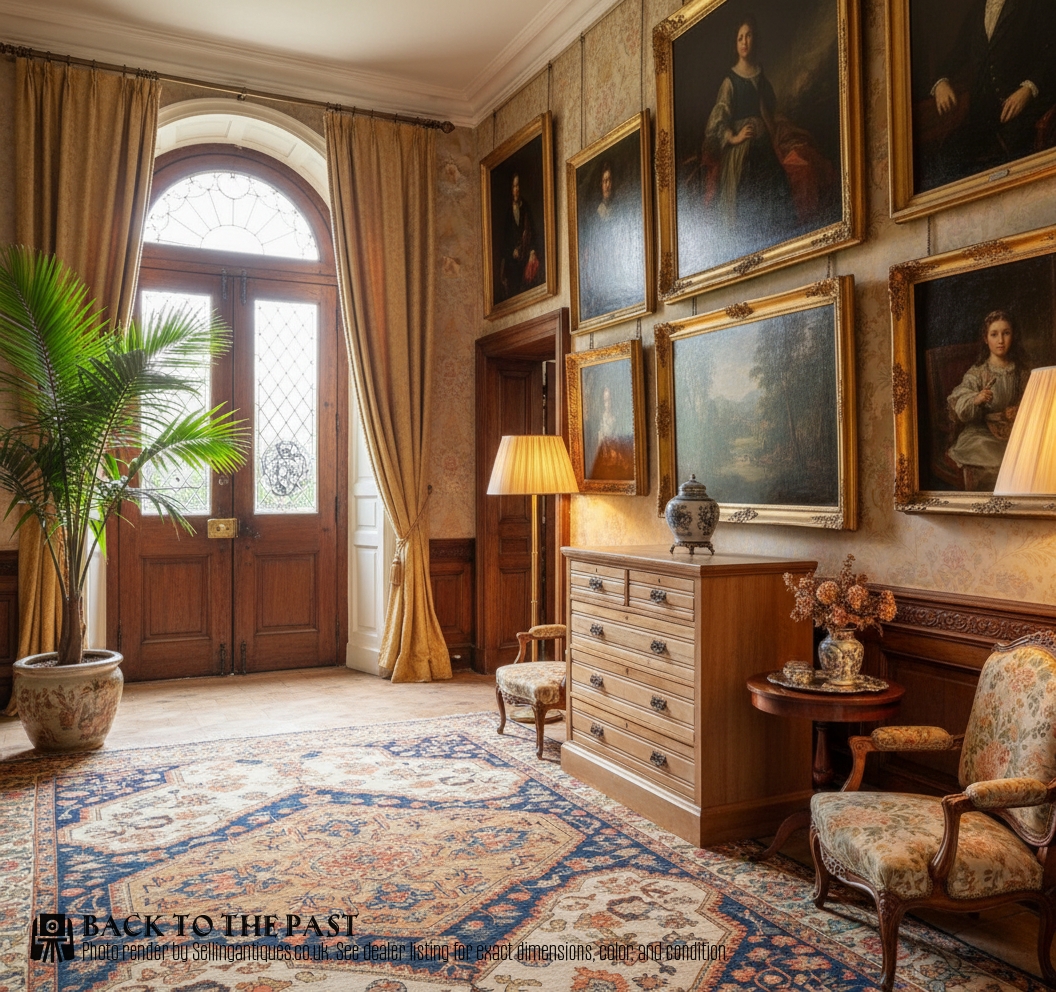
Satinwood Tallboy Dresser
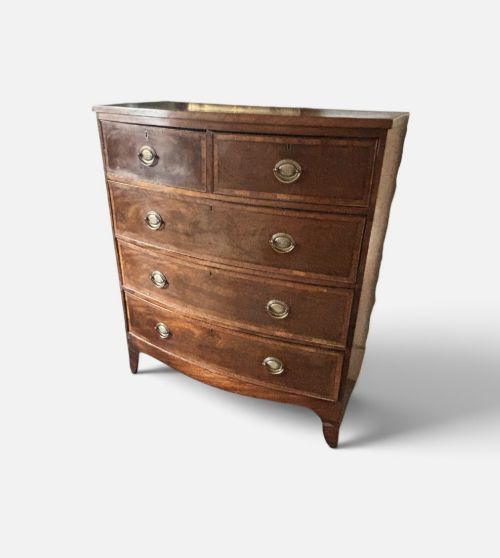
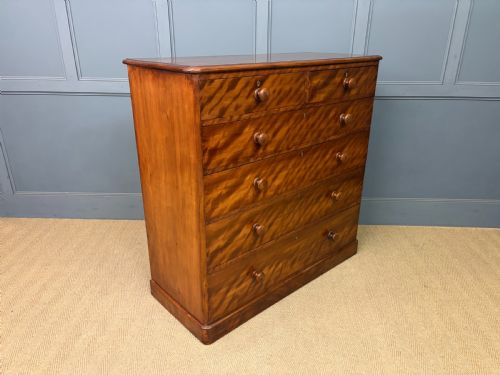
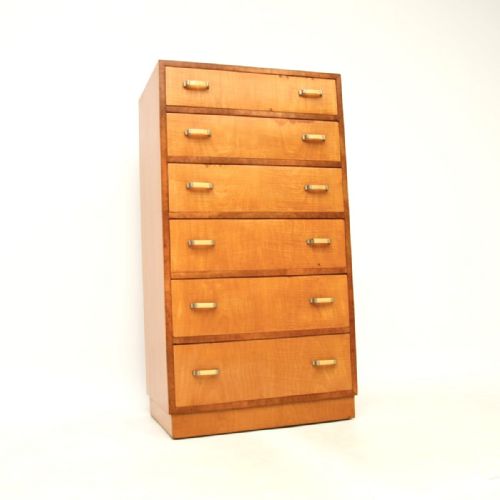
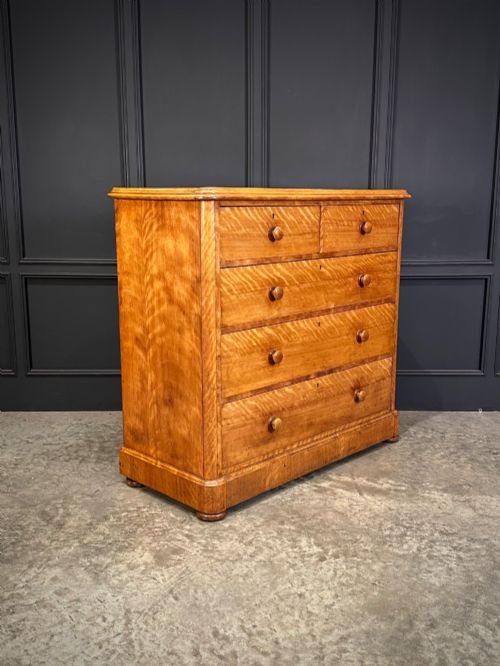
When you search for a satinwood tallboy dresser, you are looking at upright forms designed to maximise storage while displaying timber grain. The pieces on this page span several periods, including Edwardian, Victorian, and Georgian eras.
The selection ranges from Sheraton Revival examples to Arts and Crafts pieces. While the exact term tallboy appears in specific Edwardian pieces, the listings also include tall chests and related chest of drawers forms.
Origins stretch from British workshops to Swedish makers. These tall pieces stand as practical storage units that bring light timber tones into traditional bedroom settings.
How they were made
Cabinet makers utilised solid satinwood, satin birch, and walnut, often laid over secondary timbers like pine and mahogany. Crossbanding and line inlay define the decorative surface work across these pieces.
Hardware such as brass handles and pulls accompany the timber construction. Joinery methods connect the drawer boxes and tall frames to ensure durability over generations.
Several pieces arrive with their original handles intact, having survived over a century of daily drawer pulling.
What varies in quality
The degree of figure in the satinwood and the precision of the inlay separate standard examples from finer works. Strong grain patterns and crisp crossbanding indicate careful material selection by the maker.
Original hardware and well-fitted drawers contribute to the integrity of a piece. The crispness of carved details and the condition of the timber finish distinguish the top of the range.
Harris Lebus·Heal And Son
The Satinwood Tallboy Dresser Glossary
- Tallboy
- A tall chest of drawers, often built in two sections with a smaller chest stacked upon a larger base.
- Crossbanding
- A strip of veneer applied to the border of a drawer front or top so that the grain runs perpendicular to the main surface.
- Satinwood
- A hard, durable timber with a characteristic natural sheen and yellow-gold colour used for fine cabinet making.
- Bow front
- A convex curved cabinet front that projects outward in the centre.
- Sheraton Revival
- A late nineteenth-century style drawing inspiration from the lightness and classical ornamentation of eighteenth-century designer Thomas Sheraton.
Satinwood Tallboy Dresser: Frequently Asked Questions
How do I date a satinwood tallboy?
Dating relies on observing construction methods, timber choice, and decorative styles such as Sheraton Revival or Arts and Crafts. Hardware style and drawer dovetailing also offer clues to the period.
Comparing the secondary timbers inside the drawers helps confirm whether a piece belongs to the Georgian, Victorian, or Edwardian eras.
Where should I place a tall chest?
These tall pieces suit bedrooms, dressing rooms, or hallways where floor space is limited but vertical storage is useful. Their upright proportions allow them to fit into narrower wall spaces.
Keep them away from direct heat sources and strong sunlight to protect the satinwood finish and prevent timber movement.
How do I clean satinwood furniture?
Dust regularly with a soft, dry cloth to remove grit that might scratch the polished surface. Avoid silicone-based polishes which can build up over time.
Occasional application of a suitable wax preserves the lustre of the timber without harming the historic finish.
What is the difference between satinwood and satin birch?
Satinwood is a dense, exotic hardwood known for its natural yellow golden sheen and distinct figure. Satin birch is a different timber species chosen for its similar pale, reflective qualities.
Both timbers were utilised to achieve a bright surface appearance in nineteenth and early twentieth-century furniture.