
Antique Satinwood Chest
An antique satinwood chest brings luminous golden timber and refined cabinetry into a room, offering both practical storage and decorative presence.
Antique Satinwood Chest
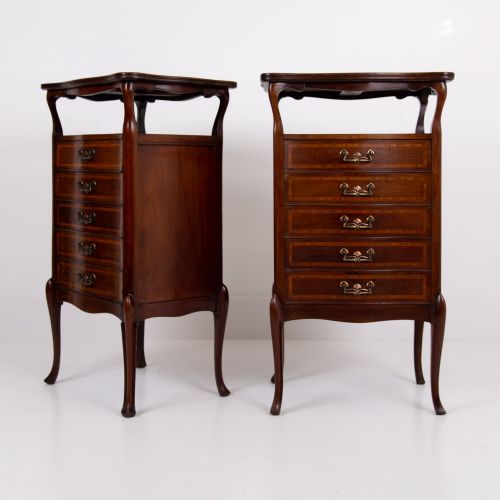
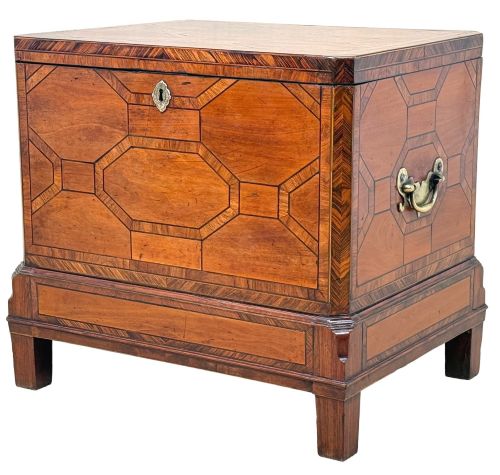
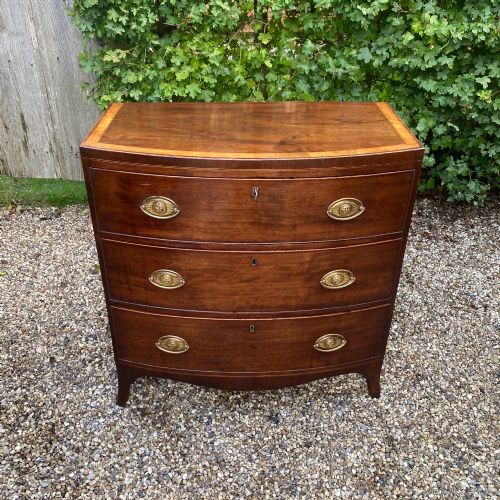
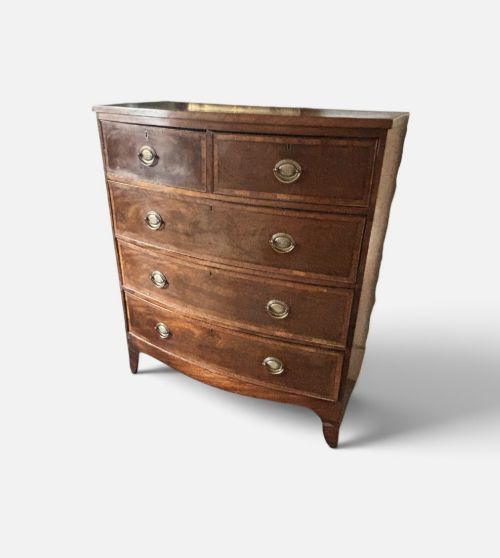
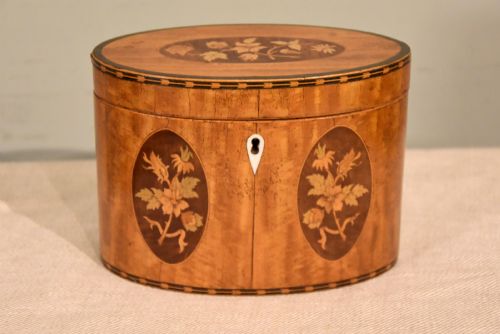
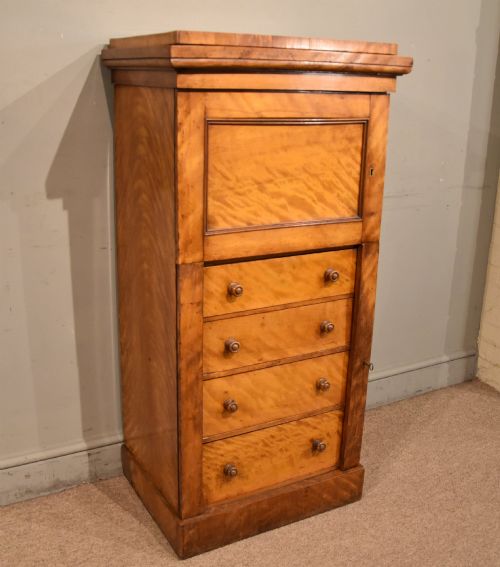
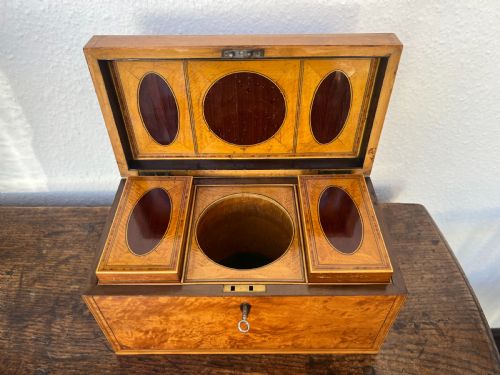
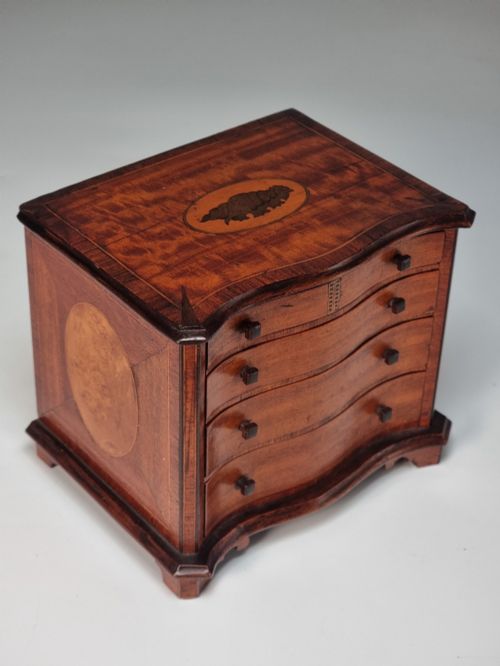
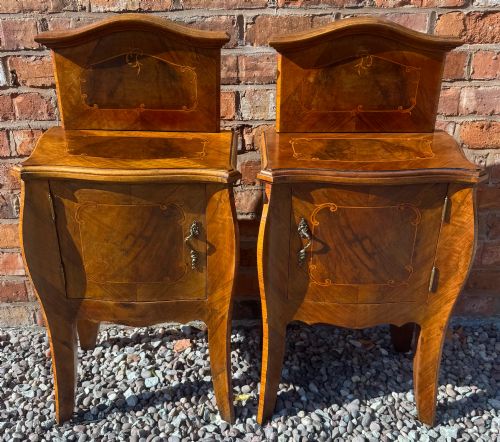
When searching for an antique satinwood chest, buyers encounter pieces primarily from the eighteenth, nineteenth, and early twentieth centuries, spanning periods such as Georgian, Regency, Victorian, and Edwardian. The selection ranges from full-scale chests of drawers and tallboys to bedside cabinets, commodes, and tea caddies.
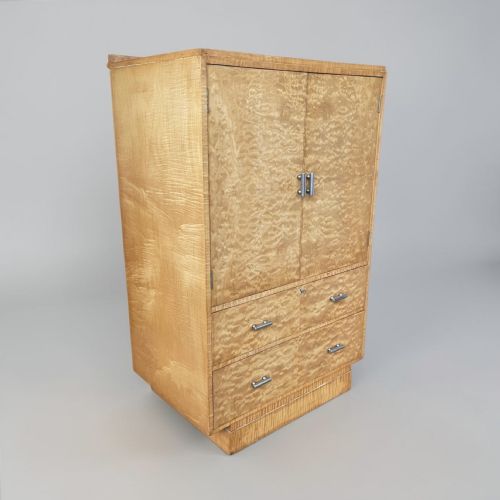
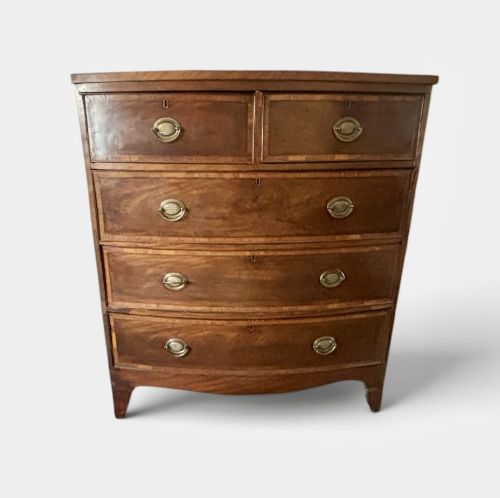
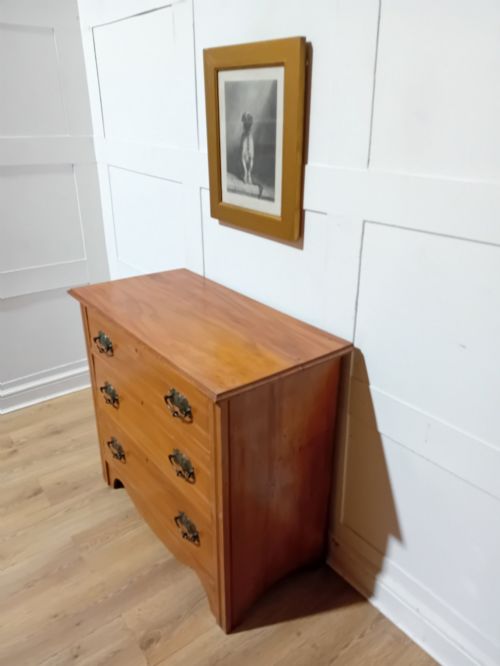
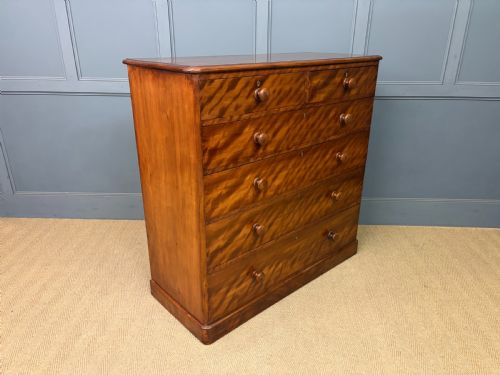
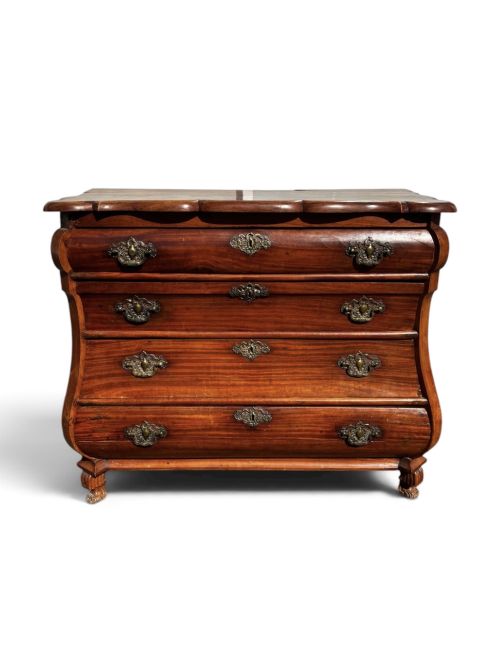
The dominant forms on this page are drawer chests in bow-front, serpentine, and straight configurations, often accented with contrasting timbers. Makers applied satinwood both as solid timber in early luxury pieces and as fine veneers over mahogany or pine in later periods.
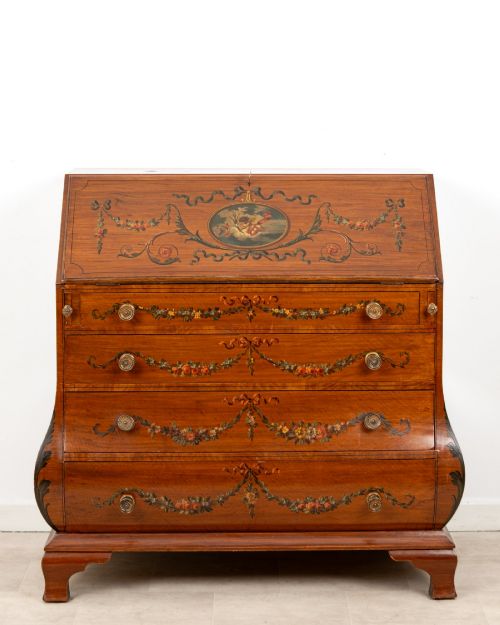
The aesthetic shifts from the restrained classical inlay of the eighteenth century to the elaborate painted satinwood of the Edwardian Sheraton Revival era. Buyers select these pieces to introduce warmth, figured grain patterns, and historic character into domestic interiors.
How these pieces were made
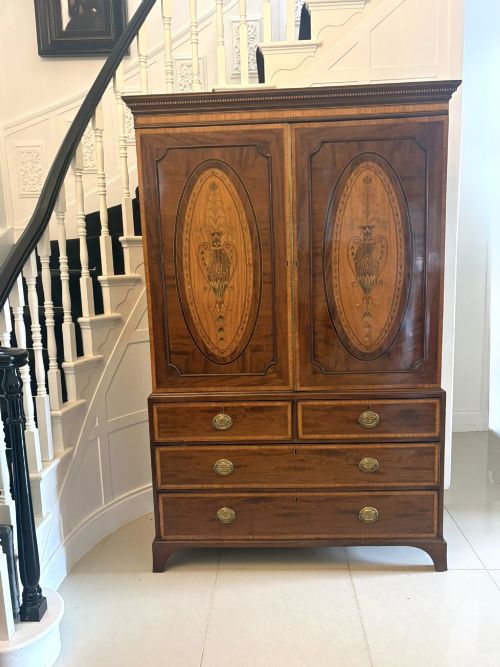
Cabinetmakers utilised satinwood primarily as a veneer, sawing the dense, lustrous timber into thin sheets and laying them over secondary woods such as mahogany, pine, or oak to stabilise the construction. Crossbanding and line inlay in ebony, harewood, or mahogany frequently framed the drawer fronts and top surfaces.
Solid construction appears in specific pieces, such as eighteenth-century tea caddies and select colonial chests, where the heavy native timber was worked directly. Brass hardware, including original swing handles and escutcheons, was fitted by hand to complement the golden tones of the wood.
Later Edwardian examples often feature hand-painted floral swags or classical medallions applied directly onto the satinwood surface before varnishing. Dovetail joints secured the drawer construction, while oak or pine linings remained standard internal practice across the nineteenth century.
The inventory includes compact tea caddies, bedside cabinets, and tallboys alongside standard chests of drawers.
What varies in quality
Quality in an antique satinwood chest rests upon the selection of the timber and the precision of the cabinetmaking. Highly figured logs yielding chatoyant, mottled, or feather-grain veneer command greater visual depth than plain, flat surfaces.
The integrity of the construction dictates the tier of the piece, visible in the tightness of the hand-cut dovetails and the alignment of drawer runners. Pieces retaining their original brass hardware, glass pulls, or fitted internal components hold higher integrity than those with replaced elements.
The subtlety of the decorative elements separates workshop output, distinguishing crisp, delicate stringing and balanced proportions from heavier, less refined later revivals.
Harris Lebus of Tottenham·Heal And Son·Druce And Co·Shapland And Petter
The Antique Satinwood Chest Glossary
- Satinwood
- A dense, hard timber known for its yellowish-gold colour and shimmering, chatoyant grain. It was imported from both East India and the West Indies for high-end cabinetmaking.
- Crossbanding
- A decorative border technique where strips of veneer are laid so that the grain runs perpendicular to the surrounding surface. This frames drawer fronts and table tops with subtle contrast.
- Stringing
- Narrow lines of inlay using contrasting woods like ebony, boxwood, or mahogany. It creates delicate geometric borders around panels and drawer edges.
- Bow-front
- A convex, curved cabinet front popular during the Georgian and Regency periods. It softens the silhouette of a chest while increasing internal volume.
- Serpentine
- A cabinet front featuring a central convex curve flanked by two concave curves, or vice versa. This complex shaping requires advanced carpentry and signals higher quality.
Antique Satinwood Chest: Frequently Asked Questions
How do I date an antique satinwood chest?
Dating relies on combining the structural characteristics, timber usage, and stylistic markers visible in the piece. Eighteenth-century examples often employ solid construction or simple mahogany carcases with fine veneers, while Victorian and Edwardian pieces frequently utilise pine or oak second woods alongside machine-assisted elements.
Hardware styles, dovetail construction methods, and label remnants also provide concrete clues to the decade of manufacture. Comparing the secondary woods inside the drawers against known period standards helps confirm the era.
Is satinwood the same as satin birch?
Satinwood and satin birch are entirely different timbers with distinct botanical origins and appearances. True satinwood comes from tropical trees yielding a dense, golden-yellow wood with a natural reflective sheen.
Satin birch is a northern European birch selected and finished to mimic the prized golden appearance of true satinwood at a lower cost. Listings occasionally use both terms, making timber grain inspection essential for identification.
How should I care for satinwood furniture?
Maintaining satinwood requires protecting the polished surface from direct sunlight and extreme humidity fluctuations. Excessive light can bleach the golden tones of the timber and dry out old veneer adhesives.
Applying microcrystalline wax periodically nourishes the polish without building up residue. Avoid silicone-based sprays and keep the furniture away from direct heat sources to prevent timber shrinkage.
Were these chests used in bedrooms?
Antique satinwood chests served primarily in principal bedrooms and dressing rooms for storing linens, undergarments, and daily attire. Tallboys and chests of drawers provided essential storage before fitted wardrobes became standard.
Smaller variations, such as bedside cabinets and commodes, were positioned next to sleeping quarters for nighttime convenience. Their decorative painted or inlaid finishes suited private domestic chambers.