


Satinwood Bedroom Storage
Satinwood bedroom storage pieces bring pale timber grain and crisp inlay into rooms needing light and refined proportion.
Satinwood Bedroom Storage
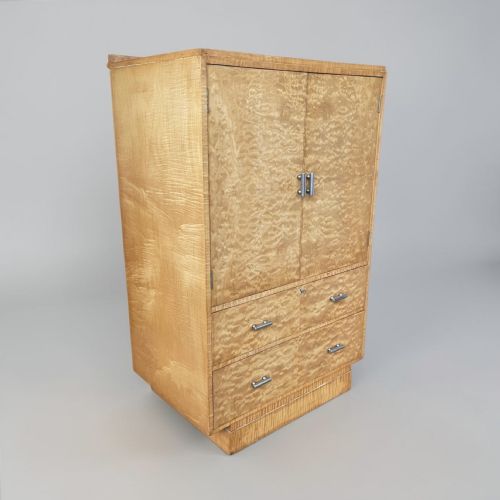
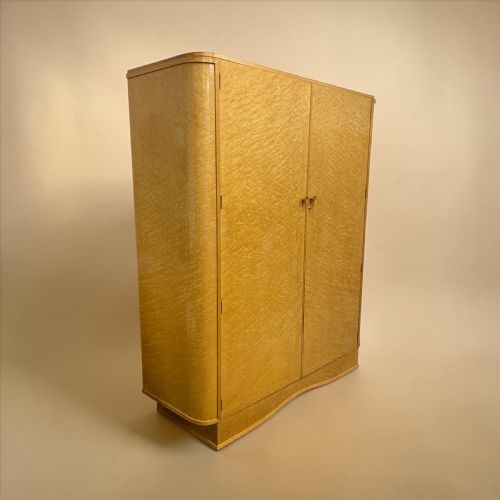
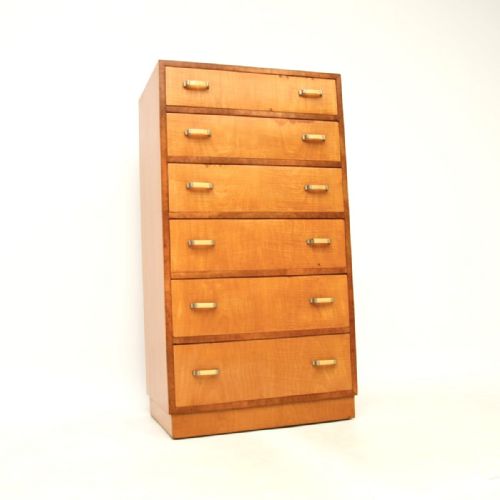
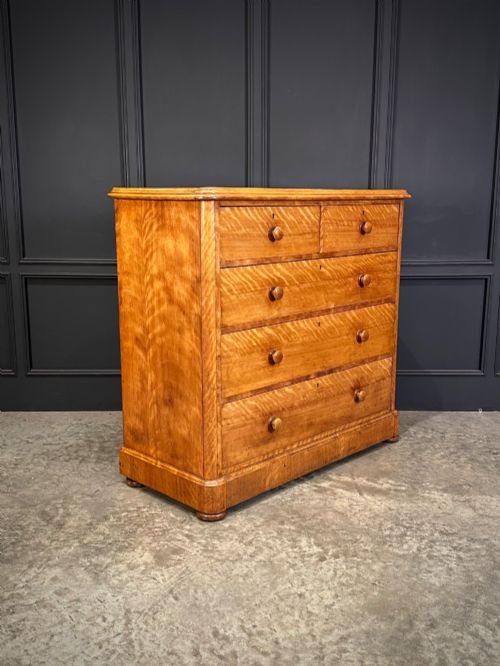
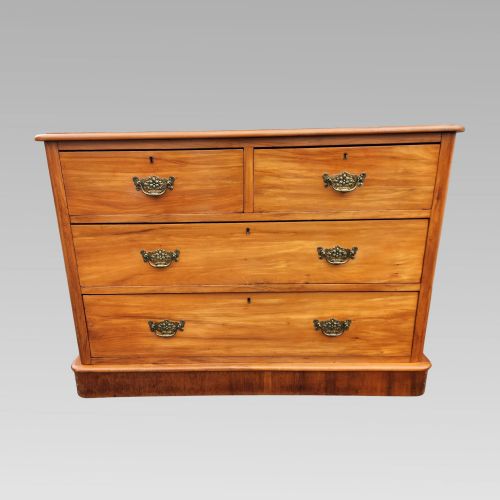
When you search for satinwood bedroom storage, you encounter practical furniture designed to hold garments and personal belongings while introducing a luminous timber surface to the room. The selection spans compact bedside tables and dressing tables alongside tall chests of drawers, linen presses, and large wardrobes.
The pieces appearing most frequently originate from the Edwardian and Victorian eras, alongside robust examples from the Georgian, Regency, and Art Deco periods. These works often pair a foundational carcase of mahogany, pine, or walnut with figured satinwood veneers or solid timber drawer fronts.
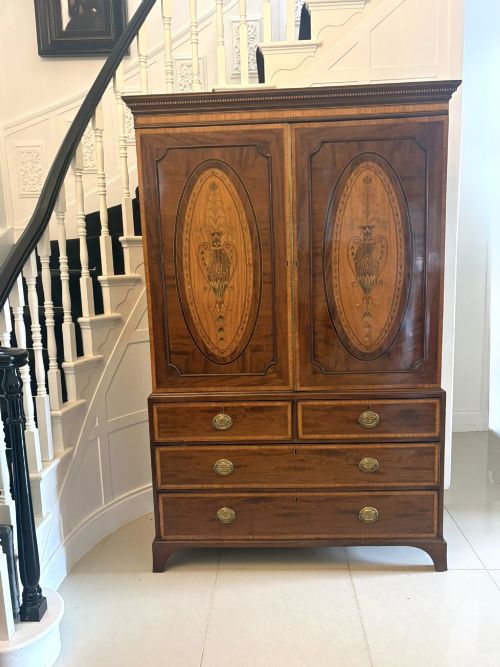
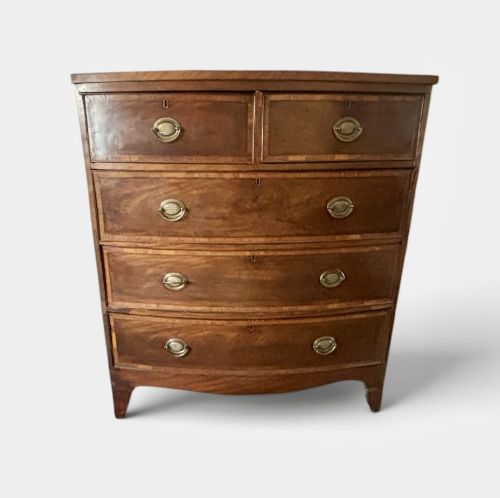
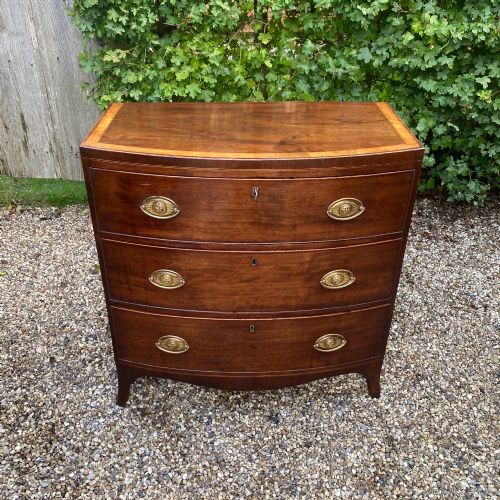
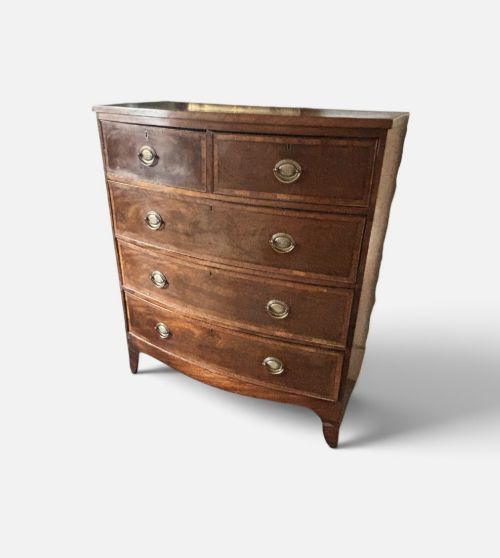
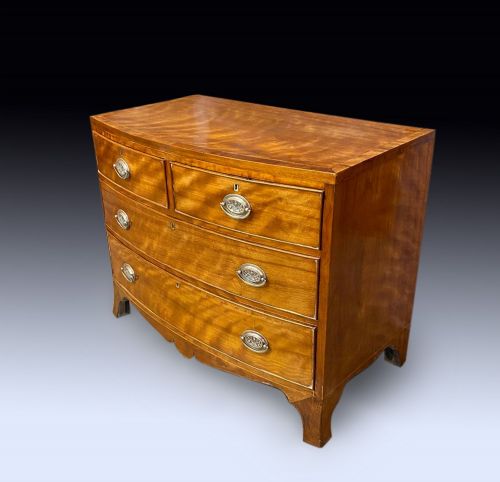
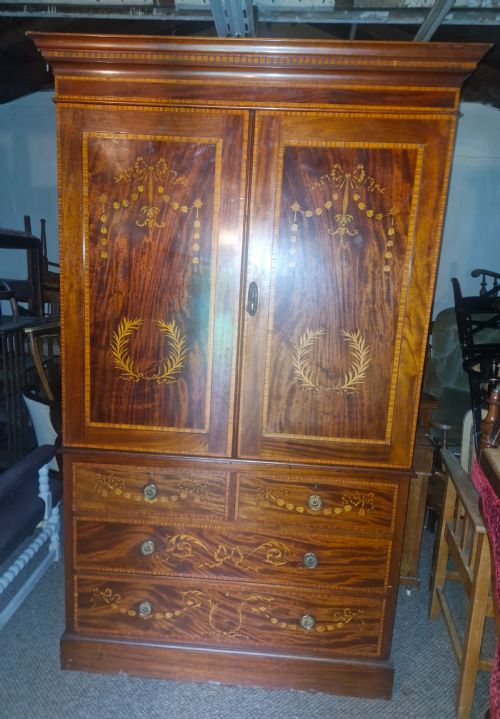
Storage forms range from modest bow-front chests to towering compactum wardrobes and fitted linen presses with internal trays. Each piece reflects the domestic storage needs of its respective period, from grand nineteenth-century country houses to twentieth-century apartments.
Materials and construction methods
Cabinet makers utilised dense secondary timbers such as mahogany and pine for structural carcases, applying delicate satinwood veneers and contrasting bandings to the exterior surfaces. Crossbanding and line inlay in darker woods framed the golden panels of satinwood to create geometric borders.
Joinery techniques relied on traditional hand-cut dovetails for drawer construction and sturdy mortise and tenon joints for wardrobe frames. Brass handles, escutcheons, and hinges provided functional hardware that complemented the warm golden tones of the polished wood.
Satinwood Bedroom Storage Retail Price Guide 2026
Typical asking prices for satinwood bedroom storage among the pieces listed under this phrase on Sellingantiques today, from the lower quarter to the upper quarter. They describe what is for sale here now, not the wider market.
Listings feature Edwardian, Victorian, and Art Deco pieces alongside Georgian and Regency examples, constructed in satinwood, mahogany, and walnut.
Evaluating craftsmanship and condition
Quality reveals itself in the grain selection of the satinwood veneer and the precision of the inlay work running along drawer fronts and cornices. Finer examples display symmetrical figure matching and crisp, intact banding without lifting or missing sections.
The integrity of the internal construction, including smooth-running drawers with well-fitted sides and original backboards, distinguishes superior pieces from standard utilitarian items. Hardware retention, such as matching period brass handles and working locks with keys, adds considerably to the integrity of the piece.
Harris Lebus of Tottenham·Heal and Son·Druce and Co·Waring and Gillow·Edwards and Roberts
The Satinwood Bedroom Storage Glossary
- Crossbanding
- A narrow strip of veneer laid perpendicular to the grain of the surrounding surface. This technique frames drawer fronts and tabletops with a contrasting border.
- Line inlay
- A slender thread of contrasting timber inserted into a shallow channel on the furniture face. It creates delicate linear patterns that define panels and borders.
- Linen press
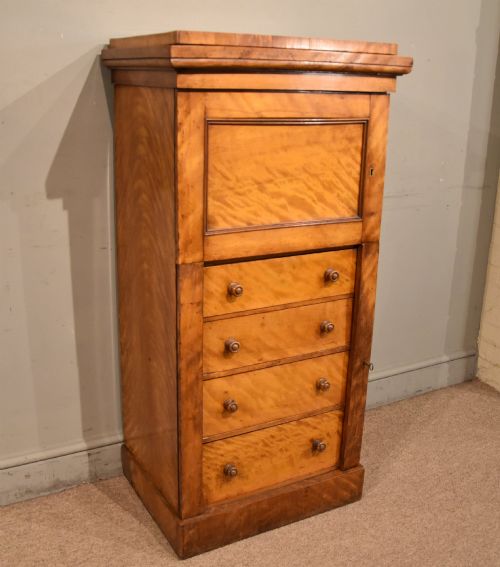
- A tall storage piece featuring upper sliding trays enclosed by doors and lower drawers for bulkier garments. Originally built to store household linens flat.
- Bow front
- A convex, outwardly curved furniture front popular during the Georgian and Regency eras. This shape softens the profile of large chests and cabinets.
- Compactum
- A multi-compartment wardrobe combining hanging space, drawers, and shelving within a single unified structure. It maximises storage efficiency in smaller bedroom spaces.
Satinwood Bedroom Storage: Frequently Asked Questions
How do I care for satinwood?
Keep satinwood furniture away from direct sunlight and steady heat sources to prevent the pale veneer from darkening or drying out. Dust regularly with a soft, dry cloth and apply a quality beeswax sparingly when the timber appears dry.
Avoid using silicone-based polishes or wet cloths, as moisture can penetrate hairline cracks in older finishes and damage the underlying veneer. Gentle handling preserves the original polish and maintains the warm golden lustre of the wood.
Are these pieces solid satinwood?
Most pieces combine a sturdy secondary timber framework, such as mahogany, pine, or walnut, with fine satinwood veneers applied to the visible exterior surfaces. Solid satinwood trunk examples do exist, but veneer allowed makers to utilise highly figured grain patterns economically.
The use of veneer prevented warping across large panels while displaying the shimmering chatoyancy characteristic of East Indian satinwood. Inspecting the drawer edges and interior carcase reveals the underlying construction methods used by the maker.
How do I date a satinwood chest?
Examine the construction of the drawers, paying close attention to the dovetail joints and the thickness of the drawer linings. Hand-cut, irregular dovetails usually point towards eighteenth or early nineteenth-century origins, while more uniform machine-cut joints indicate later production.
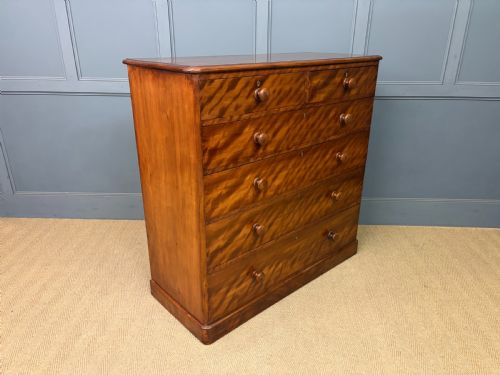
Style indicators such as bracket feet, oval brass drop handles, and restrained stringing suggest George III or Regency periods. Heavier proportions, brass ring pulls, and applied moulding generally point toward Victorian or Edwardian manufacturing.
Will a large wardrobe dismantle?
Many wardrobes and linen presses from the Victorian and Edwardian periods were designed with knock-down construction. They dismantle into separate cornices, base sections, side panels, and central doors to facilitate transport and placement.
Check for internal bolts, wooden pegs, or screw fixings that secure the panels together before attempting to move the unit. Enlisting professional delivery assistance ensures these large storage pieces are safely disassembled and reassembled in place.