



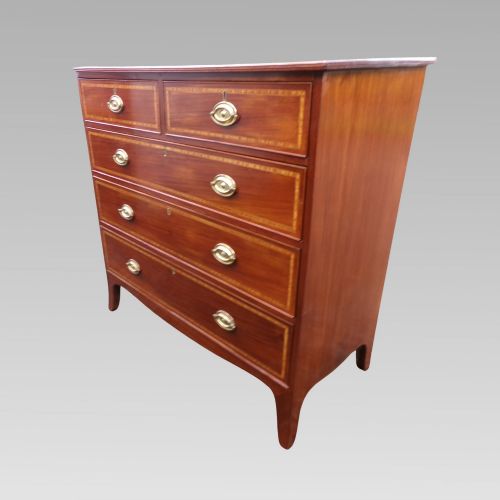


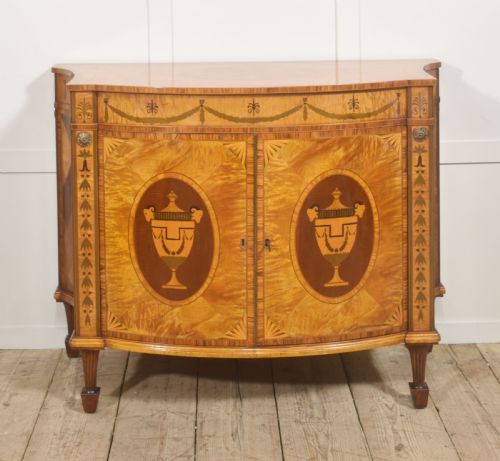


Inlaid Satinwood Commode
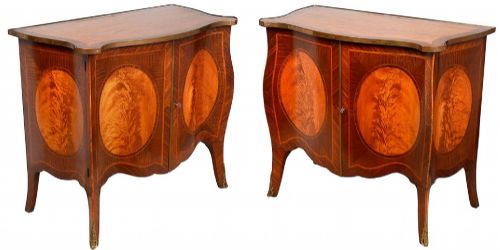
An inlaid satinwood commode brings light timber surfaces and precise marquetry to a room, offering both display space and deep storage.
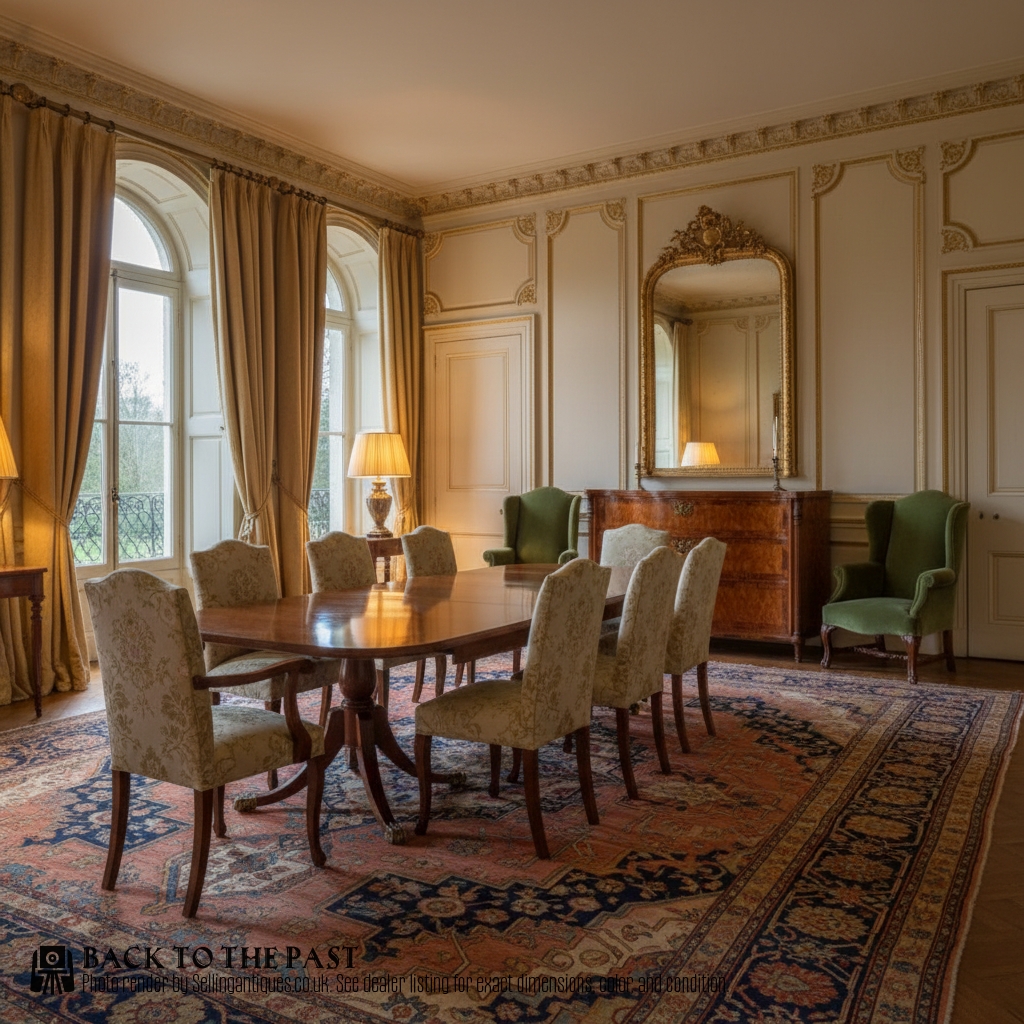
Inlaid Satinwood Commode
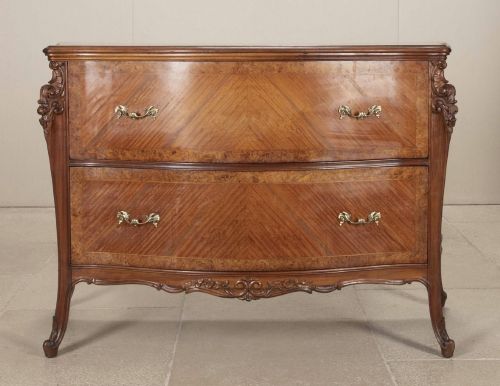
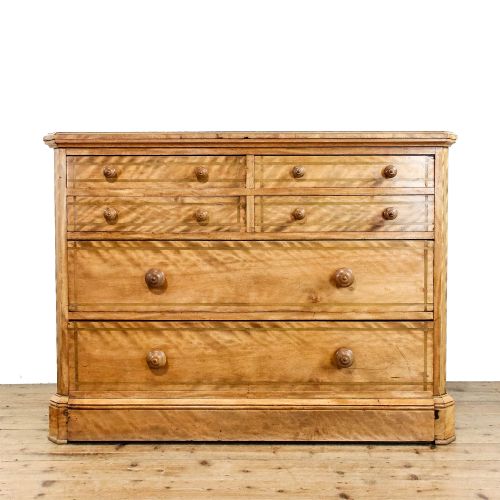
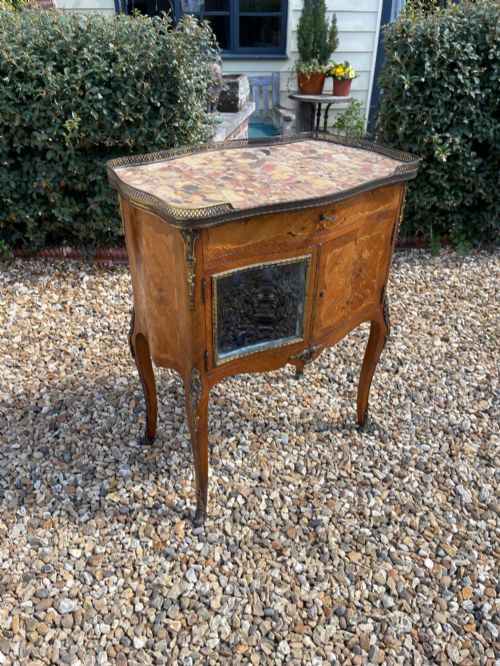
An inlaid satinwood commode is a refined storage piece, appearing here predominantly as chests of drawers, side cabinets, and demi-lune commodes. These items span the eighteenth, nineteenth, and early twentieth centuries, encompassing Georgian, Victorian, Edwardian, and Sheraton Revival eras.
The buyer meets serpentine fronts, bow-fronted profiles, and straight-sided chests in this selection. British, French, Swedish, and Italian workshops all contributed to the diverse forms found across these listings.
How They Were Made
Cabinet makers utilised dense timbers such as mahogany, walnut, and rosewood as primary structural foundations. Satinwood provided a pale, luminous veneer, often contrasted with boxwood, tulipwood, and kingwood for delicate stringing and pictorial marquetry.
Brass handles, escutcheons, and occasional marble tops completed the construction of these cabinets. Joinery relied on precise dovetailing for drawer construction and careful hand-cut veneers laid over robust oak or pine carcasses.
Inlaid Satinwood Commode Retail Price Guide 2026
Typical asking prices for inlaid satinwood commode among the pieces listed under this phrase on Sellingantiques today, from the lower quarter to the upper quarter. They describe what is for sale here now, not the wider market.
Cabinet makers occasionally hid secret compartments behind decorative marquetry panels to safeguard private correspondence.
What Varies in Quality
The sophistication of the marquetry and inlay work dictates the upper tier of the selection. Pieces featuring intricate floral scrolls, urns, or neoclassical motifs executed in contrasting exotic woods represent superior craftsmanship compared to plain line-inlaid surfaces.
Timber selection and secondary wood use reveal the origin and standard of the workshop. Dense figuring in the satinwood veneer, matched grain patterns across drawer fronts, and heavy cast brass mounts signal an atelier of note.
James Hicks·Edwards and Roberts·Cowtan and Sons·Gillows
The Inlaid Satinwood Commode Glossary
- Satinwood
- A pale, hard timber with a natural sheen, native to the West Indies and Ceylon, used extensively for eighteenth and nineteenth-century veneering. It accepts polish exceptionally well, giving surfaces a luminous quality.
- Marquetry
- Decorative patterns formed by inserting small pieces of coloured wood, ivory, or shell into a veneered surface. This technique differs from inlay by assembling the entire design on a paper backing before applying it to the carcass.
- Serpentine
- A curved furniture front characterised by a convex centre flanked by concave ends. This shape requires considerable skill from the cabinet maker to fit drawers and mouldings accurately.
- Demi-lune
- A half-moon shape used for commodes and side cabinets designed to stand flat against a wall. The curved front often incorporates doors or drawers radiating from a central point.
- Crossbanding
- A border of veneer laid around the perimeter of a panel or drawer front with the grain running perpendicular to the central wood. It frames the main timber panel and provides a neat visual boundary.
- Stringing
- Thin lines of contrasting wood inlaid into grooves on drawer fronts or table edges. This linear detail defines geometric panels and highlights structural contours.
Inlaid Satinwood Commode: Frequently Asked Questions
How do I date an inlaid satinwood commode?
Dating relies on examining the construction methods of the carcass, the choice of secondary woods, and the stylistic vocabulary of the marquetry. Eighteenth-century pieces often show hand-cut dovetails and subtle neoclassical motifs, while later Sheraton Revival items from the nineteenth and early twentieth centuries display machine-sawn elements alongside period-mimicking designs.
Hardware and interior linings offer further clues to the period of manufacture. Original locks, handles, and hinges match the expected metallurgical techniques of their respective decades, helping to distinguish an original Georgian piece from a later revival work.
Where should I place a satinwood commode?
These pieces suit reception rooms, hallways, and drawing rooms where their pale timbers can reflect light and complement surrounding furnishings. Demi-lune and bow-front variants fit well against flat walls without dominating the floor space.
Direct sunlight should be avoided to prevent the satinwood veneer from fading or darkening unevenly over time. Placing the cabinet away from heat sources protects the fragile wood veneers from drying out and lifting.
How do I care for satinwood surfaces?
Maintenance requires regular dusting with a soft, dry cloth and occasional application of traditional beeswax to nourish the timber. Moisture and harsh cleaning agents must be kept away from the veneered surfaces to prevent damage to the polish and inlay.
Environmental stability is essential for antique furniture containing multiple wood types. Keeping the room at a steady humidity level prevents the wood and its delicate stringing from expanding or contracting.
What is the difference between a commode and a chest of drawers?
A commode generally refers to a low, decorative cabinet with drawers or doors, often associated with French or formal English interior styles. Chests of drawers are typically taller storage units focused primarily on utility rather than decorative display.
In eighteenth and nineteenth-century terminology, commodes frequently featured serpentine or demi-lune shapes with elaborate marquetry. Standard chests tended toward rectangular forms with simpler line inlay or crossbanding.