

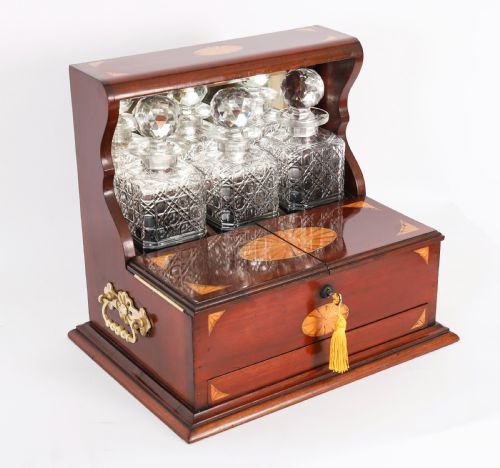


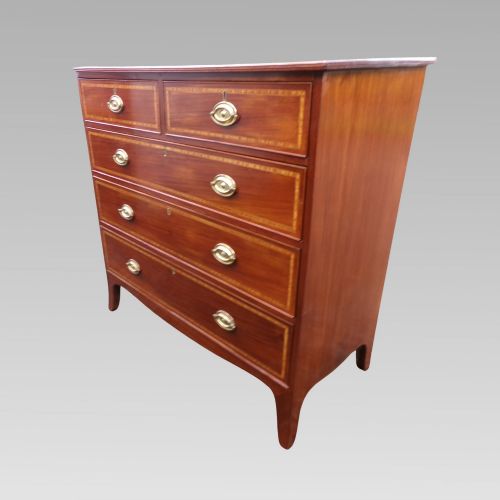


Victorian Satinwood Chest
A victorian satinwood chest brings pale lustre and fine figure to a bedroom, offering practical storage wrapped in nineteenth-century craftsmanship.
Victorian Satinwood Chest
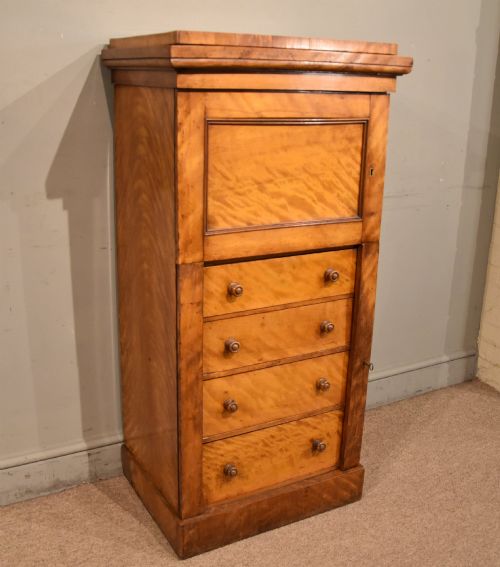
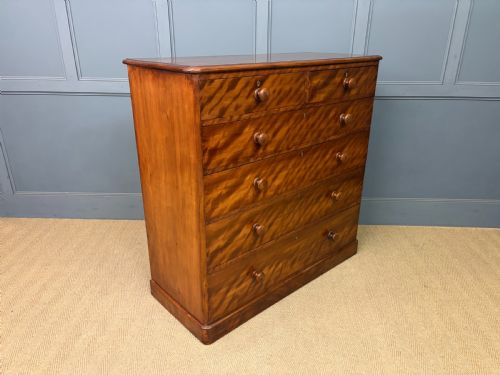
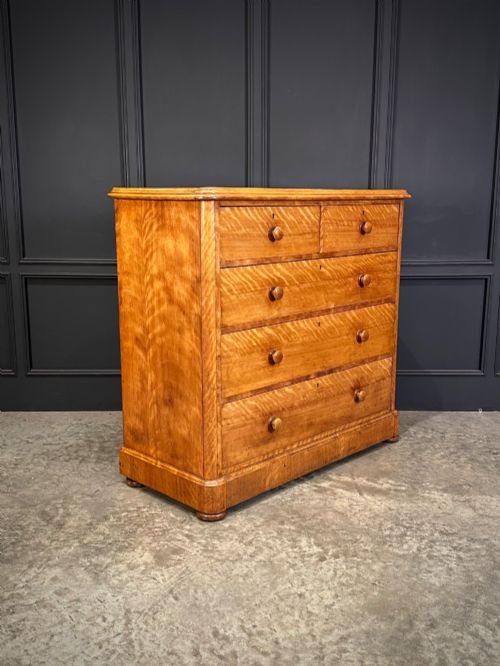
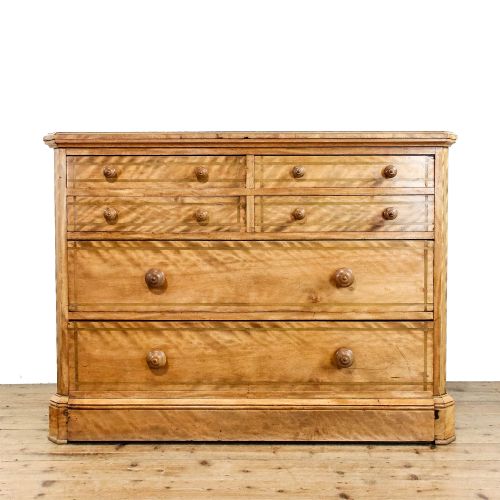
A victorian satinwood chest represents a distinct departure from dark mahogany, utilising a light timber that brightens domestic interiors. The pieces on this page span the nineteenth century, featuring upright drawer banks, low bedside formats and serpentine fronts.
Makers and workshops of the period built these chests of drawers and dressing pieces using dense tropical hardwoods, often framing the pale surfaces with darker crossbanding in mahogany or walnut. Buyers encounter both solid construction and elaborate veneers applied to pine carcasing.
The aesthetic movement and Sheraton revival styles heavily influence the design repertoire, bringing inlaid stringing and brass hardware to standard bedroom forms. Many examples originate from English workshops, alongside occasional colonial pieces incorporating contrasting timbers.
Materials and Construction
Cabinetmakers selected satinwood for its natural sheen and distinctive grain pattern, frequently applying thin veneers over stable secondary woods like pine or mahogany. Crossbanding in contrasting timber frames the drawer fronts, while mahogany and satin birch appear as alternative or supplementary materials within the same pieces.
Joinery techniques rely on hand-cut dovetails for drawer construction and sturdy framing to support heavy timber carcases. Brass drop handles, key escutcheons and occasionally mirror glass complete the structural elements of these nineteenth-century items.
Some nineteenth-century specimens include hidden compartments designed for secret documents, keeping private letters safe from prying eyes.
Assessing Quality
The visual impact of a piece depends heavily on the choice of timber figure and the precision of inlaid stringing. Master workshops selected veneers with exceptional chatoyancy, ensuring the surface catches light differently from various angles.
Structural integrity separates standard utilitarian items from pieces produced by notable makers. Smooth drawer movement, original brass hardware and well-preserved secondary woods indicate superior cabinetmaking standards.
Harris Lebus of Tottenham·Heal and Son·Edwards and Roberts·Gillows·John Taylor of Edinburgh·Holland and Son
The Victorian Satinwood Chest Glossary
- Satinwood
- A dense, lustrous tropical timber known for a golden sheen and distinct figuring that resembles satin fabric. It served as both a solid medium and a prized veneer throughout the nineteenth century.
- Crossbanding
- A decorative border technique where thin strips of veneer are laid so their grain runs perpendicular to the main surface. This frames drawer fronts and top panels on better quality case pieces.
- Wellington chest
- A tall, narrow chest of drawers secured by a single hinged locking stile on the right side. The mechanism engages the drawer edges to secure the entire stack with one key.
- Stringing
- Fine inlaid lines of contrasting wood or light-coloured inlay materials set into grooves on furniture surfaces. It defines panel shapes and outlines drawer borders on Sheraton revival and neoclassical designs.
- Carcas
- The main structural body or framework of a piece of furniture, excluding drawers and doors. Cabinetmakers typically built this inner skeleton from secondary timbers like pine before applying decorative veneers.
Victorian Satinwood Chest: Frequently Asked Questions
How do I care for satinwood?
Keep these items away from direct sunlight and excessive heat sources to prevent the timber veneers from drying out or splitting. Dust gently with a dry, soft cloth and apply traditional beeswax sparingly to maintain the natural lustre.
Avoid using modern liquid polishes or silicone sprays, as these can penetrate old finishes and attract dust. Professional wax maintenance preserves the historic surface without harming the delicate grain.
What is a Wellington chest?
A Wellington chest is a tall, narrow set of drawers featuring a locking side pilaster that secures every drawer simultaneously. Originating in the nineteenth century, this format maximised vertical storage space in compact dressing rooms.
Named after the Duke, these pieces often house document drawers or shirt compartments behind the locking stile. They require clearance on the right side to swing the locking bar open.
Are these chests solid satinwood?
Most nineteenth-century examples utilise satinwood as a veneer applied over secondary timbers such as pine or mahogany. This method prevented warping while displaying the most decorative and highly figured grain on the exterior surfaces.
Solid timber construction does occur on smaller trunks and specific regional items, but veneering remained standard practice for large case furniture. Examining drawer interiors and carcase edges reveals the underlying construction methods.
How do I date these pieces?
Stylistic cues such as brass hardware shapes, inlay complexity and structural joinery help determine the production era. Pieces showing heavy aesthetic movement or Sheraton revival influence typically date from the final decades of the nineteenth century.
Secondary wood choices and maker stamps inside drawer boxes provide further chronological evidence. Comparing construction traits with documented workshop timelines narrows down the manufacturing decade.