




Victorian Giltwood Stand
A victorian giltwood stand brings brilliant reflective surfaces and carved warmth into a room, offering both decorative presence and practical utility.
Victorian Giltwood Stand
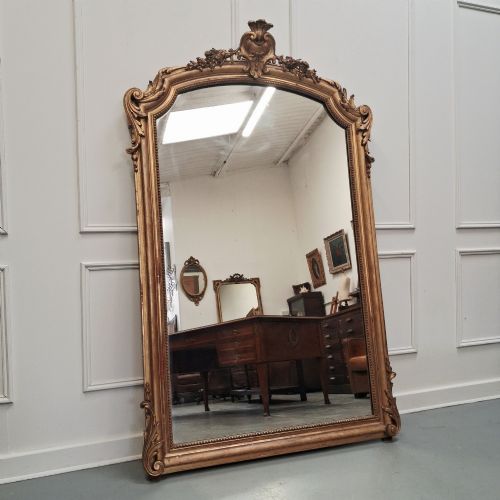
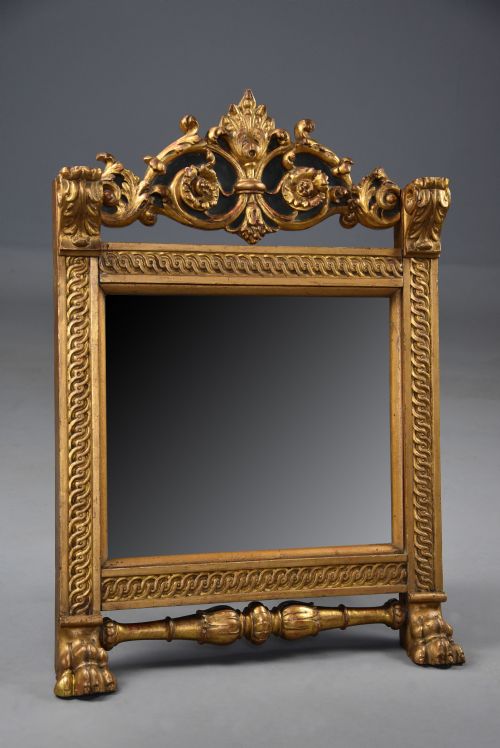
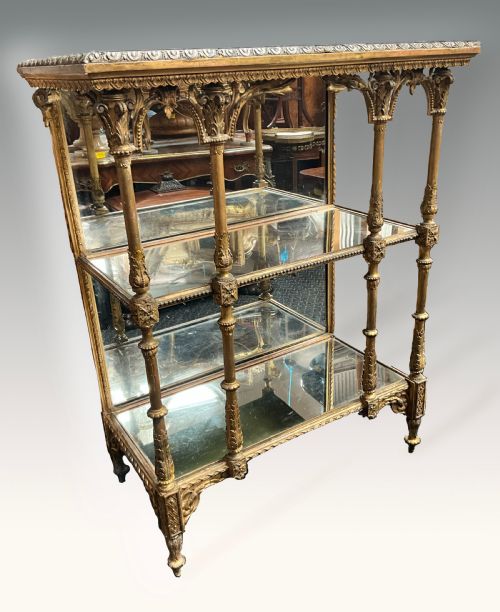
A victorian giltwood stand encompasses a variety of gilded furnishings designed to display items or reflect light within domestic interiors. The selections found on this page lean heavily towards mirrors, wall mirrors, and table mirrors, alongside occasional display shelves and stands.
Most examples hail from the nineteenth century, displaying stylistic influences ranging from Rococo Revival and Renaissance Revival to French Chateau and Victorian Neoclassical. Buyers seeking these items will encounter pieces that range from dressing table toilet mirrors to large hall mirrors and urn stands.
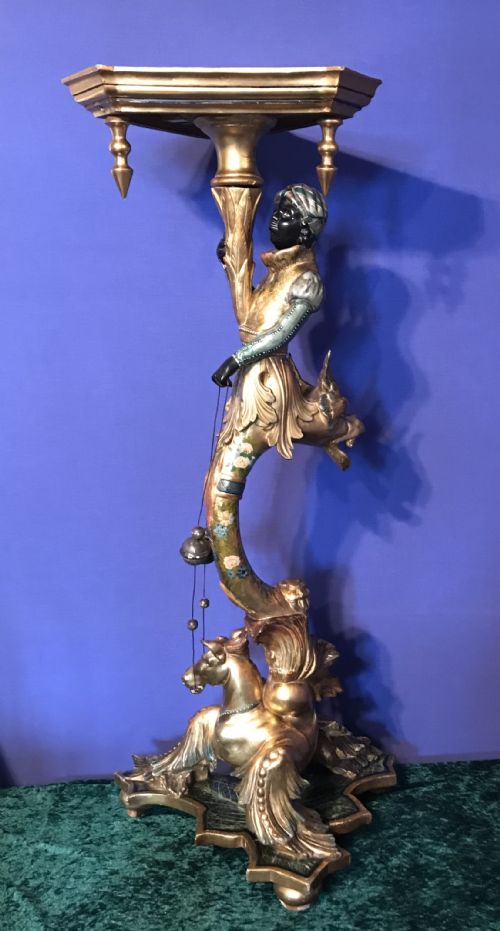
While the search term highlights stands, the physical evidence reveals that gilded woodwork primarily manifests as mirrors, shelves, and occasional furniture like urn stands and music stands. These objects share a common reliance on carved timber finished with gold leaf or gesso to achieve their characteristic sheen.
How they were made
Makers constructed these pieces using wood and carved wood as a primary structural base, applying gesso to smooth surfaces before gilding. Gold leaf provided the brilliant metallic finish that defines the giltwood aesthetic across mirrors and stands.
Mirrored glass and glass elements were integrated into frames and display shelves, often utilising heavy wooden substrates to support the weight. Composition ornament was frequently pressed into service alongside hand carving to create the intricate relief details seen in revival styles.
One remarkably confident nineteenth-century mirror decided it was a music stand in a previous life.
What varies in quality
The depth and crispness of the hand carving separate standard production from superior examples, particularly in how sharply the floral or architectural motifs emerge from the wood. Finer pieces display meticulous attention to detail in the application of gold leaf and the preparation of the underlying gesso.
The integrity of the structural timber and the retention of the original gilded surface dictate the standing of an individual piece. Superior items maintain their original glass and joinery without excessive modern intervention, preserving the authentic texture of the nineteenth-century finish.
The Victorian Giltwood Stand Glossary
- Giltwood
- Wood that has been coated with gold leaf or gold paint. This technique creates a luminous surface that catches and reflects ambient light.
- Gesso
- A plaster-like mixture applied to wood as a base for gilding. It provides a smooth surface for carving intricate details before the application of gold leaf.
- Torchere
- A tall ornamental stand designed to support a lamp or candle. These pieces often feature decorative carving and elevated pedestals.
- Cheval mirror
- A freestanding full-length mirror mounted in a frame that allows it to swing. This form became popular for bedroom dressing during the nineteenth century.
Victorian Giltwood Stand: Frequently Asked Questions
Where should I place a giltwood mirror?
These pieces suit reception rooms, halls, or bedrooms where they can reflect natural light and enhance the sense of space. Positioning them opposite a window maximises their ability to brighten a room.
Ensure the wall fixings are secure, as carved wooden frames and glass panels carry significant weight. Pairing them with complementary wooden furniture helps integrate the rich metallic finish into your interior scheme.
How do I clean giltwood surfaces?
Dust the carved details gently with a soft, dry brush to prevent accumulation without disturbing the delicate gold leaf. Avoid commercial liquid cleaners or moisture, which can damage the underlying gesso and wood.
Professional conservation is recommended for older surfaces that show signs of flaking or instability. Regular, careful dusting remains the best method for daily maintenance.
What is the difference between gesso and carved wood?
Carved wood refers to the actual timber substrate shaped by hand into architectural or organic forms. Gesso is a plaster mixture applied over the wood to create a smooth layer that accepts fine detail and gilding.
Many nineteenth-century pieces combine both techniques, using carved wooden frames enhanced with moulded gesso ornaments. Understanding this helps identify how intricate revival styles were achieved.
How do I identify the period of a stand?
Examine the construction methods, backboards, and fastener types used in the assembly of the frame or stand. Nineteenth-century pieces often display hand-cut joinery and signs of age in the silvering of the mirrored glass.
Stylistic cues such as Rococo Revival curves or Renaissance Revival motifs also point toward specific decades within the Victorian era. Comparing the hardware and wood type helps narrow down the date of manufacture.