
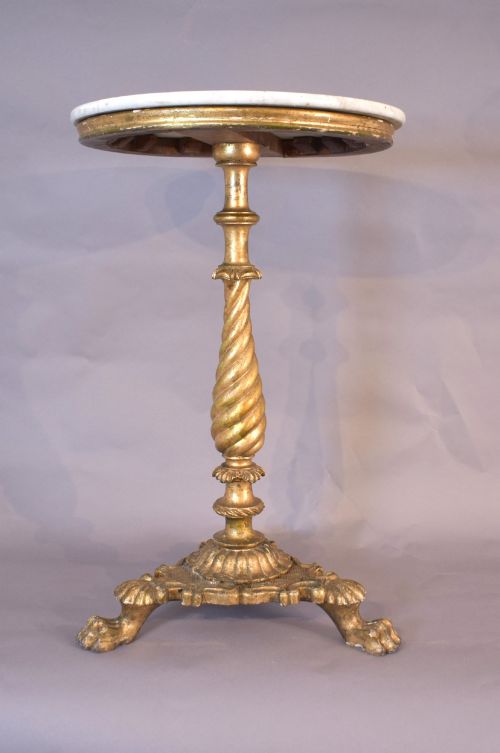
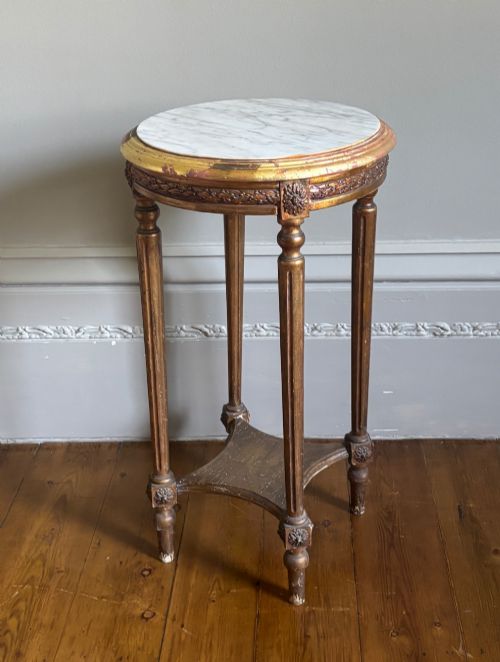
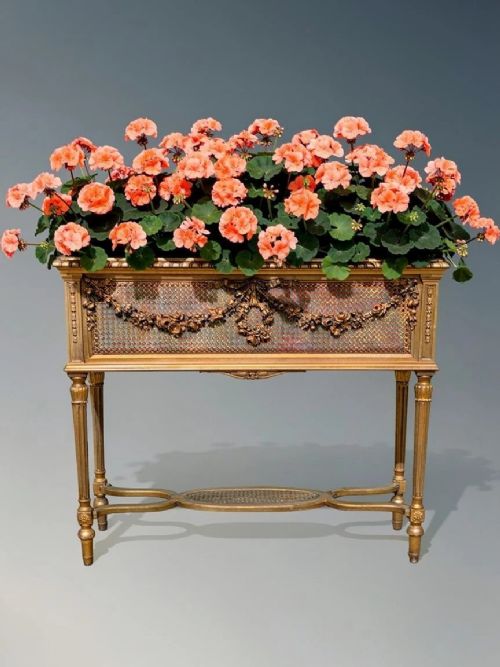


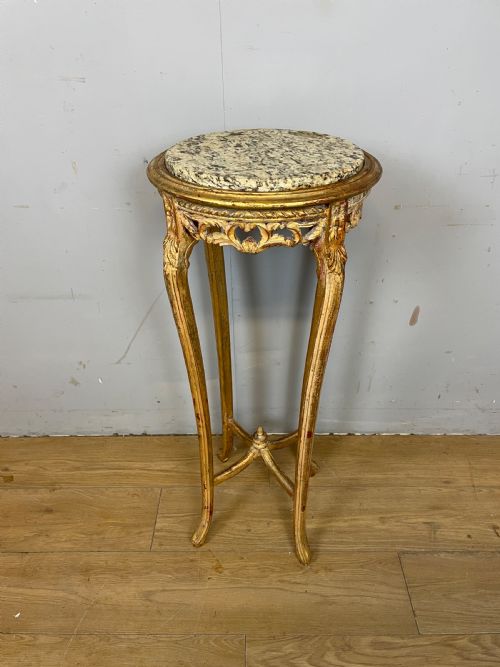
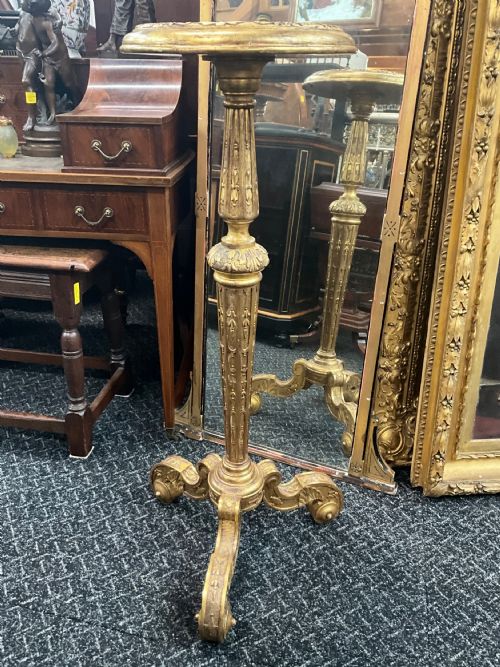

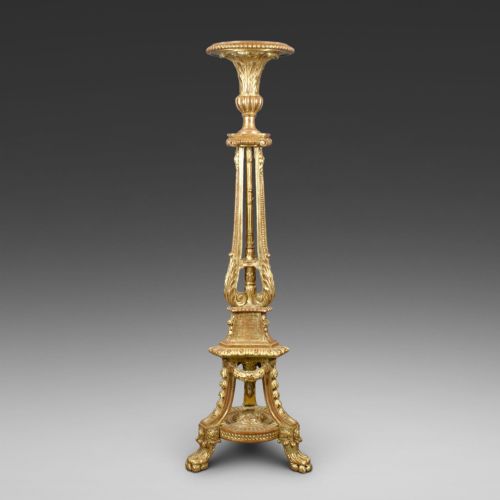


Giltwood Plant Stand
These giltwood plant stands bring architectural presence to a room, offering elevated display surfaces for greenery and sculpture.
What these pieces are
A giltwood plant stand is an elevated display piece designed to hold jardinieres, urns, or flowering plants within a grand interior. The examples collected here range from French Empire two-tiered caned stands to Edwardian marble-topped torcheres and country house pieces.
The forms span several distinct historical revivals and periods, including Regency, Victorian Rococo, and Charles II style. Buyers regularly encounter tall torcheres, urn stands, and side tables featuring round onyx or marble tops supported by carved columns.
Originating largely from French and English workshops, these stands served both functional and decorative purposes in period drawing rooms and halls. They combine utilitarian support with the rich surface ornamentation characteristic of formal nineteenth-century interior design.
How they were made
Construction relies primarily on carved wood foundations, occasionally augmented by metal elements or structural cane work. Artisans applied fine layers of gesso to the timber base to create a smooth, prepared surface capable of holding intricate relief details and mouldings.
Surface finishing involved the application of gold leaf or gilt treatment over the prepared gesso and wood. Inset tops utilised polished materials such as onyx and marble, fixed securely within the timber framework to bear the weight of heavy ceramic or metal planters.
Retail Price Guide 2026
Typical UK retail prices for giltwood plant stand, calculated from the Sellingantiques database of over a million retail prices indexed since 2003. This retail price guide relies exclusively on Sellingantiques data; no external sources or auction records are used, so the figures do not describe the wider market.
What varies in quality
Quality reveals itself in the depth and sharpness of the carved flower mouldings and architectural details. Hand-carved wooden ornament shows a crispness and individuality that distinguishes finer studio pieces from more utilitarian workshop production.
The integrity of the gilded surface and the choice of inset top material dictate the upper tier of the range. Solid marble or onyx inserts and expertly applied gold leaf demonstrate a higher standard of craftsmanship than simpler painted or thinly gilded alternatives.
The Giltwood Plant Stand Glossary
- Giltwood
- Wood that has been coated with gold leaf or a metallic substitute. This finish provides the characteristic metallic sheen seen on formal nineteenth-century furniture.
- Gesso
- A plaster-like mixture applied to wood surfaces as a base for gilding. It allows craftsmen to model sharp relief decoration before applying gold leaf.
- Torchere
- A tall, slender stand designed to hold a light source or an ornamental vessel. These pieces frequently feature prominent vertical columns and decorative pedestals.
- Jardiniere
- An ornamental stand or receptacle specifically designed to hold plants. In period interiors, these items elevated greenery to eye level within reception rooms.
- Cane
- Plant material woven in a patterned mesh. Used on lower tiers of stands to provide lightweight structural support.
Frequently Asked Questions
What is a giltwood plant stand used for?
These stands are built to elevate potted plants, urns, or decorative jardinieres within a room. They place floral displays at a prominent height to draw the eye.
Historically, they occupied drawing rooms, hallways, and formal reception spaces where interior greenery formed part of the decorative scheme.
How do I care for a giltwood surface?
Giltwood requires gentle dusting with a soft, dry cloth to prevent the accumulation of dirt. Moisture and harsh cleaning agents must be avoided entirely.
Keeping the pieces away from direct sunlight and humidity protects the underlying gesso and preserves the delicate gold leaf finish over time.
How can I tell different period styles apart?
Period identification relies on examining the carving styles, structural silhouettes, and ornamentation details. Regency and French Empire pieces often display classical columns and formal geometry.
Victorian Rococo Revival and Charles II styles lean towards exuberant floral mouldings, deep carving relief, and more sinuous structural lines.
Can these stands support heavy planters?
Most stands with stone or marble tops are structurally engineered to bear significant weight from heavy ceramic vessels. Lighter caned or wood-tiered versions suit moderate decorative foliage.
Checking the stability of the central column and joint construction helps determine the appropriate weight capacity for daily use.