




Gilt Wooden Plant Table
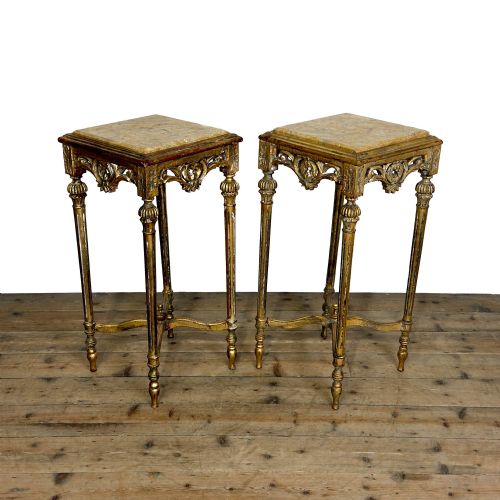
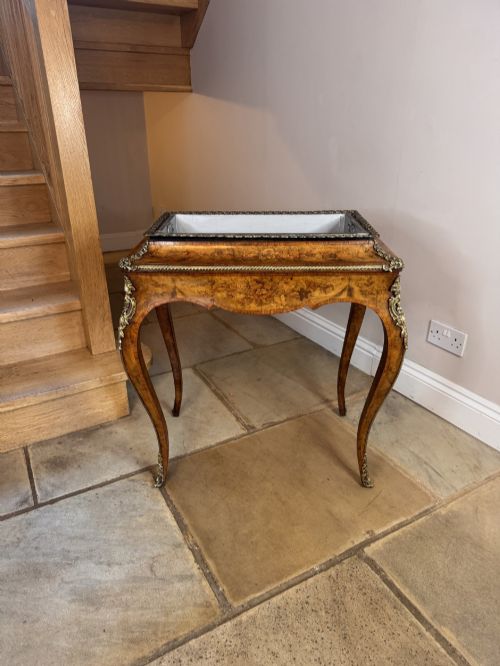
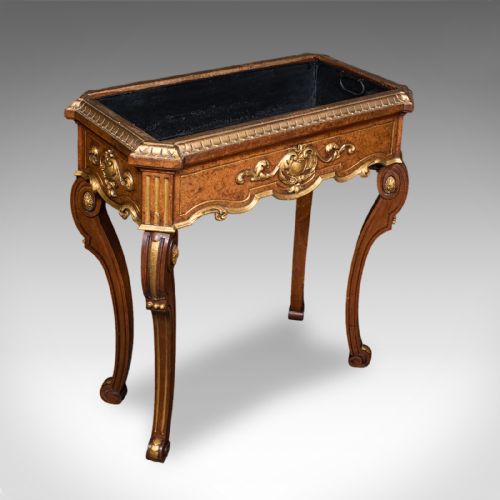
A gilt wooden plant table brings architectural flourish and botanical display together through carved timber and gilded surface.
Gilt Wooden Plant Table
A gilt wooden plant table unites decorative horticulture with furniture design across periods ranging from the Regency era through to the early twentieth century. These pieces function primarily to elevate greenery or floral arrangements within a grand interior scheme.
The most frequent examples encountered on this page belong to the nineteenth century, encompassing Victorian and French revivalist aesthetics such as Louis XV style and French Rococo Revival. Forms include jardiniere tables, planter stands, urn stands, and torcheres.
Makers and manufacturers adopted diverse timber foundations, including walnut, burr walnut, kingwood, mahogany, and ebonised wood, often enhanced with ormolu mounts or parcel gilding. Certain variations incorporate porcelain plaques or lacquer decoration alongside the primary wooden structure.
Materials and construction
Construction relies upon cabinet timbers such as walnut, kingwood, and mahogany, shaped into side tables, stands, and planter bodies. Surface ornamentation is achieved through parcel gilding, gesso, and black lacquer decoration.
Many specimens incorporate cast ormolu and gilt metal mounts, securing porcelain plaques or framing inset planter wells designed to hold botanical displays.
Gilt Wooden Plant Table Retail Price Guide 2026
Typical asking prices for gilt wooden plant table among the pieces listed under this phrase on Sellingantiques today, from the lower quarter to the upper quarter. They describe what is for sale here now, not the wider market.
One unexpected grouping pairs grand carved urns with accompanying tole flowers, bringing everlasting blooms to the table.
Assessing quality and execution
Quality separates through the finesse of the timber selection, such as figured burr walnut or rich kingwood veneers, paired with the crispness of carved details. Superior examples exhibit finely chased ormolu mounts and integrated porcelain elements that integrate harmoniously with the wood structure.
Lesser pieces rely on simpler secondary woods with basic parcel gilding or straightforward ebonising, lacking the sculptural depth found in revivalist pieces from the nineteenth century.
The Gilt Wooden Plant Table Glossary
- Jardiniere
- A decorative stand or container intended for holding plants or flowers. These vessels often feature waterproof liners or inset wells.
- Ormolu
- Gilded bronze mounted onto furniture or decorative objects. This technique was widely utilised during the nineteenth century.
- Torchere
- A tall stand designed to hold a light source or decorative object such as an urn. They frequently feature slender proportions.
- Kingwood
- A dense, richly figured exotic timber used for high-end cabinet making. It displays dark contrasting grain patterns.
Gilt Wooden Plant Table: Frequently Asked Questions
What is a gilt wooden plant table?
A gilt wooden plant table is a decorative stand or small table designed to display indoor plants, flowers, or urns. They combine timber construction with gilded surfaces or metal mounts.
These pieces emerged strongly during the nineteenth century, drawing inspiration from French styles like Louis XV and Rococo Revival.
How were plant tables used originally?
In period interiors, these tables held potted plants, floral displays, or decorative urns within reception rooms and parlours. They brought botanical elements indoors while adding a formal decorative accent.
Wealthy households utilised them to showcase exotic plants and demonstrate refined taste through elaborate furniture.
How do I date a plant table?
Dating relies upon examining the timber, construction methods, and stylistic revival motifs present in the piece. Nineteenth-century examples often feature ormolu mounts and specific revival idioms.
Comparing the secondary woods and decorative hardware against known period benchmarks helps establish the era of manufacture.
Where should I place one at home?
These tables suit hallways, drawing rooms, or bright corners where their decorative woodwork and elevated planters can be appreciated. They work well paired with trailing plants or decorative vessels.
Ensure the location protects any sensitive wood finishes and delicate metal mounts from excessive moisture.