
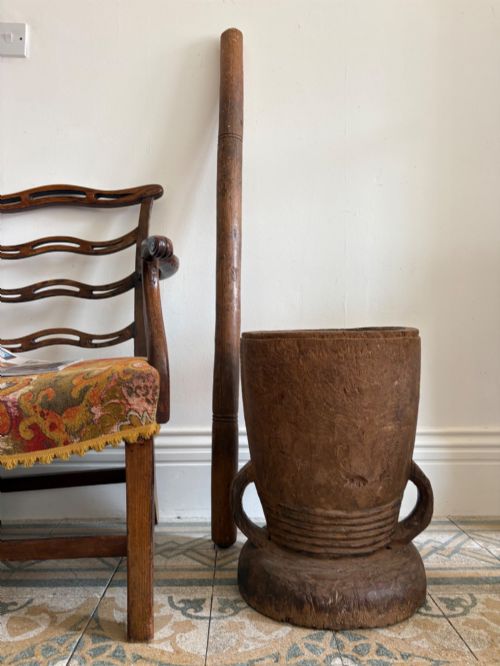
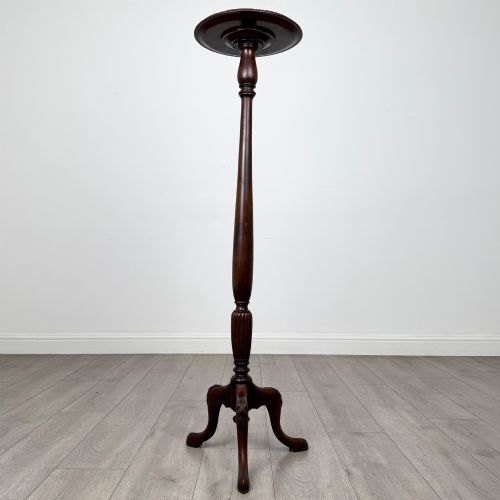
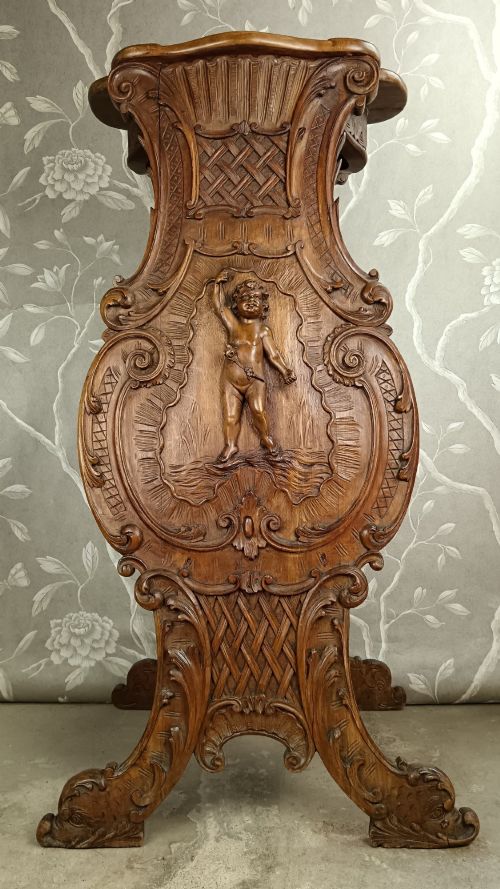
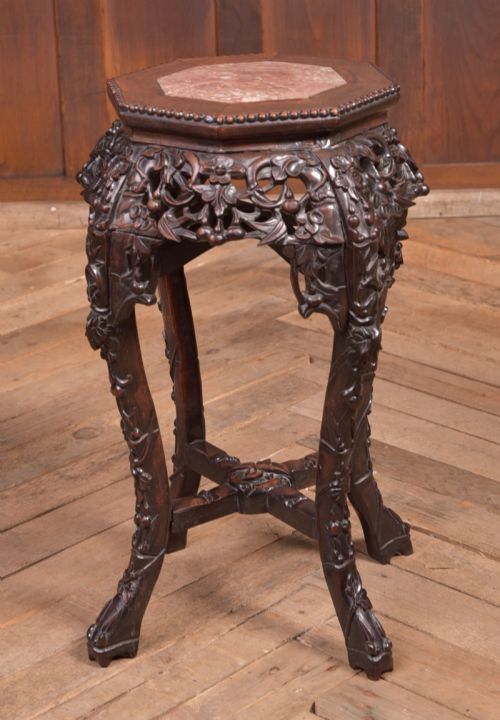
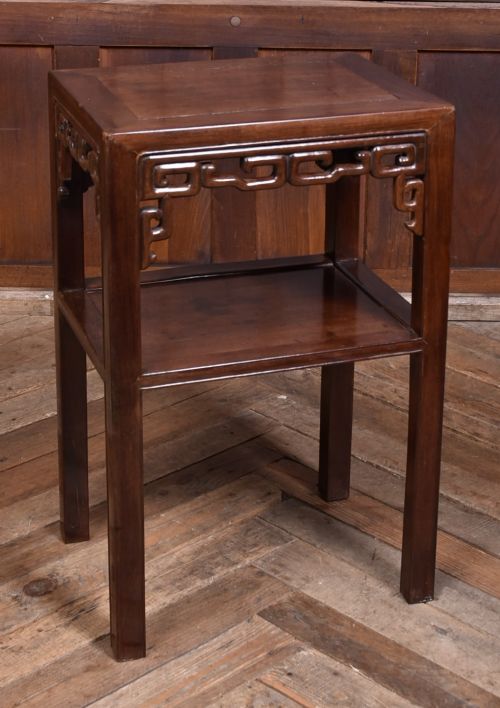
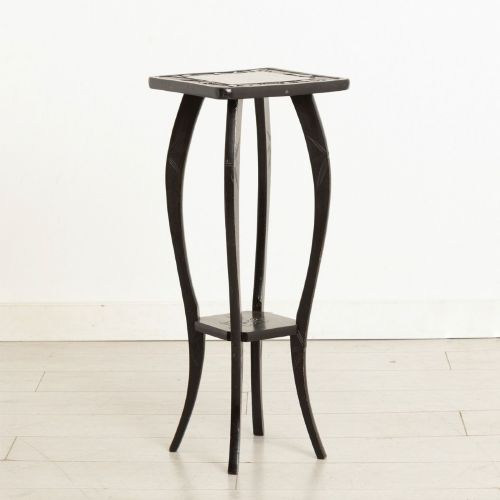
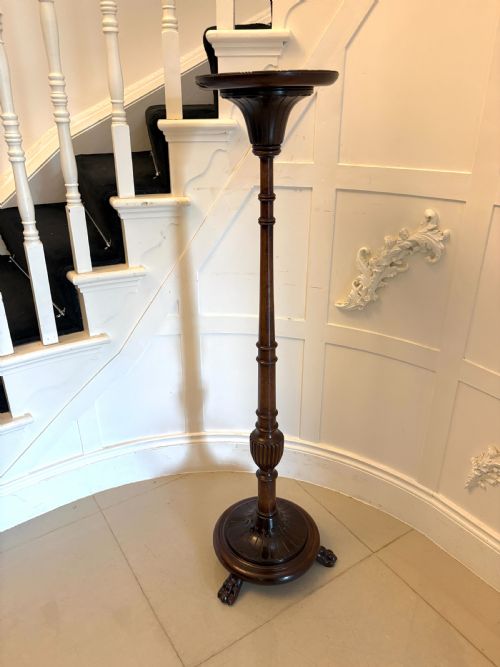
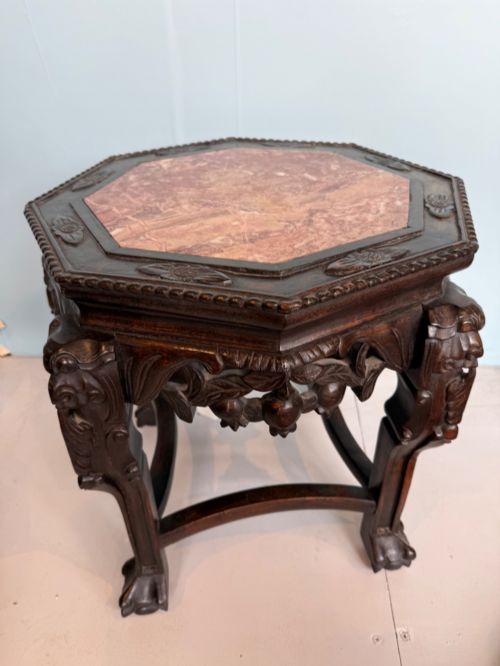
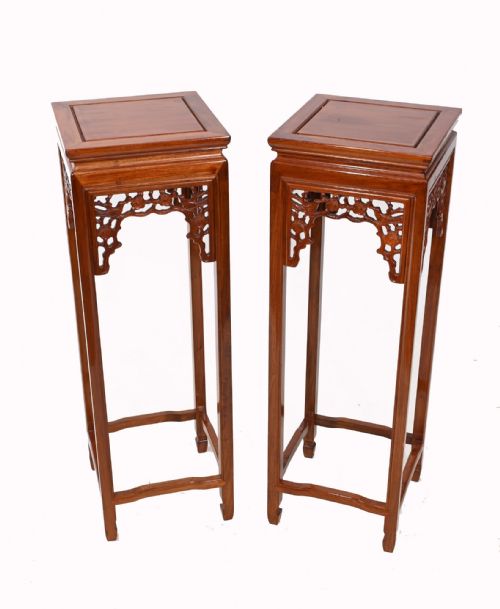
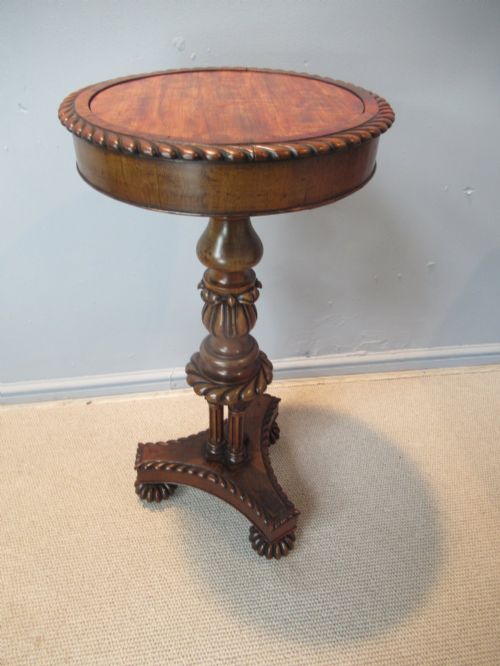
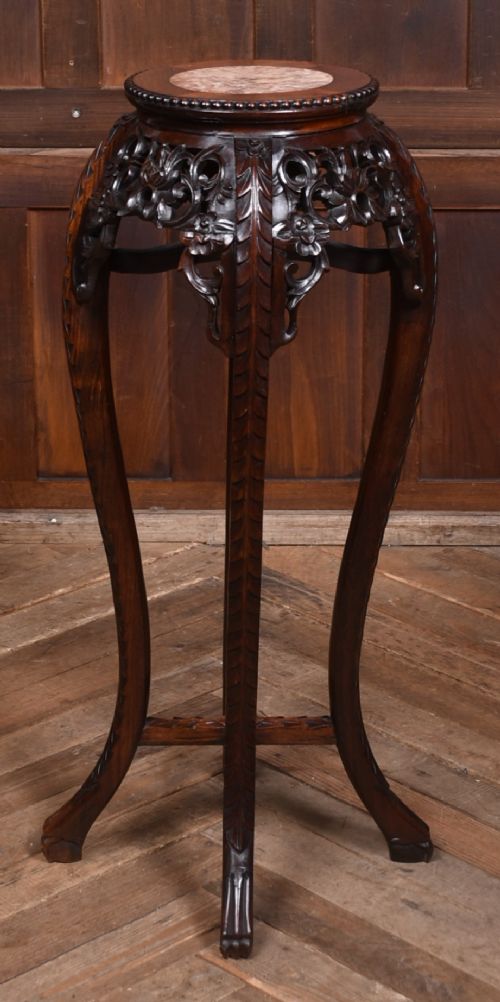


Carved Wooden Urn Pedestal
These carved wooden urn pedestal pieces elevate vases and sculpture, bringing classical height and steady support to any interior.
Carved Wooden Urn Pedestal
A carved wooden urn pedestal acts as a raised platform for heavy vessels, plants, and decorative figures within a room. Most examples found here originate from the nineteenth century, drawing upon Victorian, Chinese Export, and Anglo-Indian design traditions.
The physical form spans tall torcheres, multi-tiered tables, and sturdy tripod bases meant to hold a single heavy object. Many variations integrate inset marble or stone tops designed to resist water damage from potted plants and jardinieres.
Makers shaped these stands from dense timbers to support considerable weight without tipping. Buyers encounter both British revival styles and imported Asian hardwood furnishings from the same eras.
How they were made
Cabinetmakers utilised heavy timbers such as mahogany, walnut, rosewood, oak, and ebony to construct the foundational shafts and legs. Dense hardwoods provided the necessary stability for carrying heavy marble inserts and bronze or ceramic urns.
Joinery techniques included turned elements, barley twist legs, and intricate hand carving applied directly to the solid wood or gesso surfaces. Oriental pieces often relied on precise mortise and tenon joints to secure dense exotic woods like hongmu and padouk.
What varies in quality
The depth and crispness of the hand carving separate standard production pieces from finer studio work. Sharp undercutting in floral motifs or figural caryatids indicates a higher level of artisan skill than shallow, machine-routed patterns.
Selection of timber also defines grade, with solid rosewood, hongmu, and figured mahogany commanding greater presence than stained secondary woods. The integration of unblemished inset marble tops demonstrates superior original specification.
Liberty of London
The Carved Wooden Urn Pedestal Glossary
- Torchere
- A tall, slender stand designed to hold a lamp or candle, frequently adapted for display urns. These vertical supports anchor corners and dark spaces in period rooms.
- Jardiniere stand
- A low or medium table specifically built to hold heavy plant pots and ceramic planters. They often feature protective stone or marble surfaces.
- Triform base
- A three-sided foot arrangement that provides maximum balance for tall columns. This geometric foundation prevents heavy top-heavy items from tilting.
- Hongmu
- A dense, heavy Chinese hardwood prized for dark colour and fine grain. Artisans utilised this material for intricate carved display stands during the Qing dynasty.
- Caryatid
- A sculpted female figure serving as an architectural support column. These figures appear carved directly into the shafts of heavier nineteenth-century pedestals.
Carved Wooden Urn Pedestal: Frequently Asked Questions
What is a carved wooden urn pedestal used for?
These tall stands support heavy decorative urns, planters, and sculptural vases at a comfortable viewing height. They lift botanical displays and art pieces off the floor to create focal points in a room.
Historically, they also held candles or oil lamps before electric lighting became common. Today, collectors utilise them primarily for displaying large ceramics and bronzes.
How do I care for a marble top stand?
Wipe the stone surface regularly with a soft, damp cloth to remove dust and prevent water rings from plant pots. Avoid acidic cleaners that can etch the polished stone finish.
Condition the wooden base periodically with appropriate furniture wax to nourish the grain. Keep the stand away from direct heat sources to prevent timber splitting.
How do I tell English Victorian pieces from Chinese imports?
English nineteenth-century examples often display revival motifs like barley twist legs, ebonised finishes, or heavy mahogany turnings. They frequently follow Gothic, Georgian, or Renaissance design rules.
Chinese pieces utilise dense Asian hardwoods such as hongmu and padouk, featuring marble inserts and distinct oriental floral carving. The construction joints and timber density immediately separate the two traditions.
Can these stands support heavy plants?
Solid hardwood construction allows these pedestals to carry substantial weight safely. The wide footprints of tripod and triform bases offer excellent stability for large ceramic pots.
Stands with inset marble tops are particularly well-suited for holding damp planters without damaging the wooden structure underneath.