
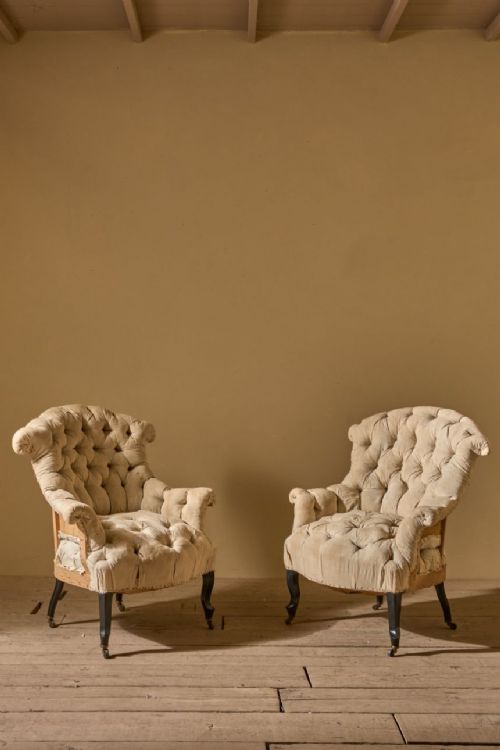
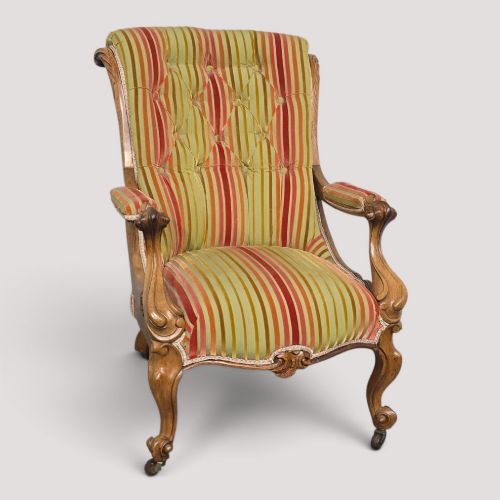

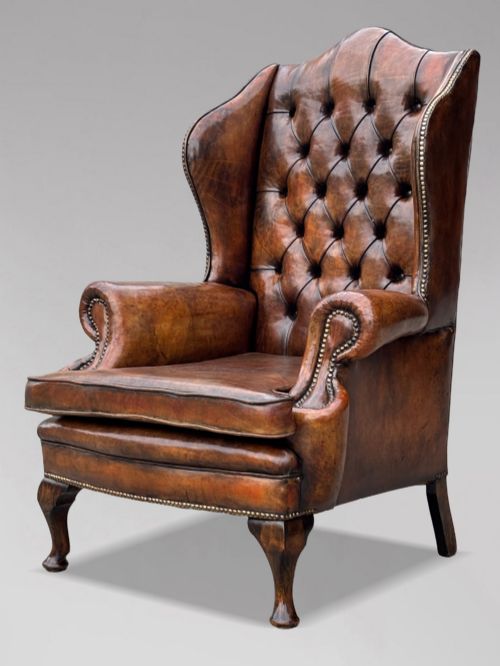
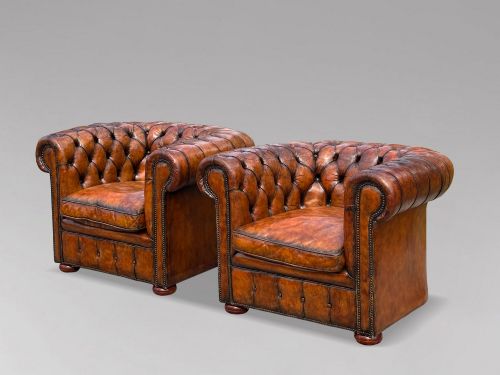
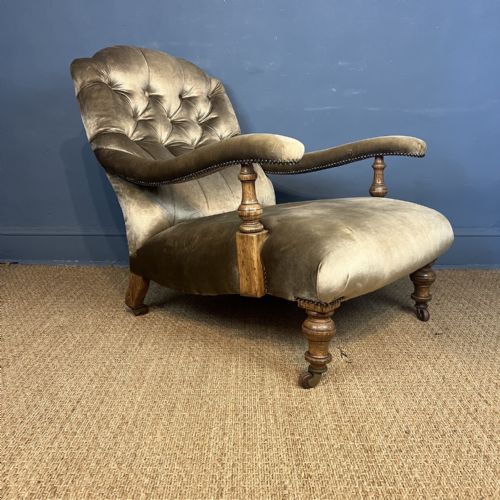
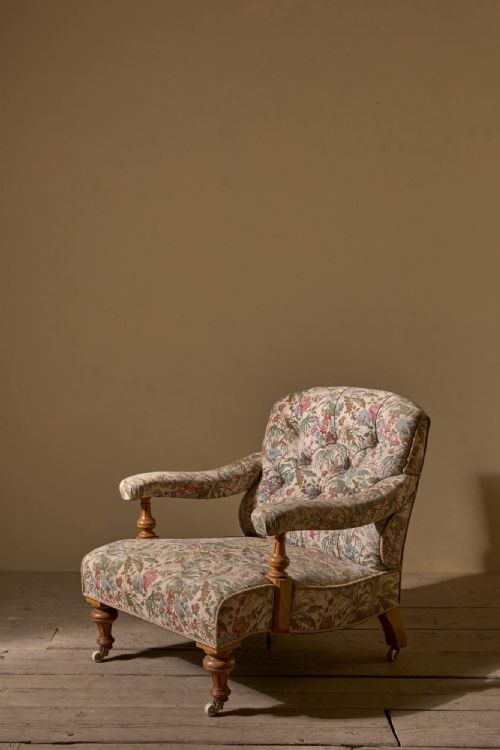
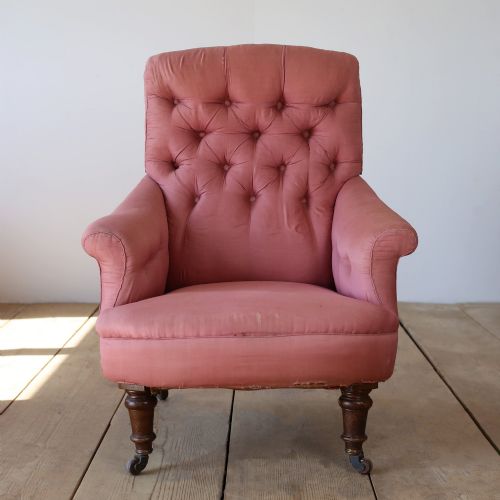
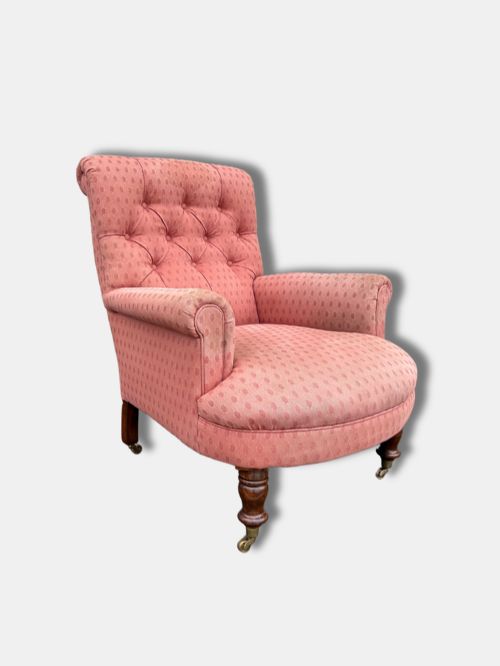
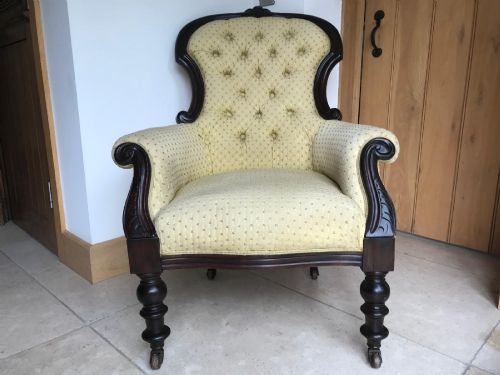
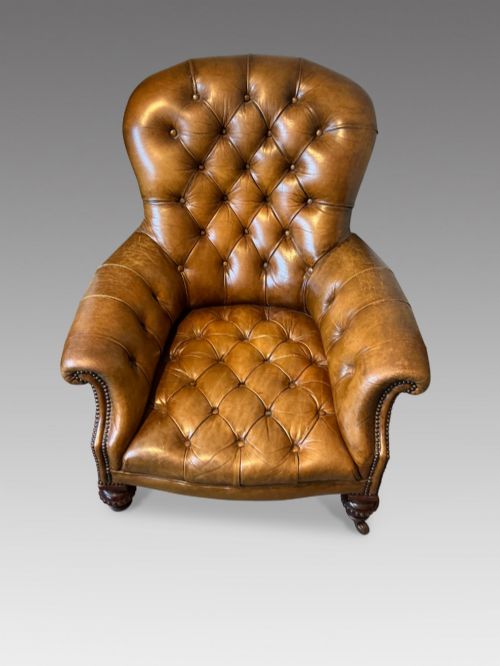
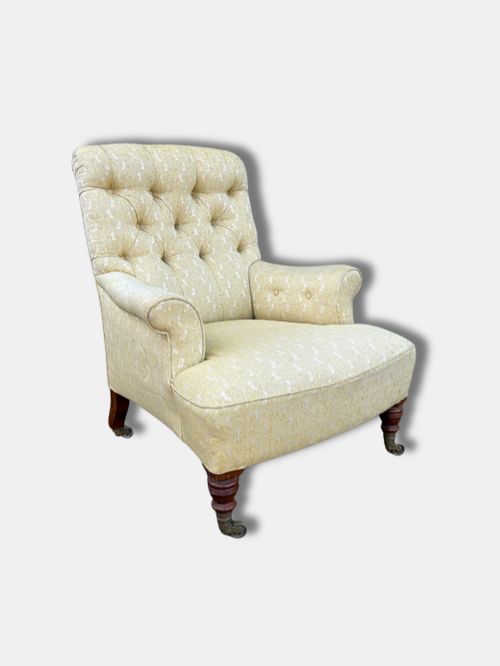
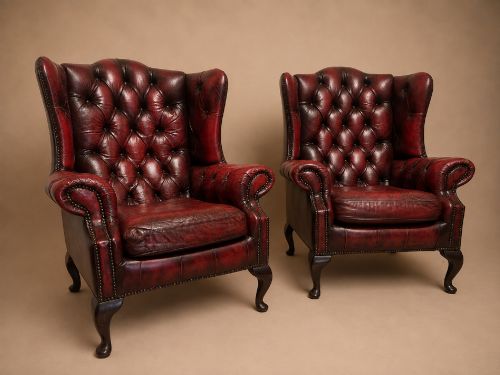
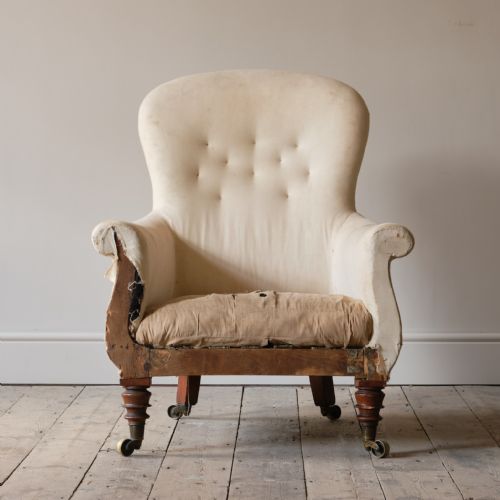
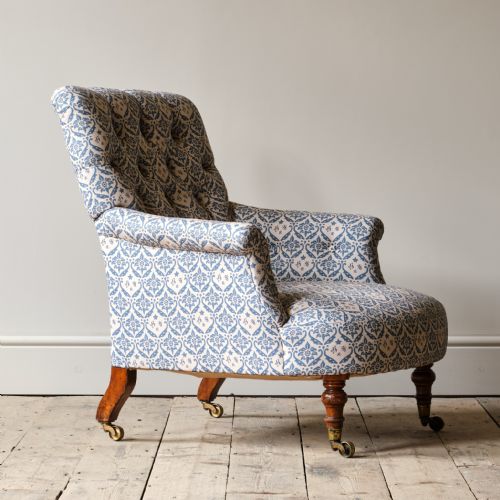
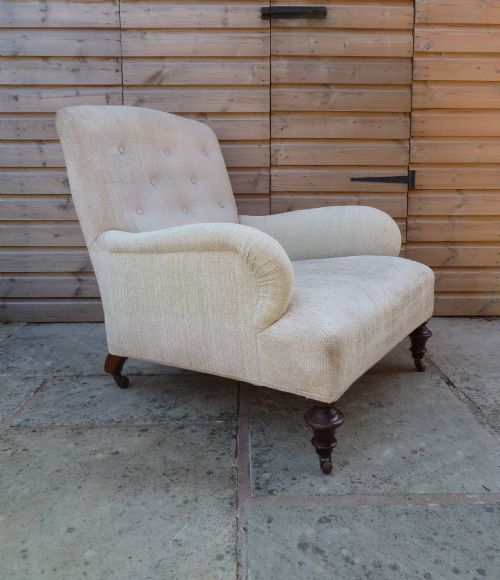
Victorian Deep Buttoned Armchair
A victorian deep buttoned armchair offers profound comfort, combining substantial timber frames with disciplined upholstery.
Victorian Deep Buttoned Armchair
A victorian deep buttoned armchair provides substantial seating, appearing frequently as library chairs, club chairs, and wing chairs across nineteenth century periods. These pieces combine robust frames with deep tufted upholstery designed for sustained comfort.
The materials span mahogany, oak, walnut, and rosewood, dressed in leather, velvet, calico, and fabric. Many examples emerge from English country house contexts alongside urban Victorian parlours.
Makers and styles stretch from Regency survivals and William IV forms to Edwardian adaptations and Aesthetic Movement details. The form persists across open armchairs, tub chairs, and reclining chairs.
How they were made
Frames rely on sturdy hardwoods like mahogany, oak, walnut, and rosewood, joined to support heavy daily use. Brass castors and hardware often finish the legs.
Upholstery combines hessian foundations with fabric, velvet, calico, or leather, secured through dense buttoning. This technique pulls the covering inward to create rigid tufted patterns.
Listings feature woods spanning mahogany, oak, walnut, rosewood, and fabrics including leather, velvet, calico, and hessian across the nineteenth century.
What varies in quality
The integrity of the timber frame and the precision of the joinery set the baseline. Heavier, denser woods maintain structural stability far better over decades of sitting.
Upholstery execution separates standard output from superior work, specifically in the regularity of the buttoning and the resilience of the internal stuffing. The hand of the maker, whether a noted firm or a regional workshop, dictates the refinement of the carved details.
Howard and Sons·Holland and Sons·Mellier and Co
The Victorian Deep Buttoned Armchair Glossary
- Deep buttoned
- Upholstery technique where buttons are pulled tight through the padding and secured to the frame in a diamond grid. This method keeps the internal stuffing firmly anchored in place.
- Chesterfield
- A low-backed seating form characterised by rolled arms and equal height back and arms. The style is frequently executed in deep buttoned leather.
- Wing armchair
- A seating form featuring protective side panels attached to the backrest. These wings originally blocked drafts in unheated rooms.
- Library armchair
- A sturdy, capacious chair designed for reading rooms and studies, usually framed in mahogany or oak. They often incorporate leather upholstery for durability.
- Tub chair
- An armchair with a curved, semi-circular back enclosing the sides. The continuous rail creates a cocooning shape.
- Spoon back
- A chair back carved into an oval contour resembling the bowl of a spoon. This silhouette became popular during the mid nineteenth century.
Victorian Deep Buttoned Armchair: Frequently Asked Questions
How do I identify a Howard and Sons chair?
Look for specific maker stamps on the castors and high grade ticking beneath the upholstery. The proportions remain remarkably balanced and substantial.
Construction details often include numbered legs and superior coiled spring systems unique to the firm's workshops.
Are leather or fabric buttoned chairs more authentic?
Both materials saw extensive use during the nineteenth century depending on the room's function. Libraries and studies favoured durable brown leather for daily reading.
Drawing rooms and parlours more commonly received velvet, calico, or patterned fabric upholstery to match interior schemes.
What distinguishes a Victorian chair from a Regency one?
Regency frames lean toward classical restraint with lighter mahogany timbers and carved reeding. Victorian pieces tend to be heavier with more exuberant curves and deeper buttoning.
Transition periods often blend these traits, making wood choice and leg turnings key indicators.
How should I care for deep buttoned leather?
Apply appropriate leather balms periodically to maintain suppleness and prevent the hide from drying out. Avoid placing the chair near direct heat sources or strong sunlight.
Dust the button folds regularly with a soft brush to prevent grit accumulation.