




Blue Upholstered Tub Chair
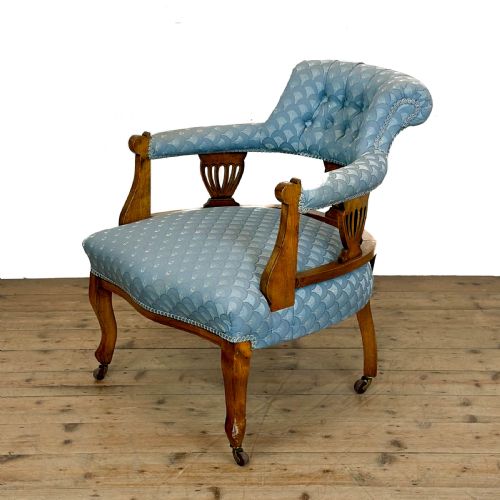
A blue upholstered tub chair offers enveloping comfort, combining a curved enclosed back with tactile textile covering.
Blue Upholstered Tub Chair
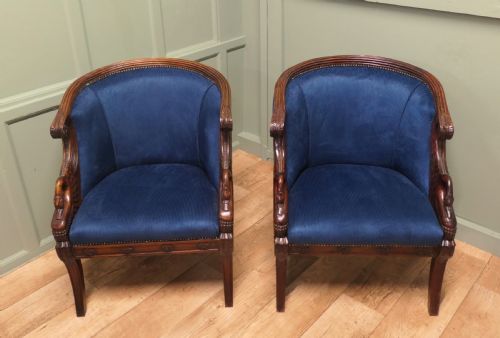
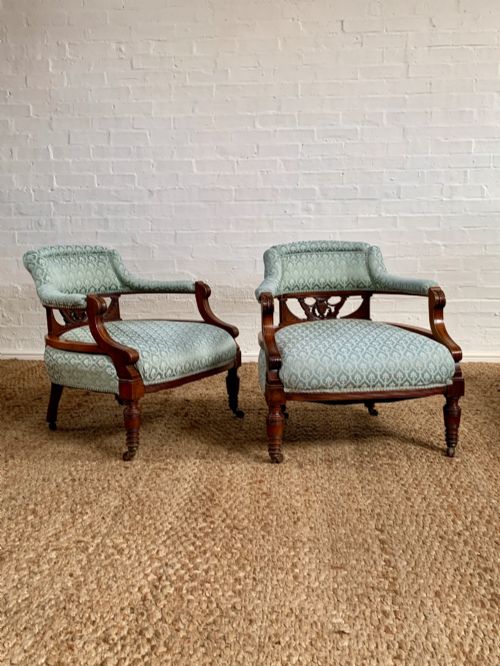
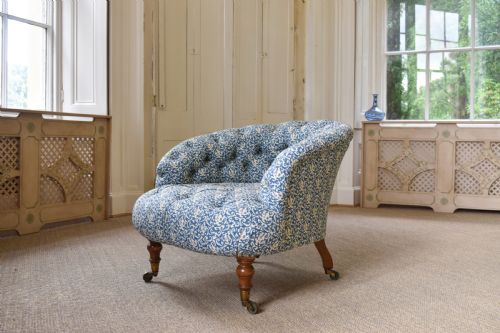
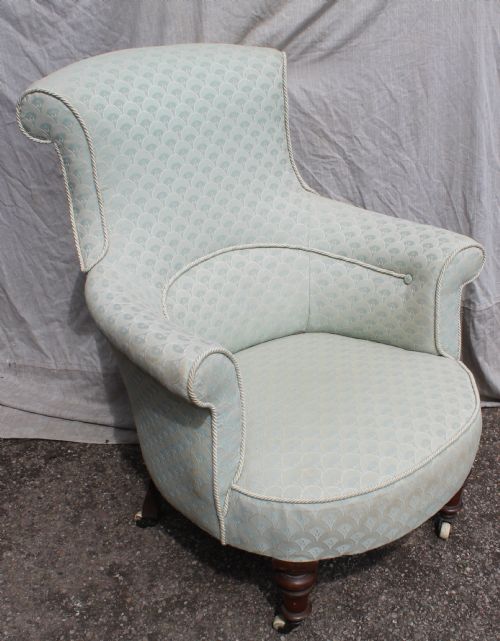
A blue upholstered tub chair is a seating form defined by its continuous curved back and arms, creating an enclosing barrel shape. The pieces found here span the nineteenth century, the Edwardian era, and the nineteen thirties, representing styles from Victorian conservatism to Arts and Crafts and French revivals.
Buyers encountering this blue upholstered tub chair selection will commonly see examples in mahogany, walnut, oak, and rosewood, often paired with textile coverings. Forms range from low desk armchairs to occasional parlour seating and matched pairs.
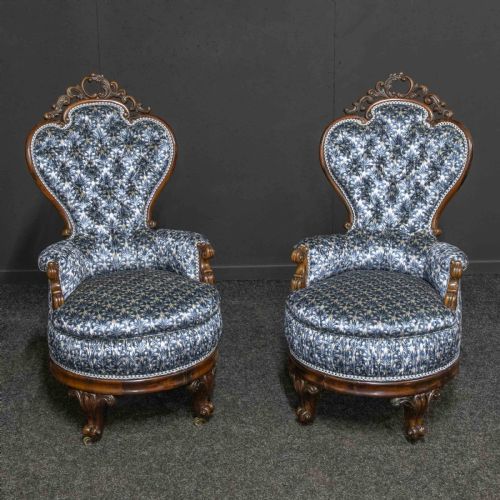
The variety within these listings includes distinct regional interpretations, such as French gilt and bergere iterations alongside English country house pieces. This mix reflects how nineteenth and early twentieth century makers adapted the basic curved silhouette for salons, studies, and drawing rooms.
Materials and construction
Makers built the structural frames of these chairs using durable hardwoods such as mahogany, walnut, oak, and rosewood, occasionally incorporating iron or brass supports. These timbers provided the necessary strength to sustain the outward pressure of the curved backrest.
The distinctive rounded form required precise joinery and steam-bent wood where appropriate, ensuring the continuous line from back to arm remained rigid. Upholstery techniques applied over webbing and stuffing secured the textile coverings tightly to the wooden carcasses.
Listings feature timbers including mahogany, walnut, oak, and rosewood across nineteenth-century and Edwardian pieces.
Distinctions in quality
Quality in these seating pieces rests upon the integrity of the wooden frame and the precision of the joinery shaping the curved back. Finer examples display meticulous carving or inlay work on exposed timber components, whereas simpler pieces rely on plain structural lines.
The refinement of the upholstery work and the selection of the textile covering dictate the overall finish of the piece. Superior construction maintains firm support within the barrel back without compromising the balance of the proportions.
Howard and Sons·E.W. Godwin
The Blue Upholstered Tub Chair Glossary
- Tub chair
- A seating form featuring a low, continuous back and arms that enclose the sitter in a rounded shape. This design originated in the eighteenth century and remained popular through the Victorian and Edwardian periods.
- Bergere
- An upholstered armchair with an enclosed wooden frame where the sides are frequently filled with cane or fabric. French examples of this type often exhibit lighter proportions.
- Arts and Crafts
- A design movement spanning the late nineteenth and early twentieth centuries that prioritised traditional craftsmanship and simple construction. Furniture from this period typically highlights the natural grain of woods like oak.
- Ebonisation
- The process of treating timber to imitate ebony, commonly utilised in nineteenth century seating to create a dark, uniform finish. This technique highlights carved details through stark tonal contrast.
Blue Upholstered Tub Chair: Frequently Asked Questions
What defines a tub chair?
A tub chair is characterised by a single continuous piece forming the back and arms, resembling the shape of an open cask or tub. This configuration provides a distinct sense of enclosure for the person seated.
Historically utilised in libraries, studies, and drawing rooms, this seating style prioritised supportive comfort alongside compact proportions.
How do I date a Victorian tub chair?
Dating a Victorian piece involves examining the underlying timber, the construction methods used for the frame, and any stylistic clues inherent in the carved details. Earlier nineteenth-century examples often feature dense hardwoods like mahogany or rosewood.
Comparing the upholstery techniques and secondary woods can also offer clues regarding the specific decade of manufacture within the Victorian era.
Where should I place a tub chair?
Because of its compact and enclosed profile, a tub chair suits corners, bedrooms, or smaller seating areas where deep armchairs might overwhelm the floor plan. They also function effectively as desk or parlour seating.
Their curved backs mean they look presentable when viewed from behind in an open room setting.
Are Edwardian tub chairs different from Victorian ones?
Edwardian versions typically display lighter proportions, brighter inlay work, and simpler lines compared to the heavier, more densely padded forms of the mid-nineteenth century. Mahogany and satinwood frequently appear in Edwardian pieces.
Victorian iterations often favour darker timbers, heavier buttoning, and more elaborate revival styling.