
Low Back Bedroom Chair
A low back bedroom chair offers a compact, inviting seat suited to intimate spaces, drawing on nineteenth-century forms.
Low Back Bedroom Chair
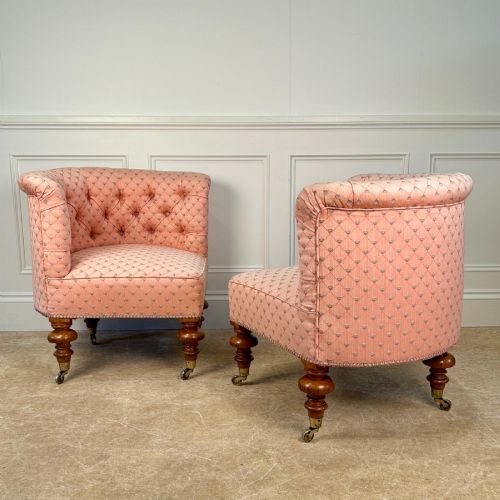
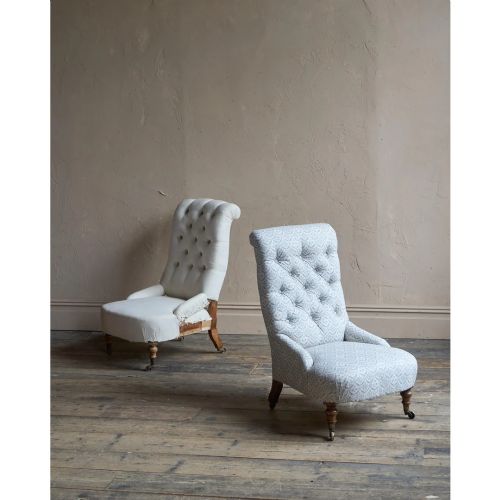
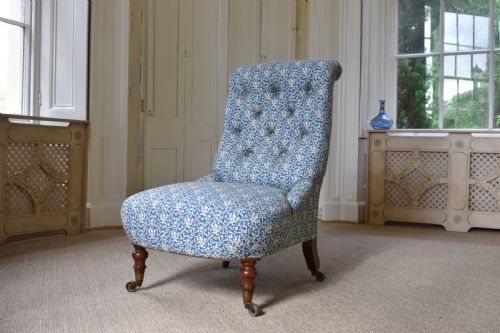
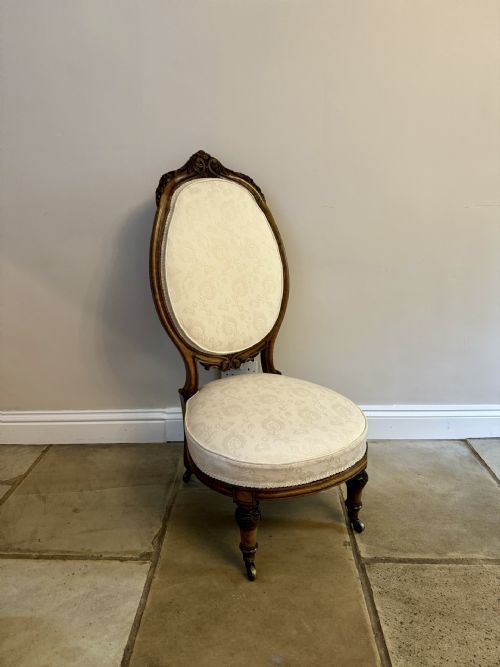
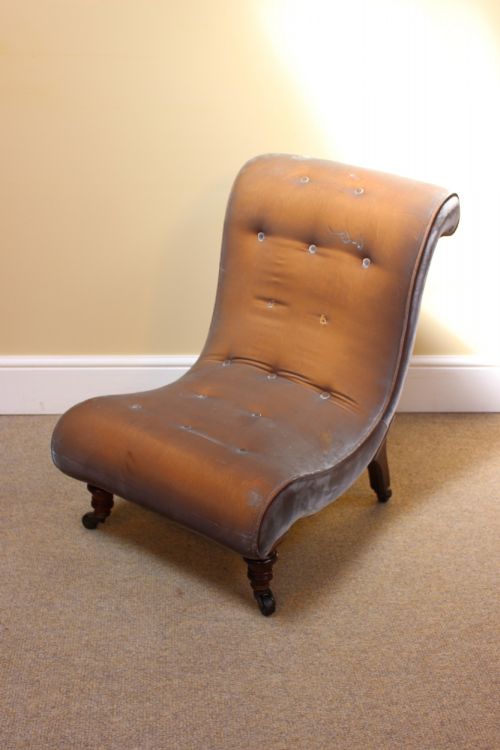
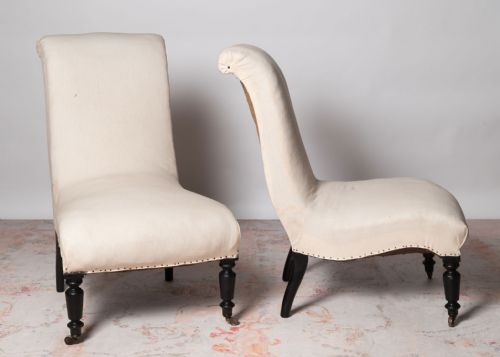
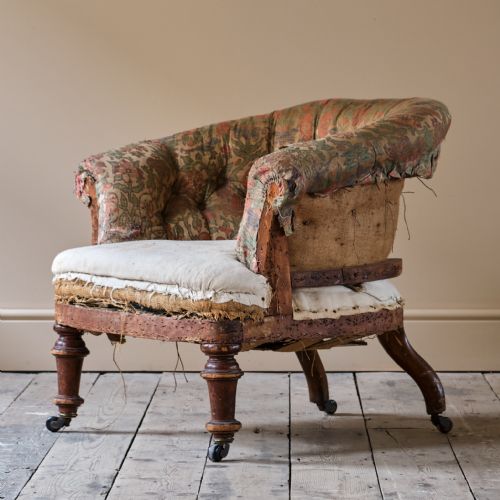
A low back bedroom chair encompasses nursing chairs, slipper chairs, and compact tub chairs originating primarily from the nineteenth century and the Edwardian era. These pieces sit lower to the ground than standard seating, a traditional design choice that allowed women to tend to hearths or dress comfortably in period attire.
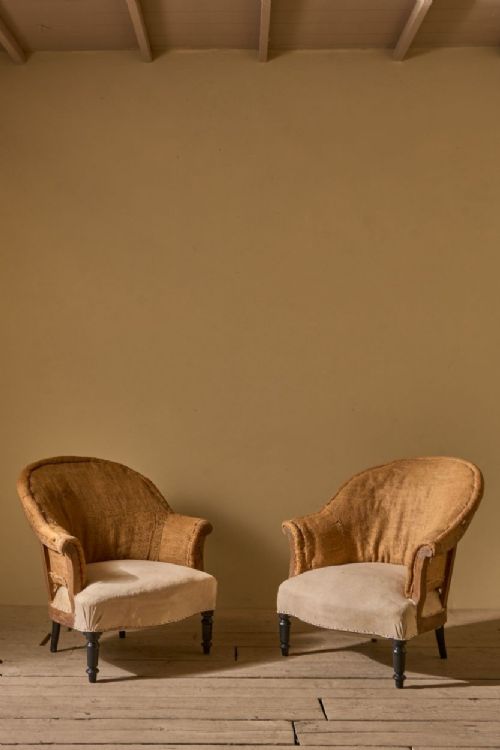
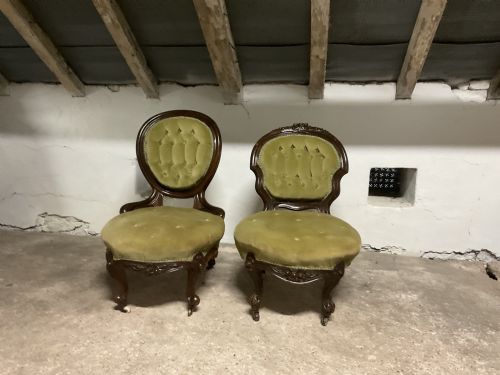
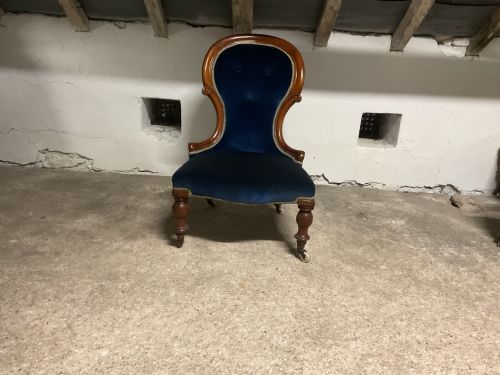
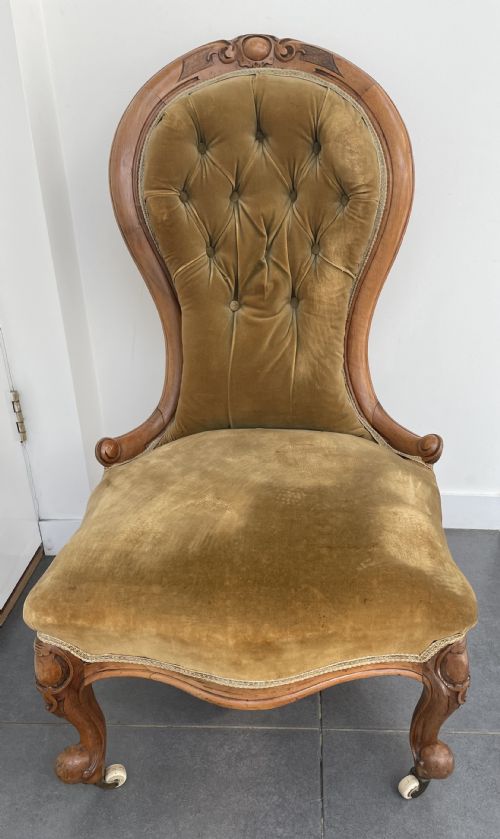
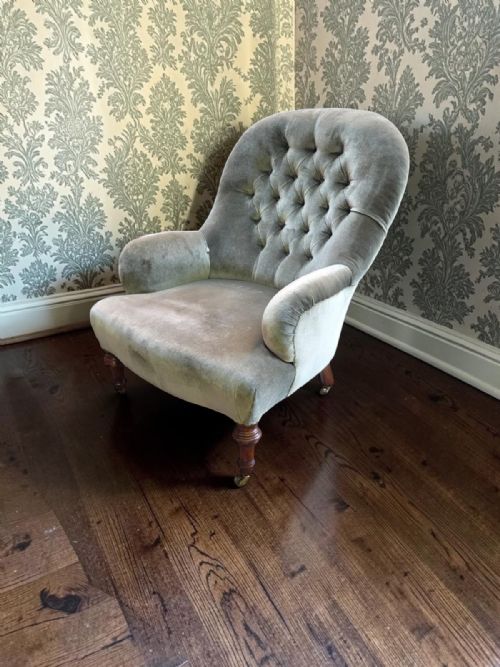
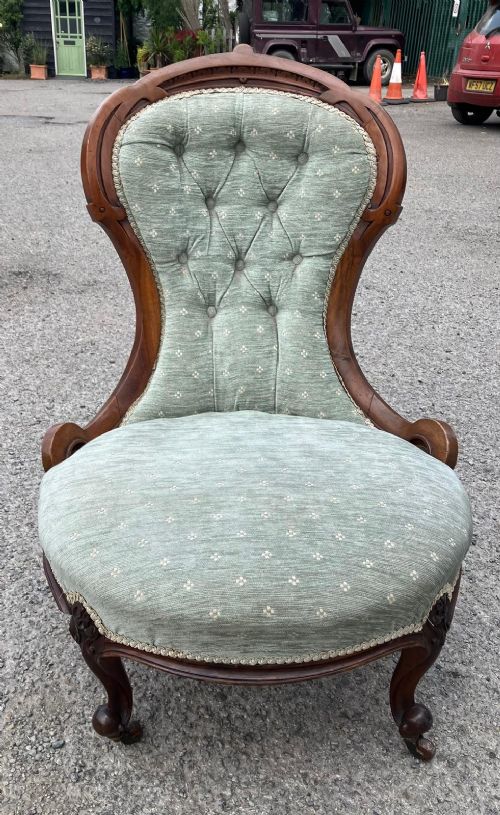
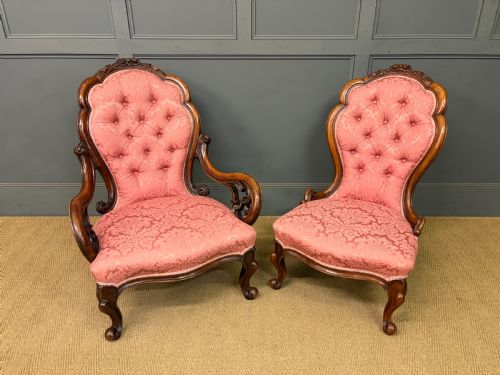
The versions most commonly met on this page include Victorian walnut and mahogany nursing chairs alongside French nineteenth-century models. Makers often produced them as occasional chairs, prayer chairs, or salon seating, resulting in a variety of rounded, scroll-back, and spoon-back silhouettes.
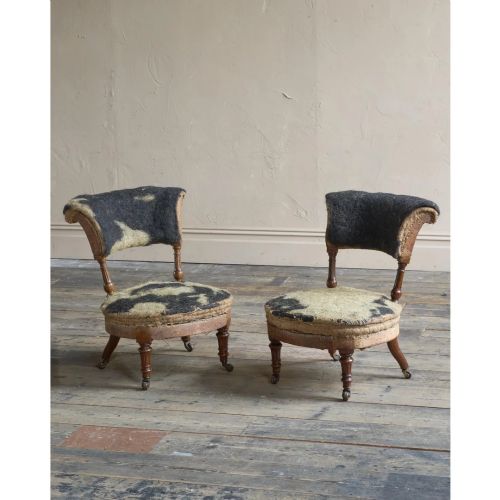
Proportions remain small and manageable, frequently featuring upholstered seats paired with exposed wood frames in mahogany, walnut, or oak. The low stature defines the group, distinguishing these domestic seats from heavier parlour armchairs.
Materials and Construction
Frames rely predominantly on turned and carved hardwoods such as walnut, mahogany, and oak, occasionally finished with giltwood or supported by brass elements. Joinery techniques from the period include sturdy mortise and tenon joints, sometimes complemented by barley twist turnings or elaborate carved detailing.
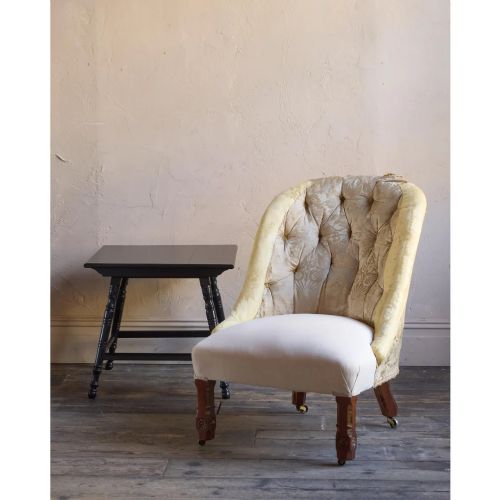
Upholstery forms a central component of construction, utilising traditional stuff-over methods with materials like calico, velvet, hessian, and specialist designer fabrics. Buttoning, fringe detailing, and spring-loaded interiors provided the plush comfort expected in Victorian and Edwardian domestic interiors.
Listings feature nineteenth-century and Edwardian pieces constructed from walnut, mahogany, oak, brass, and velvet.
Distinctions in Craftsmanship
Quality rests significantly on the depth and crispness of the frame carving, particularly on walnut and mahogany show-wood structures. Pieces bearing maker stamps or attributed to notable workshops demonstrate superior joinery and more refined proportions than unbranded utilitarian equivalents.
The integrity of the internal stuffing and the execution of the upholstery dictate the longevity and finish of the piece. Hand-carved details, balanced buttoning, and robust frame timbers separate standard domestic seating from examples produced with exceptional artistic ambition.
Howard and Sons·Gillows
The Low Back Bedroom Chair Glossary
- Nursing chair
- A low-seated armchair designed in the Victorian period to facilitate nursing or dressing. These typically feature an absence of arms to accommodate bulky period dresses.
- Slipper chair
- An upholstered seat sitting very close to the floor, traditionally kept in a bedroom for changing shoes. They often lack arms and feature padded backs.
- Tub chair
- An armchair characterised by a continuous curved back and arms forming a rounded enclosure. This form provides a snug and supportive sit.
- Spoon back
- A padded chair back shaped in the concave contour of a spoon, popular during the Victorian era. It fits the human spine closely.
- Button back
- An upholstery style where depressions are formed in the padding by stitches or buttons pulled tight. This technique secures the stuffing and creates a tufted texture.
Low Back Bedroom Chair: Frequently Asked Questions
What is a low back bedroom chair used for?
These compact seats served domestic functions in private chambers, offering comfortable seating for dressing or reading near the hearth.
Their reduced height made them practical additions to nineteenth-century bedrooms and dressing rooms.
How do I date a Victorian bedroom chair?
Dating relies on examining the timber species, framing style, and upholstery methods recorded across the period. Walnut and mahogany were prevalent, alongside characteristic design shifts from plain frames to elaborate carved spoon backs.
Makers' stamps or specific aesthetic movements provide further chronological markers.
Are nursing chairs and slipper chairs the same?
While both offer a low profile, nursing chairs traditionally emphasise back support and lack arms to accommodate garments. Slipper chairs sit even lower and focus on ease when changing footwear.
Both types overlap frequently in nineteenth-century domestic settings.
How do I live with antique bedroom chairs?
These versatile seats function well as occasional accent pieces in modern living rooms, hallways, or studies. Their modest proportions allow them to fit into corners where larger armchairs overwhelm the floor space.
Pairing historic frames with contemporary velvet or traditional calico integrates them into diverse interior schemes.