

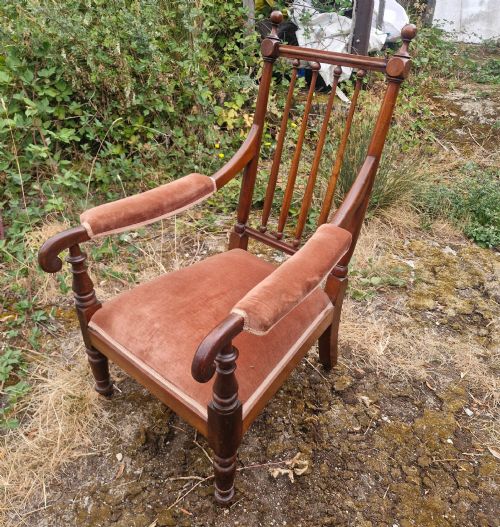
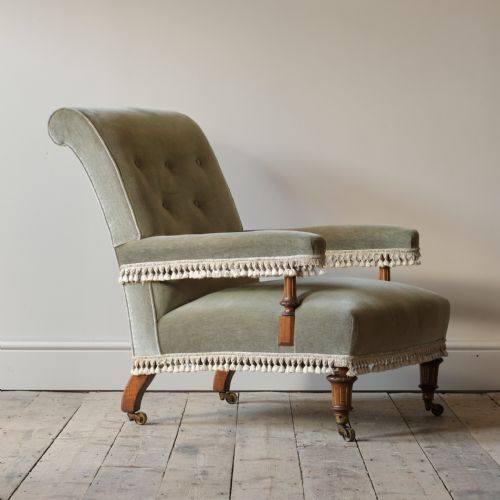
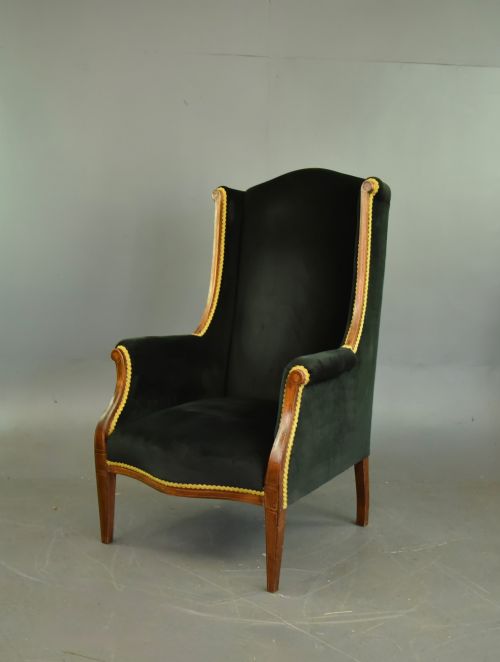
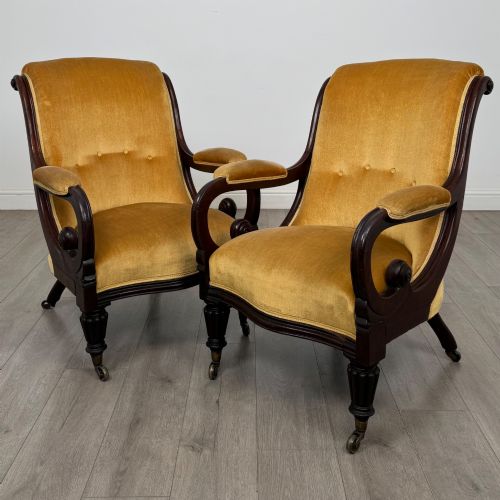
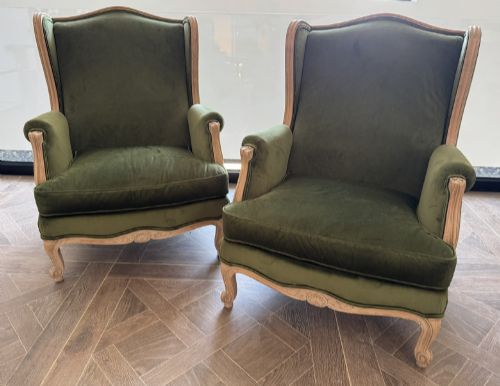
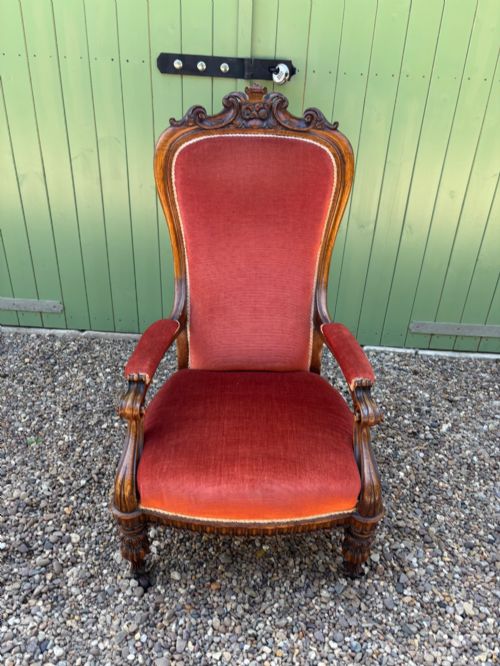
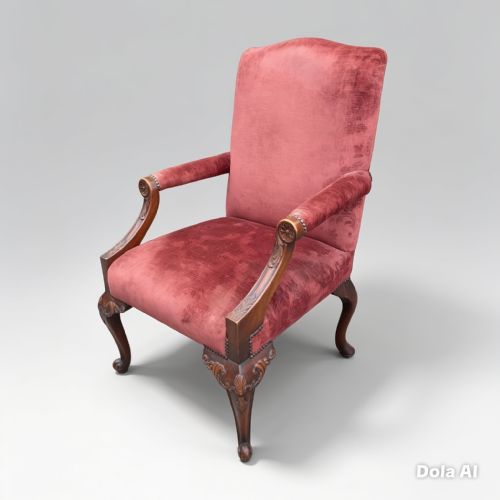
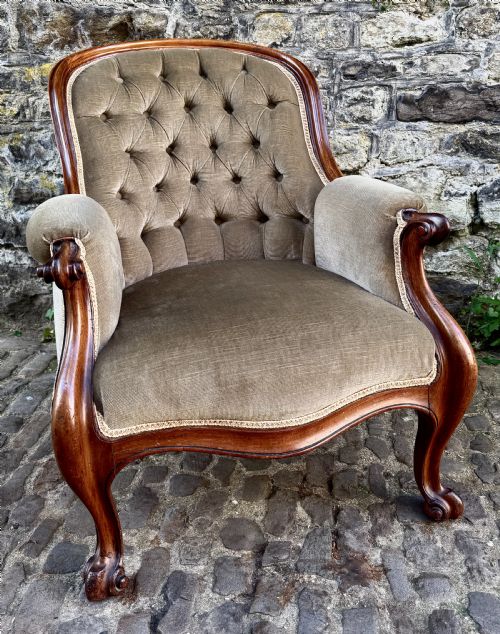
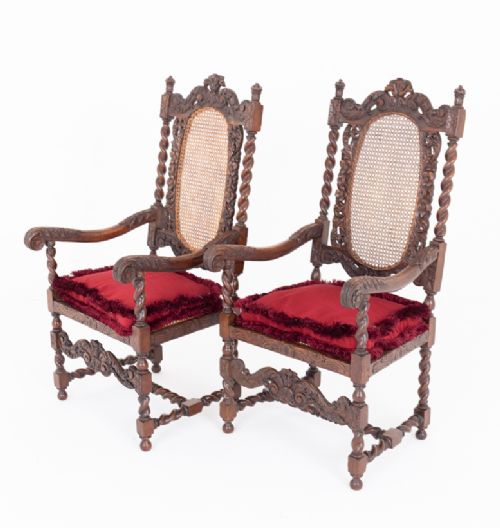
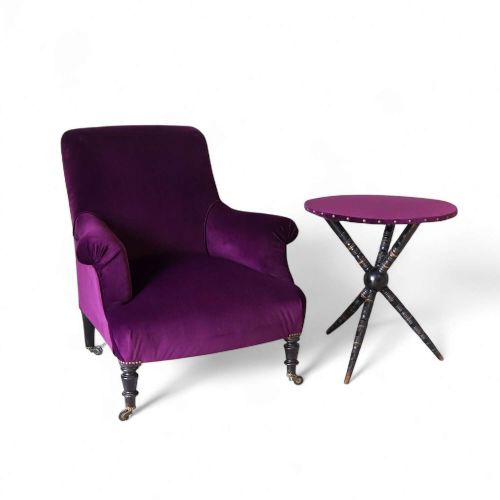
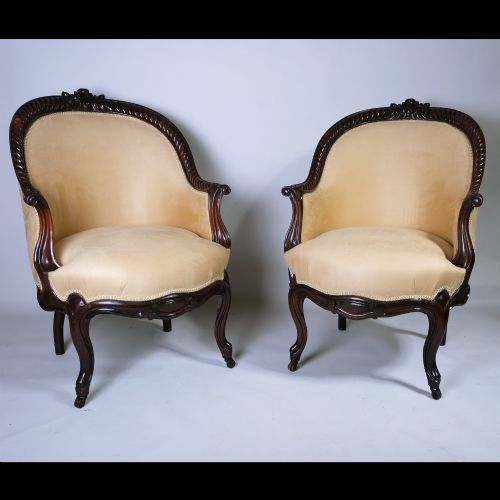
Antique Velvet Arm Chair
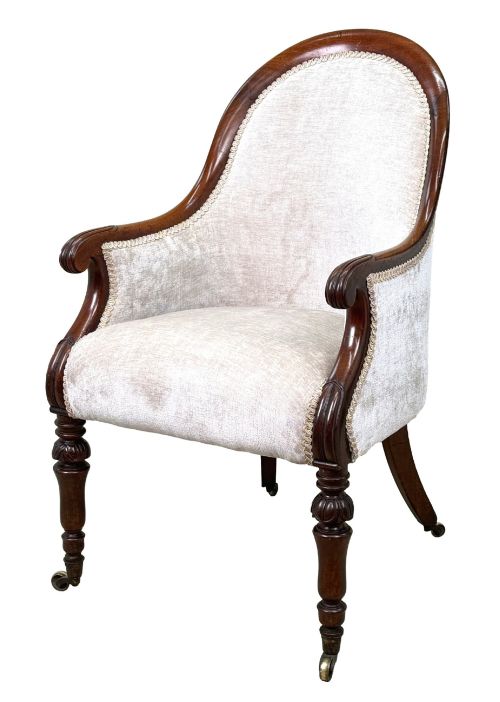
An antique velvet arm chair brings tactile warmth and period presence to a room, ranging from button-backed Victorian reading seats to Regency library frames.
Antique Velvet Arm Chair
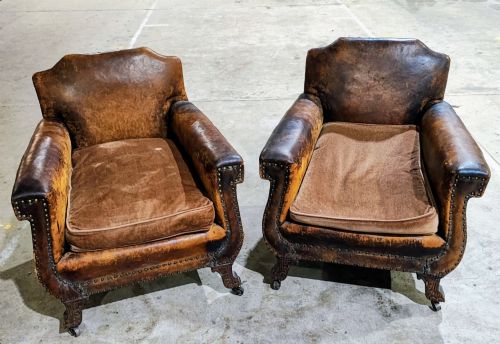
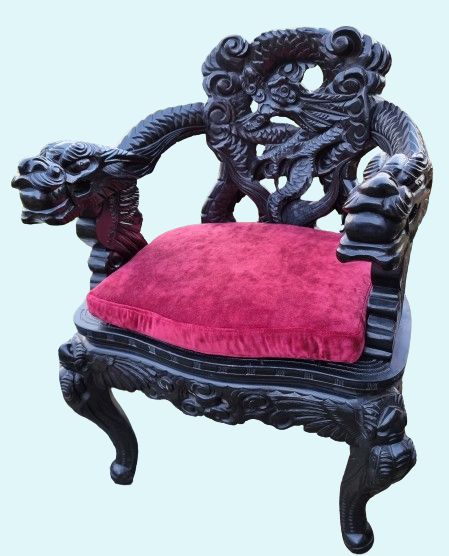
When you search for an antique velvet arm chair, you encounter seating built across the eighteenth, nineteenth, and early twentieth centuries, dressed in soft pile textiles. The forms span library chairs, wingbacks, spoon backs, and porters chairs intended for firesides and studies.
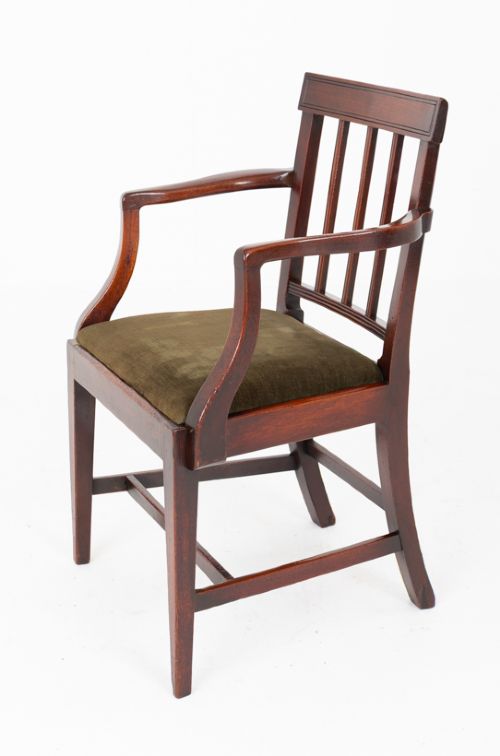
The versions most commonly met on this page belong to the Victorian and Edwardian eras, executed in mahogany, walnut, or oak. Alongside these are earlier Regency and Georgian library models, frequently paired with mahogany frames and drop-in or fully upholstered seats.
Makers such as Gillows, Howard and Sons, Hampton and Sons, and Cornelius V Smith appear in the records, marking out utilitarian comfort and cabinet-making skill. Many examples arrive upholstered in green, blue, taupe, or pink velvet, reflecting both period taste and later conservation.
How they were made
Framing relies on dense timbers including mahogany, walnut, rosewood, oak, and goncalo alves, shaped into scroll arms, cabriole legs, or barley twist supports. Joinery is traditionally pegged or jointed to bear weight across decades of use.
Upholstery incorporates velvet stretched over padding, often finished with deep buttoning, tassel trims, or brass nailheads. Frames range from carved giltwood to polished hardwood, sometimes augmented with inlaid details or painted surfaces.
Porters chairs doubled as indoor sentry boxes, wrapping sitters in hooded cocoons to block draughts while they dozed.
What varies in quality
The distinction between standard output and finer work lies in the timber selection and the crispness of the carving on arms and legs. Chairs bearing maker stamps from established workshops display superior joinery and structural integrity.
Proportion and stance dictate the visual success of a piece, from generous country house armchairs to compact occasional chairs. The quality of the velvet upholstery and the retention of original brass or wood components influence the character of the survival.
Gillows·Howard and Sons·Hampton and Sons·Cornelius V Smith
The Antique Velvet Arm Chair Glossary
- Wingback
- An armchair with side panels designed to shield the sitter from drafts and retain fireplace heat. These panels extend upward from the arms to the shoulders.
- Library chair
- A sturdy seat designed for reading rooms, often featuring low arms and upholstered padding to allow extended sitting. Examples frequently date from the Georgian and Regency periods.
- Porters chair
- A hooded armchair originally created to keep drafty hallways at bay for attendants guarding doors. They typically feature high enclosed backs wrapping around the user.
- Button back
- An upholstery method where depressions are created in the padding by stitching through to the frame, often secured with fabric-covered buttons. This creates a diamond pattern across the inner back.
- Spoon back
- A chair back shaped in a concave oval contour resembling the bowl of a spoon, popular during the Victorian era. It provides ergonomic support to the spine.
Antique Velvet Arm Chair: Frequently Asked Questions
What periods do these armchairs come from?
The pieces span from the Georgian and Regency eras through the Victorian and Edwardian periods, extending into early twentieth-century French Art Deco.
Victorian and Edwardian iterations appear most frequently, while eighteenth-century George III models represent the earlier end of the range.
How do I identify a library chair?
Library chairs are typically built for comfort during reading, featuring sturdy mahogany or walnut frames and open or closed padded arms. They prioritize supportive ergonomics for prolonged study.
Many incorporate low armrests to accommodate bulky period clothing and wide seat bases for relaxed positioning.
What woods were used for the frames?
Cabinet makers utilised dense hardwoods including mahogany, walnut, rosewood, oak, and goncalo alves for structural durability. These timbers were selected for their grain and strength under carved detailing.
Softer woods or painted finishes appear on specific regional or country house variants.
Were these chairs always upholstered in velvet?
Velvet forms a primary textile in the records, alongside leather and general woven fabrics, utilised for its tactile pile and rich appearance. Many surviving frames retain historic upholstery or have been recovered in complementary velvet tones.
Original specifications varied according to domestic fashion and the intended room function, from drawing rooms to studies.