

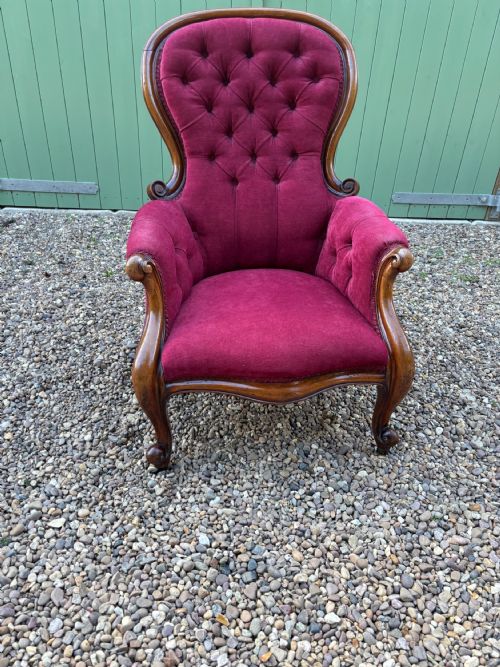
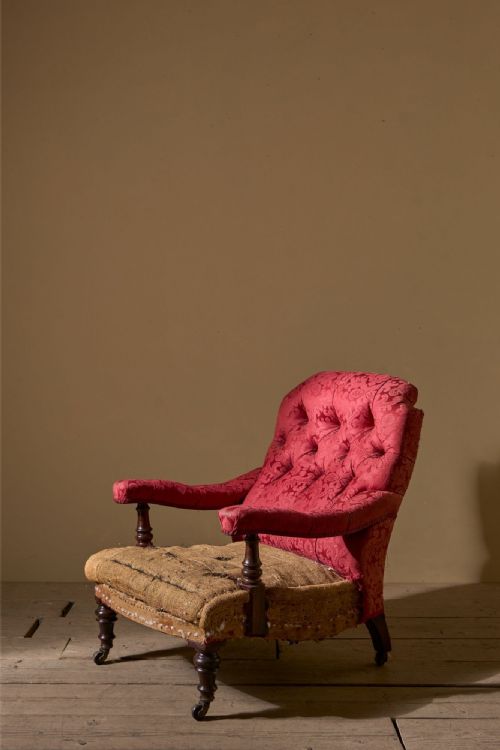
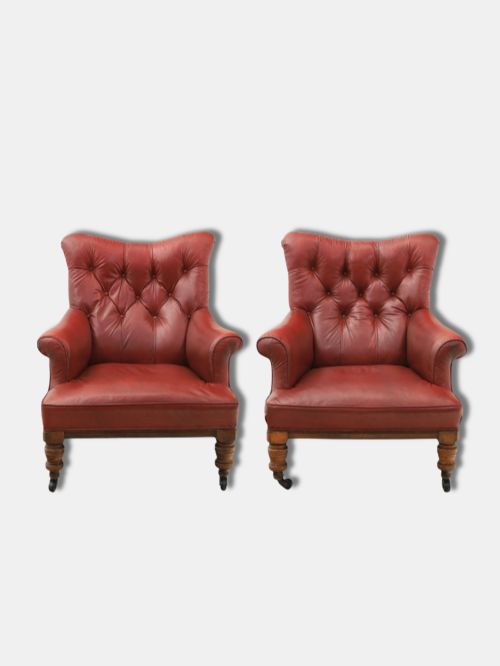
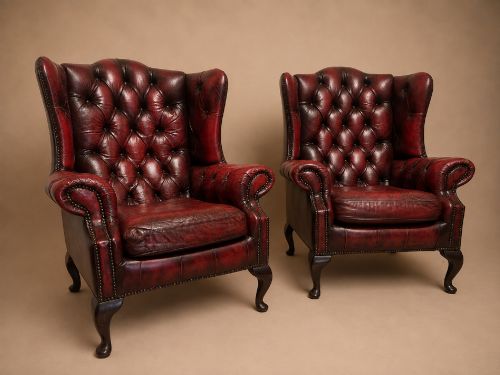



Red Button Tufted Chair
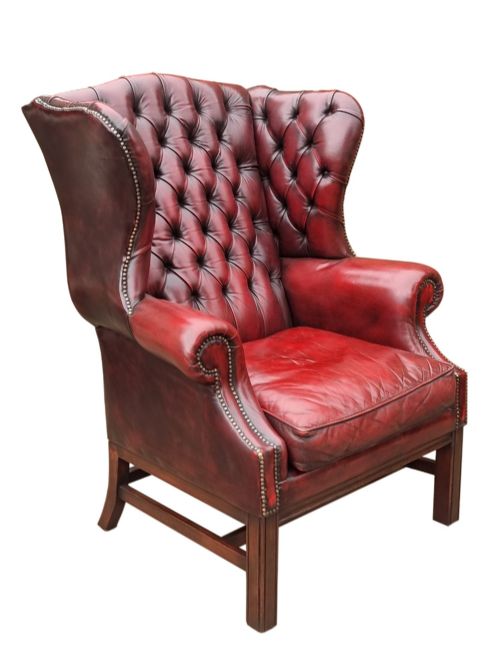
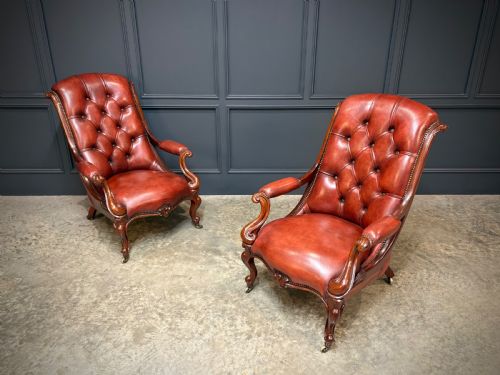
A red button tufted chair delivers deep seating comfort and rich colour, drawing the eye instantly in any traditional interior.
How They Were Made
Frames rely on sturdy timbers such as mahogany, walnut, oak and rosewood, providing structural integrity for heavy use. Wood framers shaped these hardwoods into cabriole legs, turned supports and robust armchair structures.
Upholstery techniques involve securing leather or velvet across deep padding, anchored tightly with recessed buttons to create the characteristic tufted surface. Brass elements and iron frames appear selectively to reinforce specific structural types like revolving mechanisms or rocking bases.
What Varies in Quality
The finesse of the timber frame carving and the choice of hardwood distinguish finer examples from standard production. Richness in the grain of walnut or mahogany and the substantial weight of oak elevate the presence of the seating.
Upholstery execution dictates the tactile appeal, where supple leathers and evenly spaced buttoning demonstrate superior workshop craftsmanship. The integrity of the frame construction, whether incorporating barley twist turnings or revolving actions, underpins long-term resilience.
Red Button Tufted Chair Retail Price Guide 2026
Typical asking prices for red button tufted chair among the pieces listed under this phrase on Sellingantiques today, from the lower quarter to the upper quarter. They describe what is for sale here now, not the wider market.
An eighteenth-century walnut cockfighting chair waits quietly to test your posture.
Gillows·Howard and Sons
The Red Button Tufted Chair Glossary
- Chesterfield armchair
- A deep-buttoned upholstered seat characterised by arms and back of the same height. This traditional British form offers generous proportions and robust seating.
- Button tufting
- An upholstery method where strings or twine pull through padding to secure buttons at regular intervals. This technique creates a diamond pattern and keeps internal stuffing evenly distributed.
- Wing chair
- An armchair featuring side panels attached to the back, designed to shield the occupant from drafts. Early examples frequently utilise leather or velvet upholstery over substantial hardwood frames.
- Nursing chair
- A low-seated Victorian chair designed originally for feeding infants near a hearth. These forms typically showcase exposed wooden frames in walnut or rosewood.
- Barley twist
- A decorative turning style resembling a twisted rope, carved into wooden furniture legs and supports. This detail appears frequently on Victorian frames.
Red Button Tufted Chair: Frequently Asked Questions
What periods do these red button tufted chairs come from?
The pieces span several decades and centuries, with a strong concentration of nineteenth-century and Victorian examples. Makers also produced variations through the Edwardian era and into the early twentieth century.
Craftsmen drew upon Georgian and William IV design traditions, meaning buyers find diverse historical influences reflected across the available wooden frames and upholstery styles.
Are these chairs suitable for daily desk use?
Several options cater directly to study and office environments, including revolving desk chairs and tub chairs fitted with leather upholstery. These provide supportive seating combined with period character.
Heavier library chairs and wingbacks serve better in reading rooms or living spaces, offering deep proportions designed for relaxed seating rather than upright writing.
What materials are used for the upholstery?
Leather dominates the selection, frequently appearing in shades of red, oxblood, dark red and burgundy. These leather surfaces often exhibit a rich patina accumulated over decades of use.
Alternative textiles include velvet in red or pink tones, adding softer textures to parlour chairs, nursing chairs and open armchairs.
How do I identify a Victorian button back chair?
Victorian examples typically feature exposed hardwood frames made from walnut, mahogany or oak, supporting deeply buttoned upholstery. Details such as turned legs, spoonbacks or barley twist supports often point toward this era.
Construction methods reflect nineteenth-century workshop practices, combining traditional joinery with robust internal stuffing to create substantial armchairs and salon seats.