

Victorian Decorative Table
A victorian decorative table spans everything from small walnut lamp surfaces to carved occasional pieces designed to bring distinct period character to a room.
Victorian Decorative Table
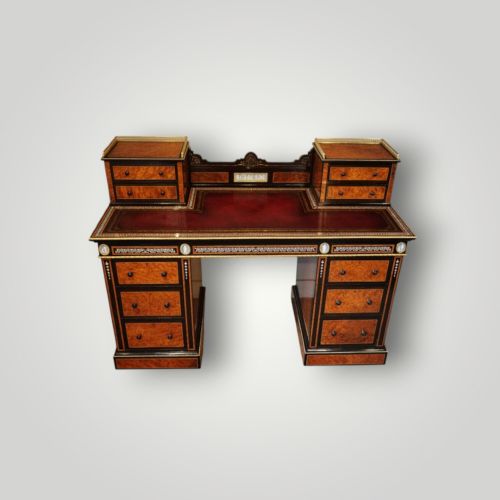
Occasional tables and side tables dominate the selection, often appearing in walnut, oak, mahogany, or ebonised timber. Many incorporate marquetry, inlay, or tile work to enhance their surface appeal.
Beyond standard timber tables, the selection includes specialised forms such as card tables, sewing tables, and bamboo occasional pieces. These variations demonstrate the period preference for versatile furnishings in domestic spaces.
Materials and construction
Makers utilised solid and veneered timbers including walnut, oak, mahogany, and rosewood, frequently pairing them with ebonised finishes. Inlay work in ivory, mixed metals, or contrasting woods added geometric and floral decoration to table tops.
Metal elements such as brass, gilt bronze, and cast iron appear extensively for mounts, frames, and structural supports. Marble inserts and ceramic tiles occasionally provide durable, decorative surfaces on table tops.
Cow horn and bamboo make unexpected appearances among the traditional timbers, proving Victorians experimented with unconventional natural materials.
Assessing craftsmanship
The standard of a victorian decorative table rests on the precision of its timber joinery and the execution of its decorative elements. Finely cut marquetry and securely fitted inlays distinguish superior examples from simpler production pieces.
The choice of materials dictates the upper tier of the range, where figured walnut, rosewood, or detailed carving elevate the object. Original condition and intact surface finishes further define the desirability of individual items.
Jackson and Graham·Henry Marc·Sitzendorf
The Victorian Decorative Table Glossary
- Marquetry
- Decorative veneer work arranged in pictorial or geometric patterns on furniture surfaces. This technique utilises contrasting wood grains and tones to create visual depth.
- Ebonised
- Wood treated to imitate the dark, dense appearance of ebony. This finish gained popularity in nineteenth-century furniture for its striking contrast against inlay.
- Occasional table
- A small, portable table designed for specific, intermittent use in a room. These versatile pieces function as lamp, tea, or display surfaces.
- Boulle
- A form of marquetry employing tortoiseshell and brass inlay developed in France. It adds an ornate, reflective quality to furniture surfaces.
- Champlevé
- An enamelling technique where troughs are carved into a metal surface and filled with vitreous enamel. This method produces colourful decorative motifs on metal objects.
Victorian Decorative Table: Frequently Asked Questions
What is a victorian decorative table used for?
These pieces primarily served as occasional surfaces for lamps, tea service, or decorative objects within nineteenth-century reception rooms. Their diverse forms also accommodated writing, card games, or needlework.
Today, they function well in modern interiors as accent pieces that provide surface area while introducing distinct period craftsmanship and wood tones to a room.
How do I identify the wood on these tables?
Examination of the grain pattern, colouration, and weight helps determine the timber used in construction. Common materials include the dark warmth of walnut, the prominent grain of oak, and the reddish hue of mahogany.
Many surfaces feature veneers or specialised treatments like ebonising, which darkens lighter woods to mimic ebony and highlights inlaid details.
Are these tables suitable for everyday use?
Most occasional and side tables from this era remain sturdy enough for gentle daily service, such as holding books or table lamps. Their compact proportions make them adaptable to various spaces around the home.
Care should be taken with delicate inlaid surfaces, marquetry, and polished finishes by using coasters and avoiding placement in direct sunlight or fluctuating humidity.
How do I distinguish between styles within this period?
Style identification relies on observing decorative motifs, structural silhouettes, and regional influences. Pieces influenced by French Rococo Revival exhibit curved lines and gilt mounts, while Anglo-Indian examples feature intricate carved teak.
Later Victorian and Edwardian items often incorporate simpler geometric lines or revivalist details borrowed from earlier historical periods.