





Venetian Blackamoor Pedestal
These striking venetian blackamoor pedestal figures combine dramatic form with functional display, bringing sculptural presence to any room.
Venetian Blackamoor Pedestal
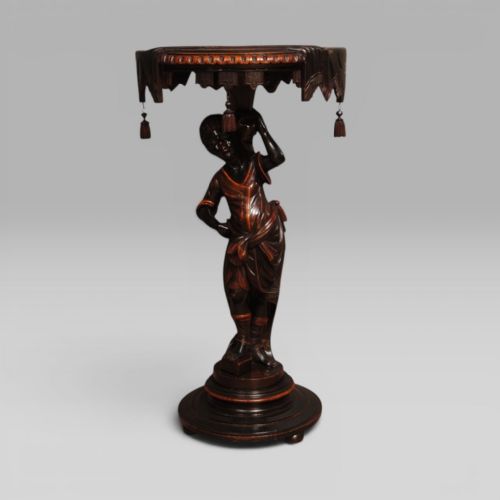
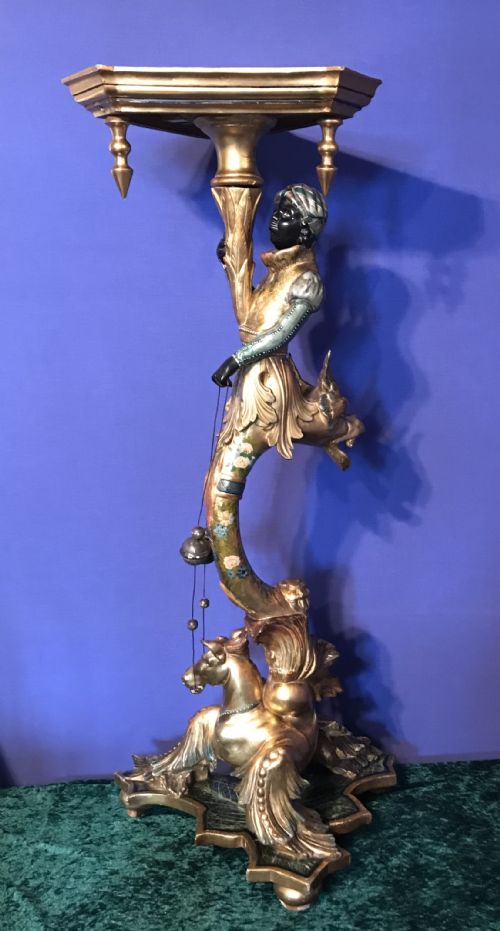
A venetian blackamoor pedestal is a decorative figural stand designed to hold lamps, plants or small items, taking the form of an exotic attendant carved from wood.
The pieces available here mostly date from the nineteenth century, including specific years from eighteen-fifty through to nineteen-twenty, alongside Victorian iterations.
These works bridge the gap between furniture and sculpture, serving as functional torchere stands, plant stands and side tables within interiors.
How They Were Made
Maker's workshops built these stands primarily from carved wood and walnut, shaping the figural components and supporting structures by hand.
Makers applied polychrome paint and gold leaf to decorate the surfaces, creating the distinctive giltwood and polychrome finishes seen on surviving examples.
One nineteenth-century gondolier figure stands patiently ready to hold your keys, forever caught in the Venetian lagoon.
What Varies in Quality
The distinction between tiers rests upon the anatomical precision of the carving and the complexity of the figural posture.
The Venetian Blackamoor Pedestal Glossary
- Torchere
- A tall ornamental stand designed to hold a light or candle. These pieces frequently double as plant stands and pedestals.
- Giltwood
- Wood that has been treated with gold leaf or a gold-coloured finish. It highlights decorative elements on the stands.
- Venetian Baroque Revival
- A nineteenth-century style reviving earlier seventeenth-century dramatic design. It influences the ornate movement in these carvings.
Venetian Blackamoor Pedestal: Frequently Asked Questions
What is a blackamoor pedestal used for?
These figural pieces function primarily as torchere stands, plant stands and side tables within a room.
Owners typically place lamps, sculptures or plants upon the integrated platforms for display.
How old are most venetian blackamoor pedestals?
The pieces available on this page date predominantly from the nineteenth century, spanning from eighteen-fifty to nineteen-twenty.
Victorian and later nineteenth-century examples form the core of the items seen here.
What materials were used to make them?
Workshops constructed these stands using carved wood and walnut as the primary structural materials.
Makers then applied polychrome paint, gold leaf and gilt to finish the surfaces.
How do I identify a venetian style piece?
Venetian pieces typically display elaborate carving associated with Venetian Baroque and Rococo revival styles from the nineteenth century.
They often feature figures of gondoliers or exotic attendants decorated in original gilt polychrome.