


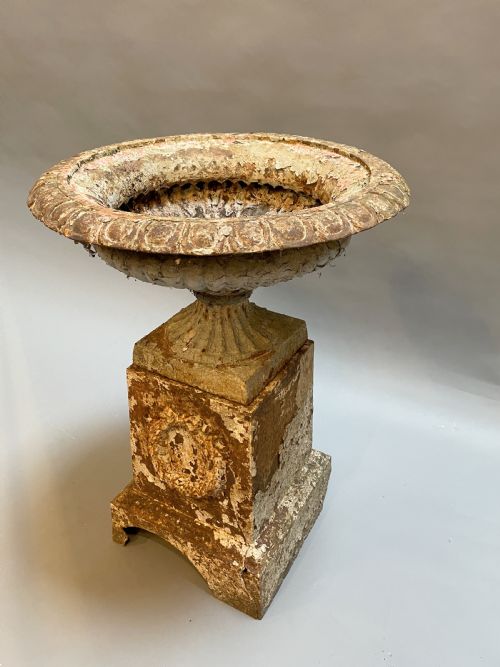

Victorian Cast Iron Ornament
These heavy victorian cast iron ornament pieces bring sturdy utility and classical form to gardens and hearths.
Victorian Cast Iron Ornament
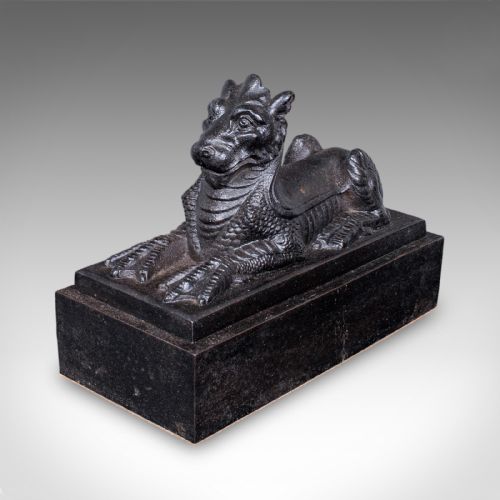
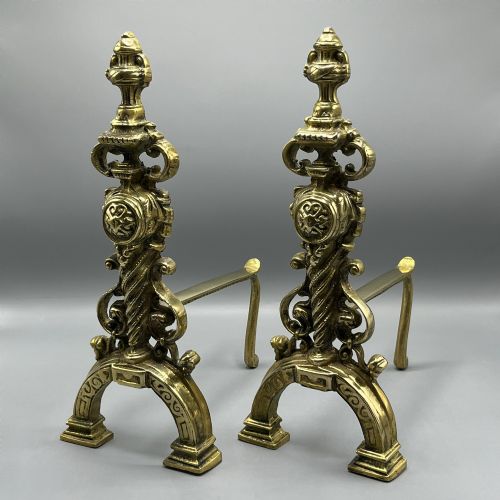
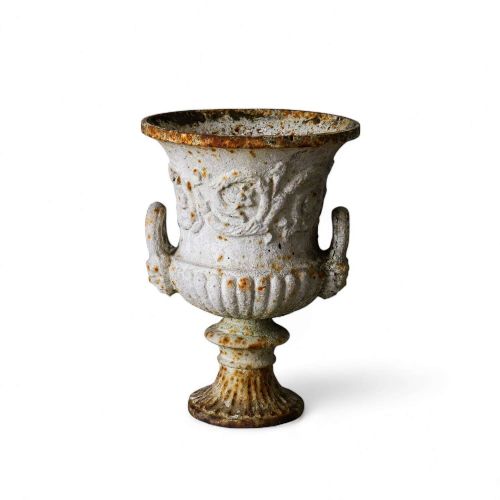
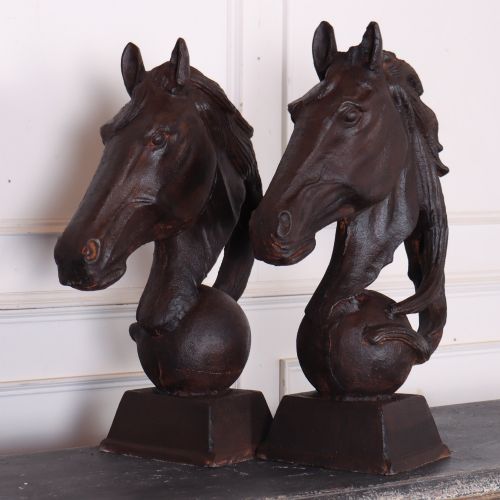
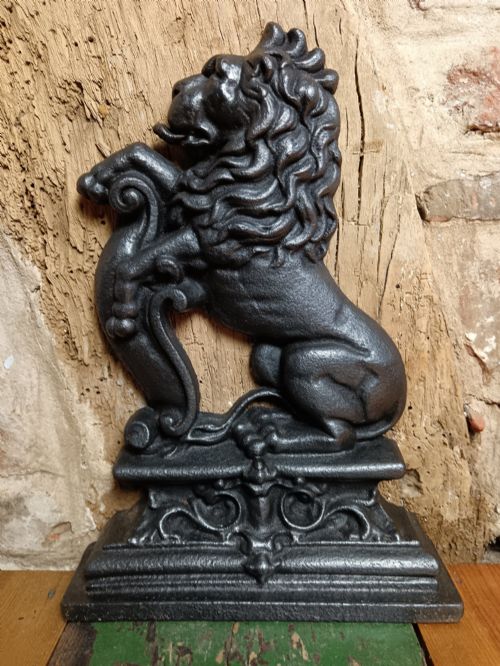
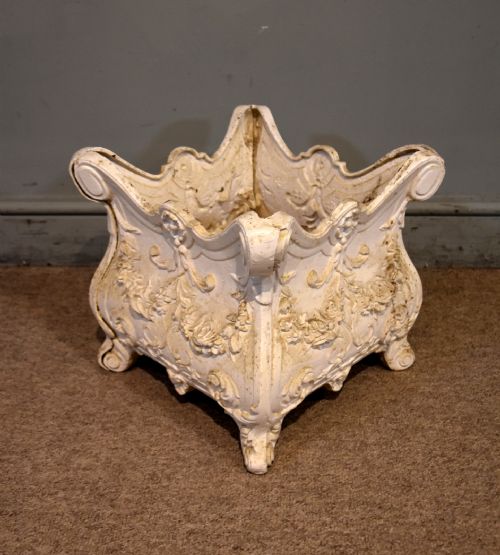
A victorian cast iron ornament encompasses items designed for functional utility and decorative display, ranging from garden urns and doorstops to architectural salvage and desktop paperweights. The most common examples encountered in this selection include campana garden planters, figurative doorstops such as rampant lions, and sturdy hitching posts shaped like horse heads.
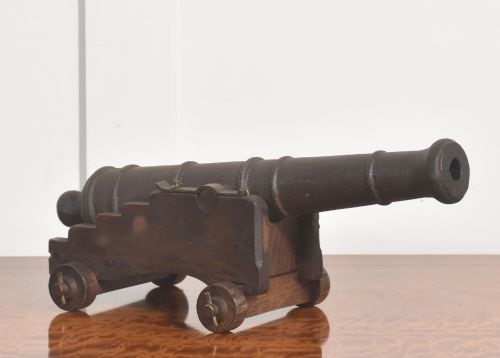
Many of these objects date from the nineteenth century, reflecting periods such as the eighteen-fifties and eighteen-eighties alongside later revivals. Makers like Coalbrookdale and Andrew Handyside produced robust garden urns and planters, while domestic spaces received heavy iron doorstops and ornamental cannons mounted on oak carriages.
Materials and construction
Foundries utilised durable cast iron poured into moulds to capture intricate sculptural details, frequently combining the metal with complementary materials such as solid brass, oak carriages, and black marble plinths. Many items display remnants of early paint finishes or weathered patination acquired from prolonged outdoor display.
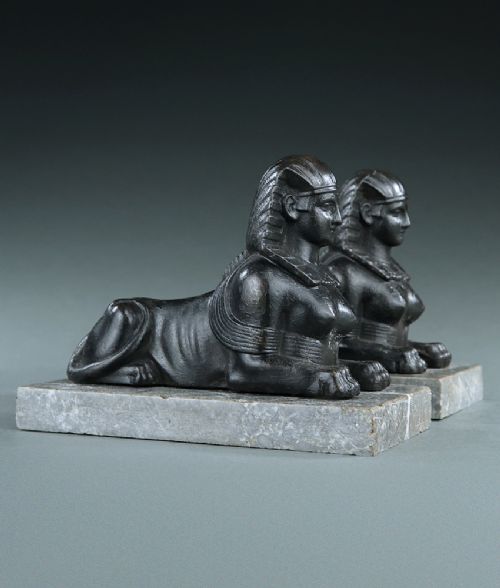
The casting process allowed founders to produce both hollow vessels like campana planters and solid figurative sculptures, including recumbent lions, sphinxes, and busts of historical figures. Structural elements often integrated bolted iron components and timber wheels to support heavier garden ornaments and architectural finials.
Desktop paperweights shaped like historical figures ensure your bills remain firmly anchored against sudden gusts.
Assessing quality and finish
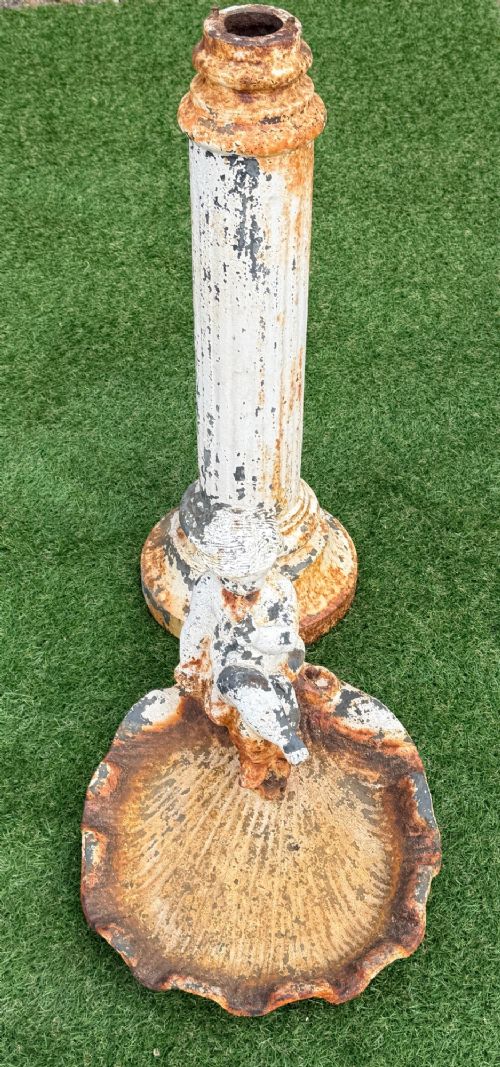
The clarity of the casting separates finer sculptural work from simpler utility items, as demonstrated by the crisp definition found on figures like cherubs, hunting spaniels, and classical sphinxes. Sharp edges on relief patterns and well-finished surfaces indicate superior foundry work from established makers.
Proportion and structural integrity dictate the standing of an object, particularly with large garden urns, hitching posts, and ornamental cannons mounted on wooden carriages. Pieces retaining original surface paint or exhibiting even, natural weathering hold distinct character compared to heavily altered examples.
Coalbrookdale·Andrew Handyside
The Victorian Cast Iron Ornament Glossary
- Campana
- A bell-shaped garden urn form popular during the nineteenth century. These vessels typically feature flared rims and heavy pedestal bases.
- Animalier
- A nineteenth-century artistic style focused on the realistic depiction of animals. Sculptures in this manner frequently portray dogs, lions, and horses.
- Hitching post
- A sturdy vertical post anchored outdoors for tying horses. Iron examples often terminate in sculpted horse head forms.
- Architectural salvage
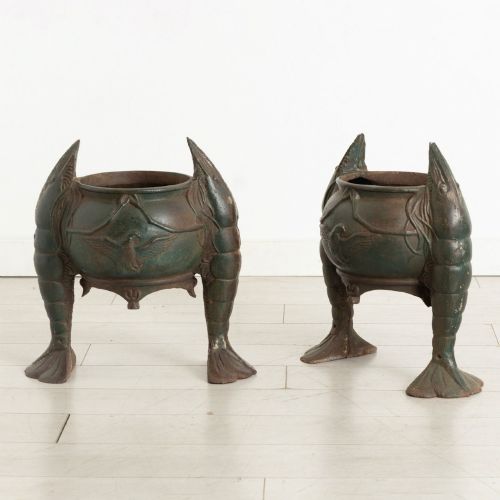
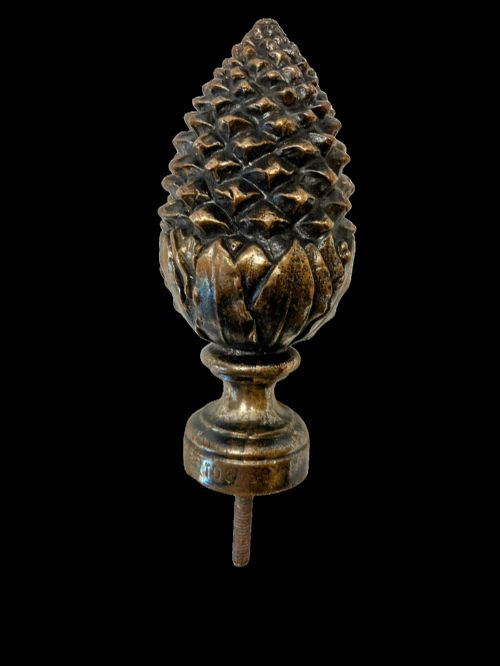
- Building elements rescued from older structures for reuse or display. This category includes staircase finials and decorative iron pots.
Victorian Cast Iron Ornament: Frequently Asked Questions
How were cast iron doorstops used?
Heavy figures like lions and dogs served to prop interior doors open against drafts in nineteenth-century hallways.
Their substantial weight kept them stable on wooden floorboards without requiring fixings.
Where were garden urns placed?
Large campana urns and planters stood along garden paths, terraces, and entranceways for seasonal planting displays.
Their iron construction withstood outdoor weather conditions year-round.
What is an ornamental cannon?
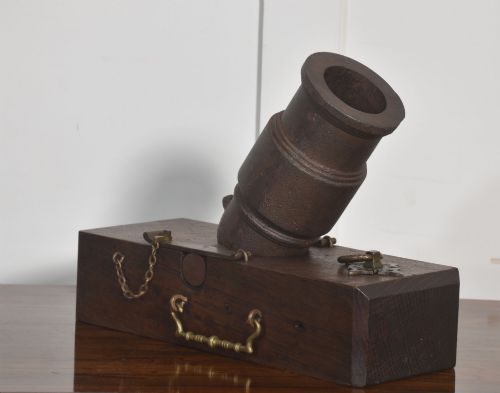
Miniature artillery pieces cast in iron and brass served decorative or ceremonial functions in domestic settings.
Some examples were mounted on oak carriages and marked to commemorate specific historical events.
How do I care for cast iron?
Items kept outdoors develop a natural weathered patination that protects the underlying metal over decades.
Indoor decorative objects require only gentle dusting to preserve their original painted surfaces.