


Antique Cast Iron Lion
These heavy metal beasts dominate the hearth and doorway, bringing heraldic strength and domestic weight to any room.
Antique Cast Iron Lion
When you search for an antique cast iron lion, you encounter robust domestic objects forged for utility and display across the nineteenth century.
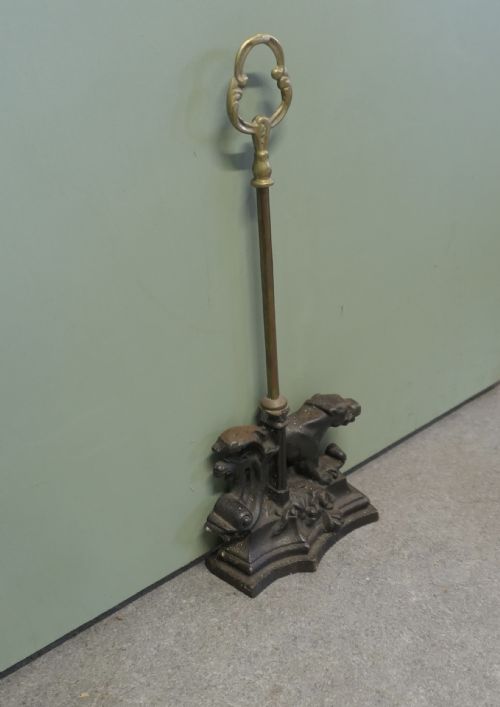
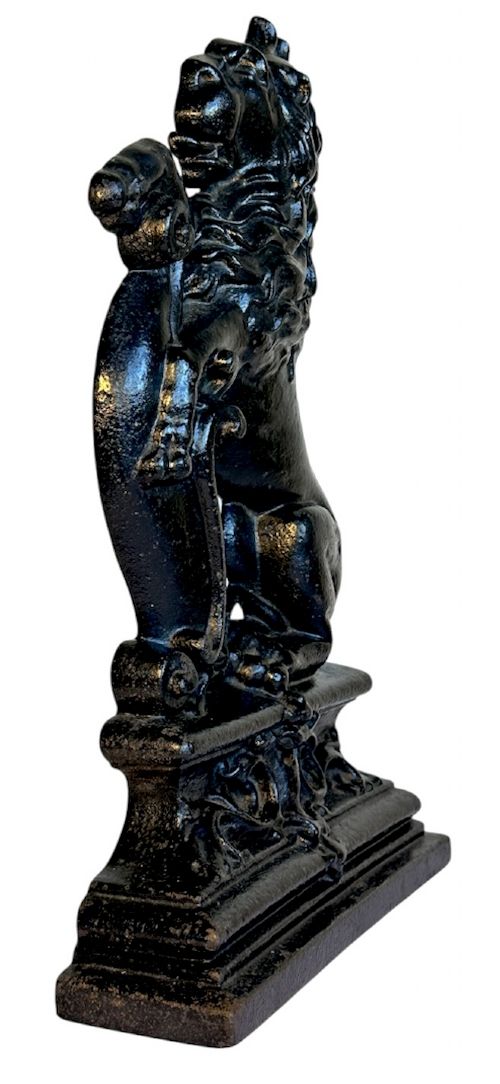
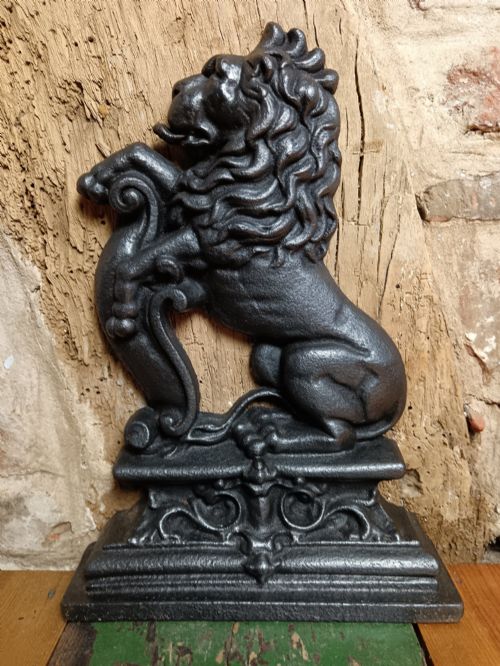
The most common form on this page is the doorstop, often cast as a rampant beast or guardian keeper holding a position against drafty doors.
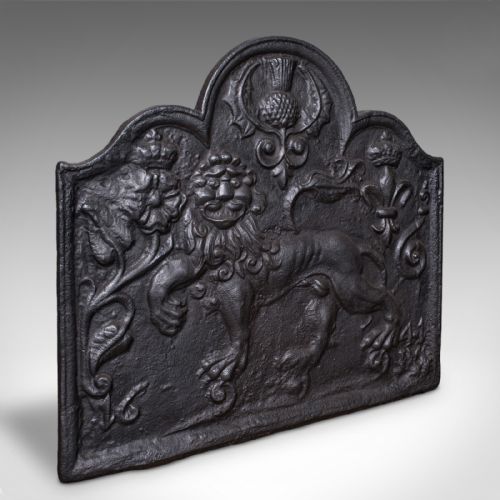
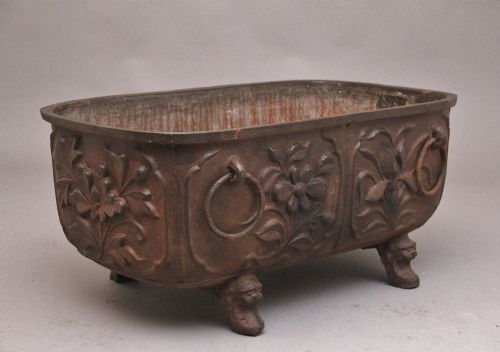
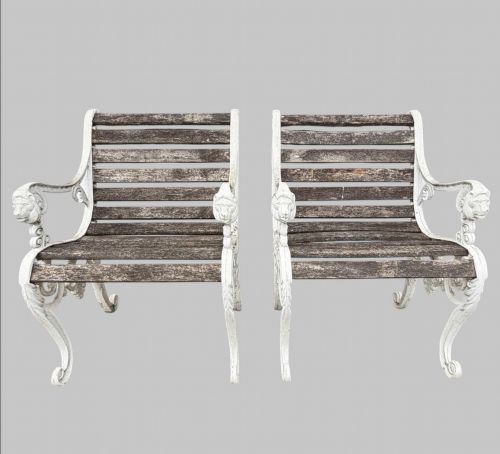
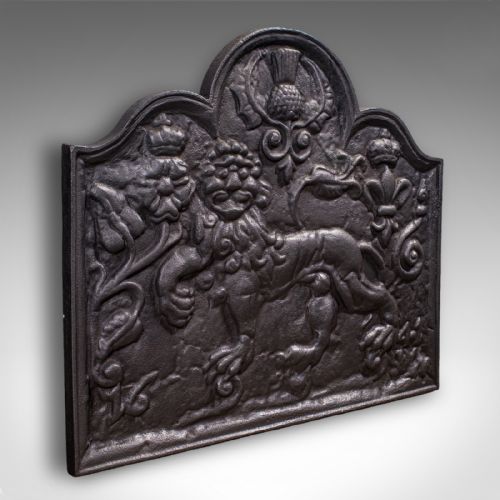
Beyond doorstops, the evidence records firebacks, coat of arms plaques, and garden armchairs bearing the king of beasts in various domestic and architectural contexts.
Method and material
Foundries produced these objects by pouring molten metal into sand moulds, capturing crisp lines for manes, claws, and heraldic shields.
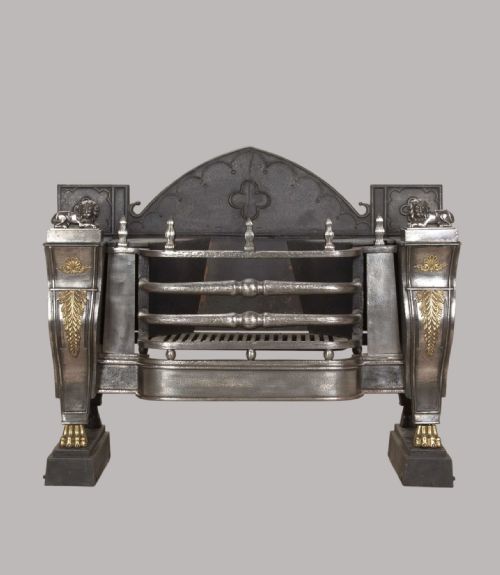
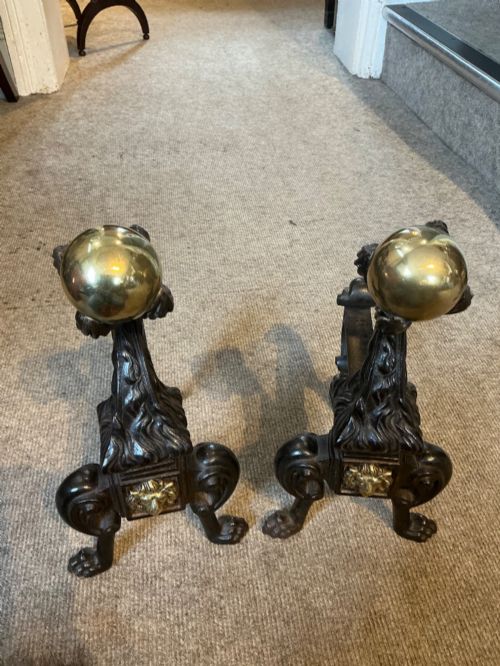
Cast iron provided the necessary weight and rigidity, frequently augmented by applied paint or paired with brass and wrought iron elements in fireplace accessories.
Cast iron lions frequently double as fierce domestic guardians, holding doors open with unimpressed expressions and unyielding weight.
Evaluating the cast
The survival of original surface treatments, such as early enamel paint or natural oxidisation, preserves the integrity of the piece without obscuring the underlying metalwork.
The Antique Cast Iron Lion Glossary
- Doorstop
- A heavy weighted object used to keep interior doors propped open. These frequently take the form of lions and heraldic figures.
- Fireback
- A heavy metal plate placed at the back of an open fireplace to reflect heat and protect the masonry. They often display cast coats of arms and royal beasts.
- Rampant
- A heraldic term describing an animal standing on its hind legs with forepaws raised. This pose appears frequently on doorstops and armorial plaques.
- Andirons
- Horizontal metal bars supported by legs, used to raise logs in an open hearth. Pairs often incorporate decorative brass or iron terminals.
- Coat of Arms
- A distinct heraldic design displayed on shields and plaques. These symbols denote lineage, authority, or royal allegiance on fireplace furniture.
Antique Cast Iron Lion: Frequently Asked Questions
How do I use a cast iron lion doorstop?
Place the heavy figure directly against the base of an interior door to hold it firmly in position.
The substantial weight of the iron prevents the door from swinging in heavy drafts.
Where were firebacks placed in the room?
The heavy metal plate stands upright against the rear brickwork inside an open fireplace.
It absorbs and radiates heat back into the living space while protecting the wall behind the fire.
How do I clean antique cast iron?
Dust the surface gently with a dry cloth to remove loose debris and surface dirt.
Avoid liquid cleaners or water to protect any surviving historical paint or natural finishes.
Are these pieces from the Victorian era?
Many examples date from the nineteenth century and the Victorian period, reflecting a strong domestic taste for heraldic motifs.
Earlier Georgian and later interwar pieces also appear alongside these Victorian domestic items.