


Country House Boot Scraper
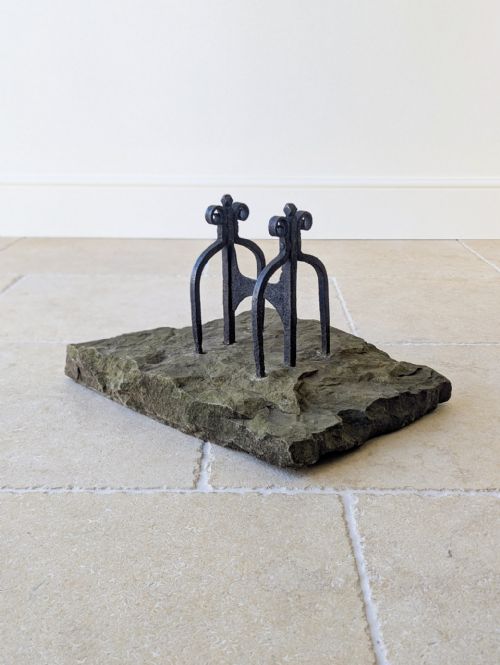
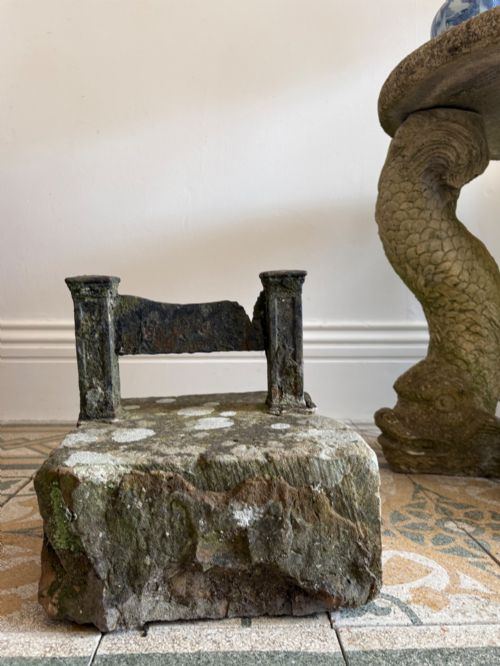
These country house boot scraper examples combine cast iron or wrought iron blades with heavy stone blocks to clear mud from heavy footwear.

Country House Boot Scraper
A country house boot scraper serves as a functional outdoor entryway accessory designed to clean heavy footwear before entering a domestic interior. These items appear across several historic eras including the Georgian, Regency, and Victorian periods.
The surviving pieces on this page primarily consist of metal scraper blades combined with solid stone bases such as Yorkstone or hewn stone blocks. Formats range from simple oval designs to substantial iron blades set within large stone slabs.
How they were made
Makers utilised durable metals like cast iron and wrought iron to form the upright scraping blades and functional frames. These metal components are securely anchored into dense masonry blocks, utilising the natural weight of stone to remain stable during use.
Stonemasons hewed natural materials like Yorkstone to create heavy slabs or blocks capable of withstanding outdoor conditions. Metal blades were then inserted directly into the stone substrate, creating a permanent and robust assembly.
Country House Boot Scraper Retail Price Guide 2026
Typical asking prices for country house boot scraper among the pieces listed under this phrase on Sellingantiques today, from the lower quarter to the upper quarter. They describe what is for sale here now, not the wider market.
Some Victorian iron scrapers include cast lion designs, ensuring visitors faced a small beast before even knocking on the door.
What varies in quality
Quality rests in the proportional balance between the metalwork blade and the supporting stone block, where heavier masonry and substantial ironwork indicate a grander domestic origin. Finer examples display careful sculptural detailing in the metal, such as lion motifs or distinctive oval shaping.
The integration of the metal blade into the stone slab dictates the structural integrity and overall aesthetic finish of the piece. Superior items utilise high-grade Yorkstone and cleanly cast iron that has aged with an even, stable surface.
The Country House Boot Scraper Glossary
- Cast iron
- A strong, hard iron-carbon alloy produced by pouring molten metal into a mould. This material allowed makers to produce robust boot scraper blades and decorative forms.
- Wrought iron
- A tough, malleable iron that can be heated and worked with hand tools. It appears in traditional scraper blades shaped through blacksmithing techniques.
- Yorkstone
- A tight-grained sandstone quarried in Yorkshire, prized for its durability and weathering properties. It frequently forms the heavy base blocks for these scrapers.
- Hewn stone
- Natural stone shaped by cutting or chipping with heavy hand tools rather than mechanical sawing. This method produces the rustic blocks found beneath historic scrapers.
Country House Boot Scraper: Frequently Asked Questions
Where were boot scrapers placed?
These items traditionally stood immediately outside the main entrance doors of large country houses or town residences. Visitors and residents used them to remove thick mud and dirt from footwear before stepping indoors.
They were often positioned near stone steps or pathways where muddy boots presented a direct hazard to interior floors and carpets.
How do I date a boot scraper?
Dating relies heavily on observing the material characteristics of both the metal blade and the supporting stone block. Georgian and Regency examples often feature hand-wrought iron components, while Victorian pieces more frequently use cast iron.
The style of the metalwork and the specific type of stone preparation also provide clear indicators of the period of manufacture.
Can I use these outdoors today?
These robust items are inherently built for exterior use and withstand weathering remarkably well due to their heavy stone and iron construction. Placing one by a modern garden entrance maintains its original functional purpose.
Regular exposure to moisture is naturally handled by the durable materials, though monitoring for surface corrosion on the iron helps preserve the metal.
What is the difference between cast and wrought iron?
Cast iron is created by pouring molten metal into a mould, which allows for repeatable shapes and decorative motifs like lions. Wrought iron is beaten and shaped by hand while hot, showing subtle individual hammer marks and fibrous textures.
Both materials offered the necessary strength required for scraping heavy footwear clean of mud and debris.