




Cast Iron Boot Wiper
These cast iron boot wiper pieces are sturdy period devices designed to clear mud from footwear before entering the house.
Cast Iron Boot Wiper
A cast iron boot wiper serves as a practical threshold accessory found outside historic doorways, designed specifically to scrape mud and dirt from footwear. When searching for a cast iron boot wiper, a buyer encounters utilitarian iron blades paired with solid foundations.
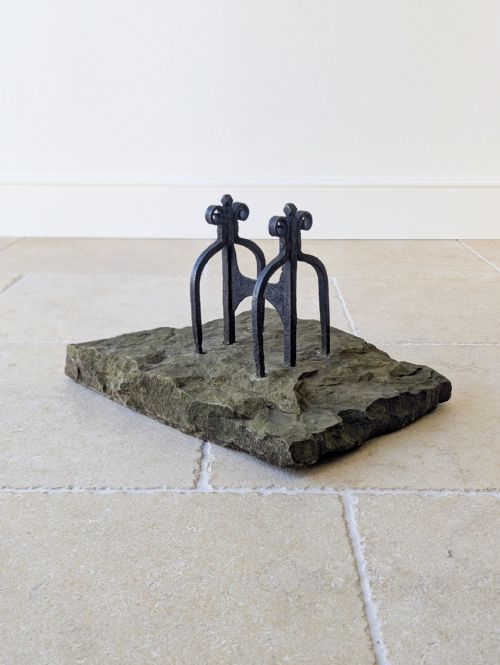
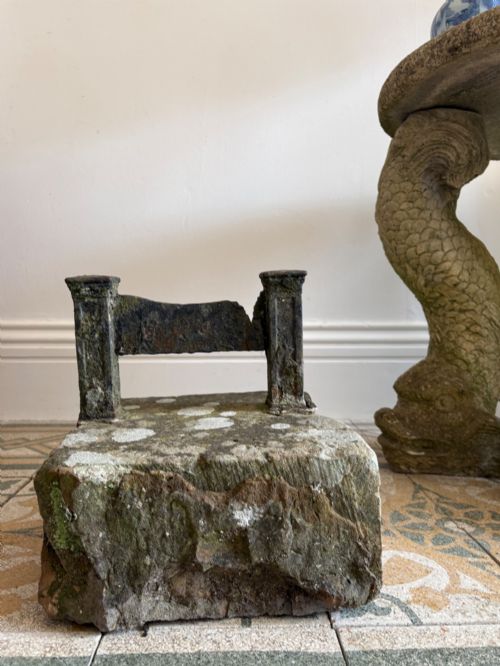
The versions most commonly met on this page date from the Victorian and Regency periods, alongside earlier Georgian examples. These objects often combine heavy metal blades with substantial bases made from Yorkstone or hewn stone blocks.
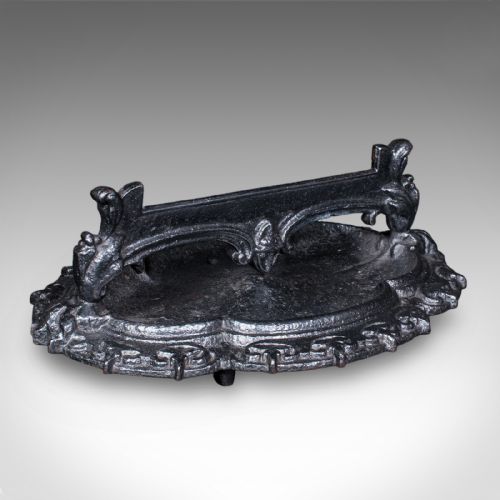
Many surviving examples incorporate a shoe pull alongside the scraper blade, offering a dual function for removing footwear. Forms range from simple townhouse patterns to grand country house designs and Gothic Revival pieces.
How they were made
Makers utilised durable metals for the scraping elements, relying primarily on cast iron and wrought iron to form the vertical blades and pulls. These iron components were shaped in foundries to create robust fixtures capable of withstanding heavy daily use.
Many examples are inset directly into heavy blocks of Yorkstone or natural stone, using the sheer weight of the base to keep the scraper stable without permanent ground fixings.
Cast Iron Boot Wiper Retail Price Guide 2026
Typical asking prices for cast iron boot wiper among the pieces listed under this phrase on Sellingantiques today, from the lower quarter to the upper quarter. They describe what is for sale here now, not the wider market.
Materials recorded across the available pieces include cast iron, wrought iron, Yorkstone, and hewn stone blocks.
What varies in quality
Quality in a cast iron boot wiper is dictated by the crispness of the casting and the substance of the mounting base. Finer examples display clean lines and well-integrated shoe pulls rather than crude, heavy-handed joins.
The choice of foundation also distinguishes the pieces, as heavy hewn stone blocks and fitted Yorkstone bases provide greater architectural presence than simpler portable iron frames.
The Cast Iron Boot Wiper Glossary
- Boot scraper
- A fixed metal blade placed near an entrance to remove mud from shoes. It forms the primary functional element of these objects.
- Shoe pull
- An upward-curving loop or handle attached to the scraper frame. It allows a person to steady their foot while removing muddy boots.
- Yorkstone
- A tough carboniferous sandstone quarried in Yorkshire. It frequently serves as the heavy mounting block for iron scrapers.
- Gothic Revival
- An architectural and decorative style popular during the nineteenth century. Pieces in this style often feature pointed arches and medieval motifs.
Cast Iron Boot Wiper: Frequently Asked Questions
Where were boot scrapers originally placed?
These devices were positioned immediately outside exterior doorways, often built close to the front step of townhouses and country houses.
Their location allowed visitors and residents to clean their footwear before stepping onto interior floors.
How do I identify a Victorian boot wiper?
Victorian examples often display standard industrial casting methods and decorative motifs typical of the nineteenth century.
Many of these pieces feature standard iron blades mounted into stone blocks or freestanding metal bases.
What is the stone block for?
The heavy stone base provides stability so the metal scraper does not wobble during vigorous use.
Blocks of Yorkstone or hewn stone add significant weight to keep the fixture firmly in place on the ground.
How do I care for cast iron outdoors?
Cast iron handles exterior weather well due to its dense composition, though surface oxidation can occur over decades.
Owners typically maintain the metal using traditional protective coatings or wax suited for exterior ironwork.