

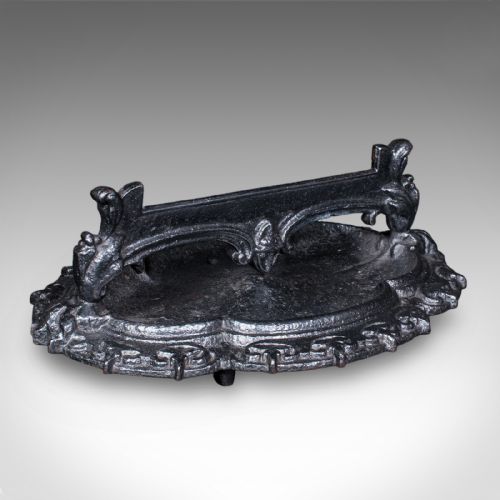

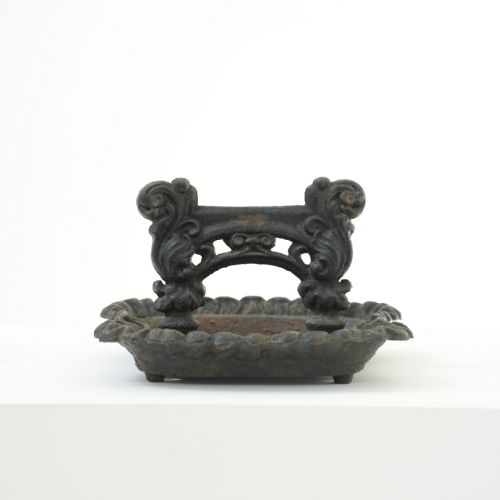


Cast Iron Tray Boot Scraper
Cast iron tray boot scraper pieces are heavy metal entrance accessories designed to clean footwear, offering durable period utility for doorsteps.
Cast Iron Tray Boot Scraper
A cast iron tray boot scraper combines a central scraping blade with an integrated tray base designed to catch mud at a doorway or entrance. Buyers searching this phrase look for heavy metal entrance accessories that protect interior floors from footwear debris.
Victorian examples predominate on this page, alongside pieces from the Regency, Georgian, and wider nineteenth-century periods. These items range from small oval designs to large country house and townhouse models.
How they were made
These pieces utilise cast iron poured into moulds to create rigid, heavy frames that withstand constant outdoor use. Foundries such as Coalbrookdale produced durable metalwork designed to resist weathering on doorsteps.
Moulding techniques allowed makers to incorporate decorative elements like Gothic Revival architectural motifs alongside functional trays and scraper blades. The resulting ironwork provides the necessary weight to stay stable without being fixed to the ground.
Cast Iron Tray Boot Scraper Retail Price Guide 2026
Typical asking prices for cast iron tray boot scraper among the pieces listed under this phrase on Sellingantiques today, from the lower quarter to the upper quarter. They describe what is for sale here now, not the wider market.
Listings feature cast iron materials spanning Victorian, Regency, and Georgian periods.
What varies in quality
Quality rests in the crispness of the cast iron detailing and the thickness of the tray walls. Finer nineteenth-century examples display sharp architectural lines, particularly in Gothic Revival pieces, whereas basic utility items feature simpler casting.
The presence of integrated shoe pulls and larger country house proportions separates substantial entrance pieces from smaller domestic variants. Well-defined moulding and balanced proportions distinguish superior foundry production.
Coalbrookdale
The Cast Iron Tray Boot Scraper Glossary
- Cast iron
- A hard, relatively brittle alloy of iron and carbon that can be readily cast in a mould. It provides the heavy, durable material necessary for outdoor boot scrapers.
- Boot scraper
- A metal blade mounted near a doorway for scraping mud from footwear. They often include an attached tray to catch the dislodged dirt.
- Shoe pull
- A handle or loop integrated into an entrance accessory to assist with pulling off muddy boots. This feature appears alongside standard scraping blades on several English townhouse examples.
- Gothic Revival
- An architectural and decorative style drawing inspiration from medieval forms. Pieces from this movement incorporate pointed arches and structural details into ironwork.
- Coalbrookdale
- A famous Shropshire ironworks known for producing ornamental and utilitarian cast iron. Their foundry work represents a standard of nineteenth-century metal production.
Cast Iron Tray Boot Scraper: Frequently Asked Questions
What is a boot scraper tray?
A boot scraper tray is a heavy metal entrance accessory that combines a vertical blade for cleaning footwear with a flat base to catch falling mud.
These items sit outside doorways to keep entranceways clean by trapping dirt before it enters the house.
Where were boot scrapers placed?
Boot scrapers were positioned directly outside exterior doorways, townhouses, and country house entrances for daily use by residents and visitors.
Their heavy iron construction allowed them to remain stable on doorsteps without permanent floor fixings.
How do I date a cast iron scraper?
Dating relies on stylistic clues such as Regency proportions, Victorian ornamentation, or Gothic Revival architectural motifs found in the iron casting.
Nineteenth-century pieces often display specific foundry characteristics and design traits typical of the period.
What is a shoe pull?
A shoe pull is an integrated loop or handle designed to help people pull off muddy boots before entering a building.
This functional addition appears frequently on English townhouse and entrance scrapers from the nineteenth century.