



Antique Doorstep Shoe Cleaner
An antique doorstep shoe cleaner clears heavy mud before it crosses your threshold.
Antique Doorstep Shoe Cleaner
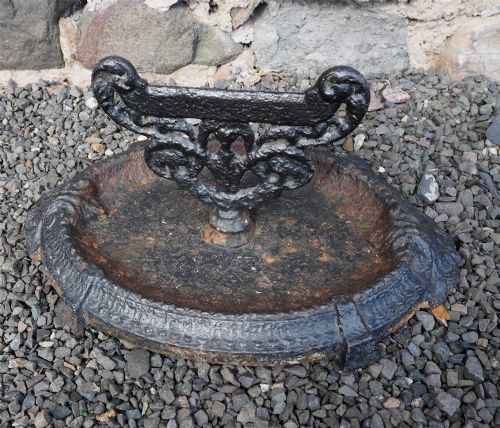
An antique doorstep shoe cleaner stands outside an entrance to scrape mud and dirt from footwear before guests step inside. These functional items take the form of boot scrapers, often paired with a shoe pull.
The selections here span from the Georgian period through the Victorian era, including Regency and 1900 examples. Cast iron forms the mainstay of these pieces, alongside wrought iron and Yorkstone.
Country house and townhouse pieces appear frequently, ranging from small oval designs to large examples. Makers such as Coalbrookdale produced these hardy iron items for entrances.
How they were made
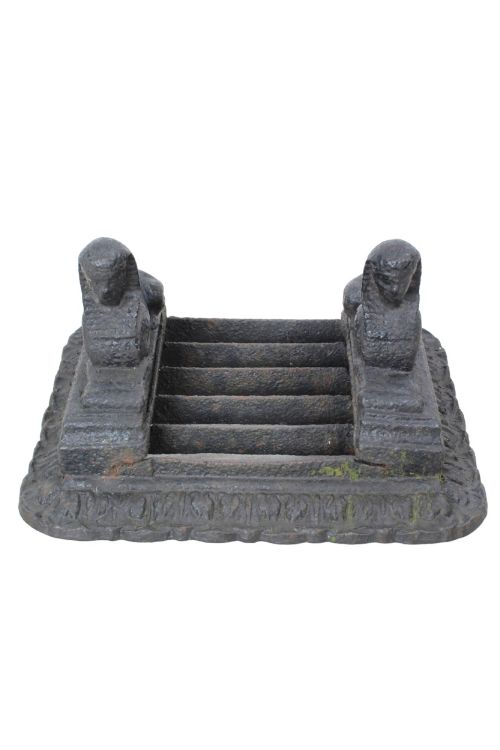
Foundries utilised cast iron to mould robust frames, blades and decorative motifs like the Egyptian Revival style. Wrought iron provided durable alternative structures for country house settings.
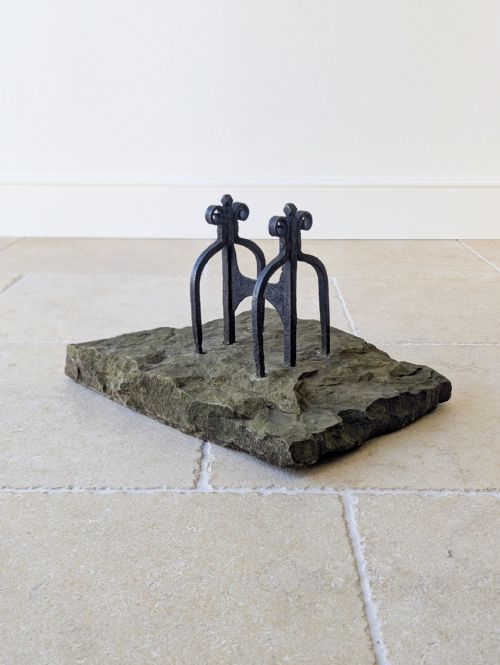
Some examples incorporated Yorkstone bases to anchor the scraper firmly beside a doorway. Foundries cast these metals to withstand heavy daily use outside London townhouses and rural dwellings.
Antique Doorstep Shoe Cleaner Retail Price Guide 2026
Typical asking prices for doorstep shoe cleaner among the pieces listed under this phrase on Sellingantiques today, from the lower quarter to the upper quarter. They describe what is for sale here now, not the wider market.
Listings feature cast iron, wrought iron, and Yorkstone across Victorian, Georgian, and Regency periods.
What varies in quality
Design complexity separates standard iron blades from decorative architectural statements. Pieces featuring integrated shoe pulls or specific regional styles like Egyptian Revival demand closer attention.
Foundry work varies from straightforward utility objects to ornate Coalbrookdale castings. Scale also dictates quality, with large pair configurations and substantial Yorkstone mounts showing greater ambition.
Coalbrookdale
The Antique Doorstep Shoe Cleaner Glossary
- Boot scraper
- A metal blade mounted near a doorway designed to scrape mud from the soles of boots. These fixtures were standard outside nineteenth-century entrances.
- Shoe pull
- An auxiliary hook or handle attached to a scraper to assist in removing tight footwear. Townhouse examples frequently incorporate this feature.
- Cast iron
- An iron-carbon alloy poured into moulds to create rigid shapes. It formed the primary material for Victorian street furniture and entrance scrapers.
- Wrought iron
- Iron beaten into shape by hand rather than poured into a mould. This material appears in country house designs from the Georgian period.
Antique Doorstep Shoe Cleaner: Frequently Asked Questions
Where were doorstep shoe cleaners placed?
These pieces sat directly outside front doors, porches and carriage entrances of townhouses and country houses.
Visitors used the metal blades to clear heavy soil from their footwear before stepping onto interior floors.
How do I date a cast iron boot scraper?
Dating relies upon stylistic clues such as Regency curves, Egyptian Revival motifs or Georgian wrought iron construction.
Foundry marks and general proportions also help link a piece to the nineteenth century or earlier.
What is the difference between a scraper and a shoe pull?
A scraper is the upright or horizontal blade used to scrape away mud, while a shoe pull is the attached hook.
Townhouse models often combined both elements to assist guests with removing muddy boots.
Can these scrapers stay outside?
Cast iron and Yorkstone weathered outdoor conditions for centuries and withstand external placement today.
Regular maintenance prevents surface rust from accumulating on the iron blades.